
Intro
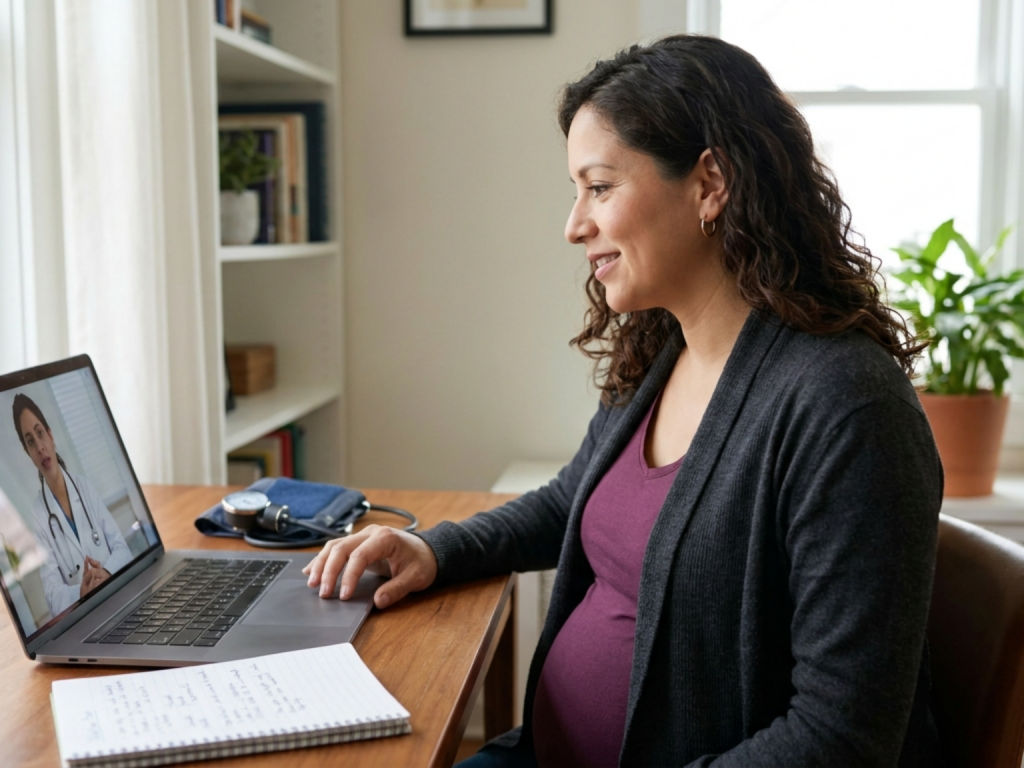
Virtual visits can be a thoughtful, medically useful part of pregnancy care when the clinical question can be answered safely without a hands-on examination. For many patients, a video or phone encounter reduces travel time, limits exposure to contagious illness, and makes it easier to stay engaged with prenatal follow-up.
That said, telehealth is best viewed as a complement to in-person obstetric care, not a replacement. Pregnancy still requires physical assessment, fetal evaluation, blood pressure measurement, laboratory testing, and ultrasound at specific points. The key question is not whether care is “real” if it happens online, but whether the information needed to make safe decisions can be gathered remotely.
Highlights
Virtual care is most appropriate when the clinician mainly needs history, symptom review, education, or follow-up rather than a physical exam.
In pregnancy, telehealth is often useful for stable symptoms, medication questions, chronic disease monitoring, and reviewing test results.
Any concern for maternal instability, fetal compromise, or a problem that needs a hands-on exam should move to in-person care.
The safest prenatal model is usually hybrid: some visits can be virtual, but ultrasound, blood pressure checks, and other assessments still need a clinic setting.
What makes a virtual visit appropriate
Virtual visits are appropriate when the clinician can safely make decisions from the history, visual inspection, home measurements, prior records, or a focused discussion. In practice, that often means low-acuity issues, treatment follow-up, results review, counseling, and medication reconciliation. Telehealth can also be useful when a patient is established in care and the plan is already clear, such as adjusting a follow-up schedule or checking whether a symptom has improved.
The strongest telehealth visits are those that do not depend on palpation, auscultation, speculum examination, fetal heart assessment, or immediate testing. In pregnancy, that distinction matters because some symptoms look mild at first but can reflect conditions that need an exam or urgent imaging. A video visit is appropriate only when the clinician and patient both understand the limits of remote assessment and have a clear plan for escalation if the story changes.
Guidance from clinical and public-health sources consistently emphasizes that virtual care should complement, not replace, in-person care. That model works well in pregnancy because many questions are educational or logistical, while the core safety checks remain in the office, ultrasound unit, or triage setting.
Common pregnancy situations that can be handled virtually
Many routine concerns in pregnancy can start with a virtual encounter. For example, a clinician may be able to review nausea patterns, constipation, heartburn, mild upper respiratory symptoms, sinus congestion, uncomplicated rashes, insect bites, or questions about urinary symptoms before deciding whether testing or an exam is needed. The same is true for many medication questions, such as whether a prescription or over-the-counter treatment fits the current pregnancy plan.
Virtual care is also helpful when the main goal is education and reassurance. Patients often need help interpreting what a symptom means, when to watch and wait, and when to seek an exam. In a video visit, the clinician can inspect a rash, look at a swollen area, assess breathing effort, or review a photo that was taken at the right time. That can be enough for triage, even when it is not enough for a final diagnosis.
Telehealth prenatal visits are especially valuable for practical follow-up: checking how symptoms are responding, confirming that a treatment plan is being followed, and making sure the patient knows what changes would justify a more urgent assessment. For many people, that is the difference between feeling stranded and feeling guided.
How telehealth fits into routine prenatal follow-up
In many prenatal programs, virtual care works best for structured follow-up rather than first-time problem solving. A clinician can review home blood pressure readings, glucose logs, weight trends, medication adherence, or laboratory results, then decide whether the next step should be another remote check, an in-person visit, or a same-day evaluation. This is particularly useful for chronic conditions such as diabetes, high blood pressure, thyroid disease, and other issues that need ongoing monitoring but not constant hands-on examination.
Telehealth can also support counseling visits that do not require a physical exam. Examples include discussing sleep, nutrition, exercise, nausea strategies, vaccine questions, work restrictions, mental health symptoms, and planning for future appointments. In some practices, a virtual visit is a good way to check in after a new concern has already been assessed in person, or after testing has clarified the diagnosis. That approach reduces unnecessary travel while preserving safety.
If you are trying to understand the broader rhythm of care, it can help to think of telehealth as one part of the larger prenatal schedule rather than a separate track. Some appointments are inherently in person because they require blood pressure measurement, fetal assessment, ultrasound, or lab work; others are excellent candidates for video because they are mainly about monitoring, planning, and education.
When virtual care is not enough
Some situations should not be managed by video alone. In pregnancy, warning signs include heavy vaginal bleeding, severe abdominal pain, decreased fetal movement, fluid leakage that could represent ruptured membranes, contractions that seem preterm or very painful, severe headache, vision changes, fainting, marked swelling, or a sudden rise in blood pressure if it is being monitored at home. Those symptoms may indicate placental, hypertensive, infectious, or fetal problems that require a physical exam, fetal monitoring, laboratory testing, or urgent imaging.
General red flags also matter. Difficulty breathing, chest pain, confusion, or concern for a broken or infected injury are situations where in-person or emergency care is more appropriate than telehealth. Likewise, fever that is persistent or accompanied by worsening pain, or urinary symptoms that include fever or flank pain, should prompt a lower threshold for urgent evaluation. A virtual clinician can help triage, but the visit should not delay needed hands-on care.
It is also worth remembering that a “new” symptom in pregnancy can be clinically important even when it seems minor. If you are unsure, it is safer to call your maternity care team, because the purpose of telehealth is to route you to the right level of care, not to keep you online when you need an exam.
How to make a virtual visit clinically useful
A productive virtual visit starts before the camera turns on. Have a current medication list, the approximate gestational age or due date, any home blood pressure or glucose readings, and a short timeline of the symptom you are discussing. If the concern is visible, such as a rash, swelling, or a wound, use good lighting and, if your clinician asks, send clear photos from the same day. If your visit is about something less visible, like nausea or fetal movement concerns, be ready to describe frequency, severity, triggers, and whether the pattern is changing.
It also helps to know the limits of the format. A virtual visit can clarify a plan, but it cannot replace an abdominal exam, cervical assessment, Doppler check, ultrasound, or lab testing when those are needed. The best clinicians will say this explicitly and give you a specific threshold for escalation, such as “call back if the pain worsens,” “come in if the blood pressure is above your target,” or “go to triage if fetal movement decreases.” That clarity is not a sign that telehealth failed; it is a sign that it is being used safely.
For patients with long-term conditions, remote follow-up can be a very efficient way to stay connected between in-person visits. For patients with anxiety about symptoms, it can also provide timely reassurance and reduce unnecessary stress when the presentation is genuinely low risk.
Special situations: counseling, second opinions, and new patients
Some pregnancy-related services are especially well suited to a virtual format even when the overall care plan remains hybrid. Genetic counseling, family conferences, and second opinions are classic examples because the conversation itself is often the main clinical task. A clinician may also use a virtual first contact for a new patient consultation, then schedule an in-person follow-up once the physical exam, ultrasound, or testing needs are clear.
This is one reason many practices use telehealth selectively rather than universally. The aim is not to force every problem into one format, but to match the format to the medical need. A patient who needs a detailed risk discussion, help interpreting test results, or help understanding a care plan may leave a virtual visit with more clarity than after a rushed office stop. Conversely, a patient whose symptom could signal a complication should not be reassured by convenience alone.
If you are uncertain which category your concern falls into, ask whether the visit is intended for triage, follow-up, counseling, or examination. That single question often clarifies whether video is appropriate now or whether you should be seen in person first.
When to seek in-person or urgent care
- Heavy vaginal bleeding, severe abdominal pain, or decreased fetal movement needs urgent obstetric assessment.
- Difficulty breathing, chest pain, fainting, or confusion should not be handled by video alone.
- Suspected fluid leakage, severe headache, or vision changes should be triaged promptly.
- Fever, worsening urinary symptoms, or signs of infection in a rash or wound may need in-person treatment.
- If you feel that something is seriously wrong, do not wait for the next virtual appointment.
Tools & Assistance
- A secure patient portal or telehealth app approved by your maternity care team
- A validated home blood pressure cuff if your clinician recommends home monitoring
- A glucose meter or continuous glucose monitor report for diabetes follow-up
- A symptom diary with dates, triggers, and severity notes
- A camera or smartphone for sending clinician-requested photos of visible concerns
FAQ
Can all prenatal appointments be virtual?
No. Virtual visits are useful for selected follow-up and counseling tasks, but many prenatal visits still require blood pressure checks, fetal assessment, ultrasound, or laboratory testing in person.
Is telehealth appropriate for a new symptom in pregnancy?
Sometimes for triage, yes. If the symptom could represent a complication or needs an exam, the clinician should direct you to in-person evaluation.
Can virtual care help if I have a high-risk pregnancy?
Yes, for certain follow-up tasks, education, and monitoring, but high-risk pregnancies often need more in-person surveillance and a lower threshold for hands-on assessment.
What should I prepare before a virtual prenatal visit?
Have your medication list, due date, symptom timeline, and any home blood pressure or glucose readings ready, and be in a place where you can speak privately.
Sources
- NCBI Bookshelf — Virtual Care Use in Primary Care or Specialty Care Settings
- Mayo Clinic — Mayo Clinic Q&A: When to consider virtual care
- Telehealth.HHS.gov — What can be treated through telehealth?
Disclaimer
This article is for general educational purposes only and does not replace individualized medical advice. If you have concerning symptoms in pregnancy, contact your maternity care team or seek urgent care promptly.

















Please log in to leave a comment.