
Intro
The first six weeks of pregnancy can feel surprisingly abstract. Biologically, a great deal is happening from fertilization through implantation and early embryonic development, but on the surface many people notice only a delayed period, a positive test, or vague symptoms such as fatigue or nausea.
This guide follows early pregnancy from conception to week 6 using obstetric dating, which starts from the last menstrual period rather than the day of fertilization. That distinction matters: by the time a pregnancy is called “6 weeks,” conception usually occurred about two weeks earlier in a typical cycle. If your cycles are irregular, timing may shift, and that is normal.
Highlights
Pregnancy is dated from the last menstrual period, so the calendar age is usually about two weeks ahead of conception age.
Implantation and hCG production explain when home and blood pregnancy tests start to turn positive.
By week 5 to 6, the neural tube, heart, and early limb structures are developing rapidly.
Mild cramping, spotting, nausea, and fatigue can be common, but heavy bleeding or severe pain needs prompt assessment.
How pregnancy is dated from conception to week 6
In everyday language, conception and pregnancy are often treated as the same moment, but medically they are not. Fertilization usually occurs near ovulation, and pregnancy dating typically begins on the first day of the last menstrual period. That means a person who is “6 weeks pregnant” by obstetric dating is often only about 4 weeks after conception.
This system is useful because the exact day of fertilization is rarely known. It gives clinicians a shared timeline for counseling, testing, and ultrasound interpretation. The phrase ovulation and fertile window matters here because cycle length, stress, illness, breastfeeding, and hormonal variation can shift ovulation. If that happens, both the estimated week of pregnancy and the expected test timing may move with it.
For people trying to understand what happened “right after sex,” it helps to separate events: sperm transport, fertilization, early cell division, uterine entry, and then implantation. Only after implantation does pregnancy become hormonally detectable in a reliable way. This is why an apparently late period may still be too early for some tests, especially if ovulation happened later than expected.
Implantation, hCG, and the first positive pregnancy test
After fertilization, the embryo divides as it travels toward the uterus, eventually becoming a blastocyst. Once the blastocyst implants into the uterine lining, trophoblastic cells begin secreting human chorionic gonadotropin, or hCG. The relationship between implantation and hCG production is central to early pregnancy detection: without implantation, there is not yet a meaningful hCG signal to detect.
hCG supports the corpus luteum, which continues progesterone production and helps maintain the endometrium. As hCG rises, blood tests can detect pregnancy earlier than urine tests, but home tests are often very accurate around the time of a missed period. That said, missed period pregnancy test timing is not identical for everyone. If implantation occurs later, the hCG rise may lag by a few days, so an early negative test does not completely rule out pregnancy.
For that reason, many clinicians recommend repeating a home test after 48 to 72 hours if the period still has not come. If the result remains unclear, or if you have pain or bleeding, medical assessment is more useful than repeated guessing. Early pregnancy is often a time for probabilities rather than certainty, and that uncertainty can be emotionally hard.
What is forming in weeks 4, 5, and 6
Embryonic development is fastest in the first trimester because organ systems are laying down their basic architecture. Around week 4, the embryo is still very small, but the embryonic disc is differentiating into layers that will become the major tissues and organs. The amnion, yolk sac, and early placental interface are also taking shape.
By week 5, embryonic organogenesis at week 5 is well underway. The neural tube, which later becomes the brain and spinal cord, is closing; early brain regions are emerging; and the primitive heart tube is forming. Depending on dating and imaging quality, cardiac activity may begin around the end of this period, although a scan that is a little too early may still show only the gestational sac and yolk sac.
By week 6, limb buds may be visible, the head region is changing quickly, and the face is starting to take shape. Tiny structures related to the eyes and ears appear, and the embryo is entering a phase of rapid differentiation. The Mayo and NHS guidance on early fetal development aligns with the idea that these milestones appear in a predictable sequence, even though the exact day varies from one pregnancy to another.
Common early pregnancy symptoms and what is often normal
Early symptoms are driven mainly by progesterone, hCG, and the body’s adaptation to pregnancy. Fatigue is extremely common, and many people notice breast tenderness, bloating, increased urination, smell sensitivity, food aversions, or a sense that their stomach is “off.” Nausea and vomiting of pregnancy can begin during this window, although it does not affect everyone and severity varies widely.
Light spotting or mild cramping can happen, especially around implantation or as the uterus and cervix respond to hormonal change. These symptoms can be unsettling, but they are not automatically a sign that something is wrong. At the same time, symptom intensity is not a reliable measure of pregnancy viability. Some people have very few symptoms and go on to have a normal pregnancy; others feel ill early and still do well.
Supportive self-observation is usually more helpful than symptom comparison. Keep track of bleeding, pain, fever, and hydration status, and notice whether symptoms are improving, stable, or worsening. If nausea becomes so strong that you cannot keep fluids down, or if pain is getting worse rather than better, that pattern deserves medical attention rather than reassurance from the internet.
Practical self-care while waiting for the first prenatal visit
The first six weeks are a good time to focus on low-risk, high-value habits. Most clinicians advise continuing or starting a prenatal vitamin that includes folic acid, because neural tube development is occurring now and folate status matters early. It is also wise to review prescriptions, over-the-counter medicines, and supplements with a clinician or pharmacist so you understand pregnancy medication safety before taking anything new.
For many families, pregnancy nutrition and food safety become immediate priorities. Regular meals, adequate fluids, and small frequent snacks can help if nausea is present. Avoiding alcohol, tobacco, and recreational drugs is important. If you already exercise, moderate activity is often reasonable, but major changes are best individualized. The bigger goal is not perfection; it is avoiding exposures that add preventable risk while your pregnancy is still developing.
This is also the time to think about support systems. People with diabetes, thyroid disease, prior pregnancy loss, autoimmune disease, or fertility treatment history often benefit from individualized prenatal care. The first prenatal appointment is typically when clinicians confirm dating, review symptoms, and plan the next steps. If you have questions, bring them written down so you do not have to remember everything in the moment.
When to seek care and what an early ultrasound may show
Some symptoms should be treated as urgent rather than “normal early pregnancy.” Heavy bleeding, soaking pads, passing large clots, one-sided pelvic pain, shoulder pain, fainting, or severe dizziness can indicate a pregnancy complication such as ectopic pregnancy or miscarriage and should be evaluated promptly. Fever, significant abdominal pain, or persistent vomiting with dehydration also merit timely medical advice. These are part of the red flags in early pregnancy that clinicians want you to recognize early.
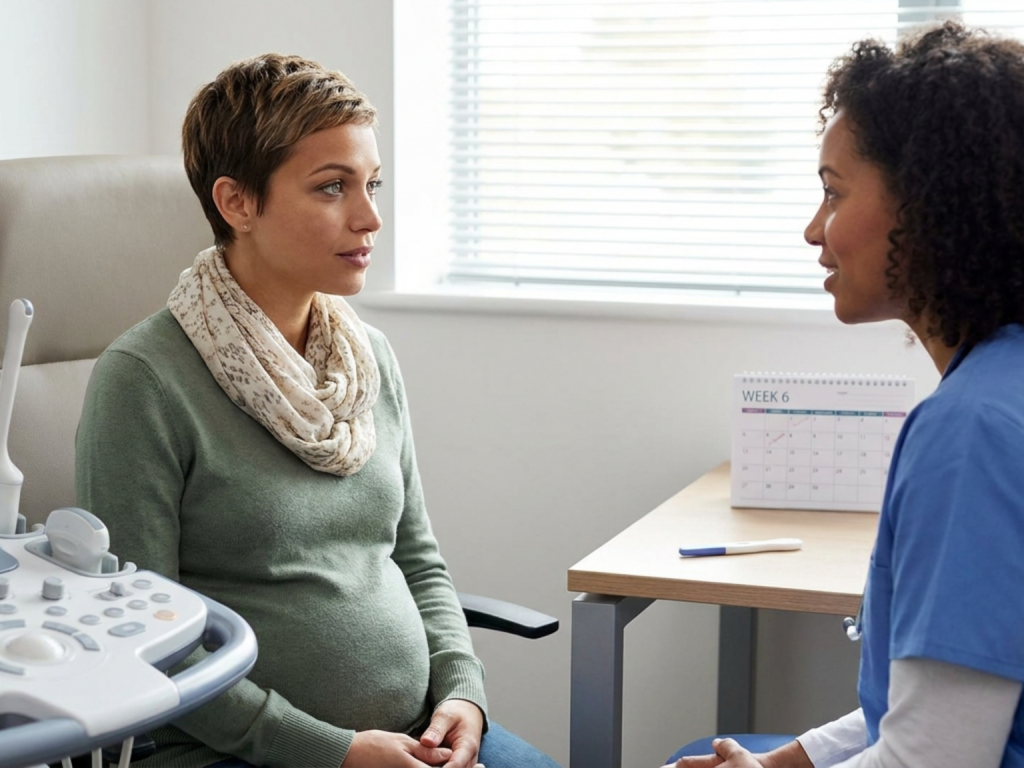
If you have a positive test but uncertain dates, an early ultrasound may help, although it is not always definitive at the first visit. Around 5 weeks, a gestational sac may be seen; around 5.5 weeks, a yolk sac may appear; and by roughly 6 weeks, a fetal pole and cardiac activity may sometimes be visible if dating is correct. The PubMed study on sequential embryonic structures supports this staged approach to what can be seen first on imaging.
If the scan is earlier than expected, the next step is often simply to repeat it after an interval, because very early pregnancy can look quieter than expected without being abnormal. The most helpful interpretation combines the menstrual history, symptoms, hCG trends when available, and ultrasound findings rather than any one data point alone.
Seek urgent medical review if you notice:
- Heavy vaginal bleeding, soaking pads, or passing large clots.
- One-sided pelvic pain, shoulder pain, fainting, or severe dizziness.
- Fever, severe abdominal pain, or persistent vomiting with dehydration.
- A positive test with worsening pain or bleeding, even if symptoms seem mild at first.
- A negative home test that remains uncertain while your period is late and symptoms are escalating.
Tools & Assistance
- Write down the first day of your last menstrual period and the date of any pregnancy tests.
- Schedule a medication and supplement review with your clinician or pharmacist.
- Start or continue a prenatal vitamin if your healthcare professional recommends it.
- Book the first prenatal appointment once you have a positive test or earlier if you have pain or bleeding.
FAQ
When does pregnancy actually start?
Biologically, pregnancy begins with fertilization and implantation, but clinicians date it from the first day of the last menstrual period.
Why can I have a negative test and still be pregnant?
If implantation happened late or hCG has not risen enough yet, a home test may be negative for a short time even when pregnancy is present.
Is spotting in week 4 to 6 always a problem?
No. Light spotting can occur, but heavy bleeding, significant pain, or dizziness should be assessed promptly.
What can an ultrasound show by week 6?
Depending on exact dating and equipment, it may show a gestational sac, yolk sac, fetal pole, and sometimes cardiac activity.
Sources
- Mayo Clinic — Fetal development: The first trimester
- National Health Service (NHS) — 6 weeks pregnant guide
- PubMed — Dating the early pregnancy by sequential appearance of embryonic structures
Disclaimer
This article is for general information only and does not replace individualized medical advice, diagnosis, or urgent evaluation from a qualified clinician.


















Please log in to leave a comment.