
Intro
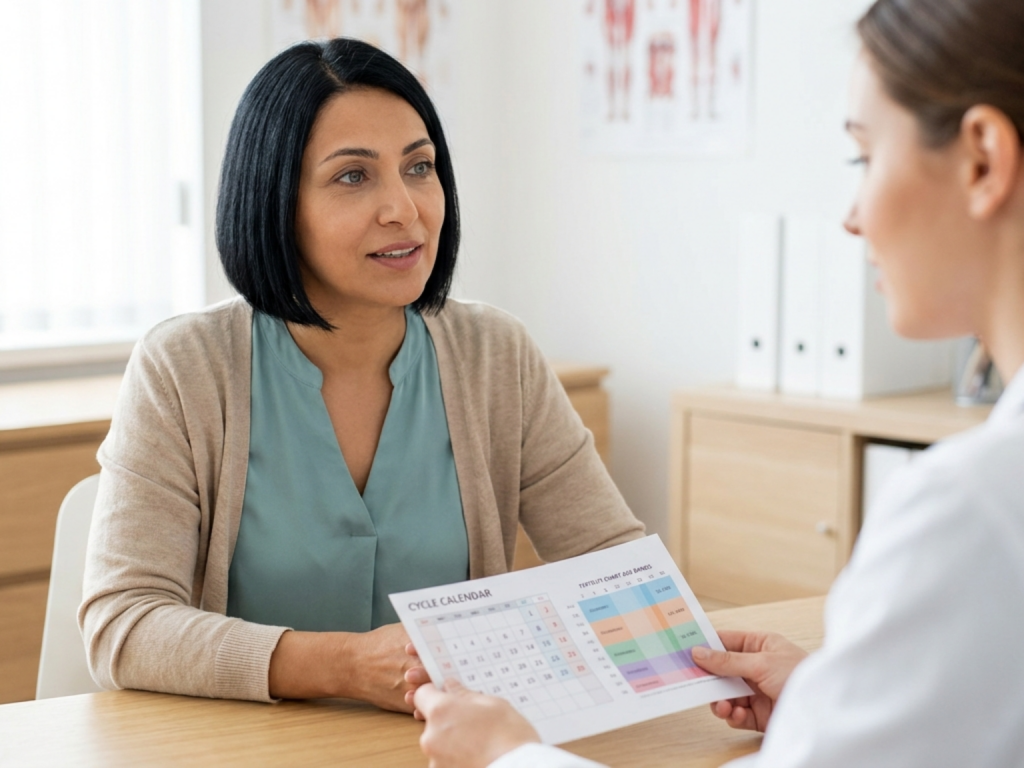
Age is one of the strongest predictors of fertility, but it is never the whole story. Many people conceive quickly in their 30s or 40s, while some people in their 20s need medical support. The most useful way to think about age and pregnancy is probabilistic: age changes the average chance per cycle, the time it may take to conceive, and the likelihood of miscarriage, but it does not determine an individual outcome on its own.
This article compares the chances of getting pregnant in your 20s, 30s, and 40s, using clinically grounded concepts such as fecundability, ovarian reserve, oocyte quality, ovulation timing, and cumulative pregnancy probability. It is designed to help you interpret the numbers with care and know when to involve a healthcare professional.
Highlights
Fertility is generally highest in the 20s, begins to decline more clearly in the 30s, and declines more sharply after 35.
Monthly pregnancy probability is only one part of the picture; cumulative chances over several well-timed cycles are often more informative.
Egg quality and chromosomal abnormalities become increasingly important with age, especially in the late 30s and 40s.
A fertility evaluation is usually recommended sooner after age 35, because time-sensitive causes may be easier to address earlier.
Age affects averages, not destiny; partner factors, ovulation, tubal health, sperm parameters, medical history, and timing all matter.
What pregnancy chances by age really mean
When people ask about the chances of getting pregnant in their 20s, 30s, or 40s, they are often asking about fecundability per menstrual cycle. Fecundability means the probability of conceiving in one cycle, usually assuming regular ovulation and intercourse during the fertile window. It is not the same as the chance of having a live birth, because miscarriage, ectopic pregnancy, and other pregnancy complications can occur after conception.
Age affects several steps at once. Ovarian reserve, which refers to the remaining supply of eggs, declines over time. Egg quality also changes, especially the ability of an egg to divide with the correct number of chromosomes after fertilization. With increasing age, a higher proportion of embryos have chromosomal abnormalities, which can reduce implantation and increase miscarriage risk.
These statistics are population averages. They do not account for every individual variable, such as endometriosis, polycystic ovary syndrome, fibroids affecting the uterine cavity, thyroid disease, prior pelvic infection, chemotherapy exposure, smoking, body weight extremes, or sperm parameters. This is why two people of the same age can have very different experiences when trying to conceive.
Chances of getting pregnant in your 20s
For many people, the 20s are the period of highest natural fertility. Ovulation is often more regular, ovarian reserve is usually stronger, and a larger proportion of eggs are chromosomally normal compared with later decades. Some sources estimate that people in their 20s may have roughly a 20% to 25% chance of pregnancy per cycle when intercourse is well timed, although the exact number varies by study design and population.
That monthly probability may sound lower than expected, but it becomes more meaningful over time. Because each cycle is a new opportunity, cumulative pregnancy chances can rise substantially over several months of regular, well-timed intercourse. Many couples without infertility will conceive within the first year, but not everyone does, even in the 20s.
Trying in your 20s does not eliminate the possibility of fertility challenges. Irregular cycles may suggest inconsistent ovulation. Severe period pain can sometimes be associated with endometriosis. A history of pelvic inflammatory disease, abdominal or pelvic surgery, or sexually transmitted infections may affect tubal function. Male factor infertility can also be present at any age, which is why semen analysis is often part of a complete fertility evaluation.
If you are under 35 and have been having regular unprotected intercourse without pregnancy for 12 months, most clinical guidance supports seeking evaluation. Earlier assessment may be appropriate if cycles are very irregular, periods are absent, there is known reproductive disease, or there is a history that raises concern.
Chances of getting pregnant in your 30s
Fertility in the early 30s is often still relatively strong, but the direction of change becomes more noticeable across the decade. The decline is usually gradual at first and more pronounced after 35. ACOG notes that fertility is highest in the teens through late 20s, starts declining by the early 30s, and declines more rapidly in the mid-30s.
In practical terms, a person in the early 30s may still have a good chance of conceiving naturally, particularly with regular ovulation and accurate timing intercourse around ovulation. By the late 30s, the monthly chance tends to be lower, and the time needed to conceive may be longer. Estimates vary, but some age-based fertility summaries place the monthly chance around the mid-teens in the early 30s and lower by the late 30s.
The main biological reason is not simply that there are fewer eggs. Egg quality and chromosomal errors become increasingly important. As the proportion of chromosomally abnormal eggs rises, fewer embryos are likely to implant successfully, and miscarriage risk increases. This does not mean pregnancy is unlikely for everyone after 35; it means each cycle tends to carry a lower average probability and a higher chance of loss after conception.
Because time matters more after 35, many clinicians recommend fertility evaluation after 6 months of regular unprotected intercourse without pregnancy for people aged 35 or older. A preconception checkup can also be useful before trying, especially if there are medical conditions, medications, prior pregnancy losses, irregular cycles, or known reproductive diagnoses.
Chances of getting pregnant in your 40s
In the 40s, natural conception is still possible, but average chances are substantially lower than in the 20s or early 30s. By around age 40, some fertility statistics estimate a monthly chance of conception near 5% for many people, though individual circumstances vary. After 40, both ovarian reserve and egg quality continue to decline, and the proportion of embryos with chromosomal abnormalities rises.
Natural conception after age 40 can happen, including in people with regular cycles, but regular bleeding does not guarantee that every cycle is ovulatory or that egg quality is sufficient for pregnancy. Menstrual cycles may also become shorter or more variable in the years before menopause, reflecting changes in follicle recruitment and hormonal signaling.
The chance of miscarriage is also higher in the 40s, largely because chromosomal abnormalities are more common. This means the chance of a positive pregnancy test and the chance of an ongoing pregnancy or live birth are not the same. It is emotionally difficult when these numbers feel abstract, but separating conception probability from live-birth probability can help make conversations with clinicians clearer.
For people over 40 who want to conceive, early medical guidance is usually reasonable rather than waiting many months. A clinician may discuss ovarian reserve testing, ovulation patterns, uterine and tubal assessment, semen analysis, and treatment options. Testing cannot perfectly predict whether someone can conceive naturally, but it can help identify modifiable factors and clarify the urgency of next steps.
Why the fertile window still matters at every age
Age changes the baseline probability, but timing still matters. The fertile window is the several days before ovulation and the day of ovulation, when sperm and egg are most likely to meet. Because sperm can survive for several days in fertile cervical mucus, intercourse before ovulation is often more effective than intercourse only after ovulation has already occurred.
For people with regular cycles, ovulation often occurs about 14 days before the next period, not necessarily on day 14 of the cycle. For example, someone with a 32-day cycle may ovulate closer to day 18 than day 14. Ovulation predictor kits, cervical mucus tracking, cycle pattern awareness, and clinician-guided monitoring can help identify timing, though no home method is perfect.
Well-timed intercourse around ovulation is especially important when monthly probability is lower, as in the late 30s and 40s. However, timing cannot fully overcome age-related fertility decline, blocked tubes, severe male factor infertility, anovulation, or significant uterine cavity abnormalities. If timing has been optimized and pregnancy is not occurring within the age-appropriate window for evaluation, professional assessment is appropriate.
It is also worth remembering that stress over timing can become burdensome. Many clinicians suggest intercourse every 1 to 2 days during the fertile window as a practical approach, if that is realistic and comfortable for the couple. For some people, a less rigid schedule is emotionally healthier and still biologically reasonable.
How to use fertility statistics without blaming yourself
Fertility statistics can be helpful, but they can also feel harsh. A lower average chance at a certain age is not a personal failure, and needing evaluation or treatment is not evidence that you did something wrong. Reproduction depends on multiple biological systems working together: ovulation, egg quality, sperm production and function, fallopian tube patency, uterine receptivity, implantation, and early embryonic development.
It is reasonable to use age-based numbers for planning. For example, someone in their early 30s may decide to try for several months before seeking help, while someone 38 or 41 may prefer preconception counseling before starting. Someone with irregular cycles, known endometriosis, prior chemotherapy, recurrent pregnancy loss, or a male partner with known sperm concerns may benefit from earlier guidance regardless of age.
A fertility evaluation does not obligate anyone to pursue treatment. It can simply provide information. Common components may include cycle history, confirmation of ovulation, ovarian reserve markers such as anti-Mullerian hormone or antral follicle count, thyroid and prolactin testing when indicated, uterine cavity evaluation, tubal assessment, and semen analysis. The right workup depends on age, history, goals, and local clinical standards.
Most importantly, statistics should support informed decisions rather than create panic. If you are trying to conceive, a reproductive endocrinologist, obstetrician-gynecologist, midwife, or primary care clinician can help put your age, menstrual pattern, medical history, and timeline into context.
When to seek medical advice sooner
- Seek urgent care for severe pelvic pain, fainting, shoulder pain, or heavy bleeding with a positive pregnancy test, because ectopic pregnancy must be considered.
- Consider evaluation after 12 months of trying if under 35, after 6 months if 35 or older, and earlier if over 40.
- Do not assume regular periods rule out fertility problems; ovulation, tubes, uterus, and sperm factors may still need assessment.
- Ask a clinician before stopping prescribed medications or starting supplements while trying to conceive.
- Get individualized guidance if you have recurrent pregnancy loss, irregular or absent periods, known endometriosis, prior pelvic infection, or cancer treatment history.
Tools & Assistance
- Preconception visit with an obstetrician-gynecologist, midwife, or primary care clinician
- Ovulation predictor kits or cycle tracking to estimate the fertile window
- Semen analysis as part of a complete fertility evaluation
- Referral to a reproductive endocrinologist when age, history, or time trying suggests earlier support
- Review of medications, vaccines, folic acid intake, and chronic medical conditions before pregnancy
FAQ
Is it much harder to get pregnant after 35?
Fertility usually declines more noticeably after 35, mainly because egg quantity and egg quality decrease. Many people still conceive after 35, but the average monthly chance is lower and miscarriage risk is higher than in the 20s.
Can I get pregnant naturally in my 40s?
Yes, natural conception after age 40 is possible, but the average chance per cycle is much lower than earlier in life. It is sensible to seek medical guidance early if you are over 40 and want to conceive.
Does a normal AMH mean I can delay trying?
Not necessarily. AMH gives information about ovarian reserve, not a complete prediction of egg quality or the chance of live birth. Age remains an important factor even when ovarian reserve tests look reassuring.
How long should I try before seeing a fertility specialist?
Common guidance is evaluation after 12 months of trying if under 35, after 6 months if 35 or older, and sooner if over 40 or if there are irregular cycles, known reproductive conditions, recurrent losses, or male factor concerns.
Does timing intercourse improve chances at older ages?
Good timing can help at any age because conception is most likely during the fertile window. However, timing cannot fully offset age-related fertility decline or untreated medical causes of infertility.
Sources
- American College of Obstetricians and Gynecologists — Fertility and Age
- Ro — Female fertility age chart: chances of getting pregnant by age
- Extend Fertility — Fertility Statistics by Age
Disclaimer
This article is for informational purposes only and is not a substitute for professional medical advice, diagnosis, or treatment. Consult a qualified healthcare professional for guidance about your fertility, pregnancy plans, or symptoms.














Please log in to leave a comment.