
Intro
Preparing a child’s backpack is part logistics, part health planning, and part emotional support. The goal is not to pack for every possible scenario, but to give a child the tools they need to learn, hydrate, eat safely, stay organized, and feel confident during the school day.
This guide approaches school gear with child development and safety in mind. It is especially useful for families balancing academic supplies with medical considerations such as allergies, asthma, sensory needs, musculoskeletal comfort, hydration, sun protection, and medication policies.
Highlights
A well-fitted backpack should support posture and comfort without becoming a daily musculoskeletal burden.
Core school gear includes learning tools, hydration, snacks, identification, weather protection, hygiene items, and age-appropriate emergency supports.
Children with chronic conditions or allergies may need a written care plan coordinated with the school nurse or healthcare team.
Labeling, routine restocking, and child-friendly organization reduce stress for both caregivers and students.
Start with the backpack: fit, load, and child comfort
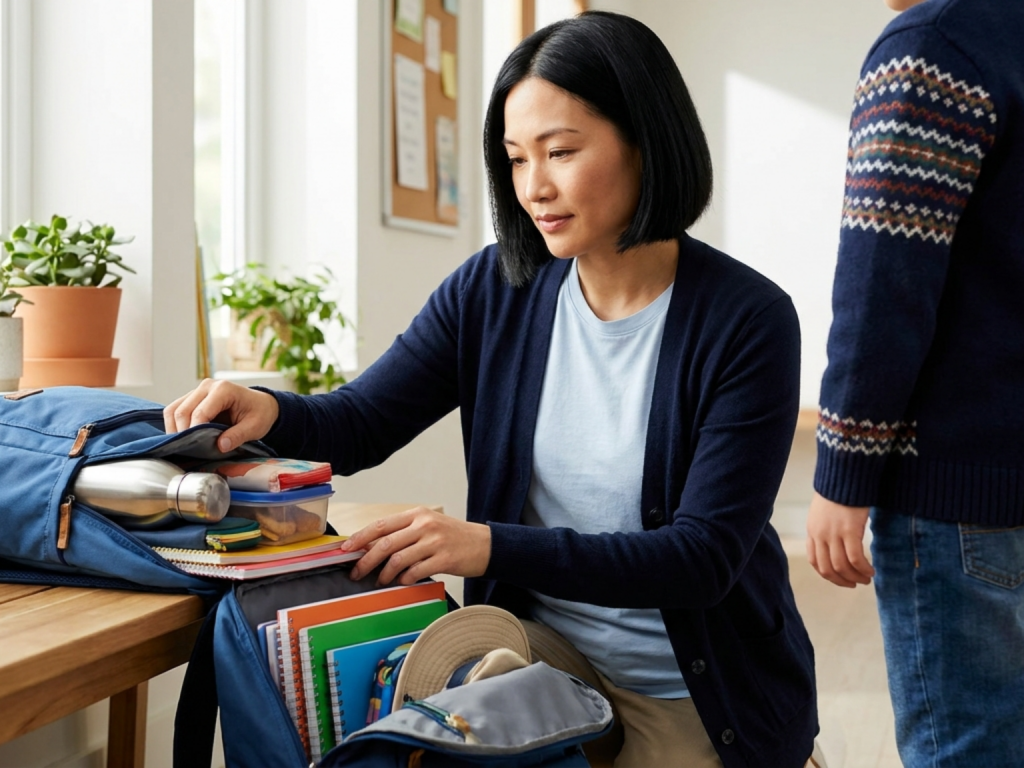
A backpack is more than a container. For a child, it becomes a daily load-bearing device, so fit matters. Choose a backpack that is proportionate to the child’s torso, with two padded shoulder straps, a padded back panel, and enough structure that books do not poke into the spine. A waist or chest strap can help distribute weight, especially for students who walk, use public transit, or carry technology.
Encourage the child to wear both straps. Slinging a heavy backpack over one shoulder can increase asymmetrical loading across the cervical and thoracic spine and may contribute to shoulder discomfort. The bottom of the bag should sit around the lower back, not below the hips. If the child leans forward to compensate, complains of pain, develops numbness or tingling, or has visible red marks from straps, the load or fit needs reassessment.
Pack heavier items closest to the back panel, and use compartments to prevent shifting. A rolling backpack can help some children, but it may be impractical on stairs, crowded buses, or snowy sidewalks. For children with scoliosis, neuromuscular conditions, joint hypermobility, chronic pain, or recent injury, ask a pediatric clinician, physical therapist, or occupational therapist for individualized guidance rather than relying on general packing rules.
Core academic supplies for different school ages
The academic section of the backpack should be simple, predictable, and age appropriate. Most children need a small set of writing tools, a notebook or binder, a folder for home-school papers, and any required textbooks or workbooks. Older students may also need a laptop or tablet, charger, headphones, planner, scientific calculator for math or science courses, and a secure way to carry a student ID or transit card.
For younger children, avoid overpacking. Preschool and early elementary students often benefit from one labeled folder, a change of clothes if requested by the school, and easy-open containers that support independence. Families looking for preschool backpack essentials should prioritize lightweight items, washable materials, and gear the child can open without frustration. Developmentally appropriate preschool products can reduce morning battles because the child can participate in packing and unpacking.
For older children and adolescents, organization becomes a health issue as well as an academic one. A planner or digital task system can reduce cognitive load and help students track assignments, medications due at school, sports gear, and transportation changes. If a child has ADHD, executive function challenges, or anxiety, consider a color-coded folder system and a brief weekly backpack reset. Avoid framing disorganization as laziness; for many children, it reflects a skill that needs scaffolding.
Hydration, snacks, and safe food planning
A reusable water bottle is one of the most useful school items. Hydration supports attention, thermoregulation, and general well-being, especially during warm weather, physical education, sports, or long bus rides. A spill-proof bottle is important because leaking water can damage books, devices, and medication packaging. Choose a bottle the child can open, close, and clean with minimal help.
Snacks should be practical, safe, and consistent with school allergy policies. Fruit, whole-grain crackers, yogurt pouches if temperature control is available, or granola-style bars can help maintain energy between meals. For children with diabetes, metabolic disorders, feeding differences, or a history of hypoglycemia, snack planning should follow the child’s healthcare plan rather than generic advice. If the child has food allergies, ensure allergen labeling is clear, and coordinate with the school about where emergency medications are stored and who is trained to use them.
Food safety matters. Perishable foods may need an insulated lunch bag and cold pack, and caregivers should teach children not to share food if allergies are present in the classroom. For younger children, consider choking risk: hard candies, whole grapes, large chunks of raw vegetables, and sticky foods may be inappropriate depending on age and chewing ability. If swallowing, oral-motor coordination, or growth is a concern, consult the pediatrician or feeding specialist.
Health, hygiene, and comfort items that belong in many backpacks
A small hygiene kit can prevent minor discomfort from becoming a major distraction. Useful items may include tissues, lip balm, hand sanitizer if permitted, menstrual products for students who may need them, hair ties or clips, and a spare mask if the child or school uses masks during respiratory illness seasons. Children with eczema may need fragrance-free moisturizer, but medicated creams should follow school medication rules.
A basic first-aid kit can be helpful for older students, but it should remain simple: a few adhesive bandages, blister pads, and perhaps non-medicated wipes if allowed. Do not pack medications, antibiotic ointments, or topical analgesics without understanding school policy. Many schools require medications to be stored with the nurse, labeled in original packaging, and accompanied by clinician authorization.
Comfort items should be discreet and developmentally appropriate. Younger children may benefit from a small transition object, family photo, or sensory item if the school permits it. Sensory supports during preschool transitions can be especially helpful for children who become overwhelmed by noise, separation, or schedule changes. For children with autism, sensory processing differences, migraines, or anxiety, an occupational therapist or school support team can help determine whether headphones, fidgets, sunglasses, or quiet-space access are appropriate accommodations.
Weather, sun, and outdoor protection
School days often include recess, walking between buildings, outdoor physical education, field trips, or waiting at bus stops. Weather-related gear should match the child’s environment and independence level. A compact rain layer, gloves, hat, or spare socks may be more useful than bulky extras that remain buried at the bottom of the backpack. For young children, labeled seasonal clothing reduces the chance of lost items and makes transitions easier for teachers.
Sun protection is also part of school health. Sunglasses, a brimmed hat if permitted, and sunscreen can help reduce ultraviolet exposure. Sunscreen rules vary by school; some treat it as a self-care product, while others require permission forms. Children who burn easily, take photosensitizing medications, have certain dermatologic conditions, or have a history of significant sun reactions should follow individualized advice from a clinician.
Outdoor safety is not only about weather. Shoes should be appropriate for playground running, stairs, and physical education. Flip-flops or unstable footwear can increase fall risk during active play. For children with orthotics, gait differences, or recurrent ankle sprains, footwear should be discussed with the child’s medical team. A small card with emergency contacts can be useful, but avoid displaying private medical details externally on the backpack unless a healthcare professional and school team recommend a specific medical alert approach.
Identification, technology, money, and transportation essentials
Many students need a secure place for identification, keys, transportation cards, lunch cards, or a small amount of money. A zippered interior pocket is safer than an exterior pouch. Younger children may need a luggage-style tag with caregiver contact information, but avoid making the child’s full name highly visible to strangers. Older students often carry a phone, but families should clarify school rules and expectations for use.
Technology requires planning. If a laptop, tablet, or calculator is required, pack the charger, protective case, and headphones as needed. Teach children to keep liquids in a separate compartment from electronics. If the device is school-issued, document its condition at the start of the year and review the school’s policy for damage, loss, or acceptable use. For children with visual impairment, dysgraphia, hearing differences, or learning disabilities, assistive technology may be part of an educational plan and should be protected like medical equipment.
Transportation gear may include a transit card, bus pass, bike lock, house key, or written after-school plan. For children who travel independently, rehearse what to do if a bus is missed, a phone battery dies, or an adult is late. This overlaps with Emergency preparedness for children: children need calm, concrete steps, not frightening instructions. Keep plans simple and reviewed regularly.
Medical needs, school policies, and when to ask for help
Children with asthma, anaphylaxis risk, seizures, diabetes, migraine, inflammatory bowel disease, mental health needs, or other chronic conditions may require more than a standard gear list. The most important item may be a written action plan shared with the school nurse, teacher, coaches, and after-school staff. Medication access should be arranged according to school policy and local regulations. Do not place rescue medications in a backpack unless the child is authorized to self-carry and the care team agrees they can use them correctly.
For allergies, emergency medications for children should be unexpired, correctly labeled, and stored where trained adults can reach them quickly. For asthma, inhaler technique, spacer availability, and symptom recognition should be reviewed periodically with a clinician. For diabetes, supplies for blood glucose monitoring, insulin administration, rapid carbohydrates, and glucagon should follow the diabetes care plan. These details are individualized and should never be improvised from a generic checklist.
Emotional health also belongs in back-to-school planning. A child who repeatedly reports stomachaches, headaches, sleep disruption, or panic around school may be experiencing anxiety, bullying, learning stress, or another concern that deserves compassionate assessment. The backpack can support coping, but it cannot replace evaluation. If physical symptoms are persistent, severe, or associated with weight loss, fever, neurologic signs, self-harm thoughts, or school refusal, contact a healthcare professional promptly.
A practical packing system that children can maintain
The best backpack system is one the child can actually use. Create zones: one area for books and folders, one for technology, one for food and water, and one small pouch for hygiene or personal items. Use labels for younger children and visual checklists for children who benefit from routine. A weekly clean-out prevents crumbs, lost permission slips, leaking containers, and forgotten wet clothing.
Involve the child in choosing some items, such as pencil pouch color, water bottle style, or folder design, while caregivers set safety boundaries. This supports autonomy without handing over decisions that require adult judgment. For example, a child can choose between two spill-proof bottles, but the caregiver ensures it is cleanable and appropriate for school.
A balanced essential list may include:
- Backpack that fits well and has two usable straps
- Folder, notebook, planner, pencils, pens, and required books
- Device, charger, headphones, and calculator if required
- Reusable spill-proof water bottle
- Nutritious snack that follows allergy rules
- Student ID, transit card, keys, or lunch card if needed
- Tissues, lip balm, hair ties or clips, menstrual products if relevant
- Weather gear, sunscreen, sunglasses, or hat if permitted
- Medical action plan and school-approved supplies for children with health needs
Keep the list flexible. A kindergartener, a middle-school athlete, and a high-school science student need different gear. The shared goal is the same: a lighter, safer, better organized backpack that helps the child move through the day with dignity and confidence.
Safety cautions
- Seek medical advice if backpack use causes persistent pain, numbness, tingling, weakness, or posture changes.
- Do not send medications to school without following school policy and clinician instructions.
- Food allergy, asthma, diabetes, seizure, and other chronic condition supplies should be guided by an individualized care plan.
- Avoid packing choking hazards for young children or children with chewing or swallowing difficulties.
- Do not display a child’s full name or sensitive medical information publicly on the outside of a backpack.
Tools & Assistance
- Schedule a backpack fit check with a pediatrician, physical therapist, or occupational therapist if pain or mobility concerns exist.
- Ask the school nurse for medication, allergy, asthma, and emergency action plan requirements.
- Create a weekly backpack clean-out routine with the child.
- Use a laminated visual checklist for younger children or students with executive function challenges.
- Review transportation and emergency contact plans before the first week of school.
FAQ
How heavy should my child’s backpack be?
There is no single safe number for every child. If the child leans forward, has pain, or develops strap marks, reduce the load and ask a healthcare professional for individualized guidance.
Should my child carry medication in the backpack?
Only if school policy allows it and the child’s healthcare team has authorized self-carry and self-administration. Many medications must be stored with the school nurse.
What should be packed for a child with food allergies?
Follow the child’s written allergy action plan. Coordinate safe snacks, emergency medication access, staff training, and food-sharing rules with the school.
Are rolling backpacks better?
They can help some children with heavy loads, but they may be awkward on stairs, buses, and uneven surfaces. Consider the child’s route and any medical or mobility needs.
How can I help a disorganized child manage school gear?
Use fewer supplies, labeled compartments, color-coded folders, and a weekly reset. If disorganization is severe or distressing, discuss executive function support with the school or clinician.
Sources
- University of Alberta — The essential back-to-school checklist: 10 must-haves for U ...
- Pacific Union College — Your Backpack Essentials
- Gooroo — Backpack Essentials for Returning to School
Disclaimer
This article is for general educational purposes only and is not a substitute for medical diagnosis, treatment, or individualized care. Consult a qualified healthcare professional for concerns about pain, chronic conditions, medications, allergies, or school health plans.














Please log in to leave a comment.