
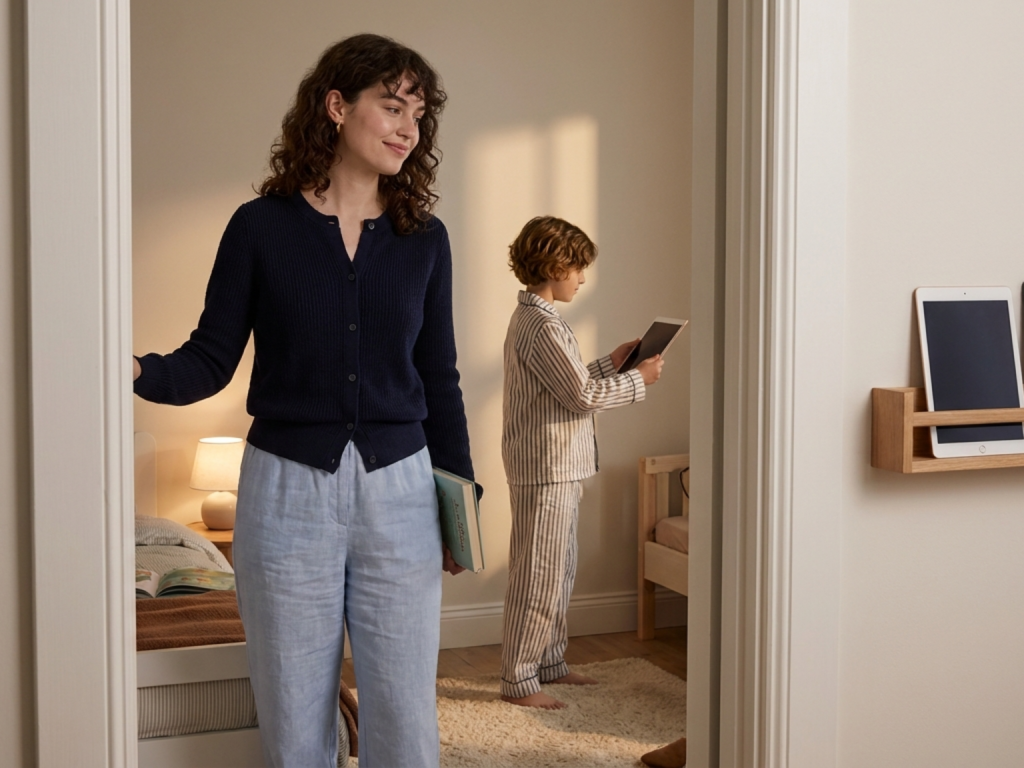
Intro
Technology is now woven into childhood: schoolwork, messaging, games, videos, music, and social connection often happen on a screen. For many families, the difficult part is not whether technology exists, but how to protect sleep, attention, mood, and learning while still allowing children to participate in modern life.
The evidence is increasingly clear that nighttime screen use can delay sleep, shorten total sleep duration, and contribute to daytime sleepiness and cognitive strain. This does not mean parents have failed or that every child needs the same rules. It means children’s brains and circadian systems are still developing, and they benefit from calm, consistent boundaries around devices.
Highlights
Screen use close to bedtime can reduce sleep duration, delay sleep timing, and increase insomnia symptoms in children and adolescents.
Sleep loss can affect attention, executive function, emotional regulation, school performance, and family functioning.
The mechanism is not only blue light; stimulating content, notifications, social stress, and sleep displacement all matter.
A supportive family plan is usually more effective than sudden punishment, especially for older children and teenagers.
Persistent insomnia, severe daytime sleepiness, mood changes, or school decline should be discussed with a qualified healthcare professional.
Why sleep and attention are tightly connected in childhood
Sleep is not passive rest for a child’s brain. During sleep, the nervous system consolidates memory, regulates emotion, restores metabolic balance, and supports neurodevelopmental processes that influence attention and learning. When sleep is shortened or fragmented, children may not simply look tired. They may appear restless, impulsive, irritable, oppositional, emotionally fragile, or unable to sustain focus.
Attention depends on several interacting systems: circadian timing, sleep pressure, prefrontal executive control, emotional regulation, and motivation. A child who slept too little may have difficulty filtering distractions, shifting tasks, remembering instructions, or tolerating frustration. In school-age children, this can resemble poor effort. In adolescents, it may look like low motivation, moodiness, or excessive dependence on caffeine and naps.
This is why sleep attention and technology should be considered together rather than as separate problems. If a child is struggling with concentration, homework completion, morning alertness, or behavior, it is reasonable to ask not only how much screen time they have, but when it occurs, what type of content it involves, and whether devices are interrupting sleep overnight.
How technology disrupts sleep biology
Research on screen use and sleep health shows several pathways by which devices can interfere with sleep. The first is sleep displacement: time spent watching videos, gaming, scrolling, or messaging simply replaces time that would otherwise be used for winding down and sleeping. Even a small delay repeated nightly can create chronic sleep restriction.
The second pathway is cognitive and emotional arousal. Fast-moving games, social media conflict, frightening videos, competitive play, or emotionally charged messages can activate the sympathetic nervous system. A child may put the device down but remain mentally alert, worried, excited, or upset. This increased arousal can lengthen sleep latency, meaning the time it takes to fall asleep.
The third pathway involves light exposure. Evening light from screens can suppress melatonin, a hormone that helps signal biological night. Brightness, duration, proximity to the eyes, and timing all influence the effect. Blue-enriched light is often discussed, but the broader issue is that the brain receives an alerting signal at a time when it should be preparing for sleep.
Finally, devices can fragment sleep after the child has fallen asleep. Notifications, vibration, fear of missing out, and checking messages during the night can interrupt sleep continuity. A bedroom screen-free overnight routine can reduce these micro-awakenings and make sleep more stable.
What the evidence says about screens, sleep, and daytime functioning
Scientific reviews across the lifespan have found that screen use generally predicts poorer sleep outcomes in children and adolescents, including shorter sleep duration, later bedtimes, and more insomnia symptoms. Importantly, some associations have been observed over periods extending up to several years, suggesting that nighttime technology habits can become persistent patterns rather than isolated bad nights.
Studies of bedtime technology use also show clinically relevant effects on sleep quality and daytime sleepiness. Regular use of smartphones, tablets, computers, or television near bedtime has been associated with worse sleep quality, longer sleep latency, and higher risk of excessive daytime sleepiness. Although some of these data come from adult populations, the mechanisms are highly relevant to children, whose sleep needs and self-regulation capacities are still developing.
Children and adolescents often underestimate how much nighttime technology affects them. A teenager may say they can fall asleep with a phone nearby, but still experience delayed sleep, lighter sleep, or next-day fatigue. Younger children may not connect their evening tablet use with morning tantrums or difficulty following classroom routines.
The pattern matters more than a single evening. Occasional late screen use during travel or a family event is different from nightly bedtime scrolling, gaming after lights-out, or sleeping with a phone under the pillow. Repeated exposure creates a behavioral loop: late screen use delays sleep, poor sleep worsens attention and mood, and fatigue increases the temptation to use passive or stimulating screen content the next day.
Long-term effects on attention, learning, and emotional regulation
Long-term concerns arise when sleep disruption becomes chronic. Children who regularly sleep less than they need may struggle with sustained attention, working memory, processing speed, and cognitive flexibility. These functions are central to reading comprehension, mathematics, planning, impulse control, and completing multi-step tasks.
Sleep restriction can also amplify emotional reactivity. A tired child may cry more easily, argue more intensely, or have difficulty calming after disappointment. Adolescents may show irritability, anxiety symptoms, low mood, or withdrawal. Sleep problems do not prove the presence of a psychiatric disorder, but they can worsen vulnerability and complicate existing mental health concerns.
There may also be behavioral conditioning over time. If a child learns that sleep begins only after videos, gaming, or social media, the brain may associate bedtime with stimulation rather than recovery. This can make it harder to tolerate quiet, boredom, or natural drowsiness. For some children, especially those with anxiety, neurodevelopmental differences, or high academic stress, screens may become a coping tool that feels helpful in the moment but perpetuates delayed sleep onset.
Chronic sleep restriction in preteens and teens can affect family life as well. Morning routines become harder, school attendance may suffer, homework may stretch late into the evening, and conflict about devices can increase. A compassionate approach recognizes that the child may be caught in a physiologic and behavioral cycle, not simply choosing to be difficult.
Age-specific vulnerabilities and family context
Preschool and early school-age children often need adult help to transition away from stimulating activities. They may not understand time limits, persuasive app design, or the connection between evening screens and next-day behavior. For them, predictable routines and parent-led boundaries are especially important.
Preteens face a different challenge. They are developing independence but may still have limited impulse control and high sensitivity to peer comparison. Late bedtime habits in preteens can emerge when homework, gaming, messaging, and videos all compete with the bedtime routine. A family charging station outside bedrooms can be a practical environmental solution rather than a nightly argument.
Adolescents have a biologic tendency toward later sleep timing during puberty, while early school schedules often force early wake times. This makes screen use and adolescent sleep particularly vulnerable to disruption. Social media, group chats, gaming communities, and academic platforms can all extend into the night. For teens, collaborative rules work better than rules that feel arbitrary. Discuss the goal: protecting mood, concentration, driving safety, sports performance, and mental health.
Family context matters. Caregivers may use screens for work, communication, safety, or brief relief during stressful evenings. The aim is not perfection or guilt. A realistic plan considers housing, school demands, parental work schedules, shared bedrooms, and a child’s temperament. Small changes, consistently applied, often have more impact than dramatic restrictions that cannot be maintained.
Practical ways to protect sleep without creating a battle
A digital curfew before bedtime is one of the most useful starting points. Many sleep educators recommend stopping recreational screen use 30 to 60 minutes before bed. Some children need longer, especially if they become emotionally activated by games, videos, or social media. The goal is to allow melatonin signaling, reduce cognitive arousal, and rebuild a predictable wind-down period.
Families can make this easier by changing the environment rather than relying only on willpower. Consider the following strategies:
- Keep phones, tablets, laptops, and gaming devices out of bedrooms overnight when possible.
- Use a shared charging area in the kitchen, hallway, or caregiver’s room.
- Turn off nonessential notifications in the evening.
- Replace bedtime scrolling with reading, quiet music, drawing, stretching, or a calm conversation.
- Keep wake time and bedtime as consistent as possible, including weekends within reason.
Children are more likely to cooperate when they know what they are gaining. Instead of saying only, “screens are bad,” try explaining that sleep helps the brain focus, remember, grow, and manage big feelings. For adolescents, connect sleep to goals they care about: athletic recovery, skin health, grades, friendships, emotional resilience, and safer reaction time.
It also helps to separate educational screen use from recreational use. Homework may require a device, but multitasking with messages or videos can extend work and increase digital distraction during homework. A structured plan might include homework in a visible common area, short breaks with physical movement, and recreational screens only after essential tasks are complete and well before bedtime.
When to seek professional help
Many sleep and attention problems improve with consistent routines, reduced nighttime screen exposure, and better morning structure. However, some children need professional assessment. Families should consult a pediatrician, sleep medicine clinician, psychologist, psychiatrist, or other qualified professional if concerns are persistent, severe, or worsening.
Medical evaluation is especially important when a child has loud snoring, pauses in breathing, restless legs, frequent night waking, recurrent nightmares, marked daytime sleepiness, fainting episodes, seizures, significant anxiety, depression symptoms, school refusal, or sudden changes in behavior. Attention difficulties can have many causes, including insufficient sleep, anxiety, depression, ADHD, learning disorders, trauma, medication effects, iron deficiency, thyroid disease, and sleep disorders such as obstructive sleep apnea or circadian rhythm sleep-wake disorders.
Clinicians may ask about sleep duration, bedtime routine, wake time, caffeine, exercise, mood, school demands, device use, and family stressors. A sleep diary can be helpful. The aim is not to blame technology for every concern, but to identify modifiable contributors while ensuring that medical, developmental, and mental health needs are not missed.
If a family has already tried a reasonable screen and sleep plan but a child continues to struggle, that is not a failure. It is useful clinical information. Supportive care can include behavioral sleep strategies, mental health support, school accommodations, evaluation for neurodevelopmental conditions, or referral to sleep medicine when indicated.
Red flags that deserve prompt attention
- Severe daytime sleepiness, falling asleep in class repeatedly, or unsafe drowsiness during activities.
- Loud snoring, gasping, witnessed pauses in breathing, or restless sleep with morning headaches.
- New or worsening depression symptoms, self-harm thoughts, panic, or major withdrawal from usual activities.
- Rapid decline in school performance, attention, or behavior despite improved sleep routines.
- Nighttime device use that involves bullying, coercion, sexual exploitation, or unsafe contacts.
Tools & Assistance
- Create a written family media plan with bedtime rules and exceptions.
- Use a shared charging station outside bedrooms for overnight devices.
- Keep a two-week sleep diary noting bedtime, wake time, screens, caffeine, mood, and daytime sleepiness.
- Ask a pediatrician or sleep specialist about persistent insomnia, snoring, or excessive daytime sleepiness.
- Work with the school if sleep loss is affecting attendance, attention, or learning.
FAQ
Is blue light the only reason screens affect sleep?
No. Light matters, but sleep displacement, stimulating content, notifications, social stress, and emotional arousal are also important.
How long before bed should children stop using screens?
A 30 to 60 minute digital curfew before bedtime is a reasonable starting point. Some children need a longer wind-down period.
Should a child’s phone be removed from the bedroom overnight?
For many families, yes. Keeping devices outside the bedroom can reduce nighttime checking, notifications, and sleep fragmentation.
Can poor sleep look like attention problems?
Yes. Insufficient or disrupted sleep can impair focus, impulse control, memory, and emotional regulation. A clinician can help evaluate persistent concerns.
What if screens are needed for homework?
Separate required school use from recreational use. Use visible workspaces, notification limits, planned movement breaks, and a clear stop time before bed.
Sources
- Sleep Health — The impact of screen use on sleep health across the lifespan
- National Center for Biotechnology Information — The impact of bedtime technology use on sleep quality and excessive daytime sleepiness
- National Sleep Foundation — Screen time and sleep: What new studies reveal
Disclaimer
This article is for educational purposes only and does not diagnose or treat medical conditions. Consult a qualified healthcare professional for persistent sleep, attention, mood, or developmental concerns.
















Please log in to leave a comment.