
Intro
A child’s school environment is not only a place for lessons. It is a daily neurodevelopmental setting where relationships, safety, routines, expectations, movement, nutrition, peer culture, and physical space interact with a child’s brain and body. For many children, school can be protective and confidence-building; for others, it may become a source of chronic stress if the climate feels unsafe, unpredictable, or excluding.
This article explains how school environments can influence cognition, emotional regulation, social development, motor creativity, and well-being. It is written for readers who are comfortable with medical and developmental terminology, while keeping the practical message clear: children thrive when school systems combine academic challenge with psychological safety, responsive adults, and timely support.
Highlights
School climate can influence learning through both social mechanisms, such as belonging and trust, and biological mechanisms, including brain network development.
Supportive teacher-student relationships are strongly connected with emotional safety, motivation, creativity, and a child’s willingness to try difficult tasks.
Stressful school experiences do not affect every child in the same way; temperament, neurodevelopmental profile, family context, health, and prior adversity all matter.
Families and schools can often improve outcomes by noticing patterns early, communicating respectfully, and involving pediatric, mental health, or educational professionals when concerns persist.
Why the school environment matters biologically
Children’s brains develop in continuous interaction with their surroundings. School provides repeated daily inputs: language exposure, problem-solving, peer negotiation, feedback from adults, physical activity, sensory stimulation, and stress recovery opportunities. These inputs can affect neuroplasticity, the brain’s capacity to strengthen, prune, and reorganize neural connections in response to experience.
Research led by Stanford has linked school environment quality with differences in white matter development, even after controlling for socioeconomic factors. White matter consists of myelinated neural pathways that support efficient communication between brain regions. In the study, higher-performing schools were associated with accelerated white matter development in areas relevant to reading. This does not mean a school can determine a child’s destiny, but it supports an important principle: educational settings are biologically active environments, not neutral backdrops.
Learning is therefore not simply a matter of intelligence or effort. A child who feels safe, receives clear instruction, and has access to appropriate academic scaffolding may engage executive functions more effectively. These include working memory, inhibitory control, cognitive flexibility, planning, and sustained attention. Conversely, chronic stress, humiliation, bullying, sensory overload, or persistent mismatch between demands and skills can divert physiological resources toward threat monitoring rather than learning.
This is especially relevant for children with developmental language disorder, ADHD, autism spectrum differences, anxiety, chronic illness, sleep disruption, or a history of trauma. Their nervous systems may require more predictable routines, explicit expectations, movement breaks, or relational buffering to access the same curriculum. A supportive school environment does not lower expectations; it makes learning demands developmentally reachable.
Safety, belonging, and the whole child
School climate refers to the felt experience of school: whether students perceive adults as fair, whether differences are respected, whether discipline is predictable, and whether asking for help feels safe. The Learning Policy Institute describes supportive school climates as those that build culturally responsive communities, relational trust, and a sense of belonging. These features are not soft extras; they influence attendance, engagement, academic persistence, and social-emotional development.
Belonging can reduce cognitive load. When a child is preoccupied with exclusion, stereotype threat, or fear of ridicule, attention is divided. Stereotype threat occurs when a student worries about confirming a negative stereotype about a group they belong to; this worry can impair performance even when ability is strong. Restorative discipline, advisory systems, and strong adult-student relationships can help create safety while still maintaining accountability.
The social brain develops through repeated relational experiences. Consistent, respectful teacher-student relationships can support co-regulation, the process by which a regulated adult helps a child’s nervous system return toward calm. Over time, co-regulation contributes to self-regulation. In practical terms, a child learns, “I can make a mistake and repair it,” rather than “A mistake means I am unsafe or bad.”
School belonging and mental well-being are closely connected, but emotional distress should never be dismissed as ordinary school dislike. If a child has persistent school refusal, panic symptoms, unexplained somatic complaints, withdrawal, self-harm comments, or sudden academic decline, families should seek assessment from qualified professionals. The goal is not to pathologize normal stress, but to identify when stress is exceeding the child’s coping capacity.
Physical space, movement, and sensory regulation
The physical school environment also shapes children’s functioning. Lighting, acoustics, crowding, temperature, classroom layout, access to outdoor areas, and the availability of quiet spaces can influence attention and arousal. Some children can filter noise and visual stimulation easily; others experience sensory load as exhausting or dysregulating. For a child with migraine, auditory sensitivity, autism, anxiety, or sleep deprivation, a loud cafeteria or chaotic hallway may be more than an inconvenience.
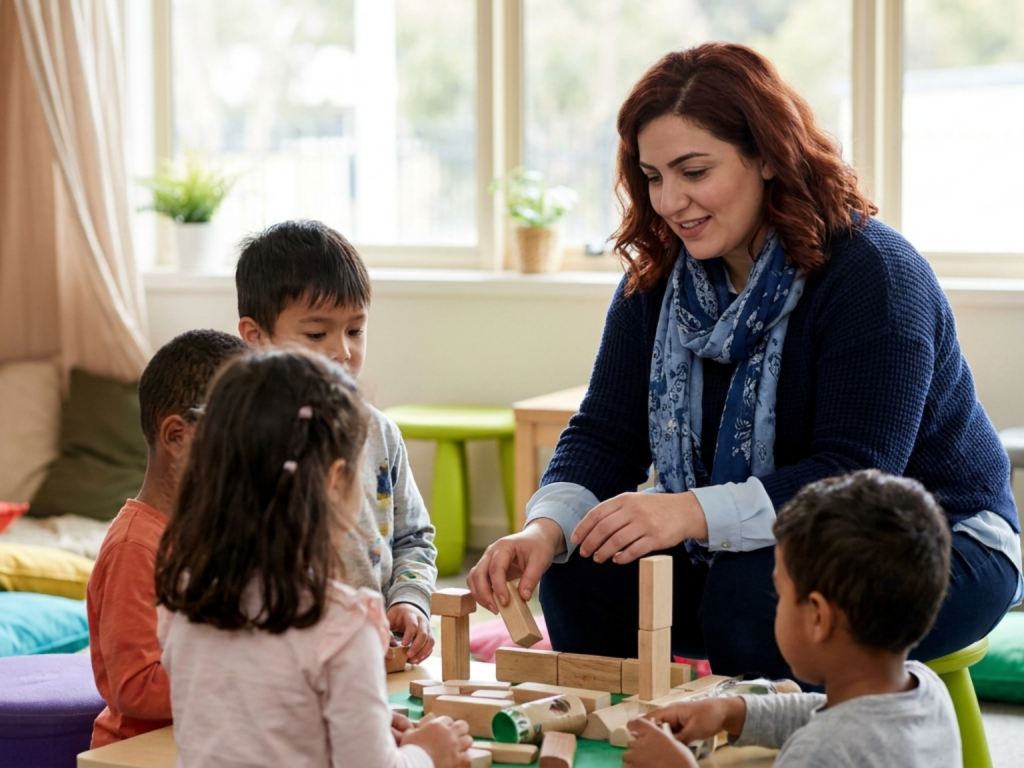
Movement is not separate from learning. Motor activity supports arousal regulation, vestibular and proprioceptive input, social play, and body confidence. In preschool and early primary years, movement-rich environments contribute to exploration, imagination, and problem-solving. A peer-reviewed study on preschool children found that supportive teacher-student interactions were important for motor creativity, while conflict and dependency could undermine the psychological safety needed for experimentation.
Motor creativity means more than athletic skill. It includes the ability to invent movements, adapt actions, explore space, and solve physical challenges. These capacities relate to confidence, autonomy, and flexible thinking. A child who is encouraged to try, modify, and try again learns that the body can be a tool for discovery rather than a source of embarrassment.
Practical features that may help include varied seating, predictable transitions, outdoor play, developmentally appropriate recess, calm corners, visual schedules, and opportunities for hands-on learning. These supports are not only for children with identified disabilities. Many children show better emotional regulation and academic engagement when the environment respects basic neurophysiology: bodies need movement, brains need breaks, and attention is easier when sensory demands are manageable.
Academic expectations, stress physiology, and motivation
Healthy academic challenge can strengthen persistence and self-efficacy. However, when expectations are chronically mismatched to a child’s developmental stage or learning profile, stress systems may become overactivated. The hypothalamic-pituitary-adrenal axis helps coordinate cortisol release during stress. Short bursts can be adaptive; prolonged activation can interfere with sleep, mood, memory consolidation, immune function, and appetite.
Children often communicate school stress indirectly. They may report headaches or abdominal pain, become irritable after school, avoid homework, lose confidence, or show perfectionism. Some appear oppositional when they are actually overwhelmed. Others mask distress at school and then collapse emotionally at home. These patterns deserve curiosity rather than blame.
Academic pressure is not only about grades. It may come from fast pacing, frequent testing, unclear instructions, public correction, excessive homework, or limited opportunity for revision. Children with dyslexia, dyscalculia, ADHD, language difficulties, or processing speed differences may work harder than peers while appearing careless or unmotivated. Persistent reading and math difficulties should prompt appropriate educational evaluation rather than repeated moral messaging about effort.
Motivation is strongest when children experience competence, autonomy, and relatedness. Competence means tasks feel challenging but possible. Autonomy means the child has some meaningful choice or ownership. Relatedness means adults communicate, “You matter here.” These conditions support intrinsic motivation and reduce avoidance. Families discussing concerns with schools can ask what supports are available before assuming the child is simply unwilling.
Peer culture, bullying, and social development
Peers become increasingly influential across childhood. A positive peer culture can teach cooperation, empathy, humor, conflict resolution, and identity formation. A harmful peer culture can contribute to anxiety, shame, aggression, loneliness, and school avoidance. Bullying, exclusion, cyberbullying, discriminatory comments, and repeated humiliation are not harmless rites of passage; they can affect mental health and learning.
Children may hesitate to disclose peer problems because they fear retaliation, believe adults will not help, or feel embarrassed. Signs can include sudden reluctance to attend school, lost belongings, changes in eating or sleep, declining grades, unexplained injuries, social withdrawal, or intense distress after using a device. These signs are nonspecific and do not prove bullying, but they warrant gentle, repeated conversation and coordination with school staff.
Social development is also shaped by how adults respond to conflict. Punitive approaches alone may suppress behavior without teaching repair, empathy, or accountability. Restorative approaches, when implemented carefully and safely, can help students understand harm and rebuild trust. However, restorative processes should never pressure a victimized child into unsafe contact or premature forgiveness.
Children with visible differences, disabilities, neurodivergent traits, minority cultural or linguistic identities, chronic illness, or gender-related stressors may need specific protection from exclusion. A school’s response should include supervision, clear policies, documentation, family communication, and emotional support. When peer stress is affecting mood, sleep, appetite, self-worth, or safety, consultation with a pediatrician, child psychologist, counselor, or other qualified clinician is appropriate.
How families can respond constructively
When a child seems affected by the school environment, it helps to move from blame to pattern recognition. Families can track when symptoms occur, which classes or transitions are hardest, how sleep and appetite change, and whether weekends or holidays improve the child’s functioning. This information can help distinguish academic mismatch, peer conflict, sensory overload, schedule-related fatigue, medical issues, or anxiety-related patterns.
Start with the child’s lived experience. Questions such as “When does school feel easiest?” and “When does your body start to feel worried or tired?” are often more useful than “Why don’t you like school?” Younger children may need drawings, play, or simple rating scales. Adolescents may need privacy, respect, and reassurance that adults will not overreact without involving them.
Collaborative school meetings can focus on observations and supports: seating, reduced sensory load, check-ins with a trusted adult, movement breaks, targeted reading support, peer safety planning, or adjusted homework expectations during a difficult period. For school transitions in children, planning may include visits, visual schedules, relationship maps, and gradual exposure to new routines.
Health factors should also be considered. Vision problems, hearing loss, anemia, sleep disorders, chronic pain, medication effects, seizures, anxiety, depression, and neurodevelopmental differences can all appear as school difficulty. School nutrition habits and school-day hydration may affect concentration and mood. If concerns are persistent, escalating, or impairing daily life, families should consult healthcare and educational professionals rather than relying on reassurance alone.
Most importantly, children need to know that struggling at school does not mean they are broken. A thoughtful response can protect dignity while identifying what needs to change. Understanding school life stages helps adults adjust expectations as children move from play-based learning to structured academics, then into adolescence, identity formation, and greater social complexity.
When to seek extra help
- Persistent school refusal, panic symptoms, or severe distress before school should be discussed with a healthcare or mental health professional.
- Any talk of self-harm, hopelessness, or wanting to disappear requires urgent professional support.
- Sudden academic decline, withdrawal, or major behavior change may reflect medical, emotional, learning, or safety concerns.
- Repeated bullying, discrimination, or threats should be documented and addressed promptly with the school.
- Unexplained headaches, abdominal pain, fatigue, or sleep disruption that continues should be evaluated medically.
Tools & Assistance
- Keep a brief school pattern log noting sleep, symptoms, difficult times of day, peer issues, and recovery after school.
- Request a collaborative meeting with the teacher, school counselor, special education team, or administrator when concerns persist.
- Ask about classroom supports such as predictable routines, movement breaks, quiet spaces, academic scaffolding, or trusted-adult check-ins.
- Consult a pediatrician, child psychologist, developmental specialist, or educational evaluator if symptoms are impairing daily life.
- Use child-friendly communication tools such as emotion scales, drawings, visual schedules, and problem-solving conversations.
FAQ
Can a school environment really affect a child’s brain development?
Yes. Research suggests school environments can influence neural pathways involved in learning, including white matter development. This does not mean school is the only factor, but it is a meaningful developmental context.
How can I tell whether my child is stressed by school or just having normal ups and downs?
Look for persistence, intensity, and impairment. Occasional complaints are common, but ongoing distress, avoidance, somatic symptoms, sleep changes, or declining functioning deserve closer attention.
Should I change schools if my child is unhappy?
Sometimes a change helps, but it is usually best to first identify the pattern: academics, peers, sensory load, safety, health, or transition stress. Discuss options with school staff and relevant professionals.
What is the most protective feature of a school environment?
There is no single feature for every child, but strong, respectful adult-child relationships are consistently important because they support safety, regulation, motivation, and help-seeking.
Can supportive school environments help children with neurodevelopmental differences?
Yes. Predictable routines, clear instructions, sensory supports, movement opportunities, and individualized learning strategies can reduce overload and improve access to learning.
Sources
- Stanford Graduate School of Education — Stanford-led study links school environment to brain development
- Learning Policy Institute — Educating the Whole Child: Improving School Climate to Support Student Learning and Development
- National Center for Biotechnology Information (PMC) — The Role of School Environment on the Sustainable Development of Motor Creativity in Preschool Children
Disclaimer
This article is for informational purposes only and does not replace medical, psychological, or educational evaluation. Consult qualified professionals for concerns about a child’s health, safety, learning, or development.















Please log in to leave a comment.