
Intro
Poison safety is one of those topics that can feel alarming because many hazards are ordinary household items: medicines, cleaning products, cosmetics, batteries, pesticides, alcohol, and even invisible gases such as carbon monoxide. The reassuring truth is that most childhood poison exposures are preventable with a layered approach: safe storage, attentive habits, caregiver communication, and knowing exactly what to do in an emergency.
Highlights
Young children are at higher risk because they explore by touching and mouthing objects, and they may not distinguish medicine or chemicals from food or drinks.
Child-resistant caps reduce risk, but they are not childproof; locked storage and immediate return after use are safer habits.
If a child may have been poisoned, seek expert help promptly rather than waiting for symptoms to appear.
Carbon monoxide deserves special attention because it is invisible and odorless, so detectors and appliance maintenance are essential.
Why children are vulnerable to poisoning
Children are not simply smaller adults when it comes to poisoning risk. Their developmental stage, body size, behavior, and physiology all matter. Infants and toddlers investigate the world with their mouths, imitate adult routines, and have limited ability to understand hazard warnings. Preschoolers may climb, open drawers, and test containers with surprising skill. School-age children may be curious about chemicals, plants, or medicines and may share items with siblings or friends without appreciating toxicity.
Dose also matters. A quantity that seems small to an adult may be clinically significant in a young child because exposure is measured relative to body weight. Some substances, including certain cardiovascular medicines, opioids, sedatives, iron-containing supplements, concentrated cleaning agents, and hydrocarbons, can cause serious harm even in small amounts. Other exposures may appear mild initially but worsen later, which is why professional poison advice is so important.
Poisoning prevention in children should not rely on a child’s obedience or memory. Even well-taught children have impulsive moments, especially when hungry, tired, excited, or unsupervised for a short time. A safer strategy is to design the environment so that dangerous substances are inaccessible before curiosity meets opportunity.
Common household poisons to recognize
Most pediatric poison exposures occur in familiar places. Medicines are a leading concern: prescription drugs, over-the-counter pain relievers, cough and cold preparations, vitamins, iron supplements, topical anesthetics, essential oils, and medicines belonging to visitors can all be hazardous. A tablet dropped on the floor or a pill organizer left on a bedside table may be enough to create risk.
Household chemicals are another major category. Bleach, drain cleaners, dishwasher detergents, laundry pods, oven cleaners, disinfectants, pesticides, antifreeze, fuels, solvents, and pool chemicals can irritate or burn skin, eyes, airways, and the gastrointestinal tract. Laundry and dishwasher pods are especially tempting to young children because they are small, colorful, and squeezable, yet their concentrated contents may be caustic or irritating.
Personal care and lifestyle products also deserve attention. Perfumes, nail products, hair products, mouthwash, nicotine products, cannabis edibles, alcohol, hand sanitizer, and some cosmetics can cause toxicity depending on the amount and formulation. Button batteries and magnets are not classic poisons, but ingestion can be life-threatening and should be treated as urgent.
Do not overlook plants, mushrooms, gardening products, and outdoor chemicals. Outdoor safety for children includes checking sheds, garages, balconies, and patios, where pesticides, fertilizers, fuel, and plant toxins may be stored less securely than indoor medicines.
Safe storage: the foundation of poison prevention
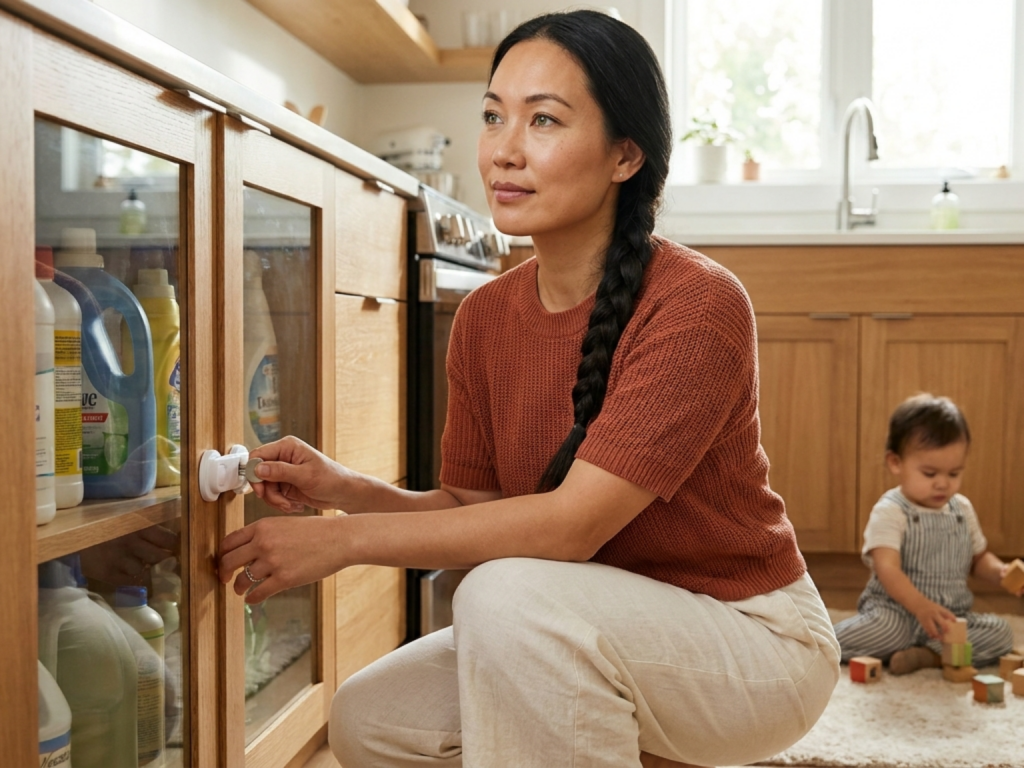
The safest storage principle is simple: high, locked, and out of sight. Medicines, vitamins, cleaning products, pesticides, alcohol, nicotine, and cannabis products should be kept in locked cabinets or lockable boxes, ideally above a child’s reach. However, height alone is not enough; children can move chairs, climb shelves, and reach counters. Treat counters, handbags, backpacks, bedside tables, and bathroom drawers as accessible unless proven otherwise.
Keep products in their original containers with labels intact. Transferring chemicals into drink bottles, food jars, or old soda containers can lead to mistaken ingestion by children and adults. Original packaging also helps poison specialists identify ingredients quickly if an exposure occurs. After each use, close the container fully and return it immediately to locked storage. Do not leave medicine or chemicals out because you plan to use them again in a few minutes.
Child-resistant caps are not childproof. They are designed to slow access, not prevent it completely. Caps must be properly re-secured after every use, and damaged containers should be replaced. Avoid calling medicine “candy” or “lollies” to encourage cooperation; this may make a child more likely to seek it later. Instead, use neutral, honest language such as “medicine is only for the person whose name is on it, and only when an adult gives it.”
Visitors’ belongings need a plan. Grandparents, babysitters, friends, and contractors may bring medicines, nicotine, or personal products in bags or coat pockets. Provide a safe place for bags and coats that children cannot access.
Medicine safety in daily routines
Medicine safety is a daily habit, not a one-time childproofing task. Prepare and give medicines in a well-lit area, using the correct measuring device, and avoid leaving tablets, bottles, syringes, or patches unattended. If interrupted, take the medicine with you or secure it before responding. This is especially important during busy morning and bedtime routines, when errors and exposures are more likely.
Store adult and child medicines separately when possible. Pill organizers can be helpful for adherence but are often easy for children to open, so they should be locked away like any other medication. Used medication patches, such as opioid or nicotine patches, may still contain active drug and should be disposed of according to professional or product guidance.
Expired or unused medicines should be removed from the home through pharmacy or community take-back programs when available. Flushing medicines is generally not preferred unless specific instructions say otherwise, because it can affect waterways and may not be appropriate for many products. If take-back is not available, ask a pharmacist or local health authority about safer disposal options.
Caregivers should communicate clearly about dosing. Double-dosing can occur when one adult does not know another has already given a medicine. A written medication log, especially during illness, can reduce confusion. If a dosing error happens, contact a poison center, pharmacist, doctor, or emergency service for case-specific advice rather than estimating risk alone.
Cleaning products, chemicals, and the kitchen-bathroom trap
Kitchens, bathrooms, laundries, and garages often contain concentrated products within a child’s reach. Under-sink cabinets are convenient for adults but unsafe unless locked. Safety latches can help, but a locked cabinet is stronger protection for high-risk substances. The same applies to laundry rooms, where detergent pods, stain removers, bleach, and disinfectants may be stored near the floor.
Never mix cleaning products unless the label specifically instructs it. Combining chemicals can release toxic gases, such as chlorine or chloramine vapors, which can irritate the eyes and respiratory tract and may be dangerous for children with asthma or other respiratory conditions. Use products with ventilation, keep children away during use, and wipe residues from surfaces that young children may touch or mouth.
When cleaning is interrupted, pause safely. Put the cap on, move the product out of reach, and then attend to the child. Many exposures happen during brief moments when a bottle is open on the floor, a bucket is filled, or a pod is left on a bench. Rinse measuring cups or cleaning tools that might be mistaken for food utensils, and store them separately.
Garages and sheds require the same vigilance as indoor rooms. Fuels, solvents, paints, pesticides, and automotive products should remain in original containers and locked storage. This is also part of a broader room-by-room safety checklist for families who want to address Common safety risks for children in a practical way.
Carbon monoxide and inhaled poisons
Carbon monoxide is a particularly dangerous poison because it has no color, smell, or taste. It can come from malfunctioning or poorly ventilated fuel-burning appliances, heaters, fireplaces, generators, grills, and vehicles. Symptoms may include headache, dizziness, nausea, weakness, confusion, chest discomfort, or loss of consciousness, but children may not describe symptoms clearly. Multiple people or pets becoming unwell in the same location is a red flag.
Install carbon monoxide detectors on each level of the home and near sleeping areas according to local guidance and manufacturer instructions. Test detectors regularly, replace batteries when needed, and replace units at the end of their service life. Fuel-burning appliances should be inspected and serviced regularly by qualified professionals. Never use outdoor grills, camp stoves, or generators inside the home, garage, or near windows.
Smoke and chemical inhalation hazards overlap with fire safety. Families who practice Fire safety for children explained concepts, such as responding to alarms and leaving the home promptly, can incorporate carbon monoxide alarm response into the same emergency planning. If a carbon monoxide alarm sounds or poisoning is suspected, move everyone to fresh air immediately and contact emergency services or local poison advice.
What to do if poisoning is suspected
If you think a child has swallowed, inhaled, touched, or splashed a toxic substance, act quickly and calmly. Remove the child from ongoing exposure if it is safe to do so. Take the product away, but keep the container or label available for identification. Do not induce vomiting unless a poison specialist or clinician specifically instructs you to do so. Do not give food, drink, or home remedies without advice.
For skin exposure, remove contaminated clothing and rinse the skin with running water. For eye exposure, rinse the eye gently with clean running water and seek urgent guidance. For inhaled exposure, move the child to fresh air. If the child has severe symptoms such as collapse, difficulty breathing, seizure, severe drowsiness, or unresponsiveness, call emergency services immediately.
In the United States, Poison Control can be reached at 1-800-222-1222. In Australia, the Poisons Information Centre can be reached at 13 11 26, and triple zero, 000, should be called for life-threatening symptoms. If you are in another country, learn and store your local poison center and emergency numbers before an incident occurs.
When seeking help, be ready to share the child’s age and weight, the substance name and strength if known, the amount involved, the route of exposure, the time of exposure, current symptoms, and any medical conditions or medicines. If advised to go to urgent care or an emergency department, bring the container or a photo of the label.
Teaching children without creating fear
Children benefit from clear, calm rules repeated often. The goal is not to frighten them, but to make safety language familiar. Use simple phrases: “Ask before you taste,” “Only adults give medicine,” and “If you find something, do not touch it; tell an adult.” Role-play can help preschool and school-age children practice what to do if they find a pill, a colorful pod, a mushroom, or an open bottle.
Avoid relying on poison symbols, bitter taste, or smell as protective cues. Some dangerous substances smell pleasant, look like drinks, or are packaged attractively. Conversely, some harmless items may look concerning. Children need a consistent rule rather than a judgment task.
All caregivers should use the same plan. Babysitters, relatives, separated co-parents, and childcare providers need to know where hazards are stored, where emergency numbers are posted, and how to respond. Poison safety works best when it is woven into a home safety plan for children: locked storage, supervision during high-risk tasks, emergency contacts, and routine checks after visitors or household changes.
Finally, give yourself compassion. Poison prevention is not about perfect parenting; it is about building systems that catch ordinary human lapses. A locked cabinet, a take-back bag for old medicines, and a saved poison center number can turn a stressful moment into a manageable one.
Seek urgent help now if
- The child is unconscious, difficult to wake, having a seizure, or breathing abnormally.
- A button battery, multiple magnets, opioid, sedative, or unknown medicine may have been swallowed.
- A caustic chemical, pesticide, fuel, or concentrated detergent was ingested or splashed in the eyes.
- Carbon monoxide exposure is possible, especially if more than one person feels unwell.
- You are unsure what happened; call a poison center or emergency service rather than waiting.
Tools & Assistance
- Save your local poison center number in every caregiver’s phone.
- Use locked boxes or locked cabinets for medicines and chemicals.
- Schedule regular disposal of expired or unused medicines through take-back options.
- Install and test carbon monoxide detectors on each level of the home.
- Keep product containers or label photos available when calling for advice.
FAQ
Should I make a child vomit after swallowing something toxic?
No, not unless a poison specialist or clinician specifically tells you to. Vomiting can worsen injury with some substances, especially caustics or hydrocarbons.
Are child-resistant caps enough?
No. They can slow a child down, but they are not childproof. Medicines and chemicals should still be locked away and returned immediately after use.
What information will Poison Control or a poison center need?
They may ask the child’s age and weight, the substance, the estimated amount, the time and route of exposure, symptoms, and relevant medical history.
Can natural products or essential oils poison children?
Yes. Natural does not always mean safe. Some essential oils, supplements, and plant products can be toxic, especially in small children.
Where should emergency numbers be kept?
Store them in caregiver phones and place them somewhere visible at home, such as near the kitchen or medicine storage area, without relying only on memory.
Sources
- Better Health Channel — Poisoning and child safety
- Lurie Children's Hospital — Poison Prevention: Keeping Kids Safe
- NYU Langone Health — Preventing Poisoning in Children
Disclaimer
This article is for general educational information and is not a substitute for professional medical advice, diagnosis, or treatment. If poisoning is suspected, contact a poison center, emergency service, or healthcare professional promptly.















Please log in to leave a comment.