
Intro
Home is where children should feel secure, curious, and loved, yet it is also where many preventable injuries happen. Keeping children safe at home is not about creating fear or removing every normal childhood experience; it is about matching the environment to a child’s developmental stage, supervising thoughtfully, and preparing adults to respond calmly when risks arise.
Families are busy, homes are different, and no caregiver can watch every movement every second. A practical home safety plan combines prevention, predictable routines, age-appropriate teaching, and clear emergency steps. If your child has medical complexity, developmental delay, sensory needs, mobility differences, or a history of injury, consider asking your pediatrician or relevant specialist for individualized safety advice.
Highlights
The most effective home safety strategy is layered: active supervision, safer room design, secure storage, and regular practice of emergency routines.
Risks change quickly as children learn to roll, crawl, climb, open containers, use appliances, or seek privacy.
Water, choking hazards, medications, chemicals, burns, falls, fires, and firearms deserve special attention because injuries can occur rapidly.
Safety rules work best when every caregiver understands who is supervising, what hazards are present, and what to do in an emergency.
Start with development, supervision, and a safer environment
Child safety begins with a realistic understanding of development. Infants explore with their mouths, toddlers climb before they understand danger, preschoolers imitate adults, and school-age children may overestimate their judgment. A home that was safe for a newborn may be unsafe for a crawling infant; a room that was safe for a toddler may need changes when a child can open doors, reach counters, or move chairs to climb.
Active supervision is more than being in the same building. It means knowing which adult is responsible at that moment, especially during handoffs between parents, relatives, babysitters, or older siblings. Ambiguous supervision is a common safety gap: one caregiver assumes another is watching while a child enters a bathroom, kitchen, garage, balcony, or yard. When caregivers change, say clearly, “You are watching the baby now,” and confirm the response.
Use a room-by-room checklist at child height. Get down on the floor and look for small objects, cords, sharp corners, unstable furniture, reachable medicines, cleaning products, plastic bags, coins, batteries, magnets, and choking-size toys. Secure heavy furniture and televisions to wall studs with anti-tip hardware. Install safety gates at the top and bottom of stairs when appropriate, and use window guards or window stops where falls are possible. Screens are not fall-prevention devices.
Good safety planning also includes teaching. Children can learn to sit while eating, hold handrails, climb stairs slowly, keep toys off the floor, avoid outlets, and ask before touching unfamiliar objects. Rules should be short, specific, and repeated often. A toddler may need physical barriers; an older child may need explanations and practice. Both approaches can coexist.
Prevent choking, suffocation, and unsafe sleep
Choking and airway obstruction are major concerns in early childhood because young children have small airways, immature chewing skills, and a tendency to put objects in their mouths. For children under 4 years, avoid high-risk foods such as whole grapes, hot dog rounds, hard candy, popcorn, nuts, chunks of raw carrot, and large spoonfuls of nut butter unless prepared in a safer form. Cut foods lengthwise and into small pieces, supervise meals, and encourage children to sit rather than run, play, or lie down while eating.
Non-food hazards matter just as much. Keep coins, button batteries, small magnets, pen caps, beads, small toy parts, jewelry, and deflated balloons out of reach. Button batteries and high-powered magnets are especially dangerous if swallowed and require urgent medical guidance. Choose toys labeled for the child’s age, and inspect toys regularly for broken or detachable parts.
For infants, safe sleep reduces the risk of sleep-related injury and sudden unexpected infant death. Place babies on their backs for sleep, on a firm, flat sleep surface in a safety-approved crib, bassinet, or play yard. Keep pillows, blankets, bumper pads, stuffed animals, loose bedding, and positioners out of the sleep space. A fitted sheet is enough. Avoid sleeping with an infant on a sofa, armchair, or adult bed, particularly if the adult is very tired, has used sedating medication, alcohol, or other substances.
If a child has reflux, prematurity, airway anomalies, neuromuscular disease, or other medical conditions, do not improvise sleep positioning devices without professional guidance. Discuss safe sleep modifications with the child’s clinician. Families may also benefit from a written pediatric medication plan when medicines are given near bedtime, because dosing confusion and sedating effects can complicate nighttime safety.
Reduce drowning and water-related risks
Drowning can be silent and fast. A young child can drown in a bathtub, bucket, toilet, pool, hot tub, pond, or even a small amount of standing water. The central rule is simple but demanding: never leave a young child alone in or near water, even briefly. If the doorbell rings or a phone call needs attention, take the child with you.
In bathrooms, use non-skid mats in bathtubs and on wet floors, empty tubs immediately after use, and keep toilet lids closed or locked when toddlers are present. Do not rely on bath seats as safety devices; they may support posture but do not replace hands-on supervision. Keep buckets and containers emptied and stored upside down.
If the home has a pool or access to shared water, use multiple barriers. Fencing, self-closing gates, locked doors, alarms, and close adult supervision all contribute to safety. Assign a specific adult as the “water watcher” during gatherings; that adult should avoid distractions such as phones, alcohol, or socializing that interrupts visual attention. Rotate the role deliberately rather than informally.
Swimming lessons can help some children develop skills, but they do not make a child drown-proof. Flotation devices are not a substitute for supervision, and inflatable toys can create false reassurance. Teach children to ask permission before approaching water, to stay away from drains and pool covers, and to call an adult if another child is in trouble rather than entering the water impulsively.
Prevent burns, scalds, electrical injuries, and fires
The kitchen is one of the highest-risk areas for burns and scalds. Use back burners when possible, turn pot handles toward the back of the stove, and consider stove knob covers. Keep hot drinks, soups, and appliance cords away from counter edges. A child pulling down a mug of hot liquid can sustain a significant scald injury within seconds. Avoid holding a child while cooking or carrying hot food.
Set household water heaters to a safer temperature when possible, and test bath water before placing a child in the tub. Teach children that ovens, irons, fireplaces, space heaters, and grills can remain hot even after they are turned off. Create a “kid-free zone” around cooking surfaces, heaters, and outdoor grills.
Electrical safety includes outlet covers or tamper-resistant outlets, intact cords, and keeping chargers away from mouths and water. Replace damaged cords and avoid overloading outlets. Small children may chew cords or insert objects into sockets; older children need rules about using appliances with wet hands and charging devices safely.
Fire safety needs both equipment and rehearsal. Install working smoke alarms on every level and near sleeping areas, test them regularly, and keep a fire extinguisher accessible for adults who know how to use it. Plan at least two exits from each sleeping area when possible and practice family fire drills. Teach children to get low under smoke, never hide during a fire, and meet at a designated outdoor location. Practice “stop, drop, and roll” for clothing fires. Store matches and lighters locked away, not merely hidden, because children may search for them.
Lock away medicines, chemicals, firearms, and other high-risk items
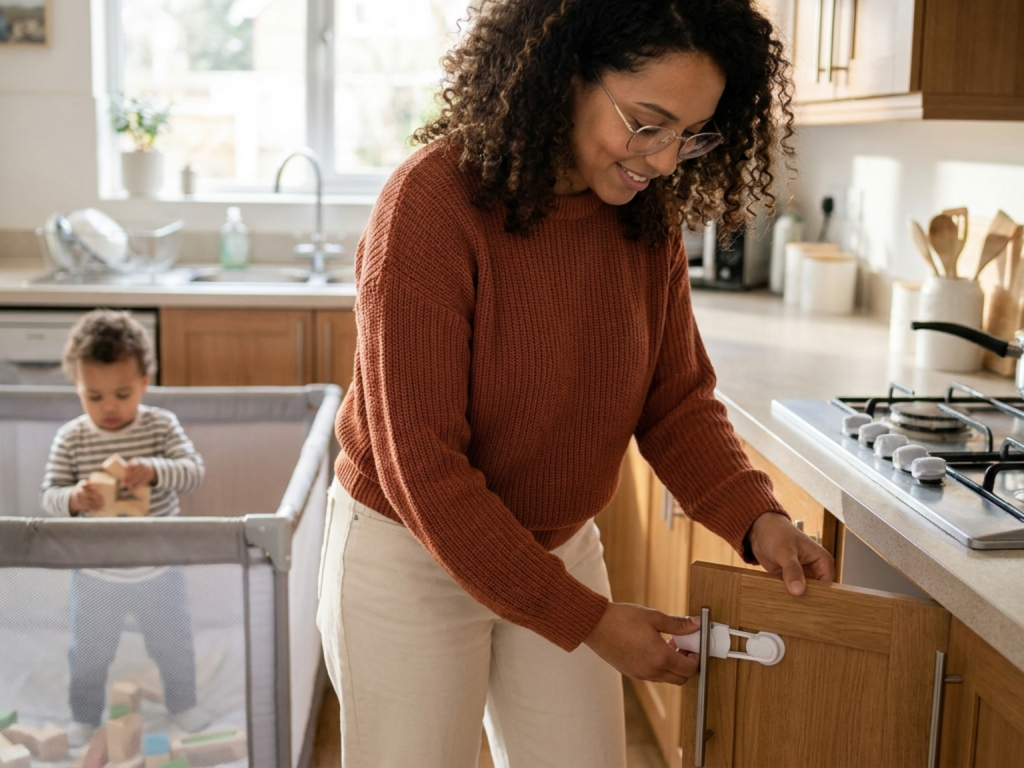
Poisoning prevention is a core part of home safety. Store prescription medicines, over-the-counter medicines, vitamins, supplements, nicotine products, cannabis products, alcohol, cleaning agents, laundry packets, pesticides, and automotive chemicals in locked cabinets or locked containers. High shelves alone are not enough for climbing children. Child-resistant caps are not childproof; they slow access but do not guarantee safety.
Use original containers whenever possible so labels, concentrations, and dosing information remain available. Do not call medicine “candy,” and avoid taking medicines in front of children if they are likely to imitate you. For dosing, use an oral syringe medication dosing method or other pharmacy-provided measuring device rather than kitchen spoons. If a dosing error, suspected ingestion, or exposure occurs, contact poison control or emergency services promptly according to local guidance.
Household chemicals should be stored separately from food and out of children’s sight and reach. Laundry detergent packets are visually attractive to some children and can cause serious injury if bitten or swallowed. Keep cleaning products closed immediately after use, even if you plan to return to the task.
Firearms require the highest level of secure storage. If firearms are present in the home, store them unloaded, locked, and separate from ammunition, with ammunition also locked. Children and teens may access firearms despite warnings, curiosity, impulsivity, or emotional distress. Ask about firearm storage when your child visits another home; this is a safety question, not a judgment. The same secure approach applies to sharp tools, razors, power tools, and other weapons.
Prevent falls, cuts, entrapment, and furniture tip-overs
Falls are common, but many serious falls can be prevented. Use stair gates that are appropriate for the location; pressure-mounted gates should not be used at the top of stairs because they can dislodge. Teach children to use handrails, keep stairs clear of toys, and avoid carrying large items that block their view. Clean up spills promptly to reduce slipping.
Windows and balconies deserve special attention. Move furniture away from windows so children cannot climb to them. Use window stops or guards that allow emergency escape but prevent a child from falling. Keep balcony doors locked when unsupervised, and ensure railings do not allow a child to squeeze through or climb easily.
Furniture tip-overs can cause severe head, neck, and crush injuries. Anchor dressers, bookshelves, wardrobes, and televisions to the wall. Do not place tempting objects such as toys, remotes, or tablets on high furniture. Open drawers can act like stairs, so use drawer stops where appropriate and teach children not to climb furniture.
Cuts and entrapment injuries can be reduced by storing knives, scissors, glassware, and tools securely. Use cordless window coverings or secure blind cords out of reach to prevent strangulation. Check toy boxes, folding furniture, recliners, and exercise equipment for pinch points or spaces where a small child could become trapped. In garages, laundry rooms, and storage areas, restrict access to machinery, chemicals, and heavy objects.
Build emergency readiness without creating fear
Preparedness helps caregivers respond quickly and helps children feel more secure. Keep emergency numbers visible and saved in phones, including local emergency services, poison control, the pediatrician, and nearby trusted contacts. Caregivers should know the home address, cross streets, and any access instructions for emergency responders.
Consider age-appropriate first aid and cardiopulmonary resuscitation training for adults and regular caregivers. Training does not replace medical care, but it can improve the first minutes after choking, drowning, burns, allergic reactions, seizures, or traumatic injuries. Keep a first aid kit stocked and accessible to adults, not children.
Children can learn emergency behaviors in calm, repeated practice sessions. Teach them how to call for help, when to leave the house during a fire alarm, and where to meet outside. Reassure them that adults are responsible for rescue; children should not re-enter a burning home or water to save toys, pets, or another person.
Some situations need urgent medical evaluation. Seek emergency help for severe breathing difficulty, loss of consciousness, major bleeding, serious burns, suspected poisoning in a child, submersion injury, seizure with concerning features, high-impact falls, or any situation where the child appears severely ill or unsafe. When uncertain, contacting a healthcare professional or emergency service is safer than waiting.
Safety situations that need immediate action
- Never leave a young child unattended in a bathtub, pool area, or near any standing water.
- Call poison control or emergency services promptly for suspected ingestion of medicines, chemicals, button batteries, magnets, or unknown substances.
- Seek urgent care for breathing difficulty, loss of consciousness, major burns, severe bleeding, or significant head injury.
- Store firearms unloaded, locked, and separate from locked ammunition; do not rely on hiding them.
- Do not place pillows, blankets, bumper pads, or soft toys in an infant’s sleep space.
Tools & Assistance
- Complete a room-by-room home safety checklist at child height.
- Save emergency services, poison control, and pediatrician contact numbers in every caregiver’s phone.
- Install and regularly test smoke alarms; practice family fire drills.
- Use locked storage for medicines, chemicals, firearms, ammunition, matches, and lighters.
- Ask your pediatrician for individualized guidance if your child has medical or developmental needs.
FAQ
At what age can I stop using childproofing devices?
There is no single age. Reassess based on the child’s abilities, impulse control, and environment. Many hazards, such as medicines, firearms, chemicals, and window falls, remain relevant for older children and teens.
Are child-resistant caps enough to protect children from medicines?
No. Child-resistant caps reduce access time but are not childproof. Medicines should still be stored in locked locations, preferably in original containers.
Do swimming lessons prevent drowning?
Swimming lessons may improve skills for some children, but they do not replace close adult supervision, barriers, and water safety rules.
How can I talk about safety without making my child anxious?
Use calm, simple language and practice specific actions, such as holding the handrail or meeting outside during a fire drill. Emphasize that safety rules help everyone, and adults are there to protect them.
Should I ask other families about firearms before playdates?
Yes. It is reasonable to ask whether firearms are present and whether they are stored unloaded, locked, and separate from locked ammunition.
Sources
- Seattle Children's Hospital — Safety Checklist for Home
- Pennsylvania State University Extension Better Kid Care — Keeping children safe at home
- Kids and Teens Pediatric Care — Child Safety: Essential Tips for Parents to Keep Their Kids Safe and Healthy
Disclaimer
This article is for general educational purposes and does not replace medical advice. For urgent symptoms, suspected poisoning, serious injury, or individualized safety concerns, contact a qualified healthcare professional or emergency services.













Please log in to leave a comment.