
Intro
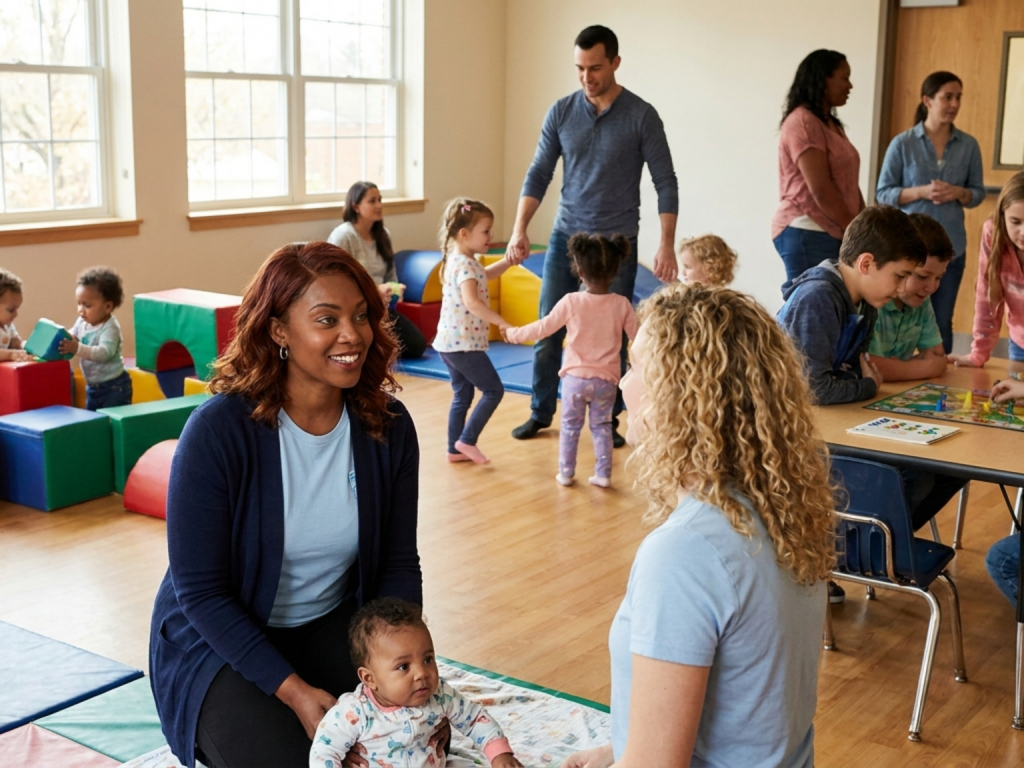
Choosing activities for a child can feel surprisingly high-stakes. Many caregivers worry about doing too little, doing too much, missing a “critical window,” or pushing a child into something that does not fit their temperament. A calmer, evidence-informed approach is to match activities to the child’s developmental stage, safety needs, energy level, and genuine interests.
Play is not a break from learning; it is one of the main ways children build motor coordination, language, executive function, social cognition, emotional regulation, and a sense of belonging. The best activity is usually not the most expensive or specialized one. It is one that is safe, repeatable, enjoyable, and responsive to the child in front of you.
Highlights
Young children need abundant movement, sensory exploration, and warm adult interaction more than formal instruction.
As children grow, activities can gradually add rules, teamwork, planning, practice, and healthy challenge.
Variety matters: sports, music, pretend play, art, nature, reading, and strategy games build different developmental systems.
Over-scheduling can undermine sleep, mood, family connection, and intrinsic motivation; rest is part of healthy development.
If a child has pain, regression, extreme fatigue, developmental concerns, or major anxiety around activities, discuss it with a healthcare professional.
Infants under 12 months: responsive movement and sensory connection
For infants, the best activities are simple, relational, and physically safe. The goal is not “teaching” in an academic sense; it is supporting sensorimotor development, attachment, visual tracking, early communication, and postural control. The World Health Organization recommends that infants be physically active several times a day, especially through interactive floor-based play. For babies who are not yet mobile, supervised tummy time while awake is especially valuable, gradually working toward at least 30 minutes spread across the day.
Good infant activities include face-to-face talking, singing, gentle imitation games, reaching for soft toys, mirror play, peekaboo, and supervised floor time on a firm surface. Peekaboo may look tiny, but it supports attention, memory, anticipation, and early social reciprocity. Varying positions during wakeful play can help babies practice head control, rolling, reaching, and eventually crawling.
Safety and responsiveness matter more than novelty. Avoid leaving infants in restrictive seats for long periods when they are awake, and avoid screen time for babies under 1 year. If an infant seems unusually floppy or stiff, has persistent feeding or breathing difficulty during activity, loses previously acquired skills, or strongly favors one side of the body, families should raise this at a well-child visit rather than trying to “exercise it away.”
Toddlers ages 1 to 3: movement, repetition, and safe independence
Toddlers learn through repetition, sensory feedback, and active exploration. Their nervous systems are building gait stability, balance, hand use, language, emotional regulation, and early problem-solving. The WHO recommends at least 180 minutes of varied physical activity daily for children ages 1 to 2, spread throughout the day. This does not need to be organized sport; in fact, most toddler activity should be free play.
Excellent toddler activities include climbing on safe playground structures, pushing and pulling toys, dancing, music and movement classes, water play with close supervision, finger painting, stacking blocks, simple pretend play, ball rolling, and short nature walks. Open-ended art is especially helpful because the process matters more than the product. A toddler who smears paint, pours water, or fills and dumps containers is exploring cause and effect, proprioception, and fine-motor control.
Some families consider swim lessons at this age. Lessons can build comfort around water, but they do not make a toddler “drown-proof.” Constant, close adult supervision remains essential around bathtubs, pools, ponds, and buckets. Similarly, toddler gymnastics or movement classes can be wonderful when they are playful, brief, and low-pressure.
Expect short attention spans and big feelings. Developmentally normal toddler behavior includes saying no, switching activities quickly, and becoming distressed when transitions are abrupt. Activities work best when caregivers offer limited choices: “Do you want blocks or bubbles?” rather than an open-ended demand to cooperate.
Preschoolers ages 3 to 5: pretend play, early rules, and whole-body learning
Preschoolers are ready for richer imagination, more language, and early cooperative play. Children ages 3 to 4 still need at least 180 minutes of physical activity daily, with about 60 minutes at moderate-to-vigorous intensity. Running, jumping, dancing, chasing games, tricycle riding, obstacle courses, and playground play all count. Sedentary screen time should be limited; for ages 3 to 4, WHO guidance recommends no more than 1 hour per day, with less being better.
At this stage, play-based learning in preschoolers is especially powerful. Pretend kitchens, doctor kits, puppet shows, dress-up, building materials, and storytelling games support symbolic thinking, language, empathy, and executive function. Games with simple rules, such as “Red Light, Green Light,” “Simon Says,” and matching-card games, help children practice inhibition, working memory, and cognitive flexibility in a playful way.
Good activity categories for preschoolers include music, dance, swimming readiness, art, nature exploration, library story time, beginner soccer-style play, and simple theater games. The adult’s role is to scaffold without taking over: name feelings, narrate choices, model turn-taking, and help children recover when a tower falls or a rule changes.
This is also an age when differences in sensory processing, coordination, speech, or social communication may become more visible. A child who avoids all movement, frequently falls compared with peers, cannot use hands for age-expected tasks, or becomes persistently overwhelmed in group settings may benefit from developmental evaluation for learning concerns or referral to occupational, physical, or speech-language therapy as appropriate.
Early school age ages 5 to 7: skill sampling and social confidence
Children in early elementary school often enjoy structured activities but still need plenty of unstructured play. This is a strong age for sampling rather than specializing. Trying soccer, swimming, dance, martial arts, art club, choir, chess, nature programs, or STEM activities helps children discover preferences while building broad motor and cognitive foundations.
Team sports can support cardiovascular fitness, coordination, cooperation, and belonging when coaching is developmentally appropriate. The focus should be effort, listening, safety, and fun rather than rankings or early performance pressure. For children who dislike competitive sport, alternatives such as hiking, biking, climbing, yoga for children, dance, or playground circuits can meet similar movement needs.
Cognitive and creative activities also expand at this age. Board games, building kits, simple coding games, drawing, clay, beginner musical instruments, singing, and theater exercises can strengthen working memory, planning, frustration tolerance, and expressive language. Harvard education experts highlight that music, dancing, theater, organized sports, and strategy games can all support positive development and a sense of connection.
Caregivers can watch for unprompted interests: What does the child return to when no one is directing them? What do they talk about afterward? Which activities improve mood rather than drain it? A child does not need to be “talented” to continue an activity; enjoyment, persistence, and healthy relationships are often better reasons to stay.
Middle childhood ages 8 to 10: competence, strategy, and belonging
By ages 8 to 10, many children can manage longer practices, multi-step projects, and more complex rules. This is a good period for activities that combine skill development with autonomy: team sports, martial arts, swimming, robotics, coding, music ensembles, visual arts, theater, scouting-style programs, gardening, cooking with supervision, and community service projects.
Strategy games become particularly useful. Games such as chess, Clue-style deduction games, collaborative board games, and age-appropriate digital building games can strengthen planning, memory, perspective-taking, and flexible thinking. Digital play is not automatically harmful, but it should not displace sleep, movement, school responsibilities, or face-to-face relationships. Clear screen boundaries before bed are especially important because evening screen use can interfere with sleep timing and quality.
This age group may also begin comparing themselves with peers. Supportive adults can help reframe mistakes as information rather than evidence of failure. Positive discipline strategies during activities include setting clear expectations, using brief logical consequences, and praising specific effort: “You kept trying that measure slowly until it sounded smoother.”
Watch the weekly load. If a child has frequent headaches or stomachaches before practice, declining grades, irritability, sleep loss, recurring injuries, or says they no longer have time to play, the schedule may need adjustment. Balanced activities should support the whole child, not consume the whole child.
Preteens ages 10 to 12 and beyond: identity, leadership, and healthy specialization
Preteens often want more voice in how they spend time. This is appropriate: activity choices are becoming part of identity, peer connection, self-efficacy, and future goal-setting. Caregivers can shift from choosing activities for the child to coaching the child through decisions: What do you want to continue? What feels meaningful? What are the time, cost, sleep, and school trade-offs?
Good options include specialized sports or arts programs, music groups, coding or STEM camps, debate, theater production, youth leadership programs, volunteering, outdoor education, language learning, and supervised strength-and-conditioning programs focused on technique rather than maximal lifting. Leadership opportunities, such as helping younger children, planning a small project, or taking responsibility for equipment, can build confidence and executive function.
Some specialization is reasonable when it is child-led and balanced, but early intense specialization may increase overuse injury risk, burnout, and social narrowing. A preteen athlete with persistent pain, swelling, limping, shortness of breath out of proportion to exertion, fainting, chest pain, or repeated concussions needs medical assessment. A child with chronic illness, neurodevelopmental differences, or disability may still thrive in activities, but adaptations should be individualized with clinicians, therapists, coaches, and the family.
Protect sleep and recovery. Many preteens need consistent routines, predictable limits, and a pre-sleep sequence for pre-teens that helps the nervous system wind down. Activity is healthiest when it coexists with rest, family meals, friendships, school, and downtime.
How to choose the right activity for your child
The “best” activity is the one that fits the child’s developmental stage, temperament, body, culture, family logistics, and medical context. A highly active child may need vigorous daily movement before they can settle into homework. A cautious child may need several visits to observe a class before participating. A sensory-sensitive child may prefer small groups, predictable routines, or outdoor activities over loud indoor gyms.
A practical selection framework includes:
- Safety: Is supervision appropriate, equipment well maintained, and instruction developmentally suitable?
- Fit: Does the activity match the child’s current motor, emotional, and social capacities?
- Joy: Does the child show interest before, during, or after the activity?
- Balance: Is there still time for sleep, free play, schoolwork, meals, and family connection?
- Growth: Does the activity offer manageable challenge without humiliation or chronic stress?
It is also helpful to rotate seasons: perhaps swimming in summer, music in autumn, art in winter, and soccer in spring. Children do not need a polished résumé; they need repeated experiences of curiosity, competence, recovery after frustration, and connection with caring adults and peers. For broader context, how children learn by age can help caregivers understand why one activity fits beautifully at one stage and feels frustrating at another.
When to pause and seek guidance
- Chest pain, fainting, unexplained shortness of breath, or palpitations during activity should be assessed promptly.
- Persistent joint pain, swelling, limping, or repeated injuries warrants medical evaluation before continuing intense activity.
- Regression in motor, language, social, or self-care skills should be discussed with a pediatric clinician.
- Severe anxiety, panic, or distress around an activity may require a gentler plan and professional support.
- Children with chronic medical conditions should have activity plans individualized with their healthcare team.
Tools & Assistance
- Keep a weekly activity-and-sleep calendar to check for balance.
- Ask coaches or instructors about safety training, child ratios, and developmentally appropriate expectations.
- Use trial classes before committing to long programs when possible.
- Discuss developmental, injury, or fatigue concerns at a well-child visit.
- Choose at least one low-cost, low-pressure family activity such as walking, dancing, or library visits.
FAQ
How many activities should a child do at once?
There is no universal number. A good rule is that the child still has enough sleep, free play, school time, and relaxed family time. If the schedule causes chronic stress, reduce it.
What if my child wants to quit an activity?
Explore the reason first. Boredom, poor coaching fit, bullying, anxiety, fatigue, and loss of interest require different responses. It is reasonable to finish a short commitment while avoiding shame.
Are screens always bad activities?
No. Age-appropriate, time-limited digital games can support creativity or strategy, but they should not replace movement, sleep, social interaction, or hands-on play.
Should preschoolers be in academic enrichment classes?
Some enjoy them, but preschoolers usually learn best through play, language-rich interaction, movement, music, stories, and pretend play rather than formal academic pressure.
How can I help a shy child join activities?
Start small: observe first, meet the instructor, attend with one familiar peer, and choose predictable, warm environments. Avoid forcing performance before the child feels safe.
Sources
- Harvard Graduate School of Education — Play Helps Children Build Better Brains. Here Are Some Ways to Get Kids Moving
- Hello Recess — What Activities Should My Child Be In? A Complete Guide by Age (0...12)
- World Health Organization — To grow up healthy, children need to sit less and play more
Disclaimer
This article is for general educational information and is not a diagnosis or individualized medical advice. Consult a pediatrician or qualified healthcare professional about activity safety, developmental concerns, symptoms, or chronic conditions.















Please log in to leave a comment.