
Intro
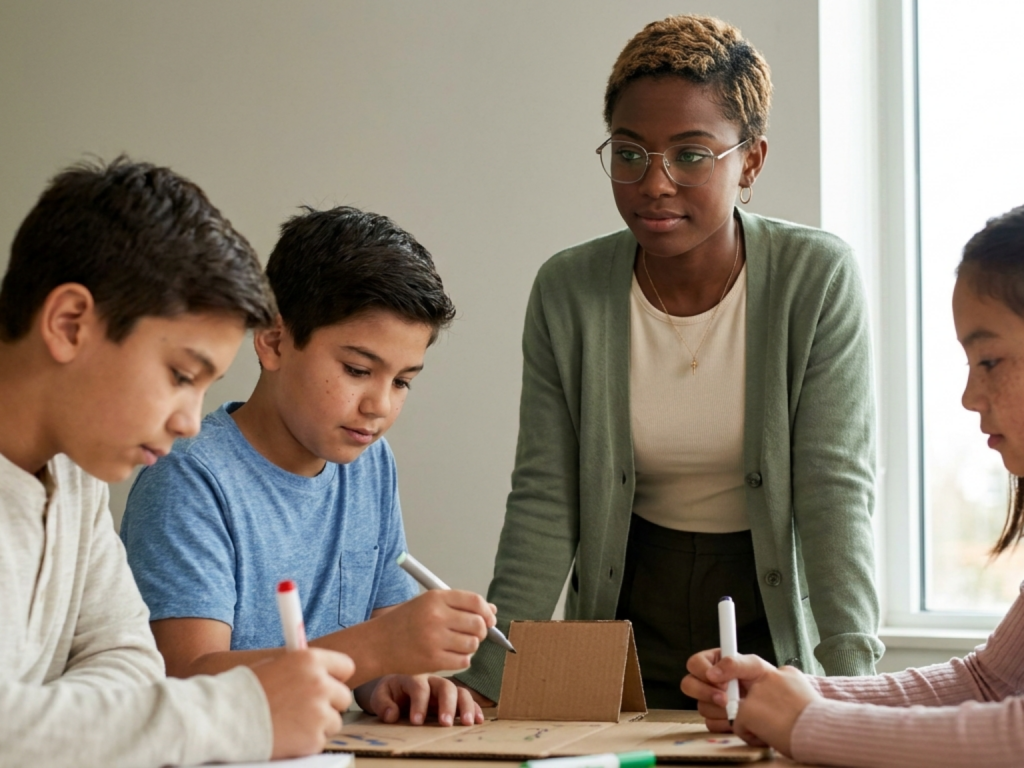
The preteen years, often ages 9 to 12, are a socially intense bridge between childhood and adolescence. Friendships become more complex, group belonging matters more, and children are expected to read subtler cues in classrooms, sports, clubs, online chats, and family life.
A checklist can help caregivers notice strengths, identify teachable moments, and decide when extra support may be useful. It should not be used to label a child or compare them harshly with peers; social development is influenced by temperament, neurodevelopment, culture, language, anxiety, sensory processing, family stress, and opportunity to practice.
Highlights
A useful checklist focuses on observable behaviors, such as turn-taking, personal space, repair after conflict, and flexible participation in groups.
Preteens may look socially mature in some settings and overwhelmed in others; context matters as much as the skill itself.
Emotional regulation, executive function, and social communication are closely linked, especially during peer pressure and disagreement.
Persistent distress, bullying, social isolation, or sudden changes in behavior warrant a supportive conversation and may justify professional guidance.
How to use a preteen social skills checklist
A preteen social skills checklist is most helpful when it is treated as a developmental map, not a pass-fail test. Children this age are still building executive functions, including inhibition, working memory, cognitive flexibility, and planning. These brain-based skills affect whether a child can pause before interrupting, tolerate losing a game, negotiate a disagreement, or notice that a peer wants to leave a conversation.
Observe patterns across several settings: home, school, extracurricular activities, community spaces, and digital communication. A child may be socially confident with one close friend but unsure in a large group. Another may follow classroom rules well yet become dysregulated during competitive sports. This does not automatically indicate pathology; it may reflect fatigue, sensory load, social anxiety, language demands, or limited practice.
Use neutral language when discussing the checklist with your child. Instead of saying, “You are bad at making friends,” try, “I noticed it was hard to join the group at recess. Let’s practice one way to ask if you can play.” The goal is skill-building with dignity. If concerns are persistent, impairing, or accompanied by emotional distress, speak with a pediatrician, school counselor, occupational therapist, speech-language pathologist, or child mental health clinician.
Basic social communication skills
Social communication includes both verbal and nonverbal behavior. In the preteen years, expectations become more nuanced: children are often expected to understand sarcasm, indirect requests, shifting group rules, and the difference between private and public comments. Some children need explicit coaching because these expectations are rarely explained.
Helpful checklist items include:
- Greets familiar peers and adults in a context-appropriate way.
- Uses an appropriate voice volume for the setting, such as classroom, cafeteria, library, or playground.
- Maintains appropriate personal space, adjusting distance based on relationship and activity.
- Takes turns in conversation rather than dominating or withdrawing completely.
- Shows active listening through relevant responses, follow-up questions, or body orientation.
- Recognizes basic facial expressions, tone of voice, and posture that suggest boredom, confusion, anger, excitement, or discomfort.
- Clarifies misunderstandings by asking questions rather than assuming hostile intent.
- Understands that humor, teasing, and sarcasm can be interpreted differently by different people.
Caregivers can support these skills by modeling concise social scripts. For example: “Can I join?” “Do you want advice or do you want me to listen?” “I didn’t mean it that way; can I try again?” Scripts are not artificial when used flexibly; they reduce cognitive load while the child learns to navigate complex peer interaction.
Friendship, empathy, and belonging
Friendships in middle childhood and early adolescence involve more than shared play. Preteens begin to value loyalty, privacy, reciprocity, humor, and shared identity. They may also become more sensitive to exclusion and peer comparison. Preteen friendship changes can feel abrupt to caregivers, but many shifts are developmentally expected.
Consider whether the child can:
- Identify at least one peer they enjoy spending time with, even if they prefer a small social circle.
- Invite a peer to participate in an activity or respond positively to an invitation.
- Share materials, ideas, attention, and decision-making during play or projects.
- Notice when someone is left out and make a reasonable effort to include them.
- Show empathy by recognizing another person’s feelings and responding with comfort, apology, humor, or practical help.
- Maintain a friendship after a disagreement, rather than ending the relationship after one conflict.
- Respect privacy and avoid sharing another child’s personal information without permission.
- Use humor without relying on humiliation, cruelty, or repeated teasing after someone asks them to stop.
Empathy is not only a personality trait; it is also a teachable social-cognitive skill. Some preteens need help distinguishing intent from impact. A child may say, “I was only joking,” while the peer experienced the comment as embarrassing. A useful adult response is, “Both can be true: you meant it as a joke, and it hurt them. What repair would help?”
Group participation and cooperative play
Group settings are demanding because they require rapid monitoring of rules, roles, emotions, and fairness. A preteen may need to negotiate who goes first, accept a less preferred role, or cope when a group changes the plan. These situations draw heavily on self-regulation and social problem-solving.
Checklist behaviors for group participation include:
- Waits for a turn during games, discussions, or shared equipment use.
- Follows agreed-upon rules, including rules created by peers, when they are safe and fair.
- Accepts winning and losing with manageable frustration.
- Suggests ideas without insisting that the group always choose them.
- Compromises when two reasonable preferences conflict.
- Responds to peer feedback without immediate aggression, shutdown, or ridicule.
- Transitions out of an activity when time is up or when the group moves on.
- Participates in classroom groups by contributing, listening, and completing their share of the task.
If a child struggles in groups, reduce the skill into smaller steps. Practice one target at a time, such as “make one suggestion and then ask what others think.” Role-play can help, but real-life coaching before and after activities is often more effective than long lectures during a meltdown. For children with sensory sensitivities, attention differences, or anxiety, group challenges may be partly physiological; crowded, noisy spaces can overwhelm the nervous system before the child has access to their best social skills.
Emotional regulation and peer pressure
Emotion regulation and peer relationships are deeply connected. A preteen who can identify rising frustration, pause, and choose a response is more likely to maintain friendships and less likely to escalate conflicts. This does not mean they will always remain calm. It means they are gradually learning recovery, repair, and flexible coping.
Useful checklist items include:
- Names common internal states, such as embarrassment, jealousy, disappointment, anxiety, anger, or excitement.
- Uses at least one calming strategy, such as taking space, slow breathing, movement, journaling, or asking for help.
- Returns to a conversation after cooling down when appropriate.
- Apologizes with specific language, not only “sorry,” when their behavior affected someone else.
- Accepts a sincere apology from a peer while still maintaining reasonable boundaries.
- Handles minor rejection, such as not being chosen for a team, without prolonged dysregulation.
- Resists negative peer pressure, including pressure to mock others, break rules, exclude a peer, or share private content.
- Seeks adult help for unsafe situations rather than relying only on peer approval.
Preteens often know the “right” answer when calm but lose access to it under stress. Caregivers can help by rehearsing plans before predictable stressors: “If someone dares you to do something unsafe, what sentence can you use?” Options include, “No, I’m not doing that,” “I’m leaving,” or “That’s not worth it.” Praise should focus on effort and recovery: “You were angry, and you still walked away before it got worse.”
Conflict repair, boundaries, and assertiveness
Conflict is not a sign that social skills have failed. Healthy relationships include disagreement, negotiation, and repair. The key question is whether the child can move through conflict without persistent aggression, intimidation, avoidance, or self-blame.
A preteen with emerging conflict repair skills may be able to:
- State a problem using “I” language, such as “I felt left out when the plans changed.”
- Listen to the other person’s perspective without interrupting every sentence.
- Separate a person from a behavior: “What you did hurt me” rather than “You are always terrible.”
- Offer a repair, such as replacing an item, correcting misinformation, inviting the peer back in, or changing future behavior.
- Set boundaries, including “Stop,” “I do not want to talk about that,” or “I need space.”
- Recognize when an adult should be involved, especially with threats, coercion, bullying, harassment, or repeated exclusion.
Assertiveness is different from aggression. It protects the child’s dignity while respecting others. Some preteens, especially those who are shy, anxious, highly compliant, or socially vulnerable, need explicit permission to say no. Others need coaching to soften a forceful tone or accept that peers also have boundaries. Conflict repair skills for children are best learned through calm modeling, repeated practice, and adults who avoid shaming the child for mistakes.
Digital and school-based social skills
Many preteens begin using group chats, gaming platforms, school devices, or shared online spaces. Digital communication in adolescents and preteens adds complexity because tone is harder to read, messages can be saved, and impulsive comments may spread quickly. Even if a child is not independently using social media, they may be exposed to peer dynamics through texting, online games, or classroom platforms.
Checklist items for digital and school contexts include:
- Asks permission before posting, forwarding, or screenshotting another person’s image or message.
- Avoids sending repeated messages when someone has not responded.
- Understands that jokes, emojis, and sarcasm may be misread online.
- Does not participate in group exclusion, rumor-sharing, or pile-on teasing.
- Reports threatening, sexualized, coercive, or bullying messages to a trusted adult.
- Balances online interaction with sleep, schoolwork, physical activity, and in-person connection.
- Uses respectful communication with teachers, coaches, and classmates in email or learning platforms.
School collaboration can be valuable when concerns appear mainly in academic settings. Teachers can often identify whether a child struggles with group work, recess dynamics, impulse control, or interpreting peer cues. Ask for specific observations rather than global labels. “When does it happen, with whom, and what happens right before?” is more useful than “Is my child social?”
When extra support may help
Every preteen has awkward moments. Extra support becomes more important when social difficulties are persistent, impairing, or emotionally painful. Seek professional guidance if a child is consistently isolated, frequently bullied, repeatedly aggressive, intensely anxious about peers, unable to recover from minor conflict, or losing previously established skills. Sudden withdrawal, school refusal, sleep changes, appetite changes, self-harm talk, or major mood shifts require prompt attention from a qualified professional.
Support may involve a pediatric visit to screen for hearing, sleep, anxiety, attention, mood, learning, or neurodevelopmental factors; a school meeting to discuss observations and accommodations; occupational therapy for sensory regulation and participation; speech-language evaluation for pragmatic language; or mental health therapy for anxiety, depression, trauma, or social problem-solving. Multidisciplinary assessment for social difficulties can be especially useful when concerns span home, school, and peer settings.
At home, choose one or two skills to practice at a time. Make goals observable: “waits for a turn in a board game for five minutes” is clearer than “be nicer.” Celebrate small gains. Social competence develops through repeated, supported experiences, not through criticism. For many families, Building social skills over time is the most realistic and compassionate frame.
When to seek prompt help
- Talk of self-harm, hopelessness, or wanting to disappear should be treated as urgent.
- Bullying, threats, coercion, or sexualized messages require adult intervention and safety planning.
- Sudden social withdrawal, school refusal, or major mood and sleep changes should be discussed with a healthcare professional.
- Loss of previously acquired communication or social skills warrants medical and developmental evaluation.
- Do not assume persistent social difficulty is defiance; anxiety, neurodevelopmental differences, trauma, hearing issues, or learning needs may contribute.
Tools & Assistance
- Keep a brief observation log noting setting, trigger, behavior, recovery, and what helped.
- Ask teachers or coaches for specific examples of peer interaction and group participation.
- Practice short social scripts before predictable situations such as recess, sleepovers, games, or group projects.
- Consider consultation with a pediatrician, school counselor, occupational therapist, speech-language pathologist, or child psychologist.
- Use role-play and post-event reflection, but avoid lengthy lectures during emotional escalation.
FAQ
What age is this checklist for?
It is most relevant for preteens around ages 9 to 12, but skills vary widely by temperament, culture, language, neurodevelopment, and opportunity to practice.
Does struggling with social skills mean my child has a disorder?
Not necessarily. Social difficulty can reflect normal development, anxiety, stress, limited practice, sensory overload, attention differences, or many other factors. A professional can help if concerns are persistent or impairing.
How many checklist items should a preteen be able to do?
There is no single required number. Look for patterns over time, the level of distress, and whether the child can function in daily settings with reasonable support.
Should I correct my child immediately after every social mistake?
Usually no. Brief, private, respectful coaching works better than public correction. Choose one skill to practice and discuss it when your child is calm.
Can social skills be taught at home?
Yes. Modeling, scripts, role-play, supported playdates, family games, and calm repair after conflict can all help. Some children also benefit from school-based or clinical support.
Sources
- The OT Toolbox — Social Skills Checklist
- ThinkPsych — Free Social Skills Checklist By ThinkPsych
- Illinois Early Learning Center — Children's Social Competence Checklist
Disclaimer
This article is for informational purposes only and is not a diagnosis or treatment plan. Consult a qualified healthcare, mental health, or educational professional for concerns about a child’s social, emotional, or developmental functioning.


















Please log in to leave a comment.