
Intro
Social development in childhood is the gradual growth of a child’s ability to connect with caregivers, understand other people’s feelings, cooperate, communicate needs, manage conflict, and participate in family, school, and community life. It is closely intertwined with emotional regulation, language, cognition, sensory processing, motor skills, and the child’s relationship environment.
Every child develops at an individual pace. Milestones are best viewed as guideposts rather than rigid deadlines. When concerns arise, a pediatrician, developmental-behavioral clinician, psychologist, speech-language pathologist, occupational therapist, or early intervention team can help interpret patterns in context.
Highlights
Social development begins in infancy with attachment, social smiling, reciprocal interaction, and responsiveness to caregivers.
Toddlers often want independence before they have mature self-regulation, so frustration, possessiveness, and parallel play can be developmentally expected.
Preschool and school-age children gradually build empathy, turn-taking, rule-based play, friendship skills, and conflict resolution.
Persistent loss of social skills, lack of response to social cues, severe aggression, or major difficulty participating with peers deserves professional attention.
What social development means in childhood
Social development is the maturing capacity to relate to others in ways that are responsive, flexible, and increasingly reciprocal. In clinical and developmental language, it includes attachment behaviors, social communication, joint attention, self-regulation, empathy, play skills, moral reasoning, and peer relationship competence. These skills do not appear separately. A baby’s ability to calm with a familiar adult supports later trust; a toddler’s emerging language supports turn-taking; a preschooler’s symbolic play supports perspective-taking; and a school-age child’s executive function supports cooperation and rule negotiation.
It can be helpful to think of social development as a layered process. The earliest layer is safety: the infant learns whether adults respond predictably. The next layer is reciprocity: back-and-forth smiling, vocalizing, gesturing, and shared attention. Later layers include autonomy, peer belonging, empathy, and the ability to repair conflict. A child may be advanced in one layer and still need support in another. For example, a verbally skilled preschooler may still struggle to wait, share, or tolerate losing a game.
Social development is also culturally shaped. Families differ in expectations for independence, eye contact, adult-child conversation, sibling caregiving, emotional expression, and group participation. A medically literate approach avoids judging a single behavior in isolation and instead asks whether the child is communicating, connecting, learning, adapting, and functioning across familiar settings.
Infancy: attachment, social smiling, and shared attention
In the first year, social development is anchored in attachment and regulated co-interaction. Newborns are biologically prepared to orient toward human voices, faces, smell, touch, and rhythmic caregiving. Through repeated cycles of distress, response, and recovery, infants learn that caregivers can help organize their nervous system. This co-regulation is the foundation for later self-regulation.
Many infants begin social smiling around 1 to 2 months. This is not just a charming behavior; it reflects emerging social engagement and reciprocal communication. By several months, babies often enjoy face-to-face play, vocal turn-taking, and familiar routines such as peekaboo. They may show preference for familiar caregivers and become more alert to unfamiliar people.
A major milestone in later infancy is joint attention, often emerging around 8 months and strengthening through the second year. Joint attention means the child and another person share focus on the same object or event. It may appear as following a caregiver’s gaze, looking back and forth between a toy and an adult, pointing, showing, or seeking an adult’s reaction. Joint attention is strongly linked with language development and social learning because the child is learning that other minds can share interest.
Separation anxiety and stranger wariness often increase in the second half of infancy. Although stressful for families, these behaviors can reflect healthy attachment and improved memory. Caregivers can support infants by using predictable routines, warm transitions, and calm reassurance rather than abrupt disappearances or prolonged distress when avoidable.
Toddlerhood: autonomy, imitation, empathy, and parallel play
Toddlerhood is socially intense because children are developing mobility, intentional communication, and a strong desire for autonomy while the prefrontal networks needed for impulse control remain immature. Erikson described this period as autonomy versus shame and doubt: toddlers need opportunities to try, choose, and participate, while still being protected by consistent limits.
Socially, toddlers often imitate household actions, bring objects to adults, point to share interest, and seek help. Around 15 months, many children begin to show early empathy, such as noticing distress, looking concerned, or attempting to comfort in a simple way. By around 2 years, children may notice when another person is upset and may offer a toy, pat, or verbal reassurance, although their responses are still inconsistent and shaped by temperament.
Play during this stage is commonly parallel: children play near one another more than truly with one another. A toddler may want another child’s toy, copy another child’s action, or protest loudly when a turn ends. This does not mean the child is selfish in an adult moral sense. The child is still learning ownership, waiting, emotional inhibition, and the idea that another person has a separate perspective.
Supportive adults can narrate feelings, model simple scripts, and create brief, successful social exchanges. Phrases such as “You wanted the truck; Sam is using it; you can have a turn next” help connect emotion, boundary, and future solution. Toddler learning through movement is also important: chasing games, dancing, pushing carts, and sensory play can build regulation and shared attention before a child can manage long verbal explanations.
Preschool years: cooperative play, friendship, and emotional regulation
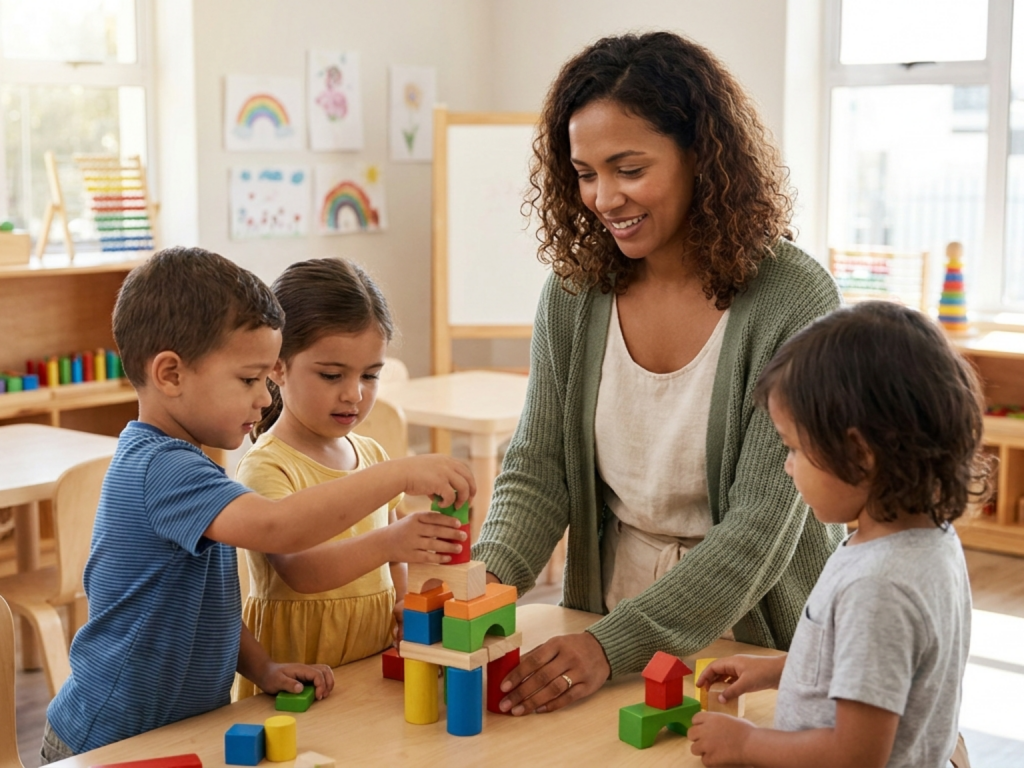
Between ages 3 and 5, many children shift from parallel play toward associative and cooperative play. Around 3 years, cooperative play becomes more visible: children begin building together, assigning roles, pretending with shared themes, and negotiating simple rules. They may call another child a friend, prefer certain playmates, and show pride in group belonging.
Preschool social development is strongly linked with symbolic play and language. Pretend play lets children practice roles, fears, fairness, caregiving, power, and repair in a low-risk setting. A child who says, “You be the doctor and I’ll be the baby,” is practicing perspective-taking, sequencing, and social flexibility. Language allows children to explain needs, ask questions, protest, bargain, and apologize, although emotional flooding can still override words.
Empathy becomes more recognizable. By around 4 years, many children can comfort a sad friend, identify basic emotions, and understand that another person may feel differently from them. They also begin to internalize social rules: no hitting, wait in line, use gentle hands, and include others. However, exclusion, bossiness, tattling, and intense disappointment are common because children are still learning fairness and impulse control.
Caregivers and educators can support preschoolers through structured routines, visual schedules, emotion coaching, and guided conflict resolution. Rather than forcing an immediate apology, it may be more useful to help the child calm, identify what happened, understand the other child’s feeling, and choose a repair action such as returning a toy, helping rebuild, or offering kind words.
School-age children: rules, belonging, and peer competence
From about 6 to 12 years, social development expands beyond the family into classrooms, teams, clubs, neighborhoods, and digital or media-influenced environments. Erikson described the central challenge as industry versus inferiority: children compare their abilities with peers and seek competence. Success is not limited to grades. Social competence, humor, kindness, reliability, creativity, and problem-solving can all support a child’s sense of industry.
School-age children become better at understanding rules, fairness, loyalty, and group identity. They can usually take another person’s perspective more consistently, although they may still misread sarcasm, teasing, or ambiguous intentions. Friendships often become more stable and based on shared interests, trust, and reciprocal support. Peer acceptance becomes emotionally meaningful, and exclusion or bullying can have significant effects on mood, school engagement, sleep, somatic complaints, and self-esteem.
This stage also brings more complex conflict. Children may experience jealousy, competition, secrets, cliques, embarrassment, and moral dilemmas. Adults can help by avoiding instant problem-solving when a child needs to be heard, then coaching specific skills: how to enter a game, how to say no, how to repair after hurting someone, how to identify unsafe behavior, and how to seek adult help without shame.
For many children, middle childhood is also the beginning of broader identity exploration. Interests, cultural belonging, family values, gender roles, abilities, and peer comparison shape the child’s self-concept. Social development teens becomes a related concern as late childhood approaches, because autonomy, privacy, and peer influence gradually intensify. Families can prepare by maintaining warm communication and clear expectations before adolescence begins.
Understanding variation: temperament, neurodevelopment, and context
Not all children are socially expressive in the same way. Temperament matters. Some children are slow-to-warm, observant, cautious, or easily overstimulated. Others are highly approach-oriented, energetic, and socially bold. Neither pattern is inherently pathological. The key question is whether the child can form trusting relationships, communicate needs, recover from stress with support, and gradually participate in developmentally appropriate social settings.
Neurodevelopmental differences can shape social behavior. Differences in language, hearing, vision, motor coordination, sensory processing, attention regulation, anxiety, sleep, trauma exposure, or autism-related social communication may affect how a child engages. For example, a child who avoids group play may be overwhelmed by noise, unable to follow rapid language, anxious about unpredictability, or unsure how to initiate. A careful assessment looks beyond surface behavior to function and context.
Family stressors also matter. Illness, parental mental health challenges, housing instability, food insecurity, bereavement, conflict, or repeated separations can influence social-emotional regulation. This does not mean caregivers are to blame. Children develop within systems, and supportive intervention often includes strengthening caregiver capacity, routines, communication, and access to services.
Developmental surveillance is most useful when it is ongoing. A single missed milestone may not be alarming, but a persistent pattern across settings, regression, or a widening gap from peers warrants discussion with a healthcare professional. Families should feel empowered to ask for hearing and vision screening, speech-language evaluation, developmental screening, school-based supports, or mental health consultation when concerns persist.
How caregivers can support healthy social growth
Children learn social skills through thousands of small, repeated interactions. Warmth and structure work best together: warmth communicates safety and belonging, while structure teaches boundaries and predictability. Social-emotional development in children is not accelerated by pressure, criticism, or forced performance. It is strengthened by responsive relationships, practice, repair, and realistic expectations.
- Name emotions without judgment: “You look disappointed” helps children connect body states with words.
- Model repair: Adults can say, “I spoke too sharply. I’m sorry. I’ll try again,” showing that relationships can recover.
- Practice social scripts: “Can I play?” “Stop, I don’t like that,” and “Can we trade?” are concrete tools.
- Use play as rehearsal: Dolls, blocks, puppets, drawing, and pretend scenarios can make conflict and empathy easier to understand.
- Protect sleep, nutrition, and sensory regulation: A dysregulated body has less capacity for flexible social behavior.
- Coordinate with teachers and clinicians: Consistent language across home, school, and therapy can reduce confusion.
Caregivers can also watch their own emotional load. Supporting a socially struggling child can be painful, especially when the child is excluded, aggressive, withdrawn, or misunderstood. Seeking guidance is not an admission of failure. It is often the most protective step a family can take.
When to seek professional guidance
- Loss of previously acquired social, language, play, or self-care skills should be discussed promptly with a healthcare professional.
- No social smiling, limited response to caregivers, or minimal shared attention may warrant developmental screening.
- Persistent aggression, severe withdrawal, self-injury, or inability to participate in childcare or school deserves evaluation.
- Concerns about hearing, vision, language delay, seizures, trauma, anxiety, or autism-related traits should not be dismissed as “just behavior.”
- If a child talks about wanting to die, self-harm, or being unsafe, seek urgent professional or emergency support.
Tools & Assistance
- Pediatric developmental surveillance and standardized screening
- Early intervention program or school district evaluation
- Speech-language, occupational therapy, or developmental-behavioral assessment
- Parent-child interaction coaching or evidence-based family therapy
- Teacher-caregiver communication plan for social goals
FAQ
Is it normal for toddlers not to share?
Yes, limited sharing is common in toddlerhood. Toddlers are still developing impulse control, ownership concepts, and perspective-taking. Gentle coaching and short turns are more realistic than expecting mature sharing.
What is joint attention, and why does it matter?
Joint attention is shared focus between a child and another person, such as pointing to show an object and checking the adult’s reaction. It supports language, social learning, and understanding other minds.
Should parents force a shy child to socialize?
Usually no. Gradual exposure, predictable routines, and supportive practice are more helpful than forcing. Persistent distress or impairment can be discussed with a pediatrician or child mental health professional.
When do children usually start cooperative play?
Many children show more cooperative play around age 3, though the timing varies. Earlier parallel and associative play are normal stepping stones toward shared rules, roles, and goals.
Can social delays improve?
Many children make meaningful gains with the right supports, especially when needs are identified early. The best plan depends on the child’s developmental profile, environment, and any associated medical or neurodevelopmental factors.
Sources
- National Center for Biotechnology Information (NCBI) — Developmental Stages of Social Emotional Development in Children
- Verywell Mind — Erikson's Stages of Psychosocial Development
- Early Stages — Social-Emotional Milestones
Disclaimer
This article is for informational purposes only and does not replace medical, developmental, or mental health evaluation. Consult a qualified healthcare professional for concerns about a child’s development or safety.
















Please log in to leave a comment.