
Intro
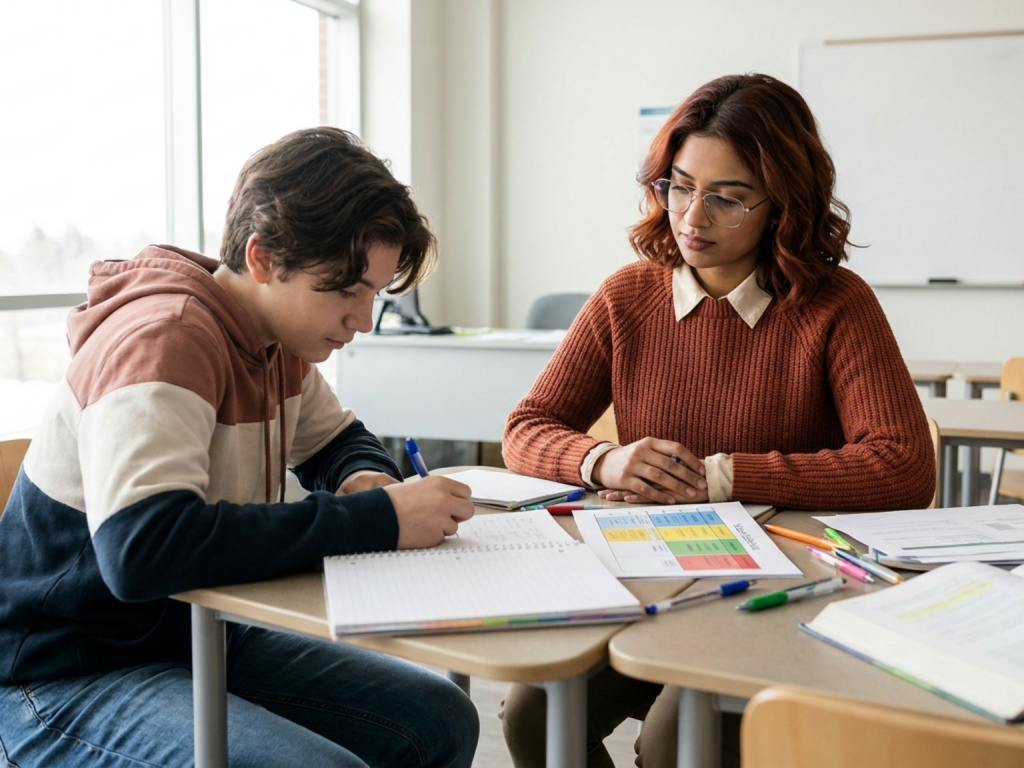
Teen learning is shaped by more than intelligence or effort. Adolescence is a period of rapid brain maturation, changing sleep biology, expanding social awareness, and increasing academic expectations. Many teenagers are capable of sophisticated reasoning, creativity, and empathy, yet they may also struggle with planning, attention, motivation, anxiety, or sleep deprivation.
Understanding teen education through a developmental and health-informed lens can help families and educators respond with support rather than blame. This article explains how adolescents learn, what can interfere with learning, and how adults can create conditions that make school feel more manageable and meaningful.
Highlights
Teen learning improves when teaching matches adolescent brain development, including growing executive function, stronger need for relevance, and sensitivity to feedback.
Sleep is a biologic learning tool. Puberty shifts circadian timing later, and early school start times can worsen sleep loss, mood, attention, and academic performance.
Digital environments can fragment attention, but structured, engaging, multisensory learning can help teens sustain focus and build confidence.
Emotional safety matters. Anxiety, chronic stress, bullying, unmet learning needs, and health problems can all interfere with memory, participation, and motivation.
How teen brains learn
Teen learning is best understood as an interaction between neurodevelopment, environment, emotion, and practice. During adolescence, the brain continues to refine neural networks involved in attention, working memory, inhibitory control, planning, reward processing, and social cognition. The prefrontal cortex, which supports long-range planning and self-monitoring, is still maturing, while limbic and reward systems may respond strongly to novelty, peer approval, and emotionally meaningful experiences.
This does not mean teenagers are incapable of responsibility. It means they often need structured opportunities to practice responsibility. A teen may understand the importance of studying but still underestimate the time needed, forget a deadline, or avoid a difficult task because it produces discomfort. These patterns often reflect developing executive function in adolescence rather than laziness.
Learning also depends on memory systems. Teens retain information better when they repeatedly retrieve it, connect it to prior knowledge, use it in different contexts, and receive timely feedback. Long rereading sessions may feel productive, but active recall, spaced practice, practice testing, and explaining concepts aloud are usually more effective. Adolescents also benefit from knowing why a topic matters. Relevance helps attention and motivation because the material becomes connected to identity, goals, relationships, or real-world problems.
Because social evaluation is powerful in adolescence, classroom climate matters. Public embarrassment, harsh criticism, or repeated failure can make the brain treat learning as a threat. In contrast, predictable routines, respectful correction, and opportunities to revise work can support persistence. The goal is not to remove challenge but to make challenge feel survivable and purposeful.
Sleep, circadian biology, and school performance
Sleep is one of the most medically important foundations of teen education. During puberty, adolescents commonly experience a circadian phase delay: melatonin secretion and sleepiness tend to occur later in the evening, making it biologically harder to fall asleep early. If school begins very early, teens may accumulate chronic sleep restriction even when they are trying to be responsible.
Insufficient sleep affects learning through several mechanisms. It reduces sustained attention, processing speed, emotional regulation, and working memory. It can impair consolidation of new information, meaning the brain has less opportunity to stabilize what was learned during the day. Sleep loss can also increase irritability, anxiety symptoms, depressive symptoms, headaches, appetite dysregulation, and risk-taking behavior. These effects can be misread as poor attitude or lack of motivation.
Later school start times have been associated with improved sleep duration and benefits for academic, mental, and physical health outcomes. While not every family can control school schedules, adults can still protect sleep by treating it as a health priority rather than a reward earned after homework. A consistent wake time, reduced late-night light exposure, realistic homework planning, and avoiding caffeine later in the day may help. Persistent insomnia, loud snoring, restless sleep, severe daytime sleepiness, or sudden changes in sleep should prompt discussion with a healthcare professional, because sleep disorders and mental health conditions can be treatable contributors to school difficulties.
Attention in a digital learning world
Many teens now study in environments filled with notifications, short-form media, multitasking, and rapid switching between apps. Digital exposure does not make adolescents incapable of deep learning, but it can train attention toward frequent novelty. For some learners, especially those already vulnerable to anxiety, attention-deficit symptoms, or sleep loss, this can make sustained reading, writing, and problem-solving feel unusually demanding.
Helpful education does not simply demand longer concentration; it teaches attention as a skill. Teens may learn better when tasks are broken into visible steps, when goals are time-limited, and when feedback is frequent enough to prevent confusion from accumulating. In language learning and other content areas, rich and comprehensible input, such as short video clips, audio, music, images, demonstrations, and meaningful conversation, can help teens engage without lowering academic expectations.
Digital tools can also support learning when they are used intentionally. Calendar reminders, visual progress trackers, flashcard systems, shared documents, and recorded explanations can reduce cognitive load. However, unstructured device use during homework often increases task-switching. Families can collaborate with teens to create realistic agreements, such as a phone parking place during a 25-minute work block, planned breaks, and access to music only if it genuinely supports focus. The tone matters: teens are more likely to cooperate when adults frame these strategies as brain supports, not moral judgments.
- Use short work intervals followed by brief movement or hydration breaks.
- Keep only the needed tabs, apps, and materials open during a study block.
- Ask the teen to predict how long a task will take, then compare with the actual time to build planning accuracy.
- Use visual tracking for assignments, revision, and skill growth to reduce uncertainty and anxiety.
Motivation, emotion, and identity
Motivation in adolescence is closely tied to autonomy, belonging, competence, and identity. A teen who says, “I do not care,” may be expressing boredom, fear of failure, shame, depression, social stress, or a belief that effort will not change the outcome. Adults can support motivation by looking underneath the behavior before assuming defiance.
Emotional development is central to learning. Stress activates physiologic systems that can be adaptive in short bursts but harmful when chronic. Ongoing conflict, bullying, discrimination, family instability, untreated pain, food insecurity, or academic overload can keep the nervous system in a high-alert state. In that state, the brain prioritizes safety over curiosity. Memory retrieval may worsen, and a teen may freeze during tests despite knowing the material at home.
Supportive adults can help by combining warmth with structure. This might include validating the emotion, naming the next small step, and reducing catastrophic thinking. For example: “This assignment feels overwhelming; let us identify the first 10-minute part.” Such co-regulation helps the teen borrow adult organization while internal skills are developing. Over time, the adolescent can take more ownership.
Feedback should be specific and formative. Instead of “You are smart” or “You are careless,” feedback can identify the strategy: “Your thesis became clearer after you reorganized the evidence,” or “You solved the first part correctly; the error started when the signs changed.” This approach reduces shame and makes improvement visible. It is especially important for students who have experienced repeated academic failure, because they may need many experiences of manageable success before confidence returns.
Evidence-informed study strategies for teens
Effective studying is not always intuitive. Many adolescents equate effort with time spent looking at materials, but learning improves when the brain has to retrieve, apply, and reorganize information. Families and teachers can explicitly teach study methods rather than expecting teens to discover them alone.
Spaced practice is one of the most useful principles. Studying a topic several times over days or weeks is usually better than one long session the night before a test. Retrieval practice is also powerful: closing the book and answering questions, making a concept map from memory, teaching the idea to someone else, or taking a low-stakes quiz. Interleaving, or mixing related problem types, can help teens learn when to use a strategy rather than memorizing a single pattern.
Teens also benefit from metacognition, which means thinking about their own thinking. They can ask: What do I already know? What is confusing? What evidence shows I understand this? What strategy worked last time? These questions build independence and reduce helplessness.
For reading-heavy subjects, active annotation, summarizing each section in one sentence, and generating questions can improve comprehension. For mathematics and science, worked examples followed by gradually less-supported problems can build accuracy. For writing, outlines, model texts, rubrics, and revision checklists can make expectations concrete. For second-language learning, comprehensible input, frequent low-pressure speaking, spaced vocabulary retrieval, and meaningful cultural materials may support confidence and fluency.
- Before studying: define the specific skill or concept, not just the chapter title.
- During studying: alternate brief review with active recall.
- After studying: identify errors and plan the next practice session.
- Before tests: practice under conditions similar to the assessment, including time limits when appropriate.
Learning differences, health conditions, and when to ask for help
Some teens work very hard but continue to struggle because an underlying learning, attention, language, emotional, sensory, or medical factor is interfering. Possibilities include dyslexia, dyscalculia, developmental language disorder, attention-deficit/hyperactivity disorder, anxiety disorders, depressive disorders, trauma-related symptoms, autism-related support needs, hearing or vision problems, migraine, anemia, thyroid disease, seizure disorders, sleep disorders, chronic pain, or medication side effects. This list is not a diagnosis; it is a reminder that school difficulty can have many contributors.
Warning signs include a sudden drop in grades, school refusal, panic around assignments, frequent headaches or abdominal pain on school days, major sleep changes, persistent sadness or irritability, loss of interest, self-harm thoughts, substance use, or a teen saying they feel hopeless. These signs deserve compassionate attention and, when significant or persistent, professional evaluation for teen distress. A pediatrician, adolescent medicine clinician, psychologist, psychiatrist, school counselor, educational specialist, or neuropsychologist may be involved depending on the concern.
Educational evaluation can clarify whether a student needs accommodations or specialized instruction. Accommodations do not give unfair advantage; they reduce barriers so the teen can demonstrate learning. Examples may include extended time, reduced-distraction testing, assistive technology, audiobooks, written instructions, organizational support, or modified workload during a health crisis. The best supports are individualized, documented, and reviewed over time.
Families can prepare for appointments by collecting report cards, teacher comments, writing samples, test results, sleep patterns, medication lists, and observations about mood, attention, and physical symptoms. The aim is not to label a teen as broken, but to understand the pattern and match support to need.
How families and schools can work together
Teen education is strongest when adolescents, caregivers, and schools collaborate. Many teens want independence but still need adults to provide scaffolding. Scaffolding means temporary support that is gradually removed as skills improve. For example, a caregiver might help create a weekly assignment plan at first, then shift to a brief Sunday check-in, and eventually let the teen manage the system independently.
Communication should focus on patterns and solutions rather than blame. Teachers can share what they observe in class: missed steps, incomplete notes, difficulty starting, strong verbal understanding but weak written output, or test anxiety. Caregivers can share sleep, health, stress, or home workload factors. Teens should be included whenever possible, because their perspective often reveals practical barriers adults cannot see.
School environments can support adolescent learning by using clear learning targets, structured routines, low-stakes practice, culturally and personally relevant materials, and timely formative feedback. Visual rubrics and progress trackers can reduce ambiguity. Opportunities for choice can increase autonomy: choosing a project topic, selecting from several practice tasks, or deciding the order of homework.
At home, the most protective message is: “You are not alone, and skills can grow.” This does not mean ignoring missed assignments or unsafe behavior. It means pairing accountability with problem-solving. A teen who feels respected is more likely to disclose confusion, ask for help, and keep trying after setbacks. Education is not only preparation for adulthood; it is also a daily experience that shapes how young people see themselves as capable learners.
When to seek extra support
- A sudden or severe decline in grades, attendance, sleep, appetite, or behavior should be discussed with a qualified professional.
- Any self-harm thoughts, suicidal statements, or feeling unsafe require urgent mental health or emergency support.
- Persistent school refusal, panic attacks, bullying, or unexplained physical symptoms deserve medical and psychological attention.
- Do not assume academic struggle is laziness; consider sleep, health, learning differences, stress, and emotional wellbeing.
- Medication, supplements, or treatment changes should only be discussed and managed with licensed healthcare professionals.
Tools & Assistance
- Schedule a meeting with the teen, caregiver, and teacher to identify one or two priority barriers.
- Use a weekly visual planner for assignments, sleep, activities, and study blocks.
- Ask the school about learning evaluations, counseling support, tutoring, or formal accommodations.
- Track sleep duration, daytime sleepiness, headaches, mood, and school stress before medical visits.
- Contact a pediatrician, adolescent medicine clinician, or mental health professional if concerns persist.
FAQ
Is it normal for a teen to be inconsistent in school?
Some inconsistency is common because executive skills, sleep patterns, motivation, and emotions are still developing. Persistent or worsening problems should be explored rather than dismissed.
How much does sleep affect teen learning?
Sleep strongly affects attention, memory consolidation, mood regulation, and physical health. Chronic sleep restriction can look like low motivation, poor focus, or emotional reactivity.
What study method helps most?
Many teens benefit from spaced practice, active recall, low-stakes quizzes, and timely feedback. Rereading alone is usually less effective than retrieving and applying information.
When should a teen be evaluated for a learning difficulty?
Consider evaluation when a teen works hard but continues to struggle, avoids schoolwork intensely, has a major skill gap, or shows a mismatch between verbal understanding and written or test performance.
How can parents help without taking over?
Use scaffolding: help the teen plan, break tasks into steps, and review progress, then gradually transfer responsibility as skills improve.
Sources
- All4Ed (All for Education) — Teens in School: Science of Learning Lights Path for Student Success
- Gianfranco Conti (GianfrancoConti.com) — How Adolescents Have Changed Over the Last Decade and how it Impacts L2 Learning: A Research-Based Perspective
- American Psychological Association — Schools shift as evidence mounts that later start times improve teens' health and learning
Disclaimer
This article is for informational purposes only and does not diagnose or treat medical, psychological, or learning conditions. Consult qualified healthcare and education professionals for concerns about a specific teen.

















Please log in to leave a comment.