
Intro
Assisted delivery, also called assisted vaginal delivery or operative vaginal birth, can feel intense, fast-moving, and emotionally complex. It usually happens in the second stage of labor, when the cervix is fully dilated and the baby is close to being born, but extra help is needed to complete the birth safely.
Highlights
Assisted delivery may involve forceps or vacuum, and sensations vary depending on anesthesia, labor duration, fetal position, and perineal stretching.
Many people feel pressure, pulling, stretching, or stinging rather than sharp procedural pain, especially if an epidural or local anesthetic is working well.
After birth, pain is often concentrated in the perineum, stitches, bruised tissues, pelvic floor, or lower abdomen, and usually improves over days to weeks.
Severe, worsening, one-sided, fever-associated, or bowel-control-related pain should be discussed urgently with a maternity professional.
What assisted delivery means in the room
Assisted vaginal delivery means that a clinician uses an instrument to help guide the baby through the birth canal while the birthing person pushes. The two main instruments are forceps, which cradle the baby’s head, and a vacuum device, also called a ventouse, which applies suction to the scalp. This is not the same as a cesarean birth; it is still a vaginal birth, but with operative assistance in the second stage.
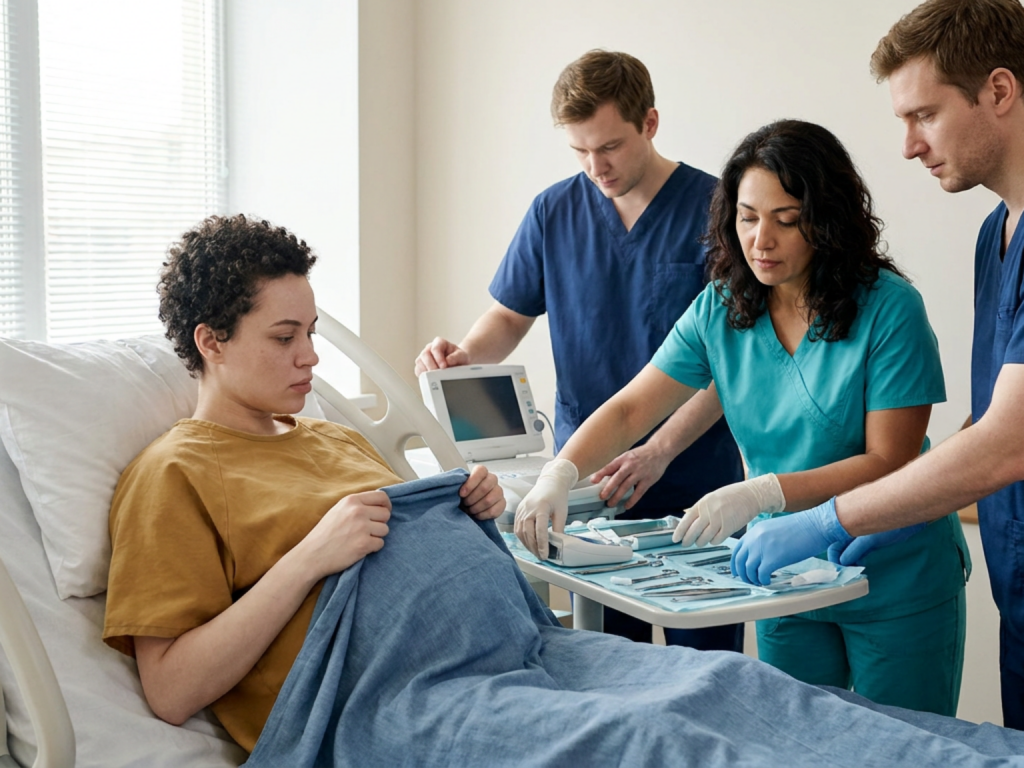
The decision is usually made when birth is close but the final part is not progressing as expected, when the birthing person is exhausted or medically advised to shorten pushing, or when the fetal heart rate pattern suggests the baby should be born soon. Because the situation can feel urgent, the room may suddenly become busier. More staff may enter, the bed may be adjusted, lights may be brighter, and someone may explain the plan quickly while preparing equipment.
Emotionally, assisted delivery can feel like relief, fear, disappointment, determination, or all of these at once. Many people remember the pressure of being told when to push, the clinician’s hands or instrument being placed, and a sense that events accelerated. A clear explanation, consent where possible, and reassurance from the team can make the experience feel less frightening.
Sensations during forceps or vacuum birth
The dominant sensation during assisted delivery is often pressure rather than cutting or tearing pain. The baby’s head is already low in the pelvis, so the tissues of the vagina, vulva, perineum, pelvic floor, and rectal area may feel extremely stretched. People often describe a deep, heavy, downward pressure, a strong urge to bear down, rectal pressure similar to needing a bowel movement, or a burning ring-of-fire sensation as the perineum stretches.
With forceps, you may feel the clinician inserting and positioning the blades around the baby’s head, then coordinated traction during contractions. The pulling should occur with pushing and uterine contractions, not as continuous force. Some people feel a firm internal movement or widening sensation. With vacuum assistance, you may feel placement of the cup and then traction during pushes; the sensation may be less of a widening feeling than forceps, though this varies greatly.
If an episiotomy is recommended, local anesthetic is usually used if there is no dense epidural already in effect. Some people feel pressure, tugging, or a brief sharpness; others feel very little. The birth itself may feel sudden once the head delivers, followed by warmth, release of pressure, fluid, and the baby’s body coming quickly. Even when pain is well controlled, the intensity of pressure can be overwhelming and memorable.
How anesthesia changes pain levels
Pain levels during assisted delivery depend heavily on whether you have an epidural, spinal anesthesia, pudendal block, local anesthetic, nitrous oxide, systemic opioid medication, or no regional anesthesia. A working epidural may reduce sharp pain substantially, but it often does not remove pressure. Many people with epidurals still feel pulling, stretching, rectal pressure, and the need to push. This can be useful because some sensation helps coordinate pushing.
Without an epidural, assisted delivery can feel more painful, especially during instrument placement, crowning, episiotomy, or repair of tears. Clinicians may use local anesthetic in the perineum, a pudendal nerve block, or other analgesia depending on urgency and local practice. If the baby needs to be delivered very quickly, there may be less time for additional pain relief, which can make the experience feel abrupt and distressing.
It is reasonable to ask, even in an urgent moment, what pain relief is available and what sensations to expect. A concise question such as, “Will I feel sharp pain or mostly pressure?” can help the team tailor support. If pain becomes severe or unexpectedly sharp during the procedure, telling the clinician immediately matters. Sometimes anesthesia can be topped up or local anesthetic added before repair of stitches.
Pain immediately after the birth
After the baby is born, the most common pain areas are the perineum, vagina, vulva, rectal area, stitches, and lower abdomen. The placenta still needs to deliver, the uterus contracts down, and the clinician checks for tears. If forceps or vacuum were used, there may be bruising, swelling, and soreness in tissues that have been stretched or compressed. Perineal pain after assisted birth can make sitting, standing, walking, and passing urine uncomfortable at first.
If stitches are needed, repair is usually done soon after birth with existing epidural anesthesia or local anesthetic. You may feel tugging and pressure during suturing, but sharp pain should be reported. Stitches used for perineal repair generally dissolve on their own, often over several weeks. The full healing process may take around six weeks, although day-to-day comfort often improves earlier.
Lower abdominal cramping is also common as the uterus contracts, particularly during breastfeeding or chestfeeding because oxytocin stimulates uterine tightening. This cramping is not specific to assisted delivery, but it can add to the overall pain load. The combination of uterine cramps, perineal swelling, hemorrhoids, fatigue, and muscle soreness can make the first 24 to 48 hours feel physically intense even after an uncomplicated assisted birth.
Typical recovery timeline and pain intensity
Recovery is individual, but many people notice the worst soreness in the first few days. Sitting may require shifting weight to one side, using pillows, or lying on the side. Walking can feel slow because swollen tissues pull or throb. Urination may sting if urine touches grazes or stitches, and bowel movements may feel intimidating because of pressure near the perineum.
For many, pain from tears, episiotomy, bruising, and soreness improves within one to two weeks. This does not mean everything feels normal at two weeks; rather, the sharpest or most limiting discomfort often starts easing. By several weeks, swelling and bruising usually reduce, stitches continue dissolving, and mobility improves. Pelvic floor heaviness, scar tenderness, sexual discomfort, or fear of bowel movements may last longer and deserve compassionate follow-up rather than dismissal.
Forceps or vacuum birth recovery can feel more demanding than an unassisted vaginal birth, particularly if there was an episiotomy, a deeper tear, prolonged pushing, or significant swelling. Pain intensity also depends on sleep deprivation, breastfeeding position, constipation, emotional distress, and whether you felt informed during the birth. Pain is not only a tissue signal; it is shaped by context, stress, and whether you feel safe and supported.
Comfort measures often used after assisted delivery
Postpartum pain control should be individualized by your healthcare team, especially if you have medication allergies, bleeding risks, kidney disease, liver disease, high blood pressure, anticoagulant use, or other medical factors. Many clinicians recommend non-opioid pain relievers such as ibuprofen or acetaminophen when appropriate, because they can reduce inflammatory pain and uterine cramping. Always follow the dose and safety advice given by your maternity team.
Local measures can be very helpful for perineal trauma. Ice packs in the first day may reduce swelling and throbbing. A peri bottle with warm water can dilute urine and reduce stinging while you pass urine. Cool sitz baths, numbing sprays, and witch hazel pads are commonly used for comfort, particularly when hemorrhoids or vulvar swelling are present. Keeping the area clean and dry, changing pads regularly, and avoiding prolonged pressure on the perineum can also help.
- Use positions that reduce direct pressure, such as side-lying for rest or feeding.
- Ask before using donut cushions, because they may increase swelling for some people.
- Prevent constipation with fluids, fiber, movement as tolerated, and clinician-approved stool softeners if advised.
- Request pelvic floor physiotherapy guidance if heaviness, leakage, or pain persists.
When pain is not expected or should be checked
Some discomfort is expected after assisted delivery, but pain should generally trend toward improvement. Seek medical advice promptly if pain is worsening rather than easing, if swelling becomes severe or one-sided, or if you develop fever, chills, foul-smelling discharge, heavy bleeding, dizziness, or feeling acutely unwell. These symptoms may signal infection, hematoma, retained tissue, or another complication that needs professional assessment.
Perineal trauma ranges from minor grazes to deeper tears involving the anal sphincter. Obstetric anal sphincter injuries need specific diagnosis, repair, and follow-up. Contact your clinician urgently if you cannot control stool or gas, have severe rectal pain, notice pus or wound breakdown, or feel a new bulge or expanding pressure in the vagina or perineum. Do not assume these symptoms are a normal price of birth.
Emotional pain also deserves attention. Assisted delivery can happen quickly, and some people later feel shocked, guilty, angry, or disconnected from the birth story. A birth debrief after assisted delivery can help you understand why the intervention was recommended, what happened clinically, and what it may mean for future births. Support from a midwife, obstetric clinician, pelvic health physiotherapist, or perinatal mental health professional can be part of recovery.
Seek urgent advice
- Severe or worsening perineal, abdominal, or rectal pain needs medical review.
- Fever, chills, foul-smelling discharge, or feeling very unwell may indicate infection.
- Heavy bleeding, dizziness, or fainting after birth should be assessed urgently.
- Loss of control of stool or gas after assisted delivery should not be ignored.
- A rapidly enlarging swollen area or one-sided severe pain may need prompt evaluation.
Tools & Assistance
- Ask your midwife or obstetric team for a clear explanation of the assisted delivery.
- Use a written pain and bleeding log for the first postpartum week.
- Request pelvic floor physiotherapy if pain, heaviness, or leakage persists.
- Contact maternity triage or postpartum care services for worsening symptoms.
- Arrange a birth debrief if the experience feels confusing or distressing.
FAQ
Is assisted delivery always more painful than unassisted vaginal birth?
Not always. Pain depends on anesthesia, labor duration, fetal position, tissue stretching, tears, episiotomy, and personal pain sensitivity. Many people feel mainly pressure during the procedure but more soreness afterward.
How long does pain usually last after forceps or vacuum delivery?
The most intense soreness is often in the first few days, and pain from tears or bruising commonly improves within one to two weeks. Deeper healing may take about six weeks or longer.
Will stitches after assisted delivery dissolve?
Perineal stitches are usually absorbable and dissolve over several weeks. If pain worsens, the wound opens, or discharge becomes foul-smelling, contact your healthcare professional.
Can I ask for more pain relief during repair?
Yes. If you feel sharp pain during examination or stitching, tell the clinician immediately so they can assess whether additional local anesthetic or other pain relief is appropriate.
Is emotional distress after assisted delivery normal?
It can happen, especially if the birth felt sudden or frightening. A postpartum debrief and perinatal mental health support can help you process what happened.
Sources
- American College of Obstetricians and Gynecologists — Assisted Vaginal Delivery
- Healthdirect Australian Government Health Service — Assisted Vaginal Delivery (antenatal use)
- Cleveland Clinic — Forceps Delivery: What To Expect, Risks & Recovery
Disclaimer
This article is for general medical information only and is not a diagnosis or treatment plan. Always seek advice from your obstetric, midwifery, or postpartum care team about your symptoms and recovery.















Please log in to leave a comment.