
Intro
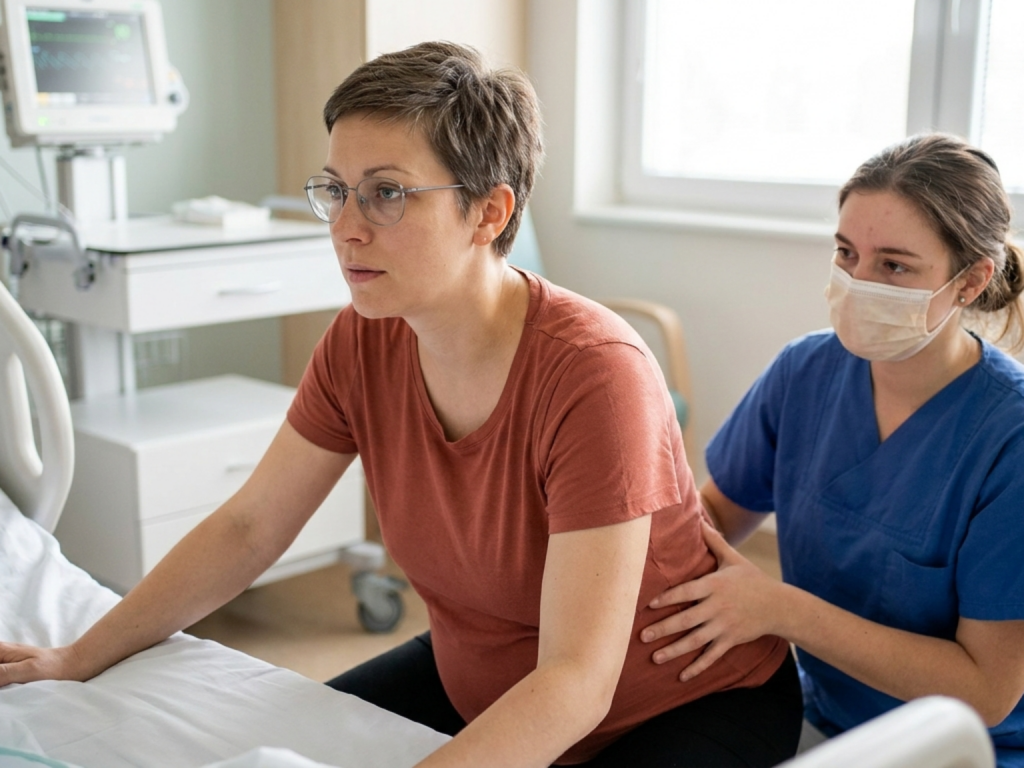
Labor is not a fixed posture; it is a moving physiologic process. Many people instinctively sway, lean forward, kneel, squat, or turn onto one side as contractions change in intensity and the baby rotates through the pelvis. These position changes can support comfort, pelvic mobility, and a sense of participation in birth.
Squatting and other upright positions are often discussed as ways to use gravity during labor. The evidence is mixed rather than absolute: some studies report benefits, while higher-level review data do not show a clear advantage for every outcome. The most clinically respectful approach is individualized, flexible, and guided by the birthing person, their care team, fetal monitoring needs, analgesia, and safety considerations.
Highlights
Squatting may help open the pelvic outlet and align the body with gravity, but it is not universally better than other positions.
Position changes can be useful for comfort, fetal descent, rotation, and reducing pressure in one area of the pelvis.
Evidence on squatting is mixed: some studies show shorter second stage and fewer perineal injuries, while a review found no clear benefit across most outcomes.
The safest position is the one that fits the clinical situation, maternal mobility, fetal status, and the birthing person's preferences.
Support from a midwife, obstetrician, nurse, doula, or physical therapist can make upright and squatting positions safer and more sustainable.
How gravity helps during birth
Gravity is one of the simplest forces available during labor, but it works best when understood realistically. In upright birthing positions, the long axis of the uterus, the fetus, and the birth canal may align in a way that encourages fetal descent through the pelvis. This does not mean gravity alone makes labor faster or easier; uterine contractions, cervical dilation, fetal position, pelvic shape, soft tissue resistance, and maternal energy all remain central.
When a laboring person stands, kneels, leans forward, or squats, the pelvis is not static. The sacrum, coccyx, pelvic floor, hips, and lumbar spine can move subtly with each contraction. That mobility may help the presenting part find space, especially when the baby is rotating from an occiput posterior or transverse position toward a more favorable anterior position.
Gravity-informed birth planning is therefore less about committing to one posture and more about keeping options available. A person may prefer walking in early labor, kneeling over the bed in active labor, supported squatting during pushing, and side-lying for rest. Each position has a different purpose, and changing between them can be more useful than trying to endure one idealized pose.
Benefits and safety of squatting during labor
Squatting during labor is often valued because it flexes the hips, widens the pelvic outlet, and lets the torso remain relatively upright. NHS inform describes squatting as a position that can open the pelvis and help the baby be born with the aid of gravity. In practical terms, a supported squat may feel powerful during the second stage of labor because the person can bear down while the pelvis is mobile and the feet, bed, squat bar, or support person provide counterforce.
The evidence should be presented with balance. One study comparing squatting with semirecumbent positions reported a shorter second stage, less oxytocin use, fewer perineal injuries, and no significant difference in infant complications. However, a later review found no clear benefit for duration of labor or most maternal and fetal outcomes when squatting was compared with other positions. This difference does not make squatting useless; it means outcomes vary and the position should not be oversold.
Supported squatting in labor can be tiring, especially after a long first stage, epidural analgesia, or significant hip, knee, pelvic girdle, or back pain. It is safest when the person can move in and out of the position easily, maintain balance, and receive help if dizziness, fetal heart rate concerns, or excessive fatigue occurs.
Choosing the right position for labor
Choosing the right position for labor depends on the phase of labor, the contraction pattern, fetal station, maternal symptoms, and the person’s sense of control. Early labor often allows broader movement: walking, swaying, climbing a few stairs with supervision, sitting on a birth ball, or leaning over a counter. Active labor may call for positions that conserve energy while preserving pelvic movement, such as kneeling over the raised head of the bed, hands-and-knees, or side-lying with a peanut-shaped positioning ball.
During the second stage, the goal shifts toward effective pushing, fetal descent, and protecting maternal tissues as much as possible. Some people feel a strong spontaneous urge to bear down in an upright posture. Others push more effectively on their side, semi-reclined, kneeling, or with one leg supported. None of these choices is automatically wrong.
A useful clinical question is not, Which position is best? It is, What is this position helping right now? If a posture improves pain coping, creates room for rotation, reduces back pressure, supports fetal monitoring, or helps the person rest, it may be doing meaningful work even if it does not shorten labor on a stopwatch.
How position affects labor progress and comfort
How position affects labor progress and comfort is partly mechanical and partly neurologic. Mechanically, maternal position changes in labor alter hip angle, sacral mobility, pelvic diameters, and the direction of pressure from the fetal head. Neurologically, movement can change pain perception by giving the brain new sensory input, reducing sustained pressure on one painful area, and helping the laboring person feel less trapped.
Forward-leaning labor positions may be helpful when contractions are felt mostly in the back, especially if the fetus is rotating. Hands-and-knees can reduce pressure on the sacrum and may feel more tolerable during intense back labor. Side-lying position during contractions can be useful for rest, epidural-associated motor weakness, blood pressure concerns, or when the perineum needs a slower, more controlled stretch during birth.
Some position changes are also intended to reduce aorto-caval compression, which can occur when the heavy uterus compresses major maternal blood vessels in a flat supine posture. A left or right lateral tilt, side-lying, or upright position may improve maternal comfort and circulation in some situations. Any concerning symptoms, such as faintness, chest discomfort, severe shortness of breath, heavy bleeding, or persistent fetal heart rate abnormalities, require immediate clinical attention rather than further experimentation with posture.
Practical ways to use supported upright positions
Supported upright positions make gravity more usable because they reduce the demand on the legs and pelvic floor. A full unsupported squat can be difficult to maintain during contractions, so many people use a squat bar, bed sheet, partner support, low stool, birth stool, wall, or raised bed. The goal is not athletic depth; it is a stable position that allows the pelvis to release while the upper body remains supported.
Common options include standing and walking during labor, slow swaying while leaning into a partner, kneeling with the chest supported on pillows, sitting upright on a birth ball, and moving into a supported squat only during contractions or pushing efforts. Between contractions, returning to kneeling, side-lying, or sitting can preserve energy.
- Use non-slip footing and avoid sudden position changes if lightheaded.
- Ask how fetal monitoring, IV lines, epidural tubing, or blood pressure cuffs can be arranged to allow safe movement.
- Change positions gradually and with assistance if sensation, balance, or leg strength is reduced.
- Stop a position if it increases severe pain, numbness, dizziness, or distress.
Mobility should always be adapted to the clinical setting. A person with an epidural, magnesium infusion, significant bleeding, or continuous monitoring needs may still change position, but usually with closer hands-on support.
When to prioritize medical guidance
Position preference matters, but it sits within a broader safety framework. The care team may recommend a different posture if there are fetal heart rate concerns, shoulder dystocia maneuvers are needed, operative vaginal birth is being considered, maternal blood pressure is unstable, bleeding is heavy, or anesthesia-related mobility limits are present. These recommendations are not a failure of physiologic birth; they are a response to changing risk.
It is also reasonable for the birthing person to decline a position that feels frightening, painful, exposing, or exhausting and ask for alternatives. Shared decision-making can be brief and still meaningful: What is the concern? What position do you recommend? Is this urgent? Can we try another posture first? These questions help preserve dignity while allowing necessary clinical action.
For birth planning, it helps to discuss upright positions during labor before contractions begin. Ask whether the unit has squat bars, birth balls, wireless or mobility-compatible fetal monitoring, birth stools, peanut balls, or staff comfortable assisting supported squatting. Also ask how position changes after epidural analgesia are usually handled. A flexible plan gives the team permission to support movement while keeping room for medical judgment if circumstances change.
When to get clinical help
- Do not use squatting without assistance if you feel faint, weak, numb, or unsteady.
- Follow urgent medical guidance if fetal heart rate concerns, heavy bleeding, or severe hypertension occur.
- Avoid forcing deep squats if you have significant hip, knee, pelvic, or neurologic limitations.
- Ask for help before changing position if you have an epidural, IV medication, or reduced leg strength.
- Seek immediate care for severe shortness of breath, chest pain, seizure symptoms, or sudden severe abdominal pain.
Tools & Assistance
- Discuss preferred labor positions during a prenatal visit
- Ask the birth unit about squat bars, birth balls, peanut balls, and wireless monitoring
- Practice supported squats, kneeling, and side-lying positions with a qualified birth professional
- Create a flexible birth preference sheet that includes movement and rest options
- Ask the care team to explain any position restriction in real time
FAQ
Does squatting make labor faster?
Not reliably for everyone. Some research has reported a shorter second stage with squatting, but review evidence has not shown a clear consistent benefit for labor duration or most outcomes.
Can I squat if I have an epidural?
Possibly, but usually only with careful support and depending on leg strength, sensation, blood pressure, and hospital policy. Side-lying, throne position, kneeling with support, or a peanut ball may be safer alternatives.
Is squatting safe for the baby?
Available studies do not show a clear increase in infant complications from squatting, but fetal status must be monitored according to the clinical situation. Follow your care team's guidance if concerns arise.
What if squatting feels uncomfortable?
That is a valid reason to change. Labor positions should support comfort, coping, and safety; side-lying, hands-and-knees, kneeling, sitting upright, or leaning forward may work better.
Should I choose one birth position in advance?
It is better to plan a menu of options. Labor changes over time, and the most useful position may shift with contraction intensity, fetal descent, fatigue, analgesia, and clinical needs.
Sources
- PubMed — Squatting position in the second stage of labor
- PubMed — The squatting position for the second stage of labor: effects on labor and on maternal and fetal well-being
- NHS inform — Labour positions
Disclaimer
This article is for general medical education only and does not diagnose, prescribe, or replace care from a qualified healthcare professional. Always discuss labor positioning, symptoms, and birth plans with your obstetrician, midwife, or care team.














Please log in to leave a comment.