
Intro
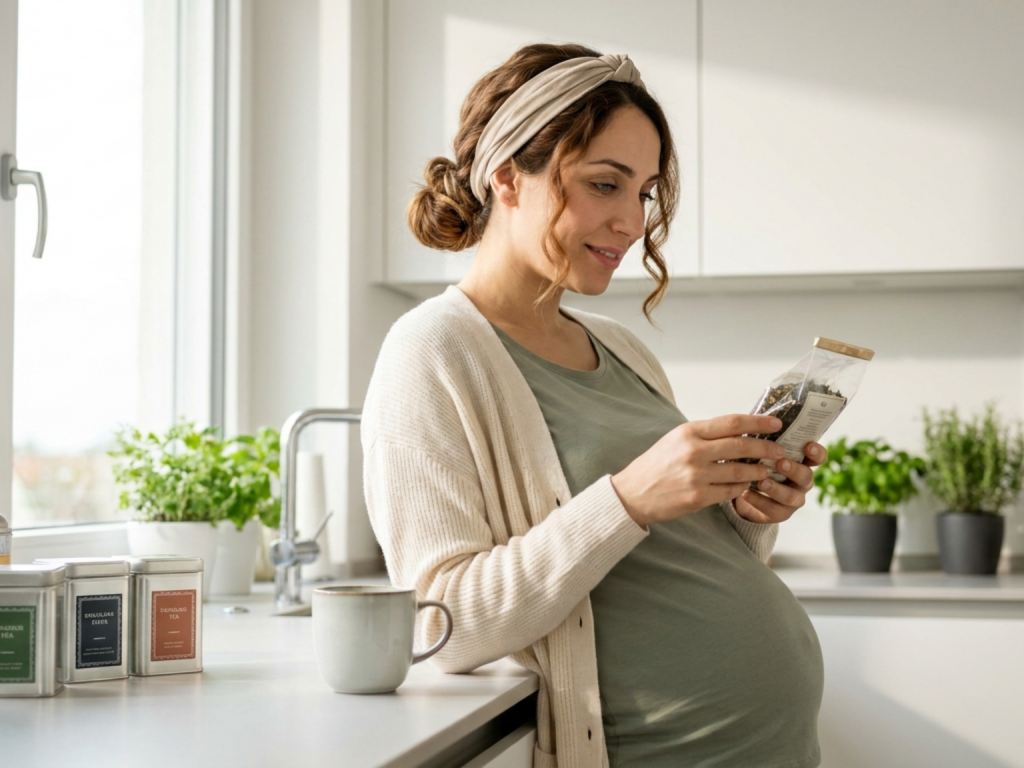
Many people want to keep the comfort and routine of tea when they become pregnant, and that is completely understandable. The key question is not whether tea is automatically "good" or "bad," but what kind of tea it is, how much caffeine it contributes, and whether any herbal ingredients have uncertain safety data.
For most people, tea safety during pregnancy comes down to total caffeine intake and careful label reading. Standard black, green, white, oolong, and matcha teas can all contribute caffeine, while herbal teas may be caffeine-free but still contain botanicals that have not been well studied in pregnancy.
Highlights
Tea is best judged by type and dose, not by the word "tea" alone. Caffeinated teas add to your daily caffeine total, while herbal teas raise a different set of questions.
The main pregnancy caffeine limit used in major guidance is 200 mg per day. That limit applies to all caffeine sources combined, not just tea.
Herbal teas are not automatically safer than black tea. Some blends contain multiple botanicals, and research on many of them in pregnancy is limited.
If a tea product lists several herbs or appears more like a supplement, it deserves a closer look and often a conversation with a healthcare professional.
A practical, non-alarmist approach works best: know the ingredients, count caffeine across the whole day, and ask for personalized advice when in doubt.
How tea fits into pregnancy caffeine guidance
The most important safety issue for ordinary tea is caffeine. The NHS advises keeping total caffeine intake below 200 mg per day in pregnancy, and that total should include every source, not only tea. MotherToBaby also notes that caffeine crosses the placenta and that the developing fetus metabolizes it more slowly than an adult does, which is one reason intake is kept moderate rather than unlimited.
That does not mean every cup of tea is a problem. It means tea should be viewed as part of a daily caffeine budget. A lightly brewed cup may contribute relatively little, while a strong mug, a large serving, or several cups across the day can add up. Because brewing time, leaf amount, cup size, and tea variety all change the caffeine load, there is no single number that fits every cup.
A useful mindset is to ask, “How much caffeine am I getting overall today?” rather than “Is tea allowed?” That question is especially important if tea is one of several caffeine sources in a day, because coffee, cola, energy drinks, chocolate, and some medicines can all contribute.
Standard teas: black, green, white, oolong, matcha, and decaf
Teas made from Camellia sinensis are the classic caffeinated teas: black, green, white, oolong, and matcha. Their caffeine content varies naturally and also depends on processing and preparation. For pregnancy counseling, the main point is simple: these drinks are not caffeine-free, so they count toward the daily limit.
Matcha deserves special attention because it is consumed as the whole powdered leaf rather than an infused leaf bag, so it may deliver more caffeine than a milder brewed tea. Strong, large, or repeatedly refilled cups can also be more significant than they look. Decaffeinated tea can be helpful for people who want the ritual and flavor with less caffeine, but “decaf” does not mean “zero caffeine,” so it still contributes a small amount.
If you are tracking intake carefully, it can help to think in terms of patterns rather than isolated drinks. One plain cup may fit comfortably into a pregnancy diet, but several caffeinated cups plus other caffeine sources can push the total higher than intended.
Herbal teas: why the label matters as much as the cup
Herbal teas are often treated as a gentler option, but pregnancy safety is more complicated than that. Many herbal products have limited human data in pregnancy, and the scientific literature does not support assuming that all botanicals are harmless simply because they are sold as tea. The review literature also points to concerns about variable product quality, contamination, and the fact that some blends contain multiple ingredients that are hard to evaluate one by one.
This is where tea safety in pregnancy becomes a label-reading problem. A product that looks like a simple chamomile-style infusion may actually include several herbs, fruit peels, flavorings, or concentrated plant extracts. If a blend includes multiple botanicals or seems closer to a supplement than a beverage, it belongs in the conversation about herbal supplements and pregnancy safety. That is especially true when the label does not clearly identify every ingredient or when the product is imported, unlabeled, or sold in a way that makes quality control hard to judge.
The safest general principle is not to assume that “natural” means “proven safe.” In pregnancy, safety data matter more than marketing language.
Practical ways to lower risk without giving up tea
For many pregnant people, the goal is not to eliminate tea completely. It is to make tea fit into a broader, reasonable caffeine plan. A simple first step is to count caffeine sources in pregnancy across the whole day rather than trying to estimate each drink in isolation. If tea is part of your routine, consider whether other caffeine sources are also present, especially on busy or tired days when cups can accumulate without much notice.
Another practical step is to choose the simplest possible product. Plain tea with one clearly identified ingredient is easier to think about than a multi-ingredient blend. The same logic applies to herbal tea safety in pregnancy: fewer ingredients generally means fewer unknowns. If you want the comfort of a warm drink, decaffeinated tea, water, milk, or a plainly labeled infusion may reduce uncertainty while preserving the ritual.
It can also help to bring tea into prenatal conversations early, before there is a problem. Many people do not think to mention their daily tea habit, but clinicians often welcome that information because it helps them estimate total caffeine exposure and spot ingredient concerns. A brief discussion with a midwife, obstetrician, or pharmacist can be reassuring and often more useful than trying to interpret the internet alone.
When tea needs extra caution
Tea deserves extra caution when the product is a blend, the ingredient list is incomplete, or the serving size is large enough to materially change your daily caffeine total. It also deserves caution if you are using tea to self-manage nausea, sleep problems, constipation, or stress and you find yourself drinking it repeatedly throughout the day. In those situations, the product may be doing more than simply quenching thirst.
Some people need a lower threshold for professional advice. That includes anyone who has been told to limit caffeine for a medical reason, anyone taking medications or supplements that could interact with botanicals, and anyone who is unsure whether a tea is actually an herbal product with pharmacologic effects. If a drink causes palpitations, marked jitteriness, insomnia, or worsened reflux, it is reasonable to pause and discuss it with a clinician.
The bottom line is that tea can be a small and manageable part of pregnancy for many people, but it is not automatically neutral. When the label is complex, the dose is high, or the symptoms are concerning, careful review is the safest path.
A balanced way to think about tea during pregnancy
It may help to think of tea as a category with a spectrum. On one end are familiar caffeinated teas that simply need to be counted toward the 200 mg/day caffeine guidance. On the other end are herbal blends that may contain multiple botanicals, uncertain doses, or quality-control issues. Most real-world products fall somewhere in between, which is why a one-size-fits-all rule often feels unsatisfying.
A balanced approach acknowledges both comfort and caution. If tea helps you stay hydrated, reduces the urge for stronger caffeine, or supports a calming routine, that benefit matters. At the same time, pregnancy is not the moment to assume that every botanical blend has a robust safety record. When in doubt, choose the simpler product, count the caffeine, and ask for individualized advice.
That combination of moderation and consultation is usually the most practical answer. It respects the value of tea in daily life while keeping the focus on fetal exposure, ingredient transparency, and informed decision-making.
When to get medical advice
- Your total caffeine intake may be near or above 200 mg per day.
- Your tea contains several herbs, extracts, or unclear ingredients.
- Tea triggers palpitations, insomnia, anxiety, reflux, or worsening nausea.
- You take prescription medicines, supplements, or have a condition that changes caffeine advice.
- You are unsure whether an herbal blend is appropriate in pregnancy.
Tools & Assistance
- NHS pregnancy nutrition guidance on caffeine limits
- Tea package ingredient list and serving-size label
- Your midwife, obstetrician, or family doctor
- A pharmacist review for herb and supplement interactions
- A simple daily caffeine log for drinks and snacks
FAQ
Is black tea safe in pregnancy?
Often it can be, as long as your total caffeine intake stays within the recommended daily limit and your clinician has not advised otherwise.
Are herbal teas automatically safer than caffeinated tea?
No. Herbal products may be caffeine-free, but many have limited pregnancy safety data, and multi-ingredient blends can be harder to assess.
Does decaf tea still matter?
Yes, but usually less. Decaf tea can still contain a small amount of caffeine, so it still counts toward your daily total.
What should I do if I drank too much caffeine today?
Do not panic. Return to a lower-caffeine pattern tomorrow and contact your obstetric clinician or midwife if you are worried or feel unwell.
Should I ask about tea at prenatal visits?
Yes. Mentioning your usual tea, coffee, and herbal drink habits helps your clinician estimate total caffeine exposure and review any herbal ingredients.
Sources
- NHS — FAQ: Nutrition During Pregnancy
- MotherToBaby — Caffeine - MotherToBaby Fact Sheet
- PubMed Central — Frequently Used Herbal Teas During Pregnancy - Short Update
Disclaimer
This article is for general information only and does not replace individualized medical advice. If you are pregnant and have questions about caffeine, herbal teas, symptoms, or medication interactions, please consult your obstetric clinician, midwife, or pharmacist.















Please log in to leave a comment.