

Intro
Psychological comfort is not a luxury in birth preparation; it is part of how a person interprets safety, control, privacy, support, and the meaning of what is happening. A setting can feel medically equipped yet emotionally overwhelming, or familiar yet clinically unsuitable for a particular pregnancy. The goal is not to find a perfect environment, but to understand which features help the nervous system register care as safe enough.
For a medically literate reader, it may help to think of comfort as a multidimensional clinical-adjacent variable: sensory input, threat appraisal, autonomy, expectations, communication quality, and interpersonal trust all interact. These factors do not replace obstetric risk assessment, but they can shape how people cope with labor, birth, postpartum recovery, and the decisions made along the way.
Highlights
Psychological comfort is dynamic: it can change with pain intensity, clinical uncertainty, staffing, privacy, sensory input, and perceived control.
A supportive birth setting balances emotional safety with clinical readiness, including escalation planning when risk changes.
Comfort is not the same as absence of pain; it often means feeling respected, oriented, and able to participate in decisions.
Home, hospital, birth center, learning spaces, and digital care each create different comfort opportunities and different limitations.
Trauma-informed communication and individualized planning can make almost any setting more psychologically tolerable.
Defining comfort in birth
Psychological comfort in birth is a subjective state in which a person feels enough ease, safety, orientation, and interpersonal trust to remain engaged with what is happening. It overlaps with well-being and quality of life, but it is not identical to either. Conceptual work in health care describes comfort as a broad, holistic construct linked with relief of imbalance, inner peace, security, and effective communication, while well-being is more often framed through psycho-spiritual experience and quality of life through life satisfaction and autonomy.
In labor, this distinction matters. A person may not feel well, because contractions, exhaustion, nausea, or fear are present, yet may still feel psychologically comfortable if the environment is predictable, clinicians explain findings clearly, and choices are respected. Conversely, a clinically stable room can feel uncomfortable if privacy is poor, language is dismissive, or procedures occur without adequate consent.
Comfort is also dynamic. It can shift with cervical change, fetal monitoring, transfer, medication decisions, or the arrival of unfamiliar staff. For many people, the central issue is not removing every stressor, but reducing unnecessary threat signals so coping, decision-making, and connection remain possible.
Home and familiar surroundings
Residential comfort research emphasizes that comfort is not only a physical response to temperature, light, air quality, or noise. It also depends on how people interpret a situation, including expectations, perceived agency, future outcomes, and trade-offs. This is especially relevant in birth because home is often saturated with personal meaning: familiar smells, chosen lighting, private bathrooms, known movement paths, and reduced observation by strangers.
For some low-risk pregnancies, home-like surroundings may support psychological comfort by protecting privacy and continuity. A person may feel more able to vocalize, move, eat, rest, or use nonpharmacologic comfort measures when the setting feels like their own. The same features, however, do not make a setting clinically appropriate for everyone. Psychological comfort should be considered alongside candidate selection for home birth, access to qualified attendants, newborn assessment, hemorrhage response, and a realistic emergency transfer process.
This is where planned home birth safety becomes a comfort issue as well as a medical issue. If someone knows where equipment is, who is monitoring the parent and fetus, when transfer would be recommended, and how transport would occur, the home can feel less like a fragile ideal and more like a prepared care environment. These discussions should happen with a licensed maternity clinician before labor begins.
Hospitals and high-acuity rooms
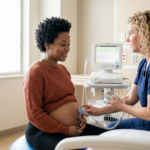
Hospitals can offer advanced obstetric, anesthetic, neonatal, surgical, and transfusion resources, which may be psychologically comforting for people with medical complexity or a strong preference for immediate escalation capacity. At the same time, hospital environments can activate stress: alarms, bright lights, rotating staff, institutional routines, restricted movement, repeated examinations, and unfamiliar terminology may increase autonomic arousal.
Comfort in a hospital is often built through communication rather than architecture alone. Shared decision-making in labor, concise explanations before procedures, permission to pause when clinically safe, and clear role identification by staff can reduce cognitive overload. For a person with previous trauma, pregnancy loss, racism in care, sexual trauma, or prior emergency birth, trauma-informed care is not an optional kindness; it is a practical way to reduce avoidable threat cues.
Small sensory changes can also help. Dimming lights, reducing nonessential noise, limiting room traffic, inviting a support person to remain close, and explaining monitoring data in plain language may make a high-acuity space feel less alien. These measures should never delay urgent care, but in stable moments they can preserve dignity and orientation.
Birth centers and hybrid settings
Birth centers are often chosen because they try to preserve the privacy and mobility associated with home while maintaining professional attendance and defined clinical protocols. Psychological comfort may come from tubs, upright movement, fewer visible machines, longer appointment relationships, and staff who expect physiologic labor when risk remains low. For someone seeking a low-intervention birth plan, this environment can feel coherent with their values.
The comfort of a birth center depends partly on transparency about limits. A supportive setting does not pretend that escalation is impossible; it makes escalation understandable. A clear birth center transfer plan can prevent transfer from feeling like failure or abandonment. It can define what changes would prompt consultation, transport, hospital admission, epidural request, operative birth assessment, or neonatal support.
Hybrid environments, such as hospital-based birth centers or low-intervention units inside larger hospitals, may offer psychological comfort for people who want a less medicalized room but also want rapid access to higher-level resources. The best fit depends on obstetric history, fetal considerations, local staffing, distance to emergency care, and the individual meaning attached to safety.
Learning and waiting spaces
Psychological comfort begins before labor. Prenatal classes, clinic waiting areas, workplaces, lactation spaces, and informal study settings shape how people absorb information and prepare for decisions. A dataset of university students in café-based informal learning spaces found that psychological comfort was examined in relation to creativity and learning efficiency, with attention to spatial layout, natural elements, soundscape, lighting, study habits, and preferences for solitary versus collaborative work. Although that study was not about pregnancy, it helps illustrate a broader point: settings influence cognitive engagement.
In birth preparation, cognitive engagement is not abstract. People need to understand consent, fetal surveillance, analgesia options, induction methods, cesarean indications, postpartum warning signs, and newborn care. If the environment is crowded, noisy, rushed, or socially unsafe, learning may become less efficient and more emotionally loaded.
Comfort-oriented prenatal education usually offers clear structure, respectful language, enough time for questions, and options for different learning styles. Some people process best in a group; others need one-to-one counseling, written materials, interpreter support, or time to review after an appointment. The goal is not to make education cozy, but to make it usable under real cognitive and emotional conditions.
Digital and relational spaces
Telehealth, messaging portals, birth apps, and online classes are also settings. They may offer control, convenience, and privacy, especially for people with transportation barriers, mobility limitations, childcare responsibilities, or anxiety in clinical spaces. Yet digital care can also create discomfort when the platform is confusing, internet access is unreliable, confidentiality is limited at home, or nuanced concerns are reduced to brief messages.
Relational comfort is often the deciding factor across all settings. A person may tolerate a busy triage unit if the clinician listens carefully, names uncertainty honestly, and explains the plan. Another person may feel unsafe in a visually calm room if concerns are minimized. This is why fear of childbirth should be taken seriously rather than dismissed as ordinary worry. Severe avoidance, panic, intrusive memories, or persistent distress deserves professional assessment, including perinatal mental health care when appropriate.
Digital tools should complement, not replace, clinical judgment. They can help organize questions, track preferences, or support education, but urgent symptoms, decreased fetal movement concerns, bleeding, severe pain, hypertensive symptoms, or signs of infection require prompt direct contact with the maternity care team or emergency services.
A portable comfort plan
Because birth can move across settings, comfort planning should be portable. A flexible birth preferences document can identify what helps the person feel safe without assuming labor will follow a single script. Useful categories include sensory needs, communication preferences, support roles, consent needs, cultural or spiritual practices, prior trauma considerations, and escalation preferences.
A practical plan can include several layers: who should speak for the patient if they are overwhelmed, which words or approaches feel grounding, whether touch is welcome, what information should be explained before examinations, and which coping toolkit for contractions has already been practiced. This may include breathing patterns, water, counterpressure, position changes, heat, cold, sterile water injections where available, nitrous oxide, epidural discussion, or other clinician-supported options.
The plan should also protect flexibility. A confidence plan for labor is strongest when it includes contingencies: what would help if induction is needed, if continuous monitoring is recommended, if transfer occurs, if cesarean birth becomes necessary, or if the newborn needs extra support. Psychological comfort is not about controlling every outcome. It is about preserving agency, dignity, and connection while receiving appropriate medical care.
When to seek urgent care
- Contact your maternity unit or clinician promptly for heavy bleeding, severe abdominal pain, or concerning fluid leakage.
- Seek urgent guidance for decreased fetal movement, severe headache, visual symptoms, chest pain, or shortness of breath.
- Do not rely on comfort measures alone when fever, infection symptoms, seizures, fainting, or severe hypertension symptoms are possible.
- If fear, panic, intrusive memories, or avoidance interferes with care, ask for perinatal mental health support.
- Any birth setting decision should include individualized obstetric risk assessment with a qualified professional.
Tools & Assistance
- Birth-setting discussion with an obstetrician, family physician, or licensed midwife
- Hospital or birth center tour focused on transfer routes, monitoring options, privacy, and support policies
- Flexible birth preferences document reviewed with the care team before labor
- Perinatal mental health referral for significant anxiety, trauma symptoms, or fear of childbirth
- Postpartum follow-up plan that includes emotional recovery, feeding support, sleep, and warning signs
FAQ
Is psychological comfort the same as wanting a low-intervention birth?
No. Some people feel most comfortable with minimal intervention, while others feel safer with continuous monitoring, epidural access, or hospital resources. Comfort is individualized.
Can a hospital birth still feel emotionally safe?
Yes. Clear communication, consent-based care, sensory adjustments, continuous support, and trauma-informed care can make a hospital setting more psychologically comfortable.
Does feeling comfortable mean a birth setting is medically appropriate?
Not by itself. Emotional comfort should be considered together with pregnancy risk factors, fetal status, available staff, equipment, and emergency transfer capacity.
What if my comfort needs conflict with medical recommendations?
Ask the clinician to explain the indication, urgency, benefits, risks, and alternatives. Shared decision-making can often preserve dignity even when the plan must change.
Sources
- PubMed — Psychological comfort, creativity, and learning efficiency in informal learning spaces: A university student dataset
- PubMed Central — Comfort, well-being and quality of life: Discussion of the differences and similarities between the constructs
- Buildings & Cities — The feeling of comfort in residential settings II: a quantitative model
Disclaimer
This article is for general educational purposes and is not a diagnosis, prescription, or substitute for individualized medical care. Consult a qualified healthcare professional for decisions about pregnancy, labor, birth setting, or urgent symptoms.

















Please log in to leave a comment.