
Intro
A predictable daily routine can help preschoolers feel safer, participate more fully, and recover from big emotions with less distress. Between ages 3 and 5, children are developing rapidly across language, motor, cognitive, sleep-wake regulation, and social-emotional domains, so a good routine is structured but not rigid.
This guide offers a practical, medically cautious framework for families and early childhood settings. It does not replace individualized advice from a pediatrician, developmental specialist, occupational therapist, speech-language pathologist, or mental health professional when concerns arise.
Highlights
Preschoolers usually do best with a steady rhythm of arrival, play, group time, meals, outdoor movement, rest, and calm transitions.
A balanced day supports executive function, language, fine and gross motor skills, emotional regulation, and early peer relationships.
Visual cues, brief warnings before transitions, and child-sized responsibilities can reduce power struggles and build independence.
Sleep needs vary in this age range; some children still nap, while others need quiet time instead of sleep.
Medical, developmental, sensory, or feeding concerns should be discussed with qualified health professionals rather than managed by routine changes alone.
Why routine matters for preschool development
A daily routine is more than a timetable. For a preschooler, it is an external regulatory system that helps the brain anticipate what comes next. At ages 3 to 5, the prefrontal cortex, which supports inhibition, working memory, planning, and flexible thinking, is still immature. Predictable sequences such as greeting, play, snack, outdoor time, lunch, rest, and pickup reduce cognitive load and give the child repeated chances to practice self-regulation.
Routine also protects relational safety. Children are more likely to separate from caregivers, join peers, eat, use the toilet, or rest when the order of the day is familiar. This does not mean every minute must be controlled. In fact, high-quality routines usually alternate structure with child-directed play. The adult provides the frame; the child has meaningful choices within it.
From a developmental perspective, a preschool day should include cognitive, physical, creative, language, and social-emotional experiences. Circle time may build joint attention and vocabulary; learning centers support problem-solving and symbolic thought; outdoor play strengthens vestibular, proprioceptive, and gross motor systems; art and manipulatives support fine-motor activities for preschool children; meals and transitions teach turn-taking, waiting, manners, and body awareness.
A sample full-day preschool routine
The exact timing depends on the child, family schedule, program length, transportation, culture, meals, and sleep needs. Still, many 3- to 5-year-olds benefit from a rhythm similar to the following:
- 7:30 to 8:30 Arrival and greeting: calm entry, handwashing, putting belongings away, and brief connection with a trusted adult.
- 8:30 to 9:15 Choice time or learning centers: blocks, dramatic play, sensory table, books, puzzles, early math, art, or science exploration.
- 9:15 to 9:30 Morning meeting or circle time: songs, calendar concepts, story, emotion check-in, movement, or a short group discussion.
- 9:30 to 10:00 Snack and toileting: hand hygiene, eating practice, hydration, and bathroom routines.
- 10:00 to 11:00 Outdoor or gross motor play: running, climbing, ball play, tricycles, nature observation, or structured movement games.
- 11:00 to 11:45 Small groups or project work: early literacy in preschool children, art, counting, sorting, science, or teacher-guided play.
- 11:45 to 12:30 Lunch: social conversation, self-feeding, cleanup, and food exposure without pressure.
- 12:30 to 2:00 Rest or quiet time: nap for children who need it, or books, soft toys, drawing, and calm activities for non-nappers.
- 2:00 to 3:00 Afternoon play: outdoor time, music, dramatic play, construction, or sensory regulation activities.
- 3:00 to 3:30 Snack, story, and closing routine: review the day, prepare belongings, and transition to pickup.
Three-year-olds often need shorter group periods, more toileting support, and more adult help during transitions. Four- and five-year-olds may tolerate longer projects, richer peer collaboration, and more responsibility, but they still need movement and emotional co-regulation.
Morning arrival, separation, and connection
Arrival sets the nervous-system tone for the day. A rushed or unpredictable drop-off can increase separation distress, while a consistent ritual can help the child shift from home attachment cues to classroom belonging. The ritual might include a greeting, handwashing, choosing a center, and a brief goodbye phrase. Long, repeated goodbyes can sometimes prolong distress, although every child is different.
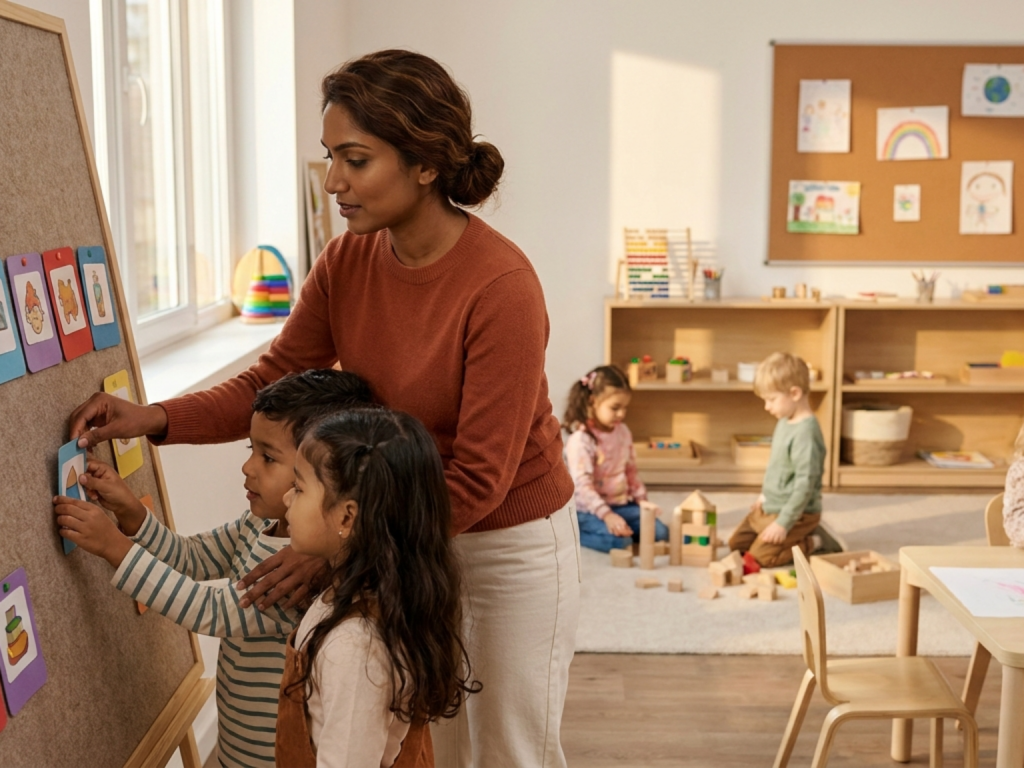
For children who struggle with separation, adults can use a visual schedule, a transitional object if allowed, and a predictable connection point such as, “After snack, we will look at your family photo.” The goal is not to suppress tears. Crying at separation can be developmentally normal. The goal is to communicate that feelings are acceptable and the routine is safe.
Morning routines also build independence. Hanging a backpack, choosing a name card, washing hands, or placing a cup in a bin are small motor and sequencing tasks. These actions strengthen executive function because the child must remember steps, inhibit impulses, and shift attention. For children with motor delays, sensory processing differences, anxiety, or language delay, adults may need to reduce steps, use pictures, model physically without forcing, or consult appropriate specialists.
Learning blocks: play, circle time, and small groups
Preschool learning should not look like a miniature elementary school day. Young children learn best through active, meaningful, relational experiences. A strong routine often includes longer choice time, because deep play allows children to plan, negotiate roles, solve problems, and sustain attention. For many 3-year-olds, 30 to 60 minutes of choice time is more productive than frequent interruptions.
Circle time should be brief and purposeful. Many preschoolers cannot sit for a long adult-led lesson without dysregulation. Two short group sessions may work better than one long session. Songs, movement, props, visual supports, and predictable participation patterns help children engage. For medically literate caregivers, it may be useful to think of circle time as a demand on attention, postural control, receptive language, auditory processing, impulse control, and social monitoring all at once.
Small-group activities allow more individualized scaffolding. A teacher or caregiver might rotate children through a counting game, story retelling, painting, cutting practice, or guided observation of leaves and insects. This is where developmentally appropriate preschool learning becomes visible: the adult notices the child’s current skill, adds just enough support, and avoids pushing abstract academic tasks before the child is ready.
Social-emotional learning in preschool should be embedded throughout the day. Naming emotions, practicing repair after conflict, waiting for a turn, asking to join play, and learning that “stop” must be respected are core school-readiness skills. These are not separate from academics; they are part of the neurological foundation for learning.
Meals, snacks, toileting, and hygiene
Meals and snacks are developmental events, not just nutrition breaks. Preschoolers practice self-feeding, bilateral coordination, oral-motor endurance, sensory tolerance, conversation, and interoception, which is the awareness of internal body signals such as hunger, fullness, and needing the toilet. Group meals also provide natural opportunities to practice manners and patience.
Adults can support feeding by offering predictable meal times, safe seating, age-appropriate utensils, and calm exposure to a variety of foods. Pressuring, bribing, or shaming a child to eat can worsen food refusal in some children. Persistent gagging, choking, coughing with meals, poor growth, extreme selectivity, painful swallowing, or recurrent vomiting should be discussed with a pediatric clinician or feeding specialist.
Toileting routines vary widely between ages 3 and 5. Some children are reliably toilet trained; others still need reminders, help wiping, or extra clothing. Regression can occur with stress, constipation, urinary tract symptoms, sleep disruption, or developmental changes. A preschool routine should include scheduled opportunities without punishment. Constipation is a common medical contributor to toileting difficulties and may present as stool withholding, abdominal pain, skid marks, large painful stools, or urinary accidents. Families should seek medical guidance rather than treating persistent toileting problems as misbehavior.
Hand hygiene before meals, after toileting, after outdoor play, and after nose wiping reduces infection spread. Visual handwashing steps can help children complete the sequence more independently.
Outdoor play, movement, and sensory regulation
Daily movement is essential for preschoolers. Outdoor play supports cardiovascular fitness, bone loading, balance, coordination, visual tracking, risk assessment, and emotional regulation. Running, climbing, jumping, digging, pushing, pulling, and carrying provide proprioceptive input that can help some children organize their bodies before more sedentary tasks.
A balanced routine includes both free gross motor play and some structured movement. Free play allows creativity and peer negotiation, while structured games can teach following directions, stopping and starting, spatial awareness, and impulse control. Outdoor learning for preschoolers may also include observing weather, collecting natural objects, comparing sizes, listening for sounds, or noticing plant and animal changes.
Safety matters. Preschoolers still have immature hazard assessment. Adults should supervise closely around climbing structures, water, streets, animals, and choking hazards. Clothing, footwear, sun protection, hydration, and temperature conditions should be considered. If a child has asthma, seizures, significant allergies, mobility differences, or other medical needs, the routine should include an individualized safety plan created with caregivers and healthcare professionals.
Some children become dysregulated by noise, crowds, bright light, messy play, or abrupt transitions from outside to inside. Sensory supports may include advance warnings, a quieter entry point, heavy-work tasks such as carrying a small bin, noise reduction strategies, or access to a calm corner. If sensory responses significantly interfere with daily function, an occupational therapy evaluation may be helpful.
Rest time, naps, and the late-afternoon transition
Rest is a biologically important part of many preschool routines. Three-year-olds commonly still need a nap, while some 4- and 5-year-olds transition away from daytime sleep. Even non-nappers benefit from predictable quiet time because the brain needs a lower-stimulation period after sustained social, sensory, and motor demands.
A Preschool sleep schedule example can help families compare daytime rest with bedtime, but individual variation is substantial. A child who naps too late may have bedtime resistance; a child who no longer naps may become irritable by dinner. Signs that rest is insufficient can include frequent meltdowns, hyperactivity that appears driven by fatigue, falling asleep in the car, or difficulty waking in the morning. Snoring, witnessed pauses in breathing, restless sleep, chronic mouth breathing, or significant daytime sleepiness deserve medical evaluation because sleep-disordered breathing and other sleep conditions can affect behavior and learning.
In the classroom or home, rest time should be emotionally safe. Children should not be forced to sleep, mocked for needing sleep, or punished for being awake. A calm routine might include toileting, dim lights, soft music, a story, and a consistent mat or bed. Non-nappers can use books, quiet puzzles, drawing, or a calm sensory item. The late-afternoon transition should then rebuild energy gradually with snack, outdoor play, or a simple closing ritual rather than an abrupt shift into high demand.
Adapting the routine for real life
No routine works perfectly every day. Illness, poor sleep, family stress, travel, new siblings, developmental leaps, and classroom changes can temporarily disrupt behavior. The most useful routines are consistent enough to feel safe and flexible enough to remain humane.
Visual schedules, first-then language, transition songs, timers, and child jobs can make expectations concrete. For example, “First clean up blocks, then snack” is easier to process than a long explanation. A child who resists transitions may not be defiant; they may be deeply engaged, anxious about what comes next, fatigued, hungry, or overloaded. Adults can validate the feeling while holding the boundary: “You wanted more time. It is hard to stop. The blocks will be here after rest.”
Children with developmental delays, autism, attention differences, trauma histories, chronic illness, or sensory processing challenges may need individualized adaptations. These might include shorter group times, more movement breaks, simplified language, picture communication, predictable seating, feeding accommodations, medication timing considerations, or coordinated plans among caregivers, educators, and clinicians.
Seek professional support if routine disruptions are persistent, severe, or impairing. Concerns may include loss of previously acquired skills, frequent aggression that endangers others, prolonged inconsolable distress, extreme rigidity, persistent sleep problems, feeding safety concerns, or toileting issues with pain or regression. A supportive evaluation is not about labeling a child negatively; it is about understanding needs and reducing avoidable stress.
When to seek extra help
- Contact a healthcare professional if a child has snoring with breathing pauses, marked daytime sleepiness, or persistent sleep disruption.
- Seek medical advice for choking, coughing with meals, poor growth, recurrent vomiting, or severe food restriction.
- Discuss painful stools, stool withholding, urinary accidents with discomfort, or toileting regression with a pediatric clinician.
- Ask for developmental guidance if a child loses skills, has severe communication delays, or struggles to participate in daily routines.
- Urgent help is needed if behavior creates immediate danger to the child or others.
Tools & Assistance
- Create a simple picture schedule showing the main parts of the day.
- Use a consistent morning goodbye phrase and keep departures calm and brief.
- Plan outdoor movement before long seated activities whenever possible.
- Track sleep, meals, toileting, and behavior patterns for one to two weeks before appointments.
- Coordinate with preschool teachers, pediatric clinicians, and therapists when routines are not working.
FAQ
How long should circle time be for preschoolers?
Many 3- to 5-year-olds do best with short, active circle times. Two brief sessions may work better than one long sedentary session, especially for younger preschoolers.
Does every preschooler need a nap?
No. Many 3-year-olds still nap, while some 4- and 5-year-olds do not. Quiet time remains useful for regulation even when a child no longer sleeps during the day.
What if my child resists every transition?
Use visual cues, warnings, first-then language, and consistent routines. If resistance is intense, persistent, or linked with anxiety, sensory distress, or developmental concerns, seek professional guidance.
Should preschool routines include academic lessons?
Yes, but they should be developmentally appropriate. Early literacy, math, science, and problem-solving are often best taught through play, stories, songs, hands-on exploration, and small groups.
How strict should the routine be at home?
Aim for a predictable order rather than a minute-by-minute schedule. Children usually benefit from consistency, but families also need flexibility for real life.
Sources
- Apple Tree Learning Centers — Preschool Daily Schedule (3 years old)
- Wondertree Blogs — Daily Schedules for Preschoolers: Sample Routines for 2-Year-Olds, 3-Year-Olds and Home
- RevTrak Child Care Blog — Simplify Your Preschool Routine with This Daily Schedule Guide
Disclaimer
This article is for educational purposes only and does not diagnose, treat, or replace medical care. Consult a qualified healthcare professional for concerns about sleep, feeding, toileting, behavior, development, or safety.
















Please log in to leave a comment.