
Intro
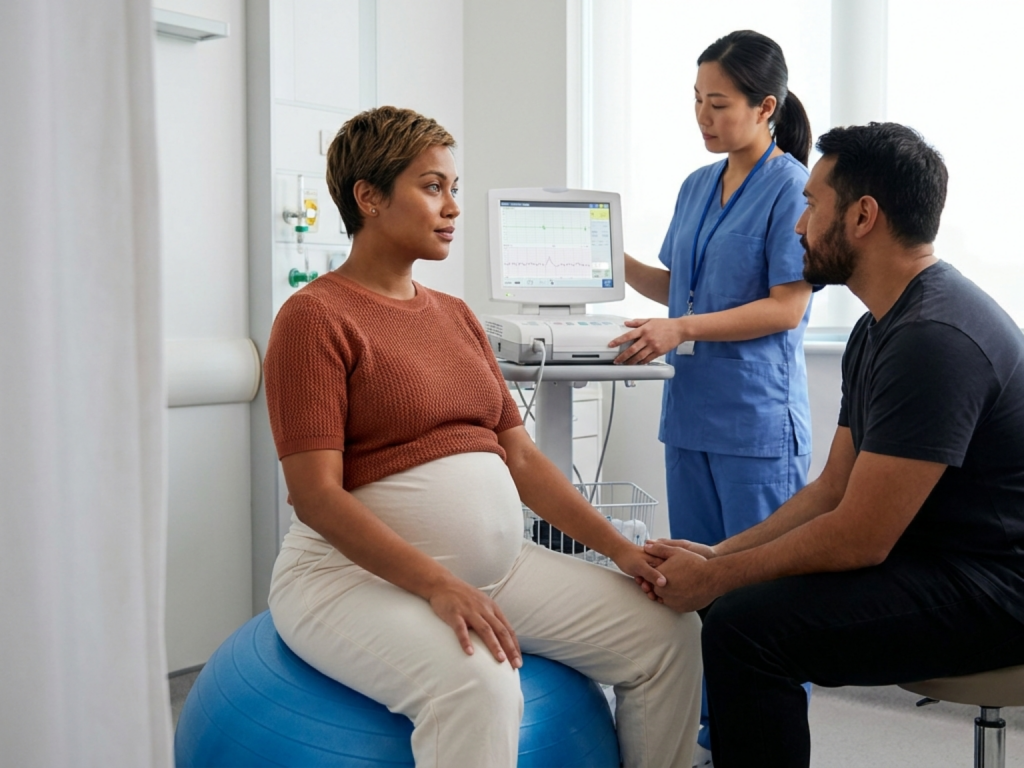
Induced labor can feel very different from spontaneous labor. For some people, contractions intensify quickly after cervical ripening, membrane rupture, or oxytocin. For others, induction unfolds over many hours or more than a day, with fatigue and uncertainty becoming as important as contraction pain.
Pain management in this setting is not about choosing one “right” method. It is about matching comfort measures, analgesia, monitoring, mobility, fetal status, cervical change, and personal priorities to the way labor is actually progressing.
Highlights
Induced labor may become rapid, prolonged, or fluctuate between slow progress and sudden intensity, so pain plans need flexibility.
Nonpharmacologic strategies, nitrous oxide, systemic opioids, and epidural analgesia can each have a role depending on timing, goals, and clinical context.
A long induction can require active fatigue management, not only contraction-by-contraction pain relief.
Rapid labor may need fast, practical comfort strategies while the team reassesses whether neuraxial analgesia is still feasible.
Any pain plan should be discussed with the obstetric and anesthesia teams, especially when maternal or fetal risk factors are present.
Why induced labor can feel different
Induction changes the physiology and rhythm of labor because contractions are started, ripened, or strengthened rather than simply observed as they emerge. Cervical ripening methods may cause cramping, pressure, irregular contractions, or back discomfort before active labor is established. If oxytocin is used, contractions may become stronger and closer together, sometimes before the person has had time to adapt psychologically or physically.
Pain is also shaped by context. Induction often involves more observation, cervical checks, intravenous access, fetal monitoring, and decisions about medication titration. These interventions can be reassuring, but they may also limit privacy, rest, and mobility. For a medically literate patient, it helps to think of labor pain as a combination of visceral pain from uterine contractions and cervical dilation, somatic pain from vaginal and perineal stretching later in labor, and central modulation from fear, fatigue, support, and prior experiences.
Because induction can be unpredictable, pain management during induction should be framed as a staged plan rather than a fixed promise. A person may begin with breathing, position changes, water immersion if available and clinically appropriate, or massage, then later choose nitrous oxide, systemic opioids, or epidural analgesia. Changing the plan is not a failure; it is responsive care.
Rapid induced labor: when intensity rises quickly
Some inductions move from mild contractions to active labor abruptly. This can happen after membrane rupture, after oxytocin reaches an effective dose, or when the cervix was already favorable. Rapid labor can feel overwhelming because there may be little recovery time between contractions and little opportunity to process each stage.
In this setting, practical measures matter. The support team can reduce stimulation, help the person use focused breathing, apply counterpressure during contractions, change positions, and offer heat, cold, or touch according to preference. If continuous fetal monitoring is needed, the team may still be able to support upright or side-lying positions depending on equipment and fetal tracing quality.
Medication decisions in rapid labor require real-time discussion. Nitrous oxide may be useful because it is self-administered, has a quick onset, and can be stopped quickly. Systemic opioids may be less suitable close to birth because of potential neonatal and maternal sedating effects, although policies vary. Epidural placement during induced labor may still be possible, but if birth appears imminent, the time needed for anesthesia assessment, placement, and onset may exceed the remaining labor time. The key question is not simply “Can I have an epidural?” but “Given the current cervical exam, contraction pattern, fetal status, and anesthesia availability, what can help now?”
Prolonged induction: managing pain, fatigue, and morale
A prolonged induction creates a different challenge. Pain may be intermittent at first, then persistent, and the emotional burden of waiting can become substantial. Sleep disruption, hunger restrictions, repeated exams, and uncertainty may lower coping capacity even before active labor is established.
For long inductions, the pain plan should include rest planning. Early cervical ripening discomfort may respond to simple analgesia if recommended by the clinical team, heat packs, repositioning, bathing or showering when allowed, and minimizing unnecessary interruptions. Support people can help preserve a calm environment by timing visitors, dimming lights, and encouraging hydration or nutrition within hospital guidance.
As contractions strengthen, epidural analgesia may be especially helpful for a long or particularly painful labor, provided there are no contraindications and anesthesia services are available. It can allow rest, reduce severe pain, and help some patients regain emotional steadiness. It also requires monitoring and may influence mobility, bladder management, blood pressure observation, and the way pushing is coached. Prolonged labor does not automatically mean an epidural is required, but it is reasonable to revisit regional analgesia for childbirth when exhaustion begins to affect coping.
Nonpharmacologic pain coping strategies remain useful even when medication is used. Position changes, peanut ball positioning, relaxation scripts, touch, and continuous labor support can reduce distress and help the person feel actively cared for.
Medication options and timing
Analgesic choice in induced labor depends on labor stage, speed of progression, maternal medical history, fetal status, local resources, and personal values. A tiered discussion can help patients and clinicians choose safely.
- Simple analgesia: Medications such as acetaminophen or other locally recommended options may be offered in early induction, but patients should only take what their maternity team confirms is appropriate.
- Nitrous oxide: Nitrous oxide for induced labor can reduce anxiety and pain perception for some people. It usually does not remove pain completely, but its rapid onset and patient control may be valuable during changing contraction patterns.
- Systemic opioids: Systemic opioids during induction may provide temporary relief, especially before advanced labor. They can cause nausea, drowsiness, altered alertness, and neonatal respiratory or feeding concerns depending on timing and dose.
- Epidural analgesia: Epidural labor analgesia is among the most effective options for contraction pain. It involves medication near the spinal nerves, typically through a catheter, and requires monitoring for effects such as low blood pressure, motor block, fever, urinary retention, or inadequate one-sided relief.
No option is universally best. A person with a rapid labor pattern may prioritize fast-onset tools; a person facing many more hours may prioritize durable relief and rest. The safest plan is individualized and revisited as labor evolves.
Non-medication strategies that still matter
Non-medication care should not be treated as “less medical.” These strategies can influence catecholamines, muscle tension, perceived control, and the ability to tolerate exams or monitoring. They are often most effective when practiced before labor and adapted by a skilled support person during labor.
Useful options include breathing exercises during labor, rhythmic vocalization, guided relaxation, massage, sterile water injections for back pain where available, counterpressure, heat, cold, upright positioning, side-lying release, hands-and-knees positioning, and use of a birthing ball. Water immersion may help some people cope during early or active labor if membranes, monitoring needs, infection considerations, and local policy allow it.
These methods also pair well with medical analgesia. For example, an epidural may reduce contraction pain but not necessarily eliminate pelvic pressure, anxiety, or the need for position support. A person using nitrous oxide may still benefit from eye contact, slow breathing cues, and a calm environment. During oxytocin-related contraction pain, the team should also evaluate contraction frequency and fetal response; comfort care should occur alongside clinical assessment, not instead of it.
Building a flexible plan with the care team
A strong induction plan names preferences while leaving room for clinical judgment. It can include labor pain management preferences, prior anesthesia experiences, fears, desired support measures, openness to epidural analgesia, and situations that would prompt reconsideration. For example, a patient might plan to begin with mobility and water, consider nitrous oxide if contractions become difficult, and request anesthesia consultation early if induction becomes prolonged.
Because induction can require continuous fetal monitoring or medication adjustments, ask ahead about mobility-compatible monitoring, shower or tub availability, anesthesia response times, eating and drinking policies, and how pain relief is handled overnight. Patients with hypertensive disorders, diabetes, obesity, prior spine surgery, thrombocytopenia, anticoagulant use, infection concerns, or complex fetal monitoring needs should discuss induction-specific anesthesia planning before labor when possible.
Communication is part of pain relief. People in labor often need short, concrete choices rather than long explanations during intense contractions. Helpful phrases include: “I need the next level of pain relief,” “I need help resting,” “I want to know whether an epidural is still realistic,” or “Please reassess the contraction pattern.” Respectful care means the person’s pain is believed, options are explained, and decisions are revisited without judgment.
When to seek urgent help
- Severe constant abdominal pain between contractions should be assessed urgently.
- Report heavy vaginal bleeding, fainting, chest pain, or sudden shortness of breath immediately.
- Tell the team promptly if fetal movement decreases before hospital arrival.
- Ask for reassessment if contractions are extremely frequent or there is little recovery time.
- After an epidural, report one-sided severe pain, difficulty breathing, profound weakness, or feeling suddenly unwell.
Tools & Assistance
- Discuss pain options with the obstetric clinician before induction begins.
- Ask whether anesthesia consultation is recommended before admission.
- Prepare a brief birth plan focused on preferences, fears, and escalation choices.
- Use a support person or doula to help communicate during intense contractions.
- Confirm hospital policies on water immersion, nitrous oxide, opioids, epidurals, and monitoring.
FAQ
Is induced labor always more painful than spontaneous labor?
Not always. Some people experience induction as more intense, especially with oxytocin or rapid progression, while others cope well. Pain depends on cervical readiness, contraction pattern, support, fatigue, fetal position, and available analgesia.
Can I request an epidural before labor becomes unbearable?
Yes, in many settings you can discuss epidural timing before pain becomes severe. The best timing depends on clinical status, labor progress, platelet count or other contraindications, and anesthesia availability.
Does choosing medication mean non-medication coping no longer matters?
No. Positioning, reassurance, breathing, touch, and calm communication remain useful with nitrous oxide, opioids, or epidural analgesia, especially during pressure, exams, waiting periods, or pushing.
What if labor is moving too fast for an epidural?
The team can reassess quickly and may suggest immediate options such as focused support, positioning, nitrous oxide if available, local anesthetic for birth-related procedures, or other measures appropriate to the moment.
Should I decide all pain relief choices before induction?
It helps to prepare preferences, but the plan should stay flexible. Induced labor can change pace, and safe choices depend on maternal condition, fetal monitoring, contraction pattern, and labor stage.
Sources
- PubMed / Obstetrics & Gynecology — Pain Management During Labor and Vaginal Birth
- NHS — Pain relief in labour
- NICE — Quality statement 3: Pain relief | Inducing labour | Quality standards
Disclaimer
This article is for general medical information only and does not diagnose, prescribe, or replace individualized care. Always discuss labor pain relief, induction plans, and urgent symptoms with your obstetric, midwifery, or anesthesia team.

















Please log in to leave a comment.