
Intro
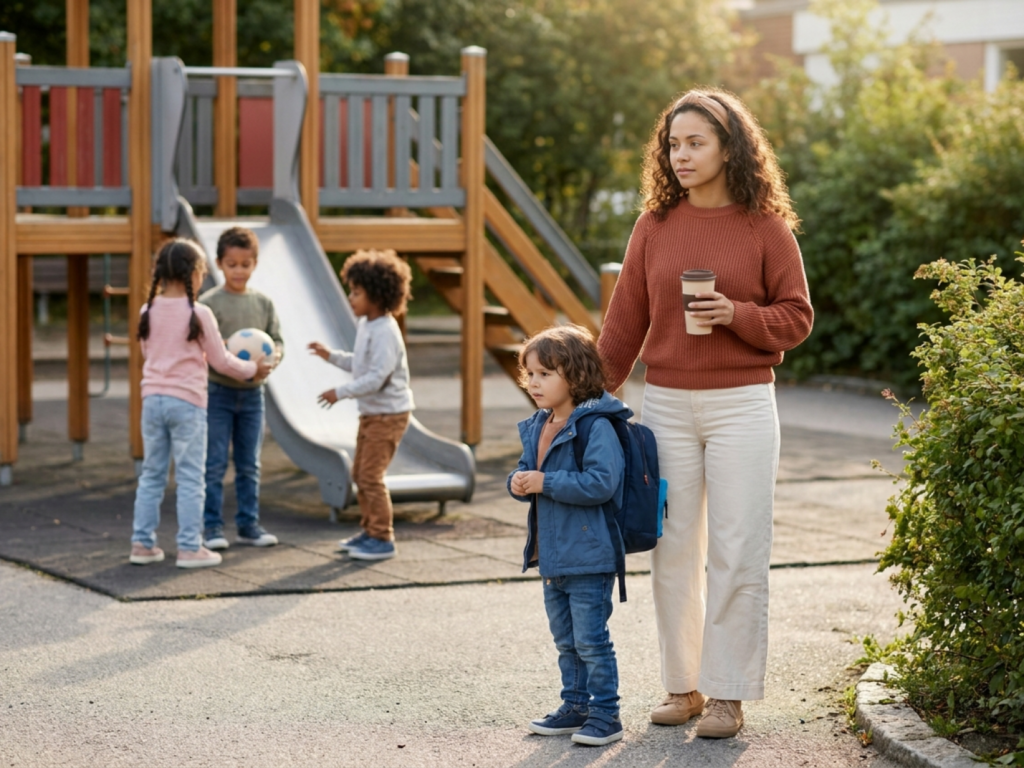
Many caregivers become overprotective because they want to keep a child safe, calm, and accepted. That impulse is understandable. The difficulty is that when protection becomes so broad that a child is rarely allowed to try, stumble, negotiate, or play with peers, the child may lose opportunities to build confidence in social situations.
This article explains how overprotection can affect social development, why it may contribute to social anxiety and dependence, and how adults can support a child’s growth without forcing or shaming. The goal is not to judge families, but to help them find a balance between safety and healthy independence.
Highlights
Overprotection can unintentionally teach a child that ordinary social contact is risky or overwhelming.
Children need repeated, manageable peer experiences to build reciprocity, confidence, and social problem-solving skills.
Research links perceived parental overprotection with social anxiety, dependence, and weaker social functioning.
Supportive practice works best when it is gradual, predictable, and matched to the child’s developmental stage.
What overprotection looks like in daily life
Overprotective parenting is more than being attentive or cautious. It usually means an adult steps in before a child has a chance to solve age-appropriate problems, tolerate discomfort, or test social skills. Examples can include answering every question for the child, arranging all play around adult comfort, avoiding all peer conflict, or consistently preventing ordinary independence such as joining a group activity, greeting a neighbor, or speaking to a teacher.
In the short term, this approach can reduce distress for both child and caregiver. In the long term, it may send an unintended message: I am not capable or the social world is too dangerous to handle. Children often absorb these signals quickly. If they rarely get to practice speaking up, waiting their turn, reading cues, or repairing misunderstandings, they have fewer chances to build confidence.
It is also important to separate protection from control. Healthy protection responds to real safety concerns. Overprotection goes further and begins to limit normal exploration, especially in peer settings where children learn so much by doing.
Why limited social exposure matters
Social development is an active process, not a skill that appears automatically. Through play, conversation, and even mild conflict, children learn reciprocity, turn-taking, perspective-taking, and how to recover after disappointment. These are not small skills; they are the foundation for healthy friendships and later social functioning.
When a child is repeatedly kept away from peers, or when adults constantly step in to soften every interaction, the child misses practice with real-world uncertainty. That can reduce self-efficacy, which is the sense that “I can handle this.” It can also limit autonomy, because the child does not experience themselves as an active participant in social life. In research on social functioning, perceived parental overprotection has been linked with poorer reciprocity and lower responsiveness in social interactions, suggesting that too much protection can interfere with the give-and-take that friendships require.
Social play for children is especially important because it offers repeated rehearsal in a low-stakes setting. A child who gets to build, pretend, negotiate, and recover from small disagreements is practicing social life in miniature.
How overprotection can shape anxiety and emotion regulation
One of the clearest concerns is that overprotection may contribute to social anxiety in children and adolescents. Social anxiety is not simply shyness. It involves a strong fear of embarrassment, rejection, or negative evaluation that can lead to avoidance, freezing, or safety behaviors such as staying silent, clinging to an adult, or refusing opportunities to participate.
Recent research has connected parental overprotection with greater social anxiety, lower psychological well-being, and increased dependence. In adolescents, emotion regulation appears to be one important pathway: when a child has fewer chances to practice coping with ordinary discomfort, they may have fewer tools for managing worry during peer interaction. The child then learns to escape social situations rather than stay in them long enough for anxiety to decrease naturally.
This does not mean overprotective parenting causes every anxiety problem. Children vary in temperament, and some are naturally more cautious. Still, if caution is paired with a family pattern of frequent rescue, the child may become even more hesitant. Over time, avoidance can narrow social life and reinforce the belief that interaction is unsafe or impossible.
Signs a child may be missing enough social practice
Not every quiet child is struggling. Some children prefer small groups or warm up slowly. The concern is more about distress, impairment, and repeated avoidance. A child may need more support if social situations consistently trigger fear, shutdown, or dependence on adults.
- They rarely initiate with peers and wait for adults to speak for them.
- They avoid birthday parties, play dates, clubs, or group activities even when they want friends.
- They show social distress before school or before social events.
- They rely on a parent to manage most conversation or conflict.
- They seem unsure how to join play, take turns, or recover after a misunderstanding.
- They show persistent social isolation or repeated withdrawal from peers.
In some children, these patterns are linked with anxiety. In others, they may reflect language differences, neurodevelopmental differences, sensory sensitivity, family stress, or a combination of factors. The main question is whether the child is getting enough safe, supported practice to grow.
Ways to encourage independence without pushing too hard
The most helpful approach is usually gradual and collaborative. The adult remains supportive, but the child gets room to try. Start with situations that are predictable and relatively low pressure, then build slowly. A brief playdate with one familiar child may be easier than a large party. A structured activity with clear rules may be easier than unstructured mingling.
Practical strategies often include:
- Let the child answer small questions themselves, even if the response is imperfect.
- Coach from the side instead of speaking for them.
- Practice simple conversation openers and repair phrases before social events.
- Use short, repeatable exposures rather than rare high-pressure challenges.
- Praise effort, persistence, and recovery, not only smooth performance.
- Avoid rescuing at the first sign of discomfort unless there is a true safety issue.
It can also help to frame discomfort as manageable rather than dangerous. Children often do best when adults communicate confidence: “This may feel awkward at first, and I think you can handle it.” That message supports resilience while preserving emotional safety. If there are broader concerns about friendship patterns, school participation, or peer conflict, targeted guidance from a clinician or school team can be useful.
When to seek professional guidance
Professional input can be valuable when social avoidance is persistent, intense, or affecting daily life. A pediatrician, child psychologist, or other qualified clinician can help sort out whether the main issue is anxiety, social skill delay, communication difficulty, developmental differences, or family dynamics. That distinction matters because the support plan may differ.
Seek help sooner if the child is missing school, having frequent physical complaints before social events, becoming tearful or panicked around peers, or showing a sustained pattern of refusing all group opportunities. Extra attention is also wise if the child has very limited peer relationships, relies heavily on adults in social situations, or seems increasingly distressed by ordinary interaction.
Family work can be especially helpful when the caregiver is anxious too. Sometimes overprotection is driven by fear, guilt, or a history of social pain in the parent. In those situations, support for the caregiver can make it easier to change the family pattern without blame. The aim is not to force a child to be outgoing. It is to protect the child while also making room for normal social learning, confidence, and connection.
When overprotection needs closer attention
- The child avoids peers, school events, or group activities most of the time.
- The child cannot separate from the caregiver without major distress.
- Social fear is causing sleep problems, stomachaches, tears, or school refusal.
- Adults regularly speak for the child or remove all chances to practice independence.
- Peer withdrawal is lasting longer or becoming more severe.
Tools & Assistance
- Pediatrician or family doctor for an initial developmental and anxiety screening
- Child psychologist or therapist for assessment of social anxiety and coping patterns
- School counselor or teacher feedback about peer participation and classroom behavior
- Family therapy or parent guidance when caregiver fear is driving overprotection
FAQ
Is being protective always a problem?
No. Protection is healthy when it matches real safety needs. The concern begins when ordinary social experiences are repeatedly blocked.
Can overprotection cause social anxiety?
It may contribute to it, especially when a child has little chance to practice coping, independence, and peer interaction. It is one factor among many.
Should I force my child to socialize more?
Usually not. A gradual, supported approach is better than pressure. The pace should fit the child’s age, temperament, and distress level.
What if my child is simply shy?
Shyness is not the same as impairment. If the child is content and functioning well, reassurance may be enough. If avoidance causes distress or limits friendships, professional advice can help.
Sources
- PubMed — Parental overprotection and interpersonal behavior in generalized social phobia
- PubMed Central — Examining the Relationships Among Parental Overprotection, Children's Social Anxiety, and Psychological Well-Being
- SAGE Journals — Overprotective parenting and social anxiety in adolescents: The role of emotion regulation
Disclaimer
This article is for educational purposes only and is not a diagnosis or treatment plan. If you are worried about a child’s social withdrawal, anxiety, or development, please consult a qualified healthcare professional.


















Please log in to leave a comment.