
Intro
Labor pain is powerful, personal, and variable. Some people experience it as rhythmic uterine tightening, pelvic pressure, back pain, or an urgent bearing-down sensation; others notice fear, nausea, shaking, or fatigue becoming part of the pain experience. Natural approaches do not erase the physiology of labor, but they can reduce distress, support coping, and help a birthing person stay connected to their body and care team.
Natural pain management is best understood as a flexible toolkit, not a test of endurance. These methods can be used alone, alongside medical analgesia, or while waiting for other pain relief. The safest plan is individualized with a midwife, obstetric clinician, doula, anesthesiology team when relevant, and the people providing continuous support.
Highlights
Natural labor-pain strategies work best when they are practiced before labor and adapted in real time.
Evidence-supported options include breathing, relaxation, movement, massage, warm packs, water immersion, acupressure, aromatherapy, and continuous labor support.
The goal is not perfect control of pain, but reducing fear, muscular tension, and isolation while supporting physiologic labor.
Natural comfort measures can be combined with medical pain relief if preferences, safety, or labor intensity change.
Understanding labor pain physiology
Labor pain is not a single sensation. In early and active labor, much of it is visceral pain from uterine contractions, cervical dilation, and stretching of the lower uterine segment. It may feel crampy, deep, wave-like, or difficult to localize. As labor progresses, somatic pain becomes more prominent as the fetal head descends and stretches the vagina, pelvic floor, perineum, and surrounding connective tissue. This pain is often sharper, more localized, and associated with intense rectal or pelvic pressure.
Fear, fatigue, environment, prior trauma, and lack of support can amplify pain through increased sympathetic nervous system activation. When adrenaline rises, breathing may become rapid and shallow, pelvic muscles may tighten, and contractions can feel harder to tolerate. Natural labor-pain management often targets this fear-tension-pain cycle: calming the nervous system, reducing unnecessary muscle guarding, and helping the birthing person feel oriented and supported.
This does not mean labor pain is imagined or purely emotional. It is physiologic and real. A compassionate plan acknowledges both truths: the body is doing demanding work, and the brain’s interpretation of pain is shaped by safety, preparation, touch, movement, and reassurance.
Breathing and relaxation techniques
Breathing techniques for natural birth can provide structure during contractions and recovery between them. Slow breathing during early labor may help conserve energy, reduce hyperventilation, and encourage parasympathetic tone. In active labor, patterned breathing in active labor can give the mind a predictable task when contractions become more consuming. During pushing, breathing may shift again depending on fetal status, maternal comfort, and clinician guidance.
A simple approach is to inhale gently through the nose or mouth, exhale longer than the inhale, and soften the jaw, shoulders, hands, and pelvic floor on each out-breath. Some people prefer counted breathing, such as inhaling for four and exhaling for six. Others use vocalization, humming, low moans, or breath awareness without counting. The specific pattern matters less than whether it prevents panic and helps the body release avoidable tension.
Relaxation techniques can also include visualization, mindfulness, music, guided imagery, prayer, or hypnobirthing-style cue words. These tools are most helpful when rehearsed before labor, because it is difficult to learn a new coping strategy during intense contractions. They should remain flexible: if a breathing pattern becomes irritating, claustrophobic, or ineffective, changing the strategy is appropriate.
Continuous support and the birth environment
Continuous labor support is one of the most human forms of pain relief. A calm support person, doula, nurse, midwife, or partner can help with timing contractions, offering fluids, suggesting position changes, applying counterpressure, advocating for labor pain management preferences, and reminding the birthing person that each contraction has a beginning, peak, and end.
The environment also matters. Bright lights, interruptions, cold rooms, and repeated explanations can increase stress for some people. A quieter room, warm blankets, dimmed lights when medically appropriate, familiar music, and clear communication may reduce perceived threat. For medically literate readers, this is partly a neuroendocrine issue: privacy and emotional safety can support oxytocin release, while fear and catecholamine surges may worsen distress and interfere with coping.
Support should never replace clinical monitoring. Instead, it should make clinical care easier to receive. A good support team notices when coping is deteriorating, when exhaustion is accumulating, or when pain seems atypical, and helps communicate that clearly to the healthcare team. Natural comfort measures are strongest when they are embedded in respectful, responsive maternity care.
Movement, positioning, and pelvic mechanics
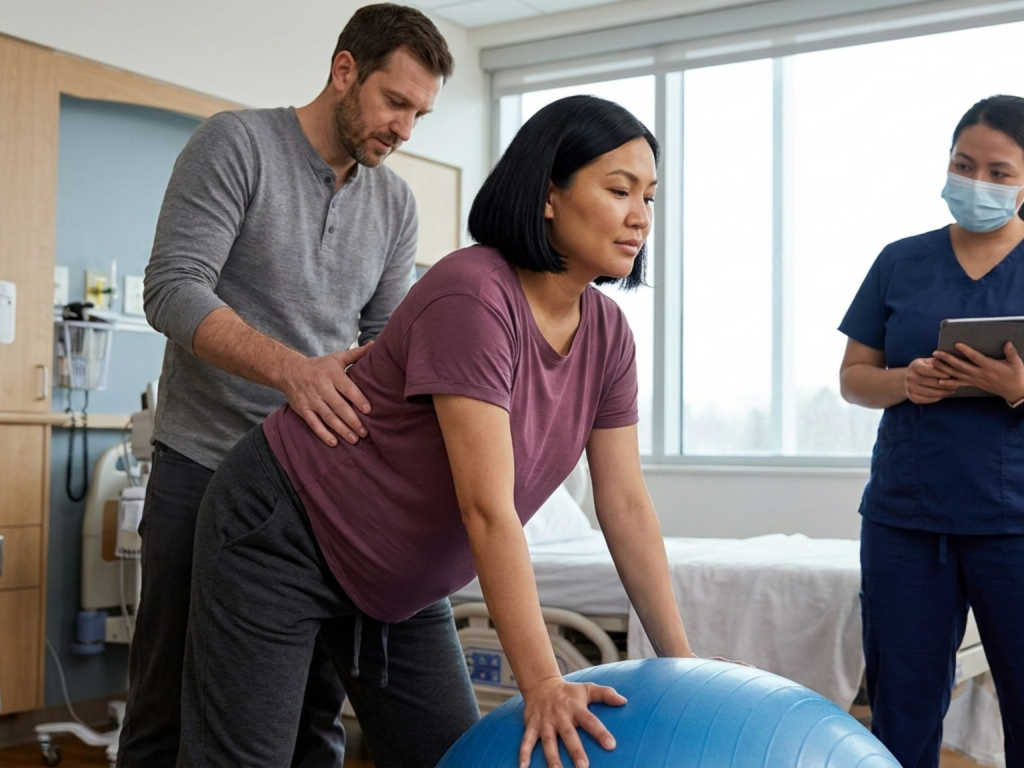
Movement and position changes can reduce pain by changing pressure patterns, improving comfort, and helping the fetus navigate the pelvis. Upright positions use gravity and may feel more active; side-lying can conserve energy and reduce pressure; hands-and-knees may help with back labor; leaning forward over a bed, partner, or birthing ball can relax the abdomen and allow rhythmic pelvic motion.
Birthing balls are useful because they support gentle mobility without requiring constant standing. Rocking, pelvic circles, or kneeling while leaning over the ball may reduce sacral pressure and help the birthing person respond instinctively to contractions. For back labor, counterpressure on the sacrum or double hip squeezes may be especially helpful, although they should be adjusted based on comfort and avoided if they worsen pain.
Movement should be guided by safety. Continuous fetal monitoring, epidural analgesia, ruptured membranes, bleeding concerns, dizziness, hypertension, or other clinical factors may limit certain positions. The practical goal is not constant activity; it is finding positions that reduce suffering, preserve energy, and remain compatible with maternal and fetal wellbeing.
Touch, heat, water, and sensory comfort
Manual techniques can be deeply effective because labor pain is both sensory and relational. Massage therapy, light stroking, firm pressure, and warm packs may reduce muscle tension and provide competing sensory input. Some people want strong touch during contractions and no touch between them; others want only verbal reassurance. Consent and responsiveness are essential, because touch that felt soothing in early labor may become intolerable later.
Warmth can help with back pain, abdominal tension, and shaking. Warm packs should be comfortably warm rather than hot, wrapped to protect the skin, and checked regularly. Cool cloths on the forehead, neck, or chest may help with nausea, sweating, or overheating. Water immersion during labor, such as a shower or bath when available and clinically appropriate, may reduce pain intensity and promote relaxation. Policies vary by birth setting, especially after membranes rupture or when monitoring is needed.
Aromatherapy, acupuncture, acupressure, and transcutaneous electrical nerve stimulation are additional nonpharmacologic labor comfort measures. Research suggests some benefit for acupressure, aromatherapy, and massage, but study quality and protocols vary. Essential oils should be used cautiously, well diluted, and avoided if they trigger nausea, headache, asthma symptoms, allergy, or staff safety concerns. Acupuncture, acupressure, and TENS should be discussed with trained clinicians before use.
Creating a flexible, safe plan
The most effective natural plan is specific but not rigid. Before labor, discuss preferences with the birth team: desired support people, movement options, water availability, massage or counterpressure, music, breathing cues, cultural or spiritual needs, and openness to medical pain relief if coping changes. A written plan can be helpful when it invites collaboration rather than functioning as a fixed script.
It is also wise to define when to reassess. Examples include severe exhaustion, panic that does not improve between contractions, prolonged labor with inadequate rest, new medical concerns, or a personal request for analgesia. Choosing medication after planning natural methods is not failure; it is an informed adjustment. Likewise, using natural methods alongside nitrous oxide, systemic opioids, or epidural analgesia can still support comfort, positioning, and emotional regulation.
People with high-risk pregnancies, hypertensive disorders, placenta concerns, fetal growth concerns, prior uterine surgery, significant medical conditions, or planned induction should individualize strategies with their clinician. Natural methods are generally supportive, but the safest choices depend on the full clinical picture, local protocols, and real-time assessment during labor.
When to seek urgent help
- Call your maternity unit or emergency services for heavy bleeding, fainting, seizure, chest pain, or severe shortness of breath.
- Seek urgent assessment for constant abdominal pain between contractions, especially if it is severe or unusual.
- Report decreased fetal movement, fever, foul-smelling fluid, or concerns after your waters break.
- Tell the care team promptly about severe headache, vision changes, right upper abdominal pain, or sudden swelling.
- Do not use herbs, supplements, castor oil, or stimulation techniques for labor without clinician guidance.
Tools & Assistance
- Discuss a birth comfort plan with your obstetric clinician or midwife before labor
- Practice slow breathing, position changes, and relaxation cues during late pregnancy
- Consider continuous support from a partner, doula, nurse, or trusted support person
- Ask your birth setting about showers, tubs, birthing balls, TENS, and monitoring policies
- Bring simple comfort items such as music, lip balm, warm socks, and a massage tool
FAQ
Can natural methods completely remove labor pain?
Usually no. They are intended to reduce distress, improve coping, and support physiologic labor, not guarantee painless birth.
Can I use natural methods if I also want an epidural?
Yes. Breathing, support, positioning, massage, and calm sensory cues can be helpful before, during, and after medical analgesia.
Is water immersion safe for everyone in labor?
Not always. It depends on maternal and fetal status, membrane status, monitoring needs, infection concerns, and local birth-setting policies.
Which natural methods have the best evidence?
Guidelines and reviews support options such as relaxation, breathing, massage, warm packs, continuous support, acupressure, aromatherapy, and movement, although effects vary by person.
When should I change my pain-management plan?
Reassess whenever pain feels unmanageable, exhaustion is escalating, symptoms seem unusual, or your healthcare team identifies a medical concern.
Sources
- World Health Organization — Intrapartum care for a positive childbirth experience
- Eunice Kennedy Shriver National Institute of Child Health and Human Development — What are the options for pain relief during labor and delivery?
- PubMed — Efficacy and safety of non-pharmacological interventions for labour pain management: A systematic review and Bayesian network meta-analysis
Disclaimer
This article is for general educational purposes and is not a substitute for individualized medical advice. Always discuss labor pain management, symptoms, and safety concerns with your obstetric clinician, midwife, or maternity care team.
















Please log in to leave a comment.