
Intro
Month 6 of pregnancy sits near the end of the second trimester, often spanning approximately weeks 23 to 27 depending on how a pregnancy calendar is counted. For many people, this stage brings a mixture of reassurance and intensity: fetal movements may feel more obvious, the abdomen is growing quickly, and the reality of the third trimester is getting closer.
Medically, the sixth month is a period of rapid fetal growth, increasing neurologic activity, sensory maturation, and continued development of the lungs, skin, and fat stores. At the same time, the pregnant body is adapting to a larger uterus, expanded blood volume, shifting posture, and increasing metabolic demands. Knowing what is typical can help you prepare thoughtfully while also recognizing when to contact your healthcare professional.
Highlights
The sixth month is usually part of the late second trimester, a phase marked by rapid fetal growth and increasingly coordinated movement.
Your baby’s brain, lungs, eyes, hearing, and fat stores are maturing, although the fetus is still very premature at this point.
Common maternal experiences include a more visible belly, stronger fetal movement, round ligament discomfort, reflux, leg cramps, and changes in sleep.
Regular prenatal care remains essential because screening, blood pressure checks, fetal growth assessment, and individualized guidance are more reliable than self-monitoring alone.
Urgent symptoms such as bleeding, severe abdominal pain, fluid leakage, severe headache, or markedly decreased fetal movement should be discussed with a clinician promptly.
Where month 6 fits in pregnancy dating
Pregnancy is usually dated from the first day of the last menstrual period, so the embryo or fetus is biologically about two weeks younger than the gestational age used in clinical care. Month 6 generally corresponds to the late second trimester, often around weeks 23 through 27. Exact boundaries vary because calendar months do not align neatly with pregnancy weeks.
The second trimester is commonly described as a period of rapid growth and development. Earlier in pregnancy, organ systems form; by month 6, those systems are continuing to mature and coordinate. This is why many prenatal conversations shift from confirming basic anatomy toward growth, movement patterns, maternal comfort, and preparation for the third trimester.
If your due date was adjusted after an early ultrasound, your clinician may use that dating rather than your last menstrual period. This matters for interpreting fetal size, screening windows, viability discussions, and timing of recommended tests. If you are unsure what week you are in, ask your prenatal care team to clarify your gestational age and estimated due date.
Fetal size and body proportions in the sixth month
By month 6, the fetus is no longer a tiny early-pregnancy silhouette. Hospital month-by-month pregnancy resources commonly describe the fetus at this stage as roughly 12 inches long and around 1 to 2 pounds, although normal measurements vary. Growth is not perfectly linear, and fetal size is influenced by gestational dating, genetics, placental function, maternal health, and whether the pregnancy is singleton or multiple.
The body becomes more proportionate as the trunk and limbs lengthen. The head is still relatively large compared with a newborn’s proportions, but the fetus increasingly looks recognizably baby-like on ultrasound. The skeleton is strengthening, muscles are developing, and movements may feel more purposeful.
Fat accumulation is beginning but remains limited compared with late pregnancy. This is why the skin may appear thin, reddish, and wrinkled if seen in medical imaging or described in developmental references. Over the coming weeks and months, subcutaneous fat will increase, helping with temperature regulation after birth.
It is important not to compare your own bump size or fetal estimates too closely with someone else’s. Ultrasound weight estimates are useful clinical tools but have a margin of error. Your clinician interprets them alongside fundal height, growth trends, amniotic fluid, placental findings, Doppler studies when needed, and your medical history.
Brain, senses, and movement: a more responsive fetus
One of the most meaningful changes in month 6 is increasing fetal responsiveness. The brain is growing rapidly, neural pathways are becoming more complex, and the fetus may show sleep-wake cycles. Movements can include kicks, rolls, stretches, startles, and rhythmic motions that may be hiccups.
Many pregnant people notice fetal movement more consistently by this stage, especially when resting, after meals, or in the evening. If the placenta is anterior, meaning positioned on the front wall of the uterus, movement may feel cushioned and less obvious. Body position, activity level, and individual fetal patterns also affect what you perceive.
The sensory organs are also maturing. Around this period, the fetus may respond to sound and light, and the eyelids may begin to open. Hearing continues to develop, and the fetus is exposed to maternal heartbeat, blood flow, digestive sounds, and voices filtered through the body. These responses do not mean the fetus is neurologically mature like a newborn, but they do reflect increasing sensory function.
Your care team may not ask for formal daily kick counts until later in pregnancy, depending on local practice and your risk profile. Still, learning your baby’s usual activity pattern can be helpful. A sudden, persistent reduction in movement should be taken seriously and discussed with a healthcare professional.
Lung development and why the fetus is still very premature
The lungs are developing actively during month 6, but they are not yet mature. The branching airway structure is becoming more refined, and cells involved in gas exchange continue to develop. Surfactant, a substance that helps keep the tiny air sacs open after birth, begins to become increasingly important as pregnancy progresses, but levels are usually insufficient for easy breathing at this stage.
This distinction can feel emotionally complicated. Medical advances have improved outcomes for some extremely preterm infants, particularly later in the sixth month, but birth at this gestational age still carries significant risks. Survival and long-term outcomes depend on gestational age, birth weight, fetal sex, antenatal steroid exposure when indicated, infection status, neonatal intensive care resources, and other clinical factors.
If you have symptoms of possible preterm labor, do not try to determine at home whether they are serious. Clinicians may assess cervical change, contractions, membranes, fetal wellbeing, infection markers, and other findings. Timely evaluation can matter, and the right approach depends on the specific situation.
Skin, eyes, hair, and fat stores
During the sixth month, the skin is still delicate and relatively translucent, but it is becoming more structured. Protective coatings and fine hair may be present, and fat deposition is gradually increasing. These changes are part of the transition from organ formation to growth and physiologic preparation for life outside the uterus.
The eyes become more developed, and eyelid opening may occur around this stage. The fetus may respond to bright light directed toward the abdomen, although routine stimulation is not necessary. Normal everyday sensory exposure is enough; there is no evidence that intense light or sound stimulation is required for healthy fetal development.
Hair patterns, eyelashes, and eyebrows may become more visible developmentally, though there is wide variation. These details can be exciting, but the clinically important themes are growth, maturation, placental support, and continued monitoring through prenatal care.
Second-trimester body changes you may feel in month 6
For the pregnant person, month 6 often brings noticeable mechanical and cardiovascular changes. The uterus rises higher in the abdomen, the center of gravity shifts, and ligaments supporting the uterus stretch. This can contribute to round ligament pain, low back discomfort, pelvic pressure, and a feeling of abdominal tightness with position changes.
Common experiences may include:
- Stronger or more frequent fetal movements
- Back, hip, or pelvic discomfort from posture and ligament strain
- Heartburn or reflux as the uterus and pregnancy hormones affect digestion
- Constipation and hemorrhoids related to hormonal effects, iron supplementation, and pressure on pelvic veins
- Leg cramps, mild swelling, or varicose veins
- Breast enlargement and possible colostrum leakage
- Skin changes such as stretch marks, linea nigra, or darker patches of pigmentation
- Intermittent Braxton Hicks contractions, typically irregular and not progressively painful
These changes can be normal, but normal does not mean easy. Support belts, posture adjustments, hydration, fiber-rich foods, gentle movement, and rest may help some people, but it is best to individualize strategies with your clinician, especially if you have pain, bleeding, hypertension, placenta-related concerns, prior preterm birth, or other risk factors.
Prenatal care, screening, and conversations to expect
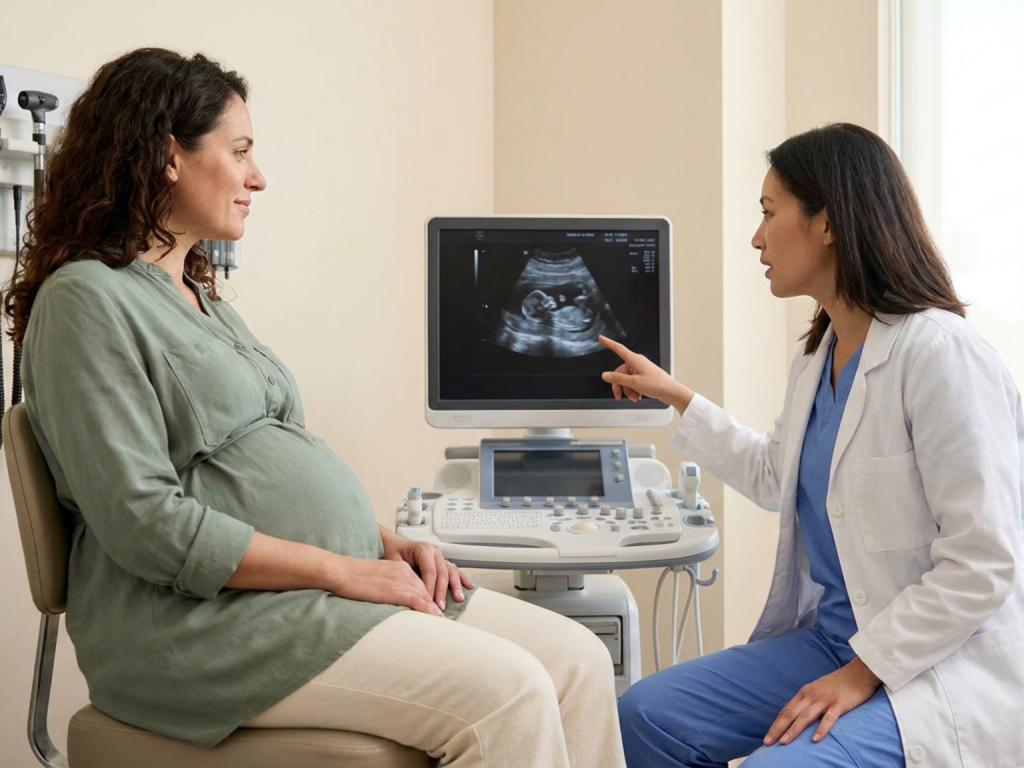
Month 6 is a good time to stay closely connected with prenatal care. Depending on your location and clinical circumstances, visits may include blood pressure measurement, urine testing when indicated, weight and symptom review, fundal height measurement, fetal heartbeat assessment, and discussion of fetal movement. Some patients may have follow-up ultrasound if anatomy views were incomplete or if there are growth, placental, cervical, or medical concerns.
Many practices screen for gestational diabetes between 24 and 28 weeks. Screening approaches vary, but the goal is to identify blood glucose patterns that may affect fetal growth, amniotic fluid, birth planning, and maternal health. This is also a common window for checking anemia and discussing Rh immune globulin if the pregnant person is Rh-negative and the pregnancy meets criteria.
Consider using this time to ask about:
- Your exact gestational age and whether growth is tracking as expected
- When and how your practice recommends monitoring fetal movement
- Recommended vaccines during pregnancy based on current guidelines and your timing
- Safe physical activity, travel, work modifications, and sleep positioning
- Birth classes, breastfeeding or chestfeeding support, and pediatric care planning
- Warning signs that should lead you to call the clinic, labor unit, or emergency services
If you have a high-risk pregnancy, your schedule may differ. Conditions such as hypertension, diabetes, autoimmune disease, kidney disease, fetal growth restriction, placenta previa, multiple pregnancy, or prior pregnancy complications may require more frequent monitoring.
Nutrition, hydration, movement, and rest in late second trimester
Fetal growth in month 6 increases the demand for energy, protein, micronutrients, and fluid, but the right plan depends on pre-pregnancy health, weight trajectory, nausea, food access, cultural preferences, medical conditions, and lab results. A balanced pattern generally includes protein foods, iron-rich foods, calcium sources, fruits, vegetables, whole grains or other complex carbohydrates, and healthy fats. Prenatal vitamins support but do not replace nutrition.
Key nutrients often discussed in pregnancy include iron, folate, iodine, vitamin D, calcium, choline, and omega-3 fatty acids. Do not start high-dose supplements without medical advice, because more is not always better and some supplements can interact with medications or medical conditions.
Hydration can help with constipation, headaches related to dehydration, and general comfort. Gentle physical activity, if cleared by your clinician, may support circulation, glucose regulation, mood, and musculoskeletal comfort. Walking, prenatal yoga, swimming, and pelvic floor-aware strengthening are common options, but restrictions may be needed for certain complications.
Sleep may become more fragmented as the abdomen grows. Side-lying positions, pillows between the knees, and elevating the upper body for reflux may help. If you snore heavily, wake gasping, have severe insomnia, or experience persistent daytime sleepiness, mention it to your healthcare professional, as sleep disorders can occur or worsen in pregnancy.
When to seek medical advice promptly
- Vaginal bleeding, fluid leakage, or a gush of fluid from the vagina
- Regular contractions, severe cramping, or pelvic pressure that does not improve
- Severe headache, vision changes, chest pain, shortness of breath, or fainting
- Marked swelling of the face or hands, especially with high blood pressure symptoms
- Fever, severe abdominal pain, painful urination, or persistent vomiting
- A sudden or concerning decrease in fetal movement compared with your baby’s usual pattern
Tools & Assistance
- Prenatal appointment checklist for late second trimester questions
- Fetal movement awareness notes to discuss with your clinician
- Nutrition and hydration log if appetite, reflux, anemia, or glucose screening is a concern
- Maternity support belt or physiotherapy referral discussion for pelvic or back pain
- Labor and delivery triage phone number saved in your contacts
FAQ
Is month 6 still the second trimester?
Usually, yes. Month 6 is commonly considered the late second trimester, though exact week ranges vary by pregnancy calendar. Clinicians generally rely on gestational weeks rather than month labels.
How big is the baby in the sixth month of pregnancy?
A common estimate is about 12 inches long and roughly 1 to 2 pounds, but normal fetal size varies. Your clinician interprets measurements using gestational age, growth trends, and your medical context.
Should I feel movement every day at month 6?
Many people feel movement daily by this stage, but patterns vary, especially with an anterior placenta or first pregnancy. Ask your care team when they recommend formal kick counts and call promptly for a sudden decrease.
Are Braxton Hicks contractions normal in month 6?
Irregular, mild tightening can occur in the second trimester. However, regular contractions, painful cramping, bleeding, fluid leakage, or pelvic pressure should be evaluated by a healthcare professional.
What tests are common around this time?
Many practices screen for gestational diabetes between 24 and 28 weeks and may check for anemia or address Rh status. Your recommended testing depends on your pregnancy history and clinical findings.
Sources
- American College of Obstetricians and Gynecologists — How Your Fetus Grows During Pregnancy
- March of Dimes — Pregnancy Week by Week
- UI Health — You and Your Baby: Month-by-Month
Disclaimer
This article is for informational purposes only and does not replace medical advice, diagnosis, or treatment. Always consult your obstetrician, midwife, or other qualified healthcare professional about symptoms, screening, and pregnancy care.


















Please log in to leave a comment.