
Intro
Preparing for a baby can make ordinary purchases feel urgent and high-stakes. Marketing often suggests that every specialized item is essential, yet most families can meet a baby's needs with a smaller, carefully chosen set of products. A practical budget focuses on safety, function, and ongoing costs rather than novelty or convenience.
The most effective approach is to delay nonessential purchases, compare the total cost of ownership, use secondhand items selectively, and plan for recurring expenses such as diapers, feeding supplies, and clothing. Savings should never depend on compromising an infant's safety or ignoring individualized advice from a pediatrician, midwife, lactation consultant, or other qualified healthcare professional.
Highlights
Buy for the baby's immediate developmental stage rather than every future stage at once.
Reduce recurring costs by comparing unit prices, considering store brands, and planning bulk purchases carefully.
Secondhand clothing and some furniture can be economical, but safety-critical products require stricter scrutiny.
A smaller collection of versatile products is often more useful than a large supply of specialized gadgets.
Use healthcare guidance and current recall information when evaluating sleep, feeding, transport, and hygiene products.
Start with needs, not a shopping list
Before buying, divide potential purchases into three groups: essential now, useful later, and optional convenience items. Immediate essentials usually include a safe sleep setup, an appropriate car seat if the baby will travel by vehicle, diapers, basic clothing, feeding supplies that match the chosen feeding method, and simple hygiene products. Many other products can wait until a real need appears.
This approach prevents a common budgeting error: purchasing for an imagined routine rather than the routine your family actually develops. For example, a family may buy multiple bottle systems before knowing which nipple shape the infant accepts, or purchase large quantities of newborn clothing even though many babies quickly outgrow that size. Buy a modest starter supply, observe what works, and expand selectively.
Consider borrowing a product temporarily, renting equipment where appropriate, or asking a healthcare professional whether a specialized item is medically indicated. A product marketed for reflux, colic, sleep, or developmental support should not automatically be treated as necessary. Avoid products that make safety claims unsupported by reliable evidence, particularly when they alter an infant’s sleep position or sleep surface.
Create a short inventory before each purchase. Record the product’s purpose, the age or weight range, how often it will be used, whether it requires consumable replacements, and where it will be stored. If an item solves no clearly defined problem, postpone it for a week. Delaying a purchase is often enough to reveal that it was unnecessary.
Protect the safety budget
Thrift is valuable only when it preserves safety. Set aside a protected portion of the budget for products whose condition, fit, or history directly affects injury risk. These commonly include car seats, cribs, bassinets, mattresses, and certain protective or medical devices. Check current manufacturer guidance and recall databases before purchase, and confirm that the item includes all required components and instructions.
Car seats deserve particular caution. A used seat may have an unknown crash history, an expired service life, missing parts, or damage that is not visible. If its history cannot be verified, a low price is not a meaningful saving. After purchase, use a qualified car-seat installation check when available and follow the manufacturer’s size and installation requirements.
For sleep, the goal is a separate infant sleep surface with a firm, flat mattress and a fitted sheet designed for that product. Do not add pillows, loose blankets, positioners, wedges, or other accessories to make an ordinary sleep space appear more comfortable. Products described as inclined or position-enhancing require especially careful evaluation because marketing language can obscure safety concerns. A simple compliant setup is usually less expensive than a collection of sleep accessories.
Buy safety-critical items new when possible, or accept them only from a trusted source that can provide a complete history. Inspect for broken hardware, recalled models, altered components, peeling materials, and instructions that no longer match the product. Never let a discount pressure you into using an item that cannot be verified. Review guidance on Using unsafe baby products and Safe sleep products for babies when assessing secondhand or specialized equipment.
Lower recurring costs without overbuying
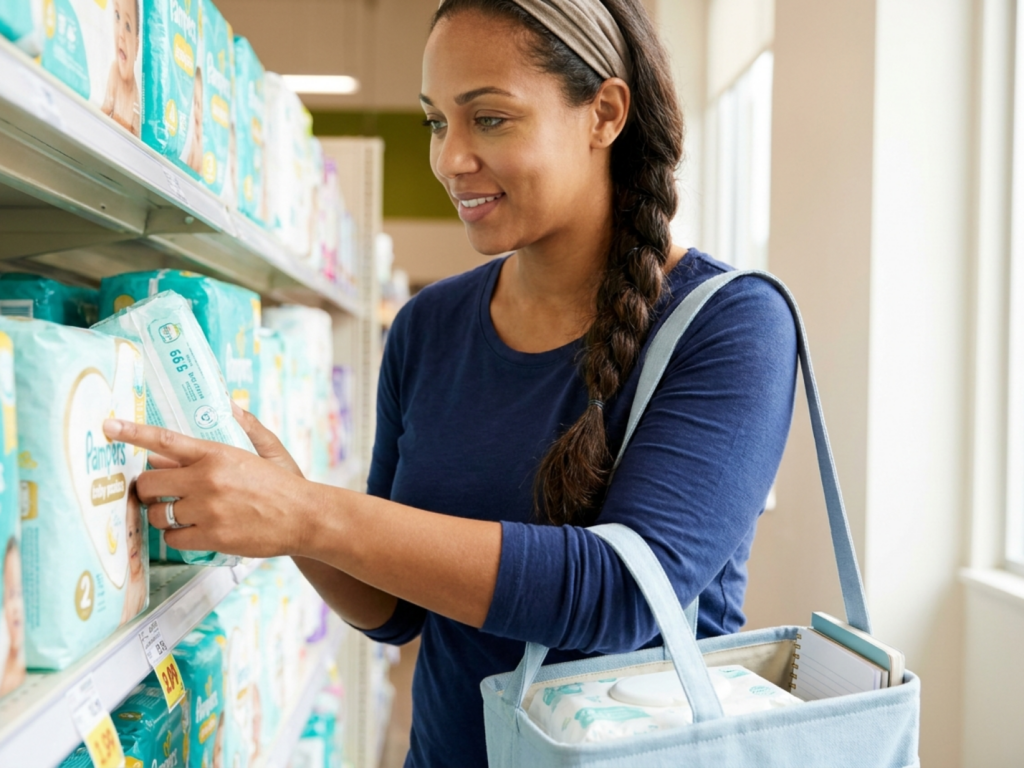
Recurring expenses can exceed the cost of one-time purchases, so compare unit prices rather than package prices. For diapers, calculate the cost per diaper and account for the baby’s size, leakage, skin tolerance, and return policy. Store-brand diapers may cost less and work well for many families, but the cheapest package is not economical if it causes frequent leaks or irritation and must be replaced.
Buying in bulk can lower the per-unit price, especially for products your baby already tolerates. However, avoid stocking large quantities of diapers in a size the baby may soon outgrow. A subscription can be useful when it offers a genuine discount and allows size changes, pauses, or cancellations. Review the delivery schedule regularly because automatic shipments can create waste and unexpected charges.
For wipes, compare sheet size, thickness, and ingredients as well as price. Some families can reduce expenditure by using washable cloths with water for routine cleaning when appropriate, while keeping disposable wipes available for travel and situations where they are more practical. Do not reuse disposable products, and follow clinical advice if the baby has persistent skin irritation or a diagnosed dermatologic condition.
Feeding costs depend on the family’s circumstances and the infant’s needs. Breastfeeding may reduce the need for formula when it is feasible and desired, but it is not cost-free and should never be treated as a moral or financial obligation. Pumps, replacement parts, nursing supplies, formula, bottles, and specialized feeding equipment can all affect the budget. If feeding is difficult, consult a pediatrician or lactation consultant before purchasing a large quantity of products marketed as solutions.
Use secondhand shopping selectively
Babies often use clothing, outerwear, and some soft goods for a short period, making gently used purchases a substantial source of savings. Look for clean items in good condition through trusted friends, community groups, resale stores, or organized exchanges. Choose versatile pieces that layer easily and can be washed according to the care label. A smaller capsule wardrobe is usually more practical than a large collection of outfits for special occasions.
Inspect every secondhand item in daylight. Check seams, snaps, zippers, elastic, drawstrings, fasteners, and small detachable components. Avoid items with mold, strong chemical odor, extensive staining, fraying, damaged insulation, or unknown laundering conditions. Confirm that sleepwear meets applicable flammability requirements and that clothing does not contain loose embellishments that could detach.
Furniture requires a more careful assessment. Verify the model, manufacture date, recall status, hardware, and assembly instructions. Do not modify a crib or substitute parts from another product. Used changing tables, high chairs, and strollers should be stable, complete, and appropriate for the baby’s developmental stage; check harnesses and locking mechanisms before use.
Some items are poor candidates for casual resale because contamination, fit, or hidden damage is difficult to assess. Be cautious with used breast pumps, bottle nipples, pacifiers, helmets, sleep products, and personal-care items. Follow manufacturer cleaning and replacement instructions, and ask a healthcare professional about any product intended to manage a medical condition. For detailed safety considerations, see guidance about secondhand baby products.
Compare total cost, not just the checkout price
A product’s purchase price is only one part of its cost. Before choosing between options, consider replacement parts, batteries, special detergents, proprietary refills, maintenance, shipping, storage, and expected usable life. A low-cost device that needs expensive cartridges may cost more than a simpler product over six months. Conversely, an initially expensive item may be worthwhile if it is durable, repairable, and genuinely replaces several purchases.
Read the care instructions before buying clothing, bedding, carriers, and feeding equipment. Products that require frequent hand washing, special drying, or separate detergents may create time and financial costs. Choose materials and designs that fit your normal household routine. This is particularly useful for products used several times each day, where minor inconvenience can lead to premature replacement.
Resist buying duplicates for every room unless the product is used frequently enough to justify them. A portable diaper caddy, one reliable thermometer, and a small set of washable cloths may be sufficient. Borrow rarely used items, such as formal clothing or travel accessories, rather than storing them indefinitely. Keep a list of what you own so that family members do not unintentionally buy duplicates.
Use price alerts, seasonal sales, coupons, loyalty rewards, and warehouse clubs strategically. Compare final prices after shipping, membership fees, and minimum-order requirements. Avoid purchasing more than you can safely use simply to reach a discount threshold. A sale is a saving only when the product was needed, suitable, and likely to be used before it expires or becomes too small.
Make feeding and hygiene spending efficient
As complementary feeding begins, simple preparation can reduce the cost of commercial pouches and single-serving products. Families may offer appropriately prepared portions of ordinary foods, provided textures, allergens, preparation methods, and nutritional needs are addressed according to professional guidance. Batch preparation and freezing can reduce waste, but use clean equipment, food-safe containers, accurate labeling, and safe refrigeration and reheating practices.
Do not dilute formula, substitute ingredients, or alter feeding instructions to save money. Infant formula should be prepared exactly as directed, and changes in formula type should be discussed with the baby’s healthcare professional when there are concerns about tolerance, growth, allergy, or another medical issue. Breast milk and formula have different handling requirements, so follow current public-health and clinical guidance for storage and transport.
Hygiene purchases can also be simplified. Most babies do not need a separate product for every body area. Select a small number of gentle, age-appropriate products and avoid fragranced or heavily marketed items when they are unnecessary. Use clean water and appropriate washing practices for bottles, pump parts, utensils, and food-preparation surfaces. For advice about sensitive skin, review information on fragrance-free baby cleanser and newborn diaper dermatitis prevention.
Watch for waste patterns. If half-used products accumulate because the baby dislikes them, the size is wrong, or the packaging is impractical, stop buying them in bulk. A brief monthly review of unused items, upcoming developmental changes, and recurring charges can keep the budget aligned with actual needs.
Build a flexible baby-product budget
Separate one-time setup costs from monthly operating costs. One-time costs may include a safe sleep surface, car seat, stroller, or basic furniture. Operating costs include diapers, wipes, formula if used, medication-free hygiene supplies, clothing replacement, and transportation. Estimate a conservative monthly amount, then add a small reserve for growth spurts, unexpected replacement, or a product that must be purchased for safety.
Use a priority order when funds are limited: safe sleep and transport, adequate nutrition, diapers and basic hygiene, weather-appropriate clothing, and developmentally appropriate care supplies. Convenience products come later. Community resources may help with diapers, formula, breastfeeding support, transportation, or gently used clothing. Ask a pediatric practice, public-health department, social worker, or local family resource center about reputable programs.
Keep receipts and product information for items with warranties, recalls, or return restrictions. Register eligible safety products with the manufacturer so recall notices can reach you. Recheck size limits and developmental requirements as the baby grows. A product that was appropriate for a newborn may become unsafe or unsuitable once the child can roll, sit, stand, or climb.
Finally, define success realistically. Saving money does not require choosing the cheapest item in every category or accepting every hand-me-down. It means spending deliberately, reducing waste, and preserving funds for housing, healthcare, nutrition, parental recovery, and other needs that support the whole family. A calm purchasing system is more sustainable than trying to optimize every individual transaction.
Safety warnings
- Never use a car seat with an unknown crash history, expired service life, missing parts, or an unresolved recall.
- Keep the infant sleep space firm, flat, separate, and free of loose bedding, pillows, positioners, and unapproved accessories.
- Do not dilute formula, change preparation instructions, or use homemade substitutes without qualified medical and public-health guidance.
- Inspect secondhand products for recalls, damage, missing hardware, contamination, and altered components.
- Seek professional advice for products marketed to treat reflux, allergy, colic, skin disease, feeding difficulty, or sleep problems.
Tools & Assistance
- A monthly baby-product budget with separate one-time and recurring-cost categories
- A unit-price calculator for diapers, wipes, formula, and refill products
- Manufacturer registration pages and current product-recall databases
- A household inventory of sizes, replacement parts, warranties, and return deadlines
- Local pediatric practices, public-health departments, social workers, and family resource centers
FAQ
Is it safe to buy used baby products?
Some items, such as clothing, may be suitable when clean and in good condition. Safety-critical products require verified history, current recall status, complete parts, and compliance with current manufacturer guidance. Avoid used car seats with unknown crash history and do not use modified or incomplete sleep products.
Are store-brand diapers always cheaper?
They often have a lower unit price, but the practical cost also depends on fit, leakage, skin tolerance, and waste. Test a small package before buying in bulk and compare the cost per usable diaper rather than the package price alone.
Should I buy baby products in bulk?
Bulk buying can help with products the baby already tolerates and uses consistently. Avoid large quantities of diapers, clothing, formula, or toiletries when the baby may change size, feeding needs, or skin tolerance soon.
How can I save money on baby food?
Depending on the baby's developmental readiness and healthcare guidance, preparing simple foods in batches and freezing suitable portions may reduce the cost of single-serving products. Follow safe preparation, storage, texture, allergen, and reheating practices.
What should I prioritize when money is tight?
Prioritize a safe sleep surface, safe transportation, adequate nutrition, diapers, basic hygiene, and weather-appropriate clothing. Ask reputable healthcare, public-health, or community services about available assistance before purchasing optional convenience products.
Sources
- WebMD — Budgeting for Baby: Tips to Save Money
- U.S. News & World Report — How to Save Money on Purchases for a Newborn
- Northwestern Mutual — How to Save on Baby Products
Disclaimer
This article provides general educational information and is not medical, nutritional, or safety advice for an individual baby. Consult a qualified healthcare professional and follow current manufacturer and public-health guidance for product selection and use.














Please log in to leave a comment.