
Intro
Screen time can be a source of comfort, learning, conflict, and guilt for many families. Preschoolers are curious and highly responsive to sound, color, stories, and social cues, so digital media can feel especially powerful at this age.
The goal is not perfection or fear. The goal is a realistic, developmentally informed approach: modest amounts of high-quality media, active adult involvement, and daily habits that protect sleep, movement, language, play, and relationships.
Highlights
For most children aged 2 to 5 years, major pediatric guidance supports no more than about 1 hour per day of high-quality screen content.
For children under 2 years, routine screen media is generally discouraged, except for video chatting with supportive adults.
Co-viewing matters: preschoolers learn more when an adult watches with them, explains what is happening, and connects it to real life.
Screens should not displace sleep, physical activity, shared reading, imaginative play, or face-to-face social interaction.
A predictable Family Media Plan can reduce power struggles and make screen limits feel safer and more consistent.
How much screen time is appropriate for preschoolers?
For children aged 2 to 5 years, a practical evidence-informed target is about 1 hour per day or less of routine, sedentary screen time, and the content should be high quality, age appropriate, and ideally shared with a caregiver. This is consistent with guidance from pediatric organizations that emphasize both quantity and quality. For children younger than 2 years, routine screen media is generally best avoided, except for video chatting, because very young children learn most effectively from responsive, real-world interaction.
Preschoolers do not usually need screen time for healthy development. They need sleep, movement, language-rich conversation, shared reading, sensory play, pretend play, and secure relationships. Digital media can have a place, but it works best as a small, intentional part of the day rather than the default background environment.
It can help to separate “routine screen time” from occasional exceptions. A long travel day, illness, a parent’s urgent work call, or a difficult family week may temporarily change screen use. Occasional exceptions do not erase healthy habits. What matters most is the usual pattern: whether screens regularly crowd out sleep, physical activity, meals, outdoor play, emotional connection, or independent play.
Why preschoolers are especially sensitive to media habits
Between ages 3 and 5, the brain is rapidly refining executive functions: attention control, impulse inhibition, working memory, emotional regulation, and flexible thinking. These skills mature through repeated practice in real-life settings: waiting, taking turns, building with blocks, negotiating pretend play, listening to stories, and tolerating boredom. Fast-paced or highly rewarding media can be engaging, but it may not provide the same opportunities for motor planning, social reciprocity, and self-directed problem solving.
Preschoolers also have limited ability to distinguish advertising, fantasy, and reality. They may imitate behaviors without understanding context, become frightened by intense scenes, or ask for products and characters repeatedly. This does not mean all media is harmful. It means adults remain the child’s “interpretive nervous system,” helping the child understand what they see.
Another issue is displacement. Screen time has its strongest developmental effect when it replaces something the child needs more. For example, a 20-minute educational program watched with a parent is different from several hours of autoplay videos that replace outdoor movement, conversation, and sleep. Pediatric guidance increasingly stresses the overall balance of a child’s day rather than a single number in isolation.
What counts as high-quality screen content?
High-quality content for preschoolers is designed for their developmental stage. It uses clear language, manageable pacing, repetition, problem solving, music, stories, or social-emotional themes. It avoids frightening imagery, aggressive modeling, manipulative advertising, and rapid scene changes that make it hard for a young child to follow meaning.
Helpful content often invites participation. A child might answer a character’s question, sing, count, identify emotions, move their body, or predict what comes next. Educational value is strongest when a caregiver reinforces it: “The character felt frustrated. What helped her calm down?” or “They sorted the animals by size. Let’s try that with your toys.”
Consider these screening questions before choosing a show, app, or video:
- Is it made for preschool-aged children, not older children or adults?
- Does it use rich, understandable language rather than mostly noise and visual stimulation?
- Does it encourage participation, curiosity, kindness, movement, or problem solving?
- Can I watch or preview it without feeling concerned about fear, aggression, ads, or confusing themes?
- Does it end naturally, or does autoplay pull the child into another episode or video?
Interactive is not always better. Some apps are called educational but are mainly reward loops: tapping, collecting, unlocking, and watching ads. For preschoolers, the best “interactive” experiences are still often human ones: a caregiver asking questions, pausing the program, connecting it to toys, books, cooking, nature, or everyday routines.
Co-viewing turns passive watching into shared learning
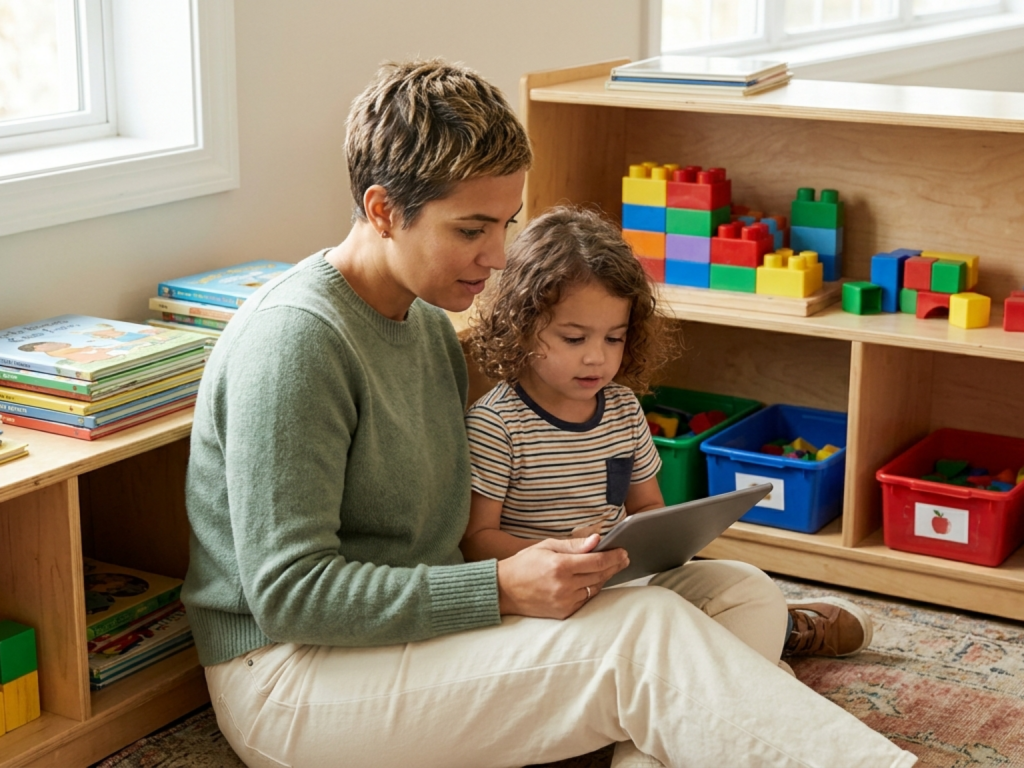
Co-viewing means an adult watches with the child and actively helps them process what is happening. It does not require constant teaching or turning every minute into a lesson. The key is shared attention: naming emotions, explaining unfamiliar words, linking the story to real life, and noticing when the child is overstimulated, confused, or frightened.
Preschoolers often learn better when adults use “serve and return” interaction. The child points, laughs, asks, or reacts; the adult responds with language, warmth, and meaning. This supports vocabulary, narrative comprehension, emotional literacy, and social understanding. A program about animals may become a conversation about a recent zoo visit. A story about sharing may become practice during block play.
Co-viewing also protects against inappropriate content. Autoplay and recommendation algorithms can move quickly from a harmless clip to material that is too intense, commercialized, or developmentally unsuitable. Keeping devices in shared spaces, turning off autoplay, and using curated platforms can reduce this risk, but they do not replace adult supervision.
Parents do not need to co-view every single second. In real life, a caregiver may use a short show to cook dinner or attend to another child. Still, it helps to “bookend” screen time: introduce what the child will watch, check in briefly, and talk afterward. Even a few minutes of connection can make screen time more meaningful and less isolating.
Daily habits that keep screens in a healthy place
Healthy screen habits are easier when they are predictable. Preschoolers manage limits better when the rule is the same most days and does not depend on repeated bargaining. A simple Family Media Plan can define when screens are available, which content is allowed, who chooses, where devices stay, and what happens when screen time ends.
Useful habits include screen-free meals, screen-free reading time, and a screen-free wind-down period before bed. Pediatric sources commonly recommend avoiding screens for at least 1 hour before bedtime because stimulating content, emotional arousal, and light exposure may interfere with sleep onset and sleep quality. If bedtime has become difficult, a screen-free bedtime routine can be an important first step.
Transitions matter. Many preschoolers melt down not because the limit is wrong, but because stopping a highly rewarding activity is hard. Try giving a concrete warning: “One more episode, then bath.” Use a visual timer if helpful. End at a natural stopping point. Then move immediately into a predictable next activity such as snack, outdoor play, bath, or stories.
It is also useful to decide what screens are not for. Avoid using screens as the main way to put a child to sleep. Be cautious about using screens as the only strategy for distress, boredom, waiting, or behavior management. Children need repeated supported practice with frustration tolerance, calming, and independent play. This does not mean never using a screen during a hard moment; it means building other tools too.
Balancing screen time with sleep, movement, play, and connection
A preschooler’s day should be anchored by biological and relational needs. Adequate sleep supports attention, mood regulation, growth, immune function, and memory consolidation. Physical activity supports cardiometabolic health, motor development, vestibular and proprioceptive input, and better sleep pressure at night. Pretend play, construction play, drawing, music, and shared reading support language, symbolic thinking, fine motor skills, and social cognition.
When deciding whether screen use is “too much,” look at function. Is your child sleeping reasonably well? Do they have time outdoors or active movement most days? Are they interested in toys, books, pretend play, and other people? Can they tolerate small frustrations some of the time? Are meals and bedtime protected from device conflict? If screens are consistently disrupting these domains, the pattern may need adjustment even if the total minutes seem modest.
For families trying to reduce screen use, replace before you remove. A sudden limit without alternatives can feel punitive to a preschooler. Prepare quiet screen-free activities for children, such as picture books, reusable sticker scenes, sensory bins, puzzles, drawing supplies, matching games, building toys, audio stories, or a basket of special “waiting toys.” For active children, offer movement first: dancing, obstacle courses, animal walks, playground time, or helping with simple household tasks.
Parents also deserve compassion. Screens are often used because caregivers are overloaded, working, managing siblings, or lacking safe outdoor space. A realistic plan is better than an idealized one. Start with one change: no screens at meals, no screens in bedrooms, one shared show after nap, or turning off autoplay. Small, consistent changes often work better than dramatic restrictions that cannot be sustained.
When screen habits may need extra attention
Consider discussing screen habits with a pediatrician, family physician, developmental specialist, or qualified child mental health professional if screen use is associated with persistent sleep problems, severe tantrums when screens stop, loss of interest in non-screen play, aggressive imitation, frequent exposure to frightening or adult content, or major family conflict. These signs do not automatically indicate a disorder, but they are worth exploring in the context of the child’s temperament, development, sleep, sensory needs, and family stressors.
Some children are more vulnerable to dysregulation after screen use, especially if they are tired, hungry, neurodevelopmentally different, anxious, highly sensory-seeking, or exposed to fast-paced content. The solution is not always simply “less screen time.” It may involve different content, shorter sessions, more co-viewing, clearer transitions, more outdoor movement before seated activities, or changes to bedtime routines.
If a child receives developmental, speech-language, occupational therapy, behavioral, or mental health support, ask the clinician how media habits fit the child’s care plan. For example, a speech-language pathologist may suggest ways to turn a favorite program into conversation practice, while an occupational therapist may recommend sensory regulation without screens. Individualized guidance is especially helpful when families are balancing medical appointments, caregiver fatigue, and a child’s specific regulation profile.
The most supportive message for preschoolers is simple: screens are one small tool, not the center of the day. Children thrive when adults set warm limits, join them in learning, and protect the basic rhythms of sleep, movement, meals, play, and connection.
When to seek guidance
- Ask a healthcare professional if screen use is linked with persistent sleep disruption or major daytime impairment.
- Seek help if stopping screens regularly triggers severe, prolonged, or unsafe behavior.
- Review content immediately if a child seems frightened, aggressive, withdrawn, or confused after viewing.
- Avoid screens as the main sleep aid; discuss ongoing bedtime struggles with a pediatric clinician.
- If development, language, attention, or social interaction concerns are present, ask for individualized guidance.
Tools & Assistance
- Create a written Family Media Plan with screen-free times and places.
- Turn off autoplay and keep devices in shared family spaces.
- Preview shows and apps before your child uses them.
- Use visual timers and predictable transition routines.
- Ask your pediatrician for advice if screen habits affect sleep, behavior, or family functioning.
FAQ
Is one hour of screen time a strict medical limit?
It is best understood as a practical upper guideline for routine use in children aged 2 to 5 years. Quality, co-viewing, sleep, movement, and family context also matter.
Is video chatting counted the same way as watching videos?
Video chatting is usually treated differently because it can be socially interactive, especially when a caring adult helps the child participate.
Are educational apps better than television?
Not automatically. Some apps are highly commercial or reward-based. High-quality, age-appropriate content with caregiver interaction is more important than the device type.
What if my child has a tantrum when the screen turns off?
Use predictable limits, warnings, natural stopping points, and an immediate next activity. If tantrums are severe, prolonged, or unsafe, consult a child health professional.
Should preschoolers use screens before bed?
It is generally better to avoid screens for at least 1 hour before bedtime and use calming bedtime activities such as reading, bath, quiet play, or music.
Sources
- Canadian Paediatric Society — Screen time and preschool children
- Zero to Three — Screen-Time Recommendations for Children Under Six
- American Academy of Pediatrics — Screen Time Guidelines - AAP
Disclaimer
This article is for informational purposes only and is not a substitute for medical advice, diagnosis, or treatment. Consult a qualified healthcare professional for concerns about your child’s sleep, behavior, development, or media use.
















Please log in to leave a comment.