
Intro
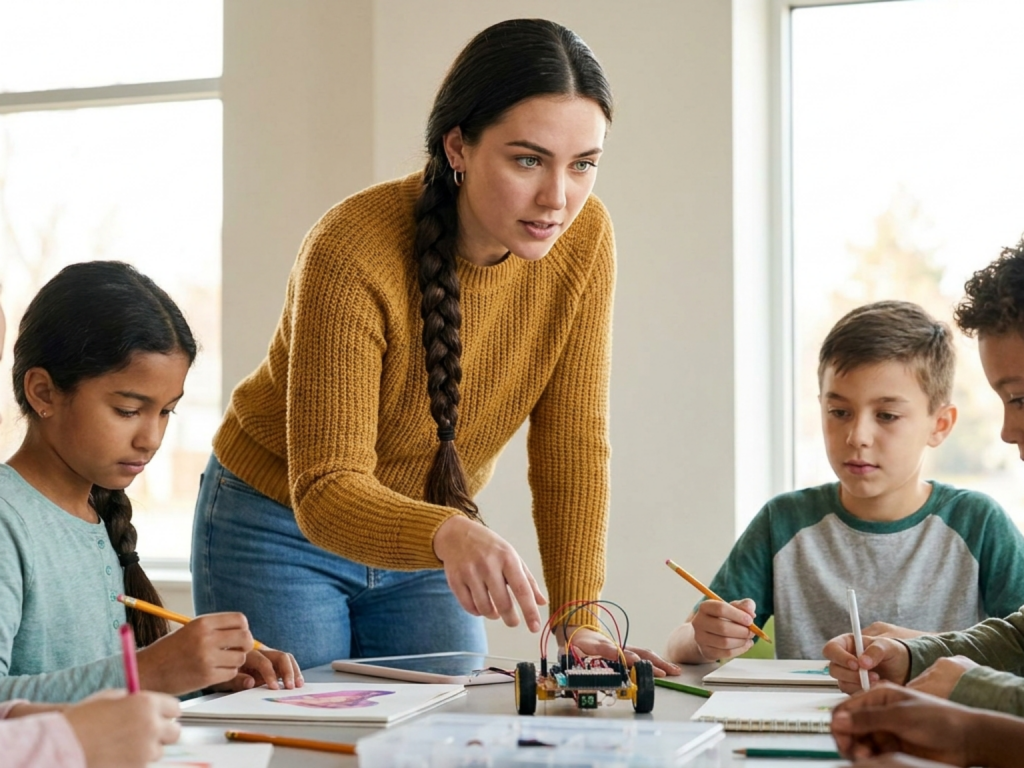
Preteen years, often around ages 9 to 12, are a sensitive bridge between childhood and adolescence. Hobbies and social activities can give children a safe way to explore identity, build competence, regulate stress, and practice peer relationships while their brains, bodies, and social worlds are changing quickly.
There is no single “right” activity for every preteen. The best fit usually balances enjoyment, developmental readiness, family resources, safety, cultural values, and the child’s temperament. A supportive adult can help a preteen try new experiences without turning every interest into a performance measure.
Highlights
Hobbies can support self-esteem, emotional regulation, and autonomy when they are chosen with the child’s interests in mind.
Organized activities, such as sports, clubs, performing arts, and community groups, may strengthen peer functioning and prosocial behavior.
Unstructured hobbies also matter; quiet creative or hands-on interests can reduce stress and offer recovery time from school and social demands.
Parents and caregivers can help by observing fit, protecting sleep and school balance, and watching for exclusion, bullying, or over-scheduling.
Why hobbies matter in the preteen years
Preteens are developing more complex executive functions, including planning, inhibition, working memory, and flexible problem-solving. At the same time, peer approval begins to feel more emotionally powerful. A hobby can become a stabilizing “third space” between home and school, where a child can experience mastery without being defined only by grades, popularity, or appearance.
Healthy hobbies support several developmental systems at once. A craft project can strengthen fine-motor skills and sustained attention. A team sport can build cardiometabolic fitness, coordination, and frustration tolerance. A music ensemble can train auditory processing, discipline, and cooperation. A nature club can improve curiosity and offer sensory recovery after a stimulating school day.
Importantly, hobbies do not need to be elite, expensive, or competitive to be valuable. Research comparing hobbies and organized activities in youth has found that organized activity involvement is associated with better peer functioning, while hobby involvement may reduce negative interactions with close same-sex friends. This distinction is useful: structured groups can expand social networks, while personal hobbies can give preteens emotional breathing room and a sense of identity.
For many families, hobbies also buffer the stress of Academic challenges preteens may face during the transition to middle school. A child who struggles with homework or test anxiety may still feel competent while drawing, coding, gardening, dancing, skating, cooking, building models, or caring for a pet. That competence is not “extra”; it can be protective for self-esteem.
Organized activities: benefits and realistic choices
Organized activities include school clubs, sports teams, religious youth groups, performing arts, academic enrichment, scouting-style programs, and community classes. Studies of youth participation commonly identify sports, academic clubs, performing arts, and religious activities as frequent forms of involvement. These settings may help preteens learn turn-taking, commitment, leadership, emotional regulation after disappointment, and respectful interaction with adults outside the family.
The best organized activity is not necessarily the most prestigious one. Fit matters more than status. A preteen who dreads competitive soccer may thrive in recreational swimming, martial arts, theater crew, robotics, choir, chess club, or a library-based writing group. Families can ask: Does the child feel safe? Is the adult leader warm and boundaried? Are mistakes treated as part of learning? Is the schedule compatible with sleep, meals, family time, and schoolwork?
Some children benefit from trying an activity for a defined trial period, such as six to eight weeks, before deciding whether to continue. This reduces impulsive quitting after one hard day while also respecting the child’s autonomy. If cost is a barrier, families can look for school-based clubs, public library programs, community recreation centers, sliding-scale arts classes, faith-community groups, or used-equipment exchanges.
Caregivers should also watch for over-identification. If a child’s entire self-worth becomes attached to winning, selection, grades, or applause, the activity may need reframing. Adults can praise effort, persistence, kindness, practice habits, and courage more than outcomes. A preteen should hear, repeatedly, that love and belonging are not conditional on performance.
Creative, sensory, and solo hobbies
Creative hobbies are especially useful for preteens who are emotionally intense, self-conscious, or easily drained by group settings. Painting, drawing, clay work, journaling, photography, sewing, digital art, woodworking with supervision, music practice, and craft kits can provide a nonverbal channel for affect regulation. Pediatric guidance often notes that arts and crafts may reduce stress and anxiety while supporting self-esteem, especially when the process is valued over the final product.
Solo hobbies can also help children who need decompression after school. This is not the same as unhealthy isolation. A preteen who reads fantasy novels, builds miniature worlds, practices guitar, solves puzzles, tends plants, or experiments with recipes may be developing concentration, intrinsic motivation, and emotional self-soothing. The goal is balance: time alone should restore the child, not replace all peer contact or family connection.
For neurodivergent preteens, including some children with autism spectrum traits, ADHD traits, sensory processing differences, or learning differences, hobbies may become a pathway to communication and confidence. Special interests can be honored while gently expanding flexibility. For example, a child fascinated by maps might enjoy orienteering, geography club, transit history, or digital design. A child who loves animals might volunteer with a supervised shelter program if age rules and safety policies allow.
Adults can lower the activation energy by keeping materials visible and manageable. A small art bin, a beginner instrument stand, a seed-growing tray, or a simple maker corner can invite engagement. Avoid turning every creative output into a social media post or family evaluation. Privacy and ownership help preteens feel that the hobby belongs to them.
Social activities that build skills without forcing popularity
Social competence is not the same as being extroverted. A healthy social activity helps a preteen practice reading cues, negotiating rules, repairing conflict, including others, and tolerating mild awkwardness. Preteen friendship changes are common as children sort through loyalty, shared interests, group identity, and emerging independence. Caregivers can normalize these shifts while still taking loneliness and bullying seriously.
Evidence-informed social skills activities often use structured play rather than lectures. Joint singing, rhythm games, cooperative art, gardening, community service, and traditional games such as Simon Says or Red Light/Green Light can strengthen self-control, shared attention, and responsiveness to others. Role-playing games can be particularly rich because they involve perspective-taking, planning, emotional language, and collaborative problem-solving. Some therapeutic and educational settings use role-play formats to support adolescents with social communication differences, although individualized professional guidance is important when a child has significant impairment or distress.
Social activities work best when expectations are explicit. A caregiver might preview: “At the club, you can say hello, ask one question, and then choose whether to keep talking.” This is more useful than simply saying, “Go make friends.” Afterward, debrief gently: “What felt easy? What felt weird? Was there anyone you might like to sit near next time?” Avoid interrogating or shaming; preteens often need time to process.
Families can also teach prosocial behavior at home. Board games, shared cooking, neighborhood cleanups, caring for younger relatives with supervision, and planning a family outing all require communication and flexibility. These ordinary interactions are legitimate social practice, especially for children who are not ready for large groups.
Balancing hobbies with sleep, school, screens, and nutrition
A hobby is most protective when it fits within the child’s biological needs. Preteens still require consistent sleep, regular meals, physical movement, and downtime. Overscheduled children may present with irritability, headaches, abdominal discomfort, declining grades, emotional outbursts, or loss of enjoyment. Late bedtime habits preteens develop because of evening practices, homework, gaming, or messaging can worsen mood regulation and attention the next day.
Caregivers can use a weekly map rather than guessing. Put school hours, commute time, homework, meals, sleep routines, chores, screen time, and activities on one page. If the schedule leaves no recovery time, the child may need fewer commitments. This is not failure; it is nervous system care.
Nutrition matters too. A preteen going from school to practice or rehearsal may need a planned snack and water to prevent fatigue, dizziness, or emotional reactivity. Healthy eating habits preteens can sustain include predictable breakfasts, portable snacks, and non-shaming conversations about hunger and fullness. Avoid linking food to body size or athletic worth.
Screen-based hobbies deserve nuance. Coding, digital art, video editing, strategy games, and online language learning can be meaningful. However, online social spaces carry risks, including sleep displacement, cyberbullying, unwanted contact, and compulsive use patterns. Families should set developmentally appropriate boundaries, keep devices out of bedrooms overnight when possible, and maintain open conversations about digital safety without relying only on surveillance.
Supporting a reluctant, anxious, or excluded preteen
Some preteens resist hobbies because they fear embarrassment, have had peer rejection, struggle with motor coordination, feel depressed or anxious, or are exhausted by school demands. A supportive response begins with curiosity: “What part feels hard?” rather than “You never try anything.” If avoidance is persistent, impairing, or accompanied by somatic complaints, panic symptoms, self-harm talk, major sleep or appetite changes, or school refusal, consult a pediatrician or qualified mental health professional.
For a shy child, start small. Invite one classmate to a structured activity, choose a low-pressure library program, or attend the first session together if appropriate. For a child with coordination difficulties, consider noncompetitive movement such as swimming lessons, hiking, yoga for children, dance for fun, or martial arts programs that emphasize self-control rather than sparring. For a child with social communication differences, ask leaders about predictable routines, sensory load, group size, and their experience with inclusive practices.
When exclusion occurs, validate the pain before problem-solving. “That hurt, and I’m glad you told me” is more regulating than immediately giving advice. Then clarify whether the issue is a normal mismatch, repeated relational aggression, discrimination, or bullying. Bullying requires adult intervention and documentation through the school or organization.
Caregivers should also protect the child’s dignity. Do not force public performances, team tryouts, or group events as a cure for anxiety. Gradual exposure can be helpful when guided sensitively, but flooding a child with feared situations may increase avoidance. The aim is courageous participation at a tolerable dose.
How parents and caregivers can stay involved without taking over
Preteens need both autonomy and scaffolding. Adults can offer choices, transportation, materials, and emotional coaching while allowing the child to own the experience. A useful phrase is: “I can help you make a plan, but this is your interest.” This reduces the risk that a hobby becomes another arena for adult ambition.
Practical support includes communicating with coaches or leaders when health, safety, disability accommodations, or bullying concerns arise; helping the child organize equipment; and setting realistic commitments. If a child wants to quit, explore the reason. Quitting because of abuse, humiliation, unsafe supervision, or severe distress is different from quitting because practice is mildly boring. Families can distinguish perseverance from unnecessary suffering.
Medical considerations may also shape activity choices. Children with asthma, diabetes, seizure disorders, hypermobility, concussion history, eating disorder concerns, cardiac symptoms, or chronic pain may still participate in many hobbies, but they may need individualized advice from a healthcare professional. Seek prompt medical evaluation for exertional chest pain, syncope, unexplained shortness of breath, recurrent injuries, or significant weight loss.
Finally, model a healthy relationship with leisure. Preteens notice whether adults allow themselves rest, friendship, creativity, and movement. A family culture that treats hobbies as nourishment, not just achievement, helps children carry balanced habits into adolescence.
When to seek extra help
- A preteen stops enjoying most activities, withdraws from friends, or shows persistent sadness or irritability.
- There are signs of bullying, coercion, humiliation, unsafe adult behavior, or online exploitation.
- Exercise causes fainting, chest pain, severe breathlessness, or recurrent injury.
- Activity schedules are causing chronic sleep loss, school decline, frequent pain, or emotional exhaustion.
- A child talks about self-harm, hopelessness, or not wanting to be alive; seek urgent professional help.
Tools & Assistance
- Create a weekly schedule map including sleep, school, meals, homework, screens, and activities.
- Ask school counselors, pediatric clinics, libraries, and community centers about low-cost programs.
- Use a short trial period before committing to a new club, sport, or class.
- Prepare social scripts for first sessions, such as greetings, questions, and how to ask for help.
- Consult a pediatrician or mental health professional if anxiety, mood changes, pain, or avoidance is significant.
FAQ
How many activities should a preteen have?
There is no universal number. A good schedule leaves room for sleep, homework, meals, family connection, unstructured play, and rest. If the child is chronically tired or distressed, reduce commitments.
Is it okay if my preteen prefers solo hobbies?
Yes, solo hobbies can be healthy and restorative. The key is balance: the child should still have some supportive connection with family, peers, mentors, or community.
Should I make my child continue an activity they want to quit?
Explore why they want to stop. Mild frustration may call for problem-solving and a short commitment period, while bullying, unsafe supervision, or severe distress should be addressed immediately.
Can video games count as a social activity?
Sometimes. Cooperative or strategy games can involve teamwork and communication, but families should monitor sleep, mood, online safety, and whether gaming is crowding out other needs.
What if my child has anxiety or neurodevelopmental differences?
Choose predictable, inclusive, low-pressure settings and consider professional guidance if distress or impairment is significant. Gradual participation is usually more helpful than forcing sudden exposure.
Sources
- National Center for Biotechnology Information (NCBI) / PubMed Central — A Comparison of Hobbies and Organized Activities Among Low-Income Youth
- Parenting Science — Evidence-based social skills activities (with teaching tips)
- Primary Pediatrics MD — 5 Healthy Hobbies Your Pre-Teen Can Explore
Disclaimer
This article is for general educational purposes only and is not a diagnosis or treatment plan. Consult a pediatrician, mental health professional, or other qualified clinician for concerns about your child’s health, development, or safety.
















Please log in to leave a comment.