
Intro
Flying with a baby can feel like a high-stakes logistical exercise, especially when you are also managing feeding, sleep, hygiene, and your own fatigue. A calm plan will not make every moment predictable, but it can reduce avoidable stress and help you respond confidently when the day changes course.
These tips focus on infant comfort, infection precautions, feeding logistics, and evidence-informed in-flight safety. Your baby's pediatric clinician is the right person to advise on individual travel readiness, particularly after a complicated birth or when a baby has an ongoing medical condition.
Highlights
A pediatric discussion is especially valuable for newborns, premature infants, and babies with cardiopulmonary or ear-related concerns.
Using an approved child restraint in a purchased seat provides substantially better in-flight protection than holding a baby on an adult's lap.
Feeding or offering a pacifier during ascent and descent may help a baby equalize middle-ear pressure.
Preparation works best when it prioritizes essentials in the cabin bag, realistic timing, and flexible expectations.
Decide whether your baby is ready to fly
Start with your baby’s individual health status rather than a universal age milestone. Published pediatric guidance generally advises avoiding air travel in the first seven days of life, while Mayo Clinic notes that waiting until a baby is at least a few months old may be preferable because young infants have developing immune systems and travel increases exposure to many people. Airlines may also set their own minimum-age rules, so confirm these before booking.
A pre-travel pediatric visit is particularly appropriate for a premature infant, a baby with chronic lung disease, congenital heart disease, recent respiratory illness, recurrent otitis media, or a need for supplemental oxygen or monitoring. Cabin pressure is lower than at sea level, and the reduced oxygen partial pressure can matter for babies with limited cardiopulmonary reserve. Your clinician can assess travel readiness and explain whether airline medical clearance, equipment planning, or postponement is warranted.
Bring an up-to-date medication list, relevant medical summaries, and immunization records when they are useful for the destination or continuity of care. Do not begin a sedating medicine solely to make a flight easier. Sedation can have unpredictable effects in infants, including paradoxical agitation or respiratory concerns, and should only be considered under direct medical guidance for a specific indication.
Book for safety and protect your baby's space
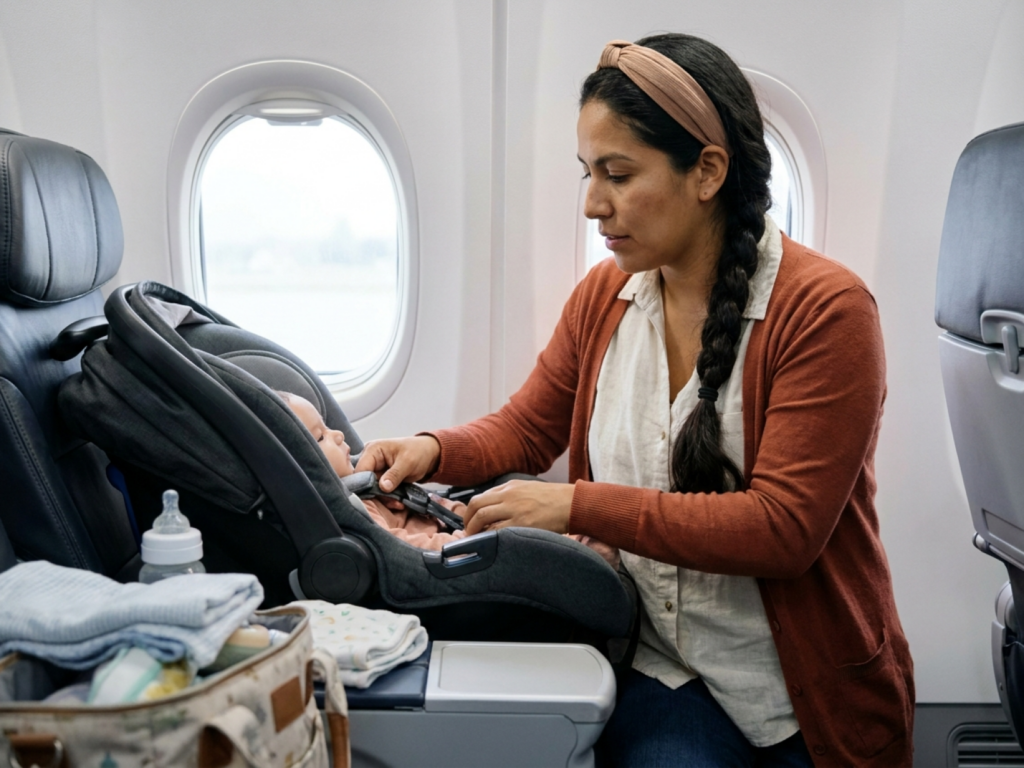
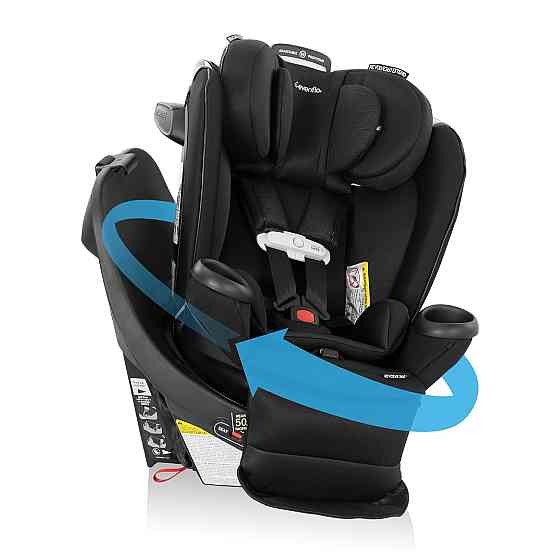
For in-flight safety, the most protective option is a purchased seat with a properly installed FAA-approved child restraint system that is appropriate for your baby’s weight and size. A lap infant may be permitted by an airline, but an adult’s arms cannot reliably restrain a baby during severe turbulence, an abrupt maneuver, or an emergency. Check the restraint label, airline rules, seat-width compatibility, and installation instructions before departure.
Choose seats strategically. A window seat can reduce exposure to people moving in the aisle and can help keep a car seat away from an evacuation path. Avoid exit rows and any location the airline prohibits for child restraints. If you have a choice, a direct flight reduces the number of takeoffs, landings, boarding events, and opportunities for disrupted feeds. Early boarding can provide time to install the seat, but some families prefer boarding later to give an alert baby more time to move before confinement.
Confirm bassinet availability well ahead of time if you plan to use one. A bassinet can be useful for supervised rest on eligible aircraft, but it is not a substitute for following crew instructions. During taxi, takeoff, landing, and whenever the seatbelt sign is on, secure your baby as the airline directs. Plan for turbulence even when the forecast is calm.
Pack a cabin bag for delays, not just the itinerary
Build your carry-on around the possibility that checked luggage is delayed or a short flight becomes a long airport day. Keep feeding supplies, diapers, wipes, a changing mat, two or more complete changes of baby clothes, one change of shirt for the caregiving adult, and familiar comfort items within reach. Pack medications in original containers when practical and keep them in the cabin rather than checked baggage.
For breastfed babies, nursing supplies and a cover if you use one may be enough; for expressed milk or formula, bring more than the expected volume. MedlinePlus notes that breast milk, formula, and baby food may require additional screening at security. Tell the screening officer that you are carrying these items and allow extra time rather than rushing. Use safe water and preparation practices appropriate to your baby’s age and your pediatric clinician’s advice, especially when preparing formula during travel.
- Separate feeding items into one accessible pouch for security and boarding.
- Pack extra diapers for expected travel time plus a meaningful buffer for delays.
- Bring sealable bags for soiled clothing and used diapers where disposal is not immediately available.
- Include a lightweight layer because cabin temperatures can vary.
- Keep a small, quiet toy or board book for wakeful periods.
Do not rely on airport shops to stock your baby’s usual formula, bottle nipples, or medication. Familiar supplies simplify decisions when everyone is tired.
Help with ear pressure without forcing a schedule
During ascent and descent, changing cabin pressure can create discomfort as the middle ear attempts to equalize. Swallowing can help open the eustachian tube, so breastfeeding, bottle-feeding, or offering a pacifier during takeoff and landing may be soothing. Try to begin when the aircraft is actually climbing or descending rather than starting too early, but do not force a feed if your baby is asleep or refusing.
A baby with nasal congestion, an ear infection, or a recent upper respiratory tract illness may have more difficulty equalizing pressure. Contact your pediatric clinician before flying if symptoms are significant, if there is fever, breathing difficulty, poor feeding, or a recent diagnosis that could affect travel. Decongestants, antihistamines, and analgesics should not be improvised for flying; infant use depends on age, diagnosis, dose, contraindications, and the advice of a qualified clinician.
Crying during descent is common and does not automatically mean a serious ear problem. Stay calm, maintain physical safety, and use your usual soothing methods. If your baby seems persistently distressed after landing, develops fever, drains fluid from the ear, feeds poorly, or has other concerning symptoms, seek medical assessment. The goal is comfort and observation, not trying to diagnose the cause in the cabin.
Reduce exposure while keeping the day manageable
Air travel puts babies in close contact with crowds, shared surfaces, and people who may be ill. You cannot eliminate this exposure, but a few measured habits help. Perform hand hygiene before feeding, after diaper changes, and after touching high-contact surfaces. Clean hands with soap and water when available; use an alcohol-based hand sanitizer according to product instructions when soap and water are not available, keeping it away from your baby’s mouth and eyes.
Choose distance and ventilation where possible. A window seat can limit aisle traffic, and keeping your baby in their assigned restraint when feasible reduces contact with surrounding surfaces. Politely discourage strangers from touching your baby’s hands or face. For young infants, it is reasonable to avoid nonessential travel during seasons or situations with high respiratory virus circulation, especially when the baby is not yet fully immunized for age.
Facial coverings are not safe for infants and should not be placed on a baby to prevent infection. Caregivers can use well-fitting masks when appropriate, particularly in crowded indoor airport areas or if they have a potential exposure, while following local rules and medical advice. Watch for ordinary but meaningful needs during travel: regular feeds, wet diapers, alertness between sleeps, and comfort. A long flight can disrupt routines, but persistent lethargy, repeated vomiting, respiratory distress, or markedly reduced intake needs professional evaluation.
Plan for sleep, movement, and a gentler recovery
Airplanes are stimulating environments, and sleep may not look like it does at home. Focus on safe positioning instead of trying to reproduce a perfect routine. For a young baby, the car seat or other approved restraint is the appropriate place during required seated periods. Avoid allowing a baby to sleep unattended on an adult’s lap, an airport chair, or improvised bedding. Follow crew instructions about when a bassinet may be used, and move your baby back to the required restraint before turbulence or other operational restrictions.
Keep expectations small. Offer a feed, a cuddle, a diaper change, or quiet sensory input one at a time. Walk the aisle only when permitted and when you can do so safely; otherwise, use gentle rocking and a familiar voice at your seat. An overtired or overstimulated baby may cry more, but this is not a parenting failure. Other passengers’ reactions are not the measure of whether you are caring well for your child.
After arrival, prioritize hydration through normal feeding, a calm sleep setting, and time to reset rather than scheduling demanding activities immediately. For large time-zone changes, infants usually adapt best with daylight exposure and a gradual return to familiar sleep and feeding cues. Contact a clinician promptly for signs such as difficulty breathing, bluish color, unusual unresponsiveness, dehydration concerns, persistent vomiting, or fever in a young infant. Have destination medical contacts and travel insurance details accessible before you leave home.
When to get medical advice
- Seek urgent care for breathing difficulty, bluish or gray color, unusual unresponsiveness, or a seizure.
- Ask a pediatric clinician before travel for a premature infant or a baby with heart, lung, oxygen, or recent illness concerns.
- Do not use sedatives, decongestants, or other medicines solely for the flight without clinician guidance.
- Arrange assessment for fever in a young infant, poor feeding, repeated vomiting, or notably fewer wet diapers.
- Follow airline crew instructions immediately during turbulence, taxi, takeoff, and landing.
Tools & Assistance
- Pediatric clinician or travel medicine clinic
- Airline special assistance and child restraint policy
- Airport security guidance for breast milk, formula, and baby food
- Destination urgent care and emergency contact list
- Travel insurance assistance line
FAQ
When can a newborn fly?
Policies vary by airline, but evidence-based pediatric guidance generally advises avoiding air travel in the first seven days of life. Discuss timing with your baby's clinician, especially for a premature or medically complex infant.
Should I buy a seat for my baby?
A purchased seat for a properly labeled and installed FAA-approved child restraint is the safer in-flight option. A lap infant is allowed by many airlines but is less protected during turbulence or sudden movement.
What can help a baby's ears during landing?
Breastfeeding, bottle-feeding, or a pacifier may encourage swallowing and help equalize middle-ear pressure. Ask a clinician before using any medication for congestion or ear discomfort.
Can I bring breast milk and formula through airport security?
Yes, breast milk, formula, and baby food can be screened separately. Tell security staff about them and allow extra time for the process.
Sources
- Mayo Clinic — Air travel with infant: Is it safe?
- MedlinePlus — Traveling with children: MedlinePlus Medical Encyclopedia
- PubMed Central — Air travel and children
Disclaimer
This article provides general educational information and is not a substitute for individualized medical advice. Consult your baby's pediatric clinician about travel plans, medications, and any symptoms or medical conditions.














Please log in to leave a comment.