
Intro
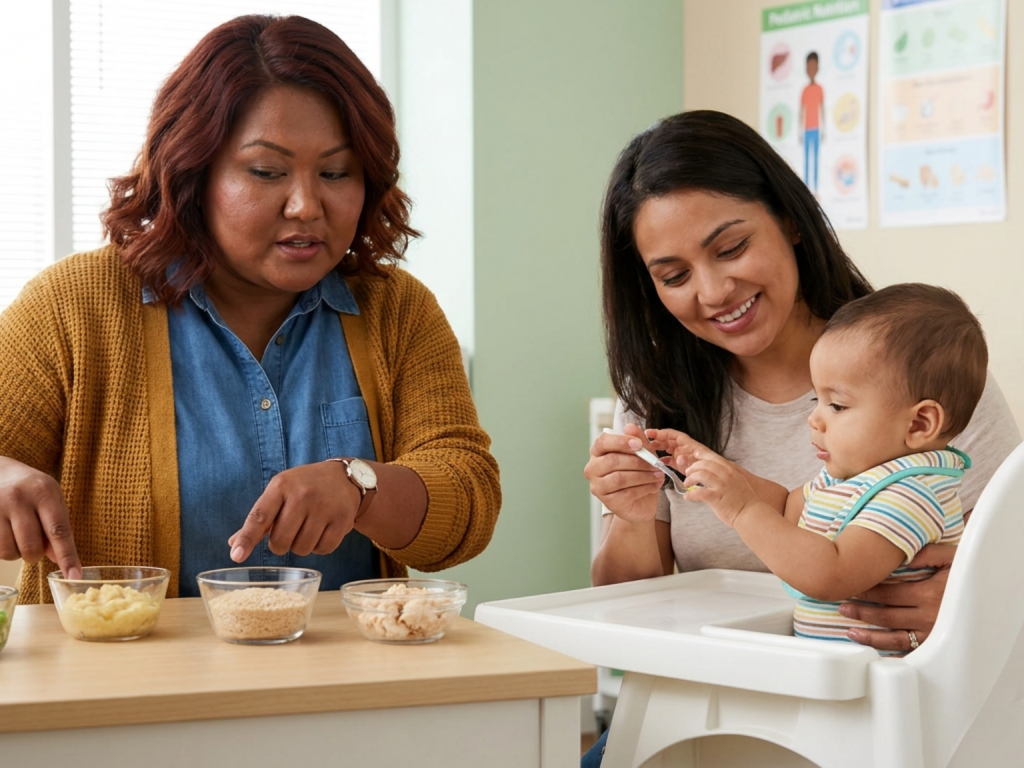
Starting complementary foods is an important developmental milestone, but it does not need to be perfect or rushed. In the United States, most babies begin trying foods other than breast milk or infant formula at about 6 months, when they show signs of readiness. Breast milk or iron-fortified infant formula remains the primary source of nutrition during the transition.
This guide explains how to recognize readiness, choose nutrient-dense first foods, reduce choking and allergy risks, and build a responsive feeding routine. Your baby's healthcare professional can help individualize advice, particularly if your baby was born preterm, has a medical condition, has feeding difficulties, or may be at increased risk for food allergy.
Highlights
Most babies are ready for complementary foods at about 6 months, but developmental readiness matters more than age alone.
Offer a variety of vegetables, fruits, whole grains, protein foods, and unsweetened dairy foods in developmentally appropriate textures.
Iron-rich foods deserve early attention because infants have increasing iron needs during the second half of the first year.
Avoid choking hazards, honey before 12 months, juice before 12 months, and foods or drinks with added sugar.
Introduce potentially allergenic foods in safe forms and discuss individualized guidance with your baby's healthcare professional.
When babies are ready to start complementary foods
Federal guidance and American Academy of Pediatrics guidance generally support beginning complementary foods around 6 months. Foods should not be introduced before 4 months unless specifically directed by a qualified healthcare professional. The appropriate timing is based on maturation of oral-motor skills and postural control, not simply on a baby’s interest in food or ability to sleep for longer stretches.
Common signs of developmental readiness for solids include sitting upright with minimal support and maintaining good head and neck control. A ready infant can open the mouth when food is offered, bring objects to the mouth, and swallow rather than repeatedly pushing food out with the tongue. The baby should also show interest in food and be able to coordinate reaching, grasping, and bringing objects toward the mouth.
Readiness signs should occur together. A baby who can sit with support but cannot maintain head control may not yet be prepared for spoon- or finger-feeding. Conversely, mouthing objects or watching adults eat does not, by itself, establish readiness. Ask your pediatrician or other qualified clinician for guidance if you are uncertain, especially after premature birth or when there are concerns about growth, swallowing, reflux, neuromuscular function, or oral-motor development.
The nutritional priorities for first foods
At the beginning, complementary foods provide practice with flavors, textures, and eating skills as well as additional nutrients. Breast milk or infant formula continues to supply much of the baby’s energy and fluid. Solids gradually become more substantial over the following months, but there is no requirement to replace milk feeds immediately.
Pay particular attention to iron-rich complementary foods. Infants’ iron requirements increase during the second half of infancy, and iron supports hematologic and neurodevelopmental health. Suitable options include smooth meat or poultry purees, finely minced or shredded tender meat, beans and lentils prepared to a safe texture, iron-fortified infant cereals, and well-cooked eggs. Combining plant-based iron sources with foods containing vitamin C, such as soft fruit or vegetables, can support non-heme iron absorption.
Other useful food groups include vegetables, fruits, whole grains, protein foods, and dairy foods without added sugars. Examples include mashed sweet potato, avocado, banana, soft-cooked broccoli, oatmeal, quinoa, plain whole-milk yogurt, and cottage cheese prepared appropriately for the baby’s skills. A varied diet helps expose the infant to different tastes and provides a broader nutrient profile. Avoid pressuring the baby to finish a portion; early intake may be only a small taste, and appetite can vary considerably from day to day.
Choosing safe textures and preparing food
Texture should match the infant’s oral-motor abilities and progress gradually. Early foods may be smooth, mashed, or pureed, but babies should not remain on uniformly smooth textures longer than necessary. As skills improve, move toward thicker mashes, soft lumpy foods, finely chopped or shredded foods, and soft finger foods. These transitions support chewing practice even before a baby has many teeth; gums can manage appropriately soft foods.
Examples of safe textures for infant feeding include a thick puree that holds its shape on a spoon, soft cooked vegetables that can be easily squished between fingers, ripe fruit cut into manageable pieces, and tender meat finely shredded or minced. Food should be moist and soft rather than dry, hard, stringy, or sticky. Remove bones, pits, seeds, tough peels, and gristle. Cook foods thoroughly when appropriate and wash produce and hands before preparation.
Choking prevention requires active supervision. Seat the baby upright in a stable high chair or other appropriate feeding seat, and remain close throughout the meal. Do not feed while the baby is reclining, crawling, walking, riding in a car, or distracted by toys or screens. High-risk foods include whole grapes, raw hard vegetables, nuts, popcorn, chunks of meat or cheese, spoonfuls of nut butter, hard candy, and round or firm pieces of food. Grapes and cherry tomatoes should be quartered lengthwise; nuts should be finely ground, and nut butter should be thinned or spread very thinly in a suitable preparation. Caregivers should learn infant choking first aid and understand that gagging can be noisy, whereas choking may be silent and impair breathing.
Introducing foods one at a time and managing allergy concerns
Many clinicians and the AAP suggest beginning with simple, single-ingredient foods so caregivers can observe tolerance and learn the baby’s preferences. There is no medically necessary order for most foods. You might offer a small amount of a soft vegetable, fruit, iron-fortified cereal, meat, egg, or bean preparation, then gradually add other foods. Waiting about 3 to 5 days between unfamiliar single-ingredient foods can make it easier to identify the likely cause of a reaction, although families should follow their clinician’s specific advice.
Potentially allergenic foods include peanut, tree nuts, egg, dairy, wheat, soy, sesame, fish, and shellfish. Current guidance generally does not recommend delaying these foods solely to prevent allergy. Once the infant is developmentally ready, offer them in safe, non-choking forms, such as smooth peanut butter thinned with water or puree, well-cooked egg, or plain yogurt. Do not offer whole nuts or thick globs of nut butter. If your baby has severe eczema, an existing food allergy, or another reason for elevated allergy risk, consult the baby’s healthcare professional before introducing these foods; supervised introduction or allergy evaluation may be appropriate.
Watch for possible allergic reaction signs, including hives, facial or lip swelling, repeated vomiting, coughing, wheezing, breathing difficulty, pallor, unusual sleepiness, or sudden widespread symptoms. Breathing difficulty, swelling of the tongue or throat, or signs of circulatory compromise are emergencies. Call 911 in the United States. Do not attempt to diagnose the cause or reintroduce a suspected trigger without medical advice.
Foods and drinks to limit or avoid in the first year
Honey should be avoided before 12 months because it can contain spores that cause infant botulism. Do not add juice to the baby’s routine before 12 months; whole fruit offers fiber and a more favorable texture and nutrient profile. Infants do not need sugar-sweetened beverages, desserts, or foods with added sugars, and these can displace more nutrient-dense choices. Avoid unpasteurized milk, juice, or cheese because of pathogen risk.
Cow’s milk can be used in foods such as yogurt or cheese when developmentally appropriate, but it should not replace breast milk or infant formula as the main drink before 12 months. Cow’s milk as a primary beverage is nutritionally inadequate for young infants and may contribute to excessive protein and mineral intake or iron deficiency. Continue breast milk or iron-fortified infant formula as the main milk source unless your baby’s healthcare professional recommends a different plan.
Salt does not need to be added to infant foods. Be cautious with processed foods, which may contain substantial sodium or added sugars. Rice-based products should not be the only grain offered because variety reduces repeated exposure to arsenic from rice. Ask a clinician about any food, supplement, or beverage that may be relevant to your baby’s medical history.
Building a responsive feeding routine
Start with a small amount when the baby is alert, calm, and not extremely hungry. A short meal once a day may be enough at first, followed by a gradual increase in frequency as the baby becomes more skilled and interested. Milk feeds generally remain important during this period. Offer a few sips of water from an open cup or suitable training cup with meals when advised by your healthcare professional; water does not replace breast milk or formula.
Responsive feeding for babies means noticing and respecting hunger and satiety cues. Hunger cues may include reaching for food, opening the mouth, or becoming more attentive when food is presented. Turning away, closing the mouth, losing interest, or pushing food away can indicate fullness. Pause or end the meal when the baby signals that they are done. Avoid force-feeding, using food as a reward, or measuring success by the amount eaten.
Mess is part of sensory and motor learning. Let the baby touch and explore safe foods while maintaining supervision and a predictable routine. New flavors may need repeated, pressure-free exposures before acceptance. Family meals can help model eating, provided the baby’s portion is modified for texture and choking safety. If coughing during feeds, persistent gagging, prolonged meals, marked distress, recurrent vomiting, or poor intake occurs, stop and seek professional assessment rather than trying to solve the problem by changing textures independently.
Seek urgent help for these warning signs
- Call 911 for breathing difficulty, blue or gray color, severe swelling, or suspected choking.
- Seek emergency care for a rapid, multi-system allergic reaction or marked lethargy after eating.
- Do not give honey before 12 months.
- Do not offer hard, round, sticky, or large pieces that can obstruct the airway.
- Contact a healthcare professional about repeated vomiting, coughing with feeds, or difficulty swallowing.
Tools & Assistance
- Pediatrician or family physician visit before or around the start of complementary feeding
- Infant CPR and choking first-aid training from a recognized US provider
- Stable upright high chair with a properly used safety harness
- Food and symptom log for tracking new foods and suspected reactions
- Registered dietitian or feeding therapist referral when nutrition or swallowing concerns arise
FAQ
Does my baby need teeth before starting solids?
No. Readiness depends on posture, head control, oral-motor coordination, and the ability to swallow safely rather than on the presence of teeth. Foods must still be soft and prepared to reduce choking risk.
Should I begin with vegetables or fruit?
There is no required order for most healthy infants. Offer a range of foods, including iron-rich options, vegetables, fruits, grains, and protein foods, while following developmentally appropriate texture guidance.
Can babies eat peanut and egg?
Many infants can be introduced to peanut and well-cooked egg when they are ready for complementary foods, in safe forms. Babies with severe eczema, an established food allergy, or other risk factors should receive individualized medical guidance first.
How much food should my baby eat at first?
Initial amounts may be very small because the early goal is skill and sensory development. Follow the baby's hunger and fullness cues and continue breast milk or infant formula as the primary milk source.
Is gagging the same as choking?
No. Gagging is often noisy and can be part of learning new textures, while choking may be silent and interfere with breathing. Constant supervision and caregiver training in infant choking first aid are essential.
Sources
- Centers for Disease Control and Prevention — When, What, and How to Introduce Solid Foods
- American Academy of Pediatrics — When Can Babies Start Solid Foods? Readiness & Feeding Tips
- Dietary Guidelines for Americans — Build a Healthy Eating Routine for Your Baby (Birth to Age 2)
Disclaimer
This article provides general educational information and is not a diagnosis or a substitute for individualized medical advice. Consult your baby's pediatrician or another qualified healthcare professional for feeding decisions, allergy concerns, or urgent symptoms.
















Please log in to leave a comment.