
Intro
The first days and weeks with a baby involve a remarkable transition from intrauterine life to independent breathing, feeding, thermoregulation, and protection from infection. Caregivers are learning quickly while recovering physically and emotionally, so practical routines and timely professional support matter more than perfection.
This guide covers the core elements of early baby care: immediate newborn needs, feeding, temperature and hygiene, sleep, routine handling, and warning signs. Every baby has individual needs, particularly if born prematurely, at a low birth weight, or with medical complications. Use this information alongside advice from your midwife, pediatrician, family doctor, or other qualified healthcare professional.
Highlights
Skin-to-skin contact, warmth, early feeding, and careful observation support newborn adaptation.
Feed responsively and monitor output, behavior, and weight rather than relying on a single rigid schedule.
A dry cord stump, clean hands, safe sleep surface, and smoke-free surroundings reduce preventable risks.
Poor feeding, breathing difficulty, abnormal temperature, marked lethargy, and worsening jaundice require prompt medical attention.
Supporting the newborn transition
Immediately after birth, the priorities are effective breathing, thermal stability, skin-to-skin contact, and timely feeding. Drying the baby thoroughly and placing the infant skin-to-skin with a parent helps reduce heat loss and supports cardiorespiratory adaptation. A hat or additional covering may be used when clinically appropriate, while the baby’s face remains visible and the airway unobstructed. If the newborn needs resuscitation or other medical intervention, the clinical team will prioritize stabilization.
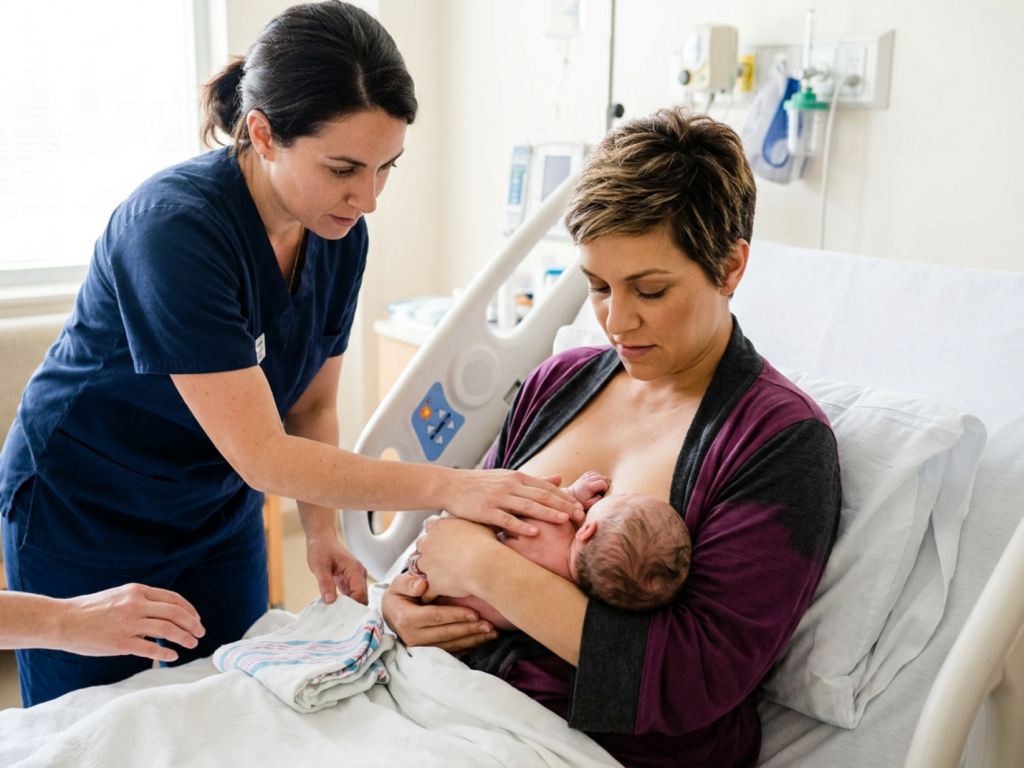
Early breastfeeding is encouraged when parent and baby are medically ready. Colostrum is produced in small volumes but is concentrated and immunologically active. A lactation professional can assess latch, milk transfer, maternal comfort, and feeding frequency. Families using infant formula should receive individualized guidance about preparation, storage, sterilization, and responsive feeding. Do not add cereal, water, or supplements to a bottle unless a healthcare professional specifically recommends it.
Newborns have limited glycogen stores and immature hepatic and renal function, so clinical observation is important. Vitamin K prophylaxis is commonly offered to prevent vitamin K deficiency bleeding, according to local policy and informed parental consent. Babies born prematurely or with very low birth weight may require additional respiratory, nutritional, glucose, or temperature support in a neonatal unit.
Feeding and hydration in the first weeks
Most healthy newborns feed frequently, including overnight. Cue-based newborn feeding means responding to early signals such as stirring, hand-to-mouth movements, rooting, and increased alertness, rather than waiting for intense crying. Crying is a late hunger cue and can make latching or settling more difficult. Breastfed infants may have variable feeding durations, while formula-fed infants also benefit from paced, responsive feeding rather than pressure to finish a bottle.
During the first several days, clinicians assess feeding effectiveness through observation, urine and stool patterns, alertness, swallowing, and serial weight measurements. Some weight loss after birth is physiologic, but the degree and trajectory require professional interpretation. A baby who is difficult to wake for feeds, repeatedly vomits, has markedly reduced urine output, or appears increasingly weak needs prompt assessment. Never force-feed an infant or attempt to treat poor feeding at home with unprescribed products.
Arrange the recommended newborn follow-up and discuss any concerns about milk supply, nipple pain, tongue movement, reflux-like behavior, or formula tolerance. A feeding plan may need adjustment as lactation changes, jaundice is assessed, or the infant’s weight trajectory becomes clearer. When supplements are medically indicated, ask how to preserve breastfeeding or maintain milk production if that is a family goal.
Warmth, cord care, and everyday hygiene
Newborn thermoregulation is immature. Keep the baby comfortably warm with appropriate clothing and bedding, avoiding overheating. The chest or back is more useful than hands and feet for judging general warmth because peripheral extremities can feel cool normally. Sweating, flushed skin, unusual restlessness, or a very hot trunk may indicate overheating. Follow local clinical advice for measuring temperature and interpreting the result.
Hand hygiene is one of the simplest infection-prevention measures. Wash hands before handling the baby, preparing feeds, caring for the cord, or changing nappies, and ask visitors to do the same. Keep people with respiratory or gastrointestinal infections away from the newborn until they have recovered. Avoid smoke and vaping exposure in the home and car.
Umbilical cord care generally consists of keeping the stump clean and dry and allowing it to separate naturally. Fold the nappy below the stump to reduce friction and contamination. Do not pull at it or apply powders, oils, alcohol, antiseptics, or traditional substances unless advised by a local healthcare professional. A small amount of blood or moisture around separation may occur, but persistent bleeding, pus, spreading redness, foul odor, or fever requires medical review.
Bathing does not need to be daily. Delaying the first bath can help protect temperature stability and support early skin-to-skin contact. Until the cord separates, a careful sponge wash may be easier. Use warm water, supervise continuously, support the head and neck, and prepare all supplies in advance. Never leave a baby unattended in water, even briefly.
Nappies, skin, and physical handling
Nappy care provides useful information about intake and hydration as well as comfort. Change soiled nappies promptly, clean from front to back, and dry the area gently. Newborn skin is thin and susceptible to irritant dermatitis from moisture, stool, friction, and fragranced products. A simple barrier preparation may be appropriate for minor irritation, but persistent, severe, blistering, bleeding, or spreading rashes should be assessed rather than treated repeatedly at home.
Use fragrance-free, mild products when products are needed, and avoid talcum powder because inhaled particles can harm the lungs. Clothing should allow free movement and should not constrict the abdomen, neck, or limbs. Check that car seats, carriers, and slings maintain an open airway, with the chin off the chest and the baby’s face visible. Follow the manufacturer’s instructions and local road-safety requirements for rear-facing car-seat use.
Support the head and neck whenever lifting or carrying a newborn. Avoid shaking, tossing, or rough play; vigorous movement can cause abusive head trauma. Crying can be intense and repetitive, especially in the early months. If frustration is building, place the baby supine in a safe cot, step away briefly, and ask another trusted adult for help. A crying baby is communicating a need, but caregivers also need protection from exhaustion and overload.
Safe sleep and a calm environment
For every sleep, place the baby on the back on a firm, flat, separate sleep surface designed for infants. Keep the sleep area free of pillows, duvets, loose blankets, stuffed toys, and positioners. Room-sharing without bed-sharing is generally recommended during early infancy because it facilitates observation and feeding while reducing hazards associated with adult beds and sofas. Never allow a baby to sleep unsupervised on a couch, armchair, waterbed, or soft surface.
Maintain a smoke-free environment and avoid overheating. If swaddling is used, it should be secure but not tight around the hips or chest, and the baby must always be placed on the back. Stop swaddling as soon as the infant shows signs of attempting to roll. Weighted sleep products are not appropriate unless specifically approved by a qualified clinician under local guidance.
Newborn sleep is fragmented, and day-night confusion is common. Keep daytime interactions brighter and more active while using subdued light and low stimulation at night. There is no need to keep a healthy newborn awake for long periods to improve nighttime sleep. Gentle holding, rocking, quiet talking, and skin-to-skin contact can help regulation, but any adult who feels drowsy should transfer the baby to the safe sleep surface before falling asleep.
Observation, follow-up, and caregiver wellbeing
Early care is a process of repeated observation. Notice feeding quality, urine and stool output, breathing effort, skin color, alertness, temperature, and the condition of the cord. Mild jaundice is common, but jaundice that appears very early, intensifies, extends to the limbs, or occurs with poor feeding or lethargy needs prompt assessment. Do not place a jaundiced baby in direct sunlight as a substitute for clinical evaluation.
Keep scheduled appointments for newborn examination, weight review, screening, immunization, and feeding support according to the local healthcare system. Write down questions and, when useful, record approximate feeds and nappy output. Ask about newborn jaundice warning signs, vitamin K, hearing and metabolic screening, safe sleep, and when to seek urgent care. Babies with prematurity, congenital conditions, feeding difficulties, or prolonged hospitalization may need a more individualized surveillance plan.
Caregiver wellbeing is part of newborn safety. Sleep in shifts when possible, accept practical help, eat and drink regularly, and tell a healthcare professional about persistent anxiety, hopelessness, intrusive thoughts, severe mood symptoms, or difficulty bonding. Postpartum mental health support is appropriate for any caregiver, regardless of whether the birth was uncomplicated or whether feeding is going as planned. If someone may harm themselves or the baby, seek emergency assistance immediately and do not leave them alone.
Seek urgent medical advice
- Breathing difficulty, grunting, pauses, blue or gray coloration, or persistent rapid breathing
- A temperature outside the range advised by your healthcare professional, especially fever in a young infant
- Poor feeding, repeated vomiting, markedly fewer wet nappies, or inability to wake for feeds
- Increasing lethargy, limpness, seizures, unusual high-pitched crying, or a significant change in responsiveness
- Jaundice that is worsening, appears very early, or occurs with poor feeding or reduced alertness
- Redness spreading from the cord, pus, foul odor, persistent bleeding, or any concern that the baby is acutely unwell
Tools & Assistance
- A written feeding and nappy log for the first days when monitoring is clinically useful
- A digital thermometer used according to local healthcare guidance
- A firm, flat infant sleep surface with fitted bedding
- A rear-facing infant car seat installed according to manufacturer and local safety instructions
- Contact details for the maternity unit, pediatric service, lactation support, and emergency services
FAQ
How often should a newborn feed?
Many newborns feed frequently throughout a 24-hour period, but an exact schedule varies. Follow feeding cues and your healthcare professional's advice, especially if the baby is premature, jaundiced, sleepy, or not gaining weight as expected.
When can a newborn have a bath?
A first bath can usually wait until the baby is stable and warm, and many families delay it. Until the cord stump separates, a sponge wash may be practical. Always supervise directly and prepare everything before starting.
Is it safe for a baby to sleep in the parents' bed?
Adult beds, sofas, and armchairs contain entrapment and suffocation hazards. Use a separate firm, flat infant sleep surface in the same room when possible, and transfer the baby there before the caregiver falls asleep.
How can I tell whether jaundice is serious?
Jaundice requires clinical assessment when it appears very early, becomes more pronounced, spreads, or accompanies poor feeding, unusual sleepiness, or reduced responsiveness. Contact a healthcare professional promptly rather than relying on home observation alone.
Sources
- World Health Organization — Newborn
- World Health Organization — Caring for a newborn
- National Health Service — Caring for a newborn baby
Disclaimer
This article provides general educational information and does not diagnose, treat, or replace advice from a qualified healthcare professional. Seek urgent medical care for a baby who appears seriously unwell or whose symptoms concern you.


















Please log in to leave a comment.