
Intro
Cravings are one of the most talked-about parts of pregnancy, yet they are also one of the most misunderstood. A strong pull toward sweet, salty, sour, or even unusual foods does not mean anything is wrong with you; in most cases, cravings reflect a mix of hormonal shifts, altered smell and taste, nausea patterns, sleep and stress, and learned food preferences.
For some people, the craving is occasional and easy to accommodate. For others, it can feel urgent, repetitive, and emotionally loaded, especially when it collides with food aversions or worries about weight gain. Understanding why cravings happen can make them easier to navigate without guilt.
Highlights
Pregnancy cravings are usually multifactorial rather than caused by a single hormone or a single nutrient deficiency.
Changes in smell, taste, nausea, and food reward can make certain foods feel unusually appealing or aversive.
Most cravings are harmless, but non-food cravings, such as pica, deserve medical attention.
A flexible eating pattern with balanced meals and planned snacks often works better than strict restriction.
Why cravings happen
Research suggests that pregnancy cravings are multifactorial, meaning they arise from several overlapping influences rather than one simple cause. Hormonal changes can alter olfaction and gustation, so foods may smell stronger, taste different, or seem newly appealing. Many pregnant people also notice heightened smell sensitivity, which can make previously neutral foods suddenly irresistible or intolerable.
Nausea is another major driver. When eating feels uncertain, the brain often leans toward foods that are familiar, easy to tolerate, or associated with temporary relief. That is one reason some cravings seem to target simple carbohydrates, cold foods, or highly seasoned items. Studies also point to the role of culture, expectation, mood, sleep disruption, and prior food habits. In other words, a craving is not just biology; it is biology filtered through daily experience.
Importantly, the evidence does not support a single universal explanation such as “the baby needs this specific food.” Nutrient-related theories exist, but cravings are not a reliable nutrient test. A craving can coexist with normal nutrition, and a perfectly balanced diet does not prevent every craving. That uncertainty can be frustrating, but it also means cravings should be interpreted gently, not as a personal failing.
What cravings commonly look like
Cravings vary widely from person to person. Some people want fruit, dairy, or cold foods; others gravitate toward salty snacks, carbohydrate-rich foods, or a specific restaurant item. The pattern can be intermittent or strikingly repetitive. A craving may appear at the same time each day, intensify when the stomach is empty, or feel stronger when nausea is easing.
It is also common for cravings and aversions to coexist. A person might intensely want one food while suddenly finding a formerly beloved food unacceptable. This is one reason eating can become emotionally complicated in pregnancy: the menu may feel narrower at the same time that appetite becomes more insistent. For some, the most memorable cravings are for convenience foods or what people casually call pregnancy cravings for junk food, but many cravings are for perfectly ordinary foods.
Clinical experience and qualitative research suggest that the experience itself matters as much as the food chosen. Some people describe the craving as a passing preference; others experience it as intrusive and difficult to ignore. Neither pattern is unusual. What matters is whether the craving leads to a diet that still feels sustainable and varied enough to support pregnancy needs.
- Sweet foods: fruit, dessert, chocolate, juice
- Salty foods: chips, pickles, soup, crackers
- Texture-specific foods: crunchy, icy, cold, or creamy items
- Highly specific combinations: unusual pairings that are memorable but not inherently concerning
When cravings may point to something else
Most cravings do not indicate disease. Still, certain patterns deserve a closer look. Persistent non-food cravings in pregnancy, also called pica, are a classic example. Wanting ice, clay, starch, paper, or other non-nutritive items is not something to dismiss casually. It can occur for several reasons, and it should be discussed with a clinician rather than self-managed.
One specific pattern people often mention is ice craving and iron deficiency. That overlap is well known, but it is not diagnostic on its own. Ice craving can happen without anemia, and anemia can exist without any unusual craving. The point is not to self-diagnose; it is to raise the topic if the pattern is persistent, intense, or new.
Cravings also warrant attention when they appear alongside other symptoms: marked fatigue, pallor, shortness of breath, restless legs, constipation, severe nausea, vomiting, or a very restricted diet due to aversions. These may reflect iron deficiency, dehydration, inadequate intake, or another issue that should be assessed during prenatal care. If a craving feels obsessive, frightening, or tied to compulsive eating, that is also worth discussing. Pregnancy is not the time to shame yourself for asking questions.
How cravings affect eating patterns and weight gain
Cravings can influence the overall quality and quantity of what is eaten, especially when they become frequent or are used to get through nausea and fatigue. On their own, occasional cravings are not a problem. The issue is pattern: if cravings repeatedly replace meals, crowd out protein or produce, or rely heavily on ultra-processed foods, they can contribute to nutrient displacement in pregnancy. That means there is room for energy, but not enough room for enough iron, folate, calcium, fiber, or fluid.
This is where gestational weight gain recommendations matter. Weight gain guidance is individualized and depends on pre-pregnancy BMI, number of fetuses, and overall clinical context. The goal is not to police every bite; it is to support fetal growth and maternal health with enough nutrient density. A craving for sweets or fast food does not automatically lead to a problem, but a repeated pattern of overeating or under-eating may affect the pregnancy weight-gain trajectory.
It can help to think in terms of balance rather than restriction. If a craving is fully satisfied with a large portion of a low-nutrient food and the rest of the day becomes chaotic, the craving has taken on more weight than it needs to. If, instead, the craving is acknowledged and paired with adequate meals, fluids, and variety, it is much easier to keep the overall dietary pattern steady.
Practical ways to manage cravings safely
Managing cravings usually works best when the approach is structured but flexible. Many people do well with small frequent meals in pregnancy, especially if an empty stomach triggers nausea or makes cravings feel urgent. Regular eating can smooth out hunger, reduce the intensity of sudden impulses, and make it easier to choose foods that are satisfying without becoming overwhelming.
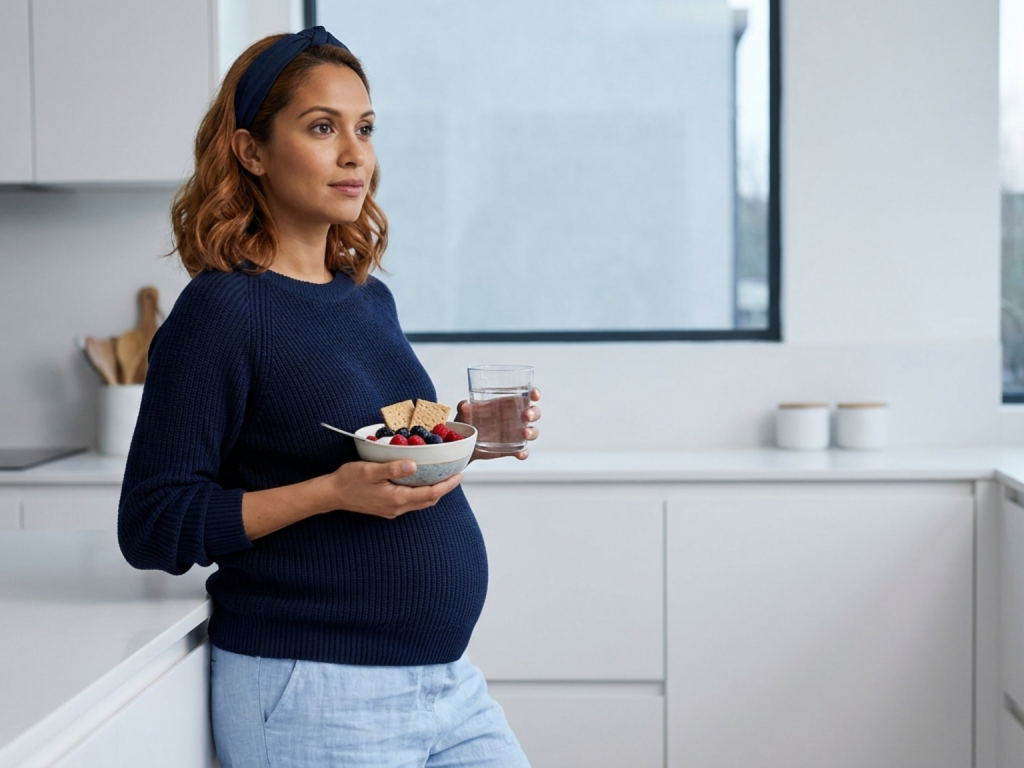
Planning ahead also helps. Keep nutrient-dense pregnancy snacks available so the easiest option is not always the least balanced one. Protein, fiber, and fluids tend to improve satiety, so a snack that combines two of those elements is often more stabilizing than a purely refined carbohydrate. Examples might include yogurt and fruit, hummus and crackers, nuts with fruit, cheese with whole-grain toast, or a smoothie that includes protein.
Hydration matters too, because thirst can feel like hunger or craving. If one specific food keeps calling to you, it can be useful to serve it in a portion that feels intentional rather than automatic, then add a side that improves nutritional balance. That may be one way to satisfy healthy snacks for pregnancy without turning every craving into a missed meal. The aim is not perfection; it is enough structure to reduce regret and blood sugar swings.
- Eat before you become overly hungry
- Combine carbohydrate with protein or fat for steadier satiety
- Keep easy snacks visible and ready
- Notice whether tiredness, stress, or nausea is driving the craving
- Ask your prenatal clinician if supplements or lab tests are appropriate
When to ask for help
It is sensible to bring cravings up at prenatal visits if they are frequent, intense, or disrupting your eating pattern. You do not need to wait for a crisis. A clinician can help you think through whether the issue is ordinary appetite fluctuation, an aversion-driven pattern, pica, iron deficiency, or something else that deserves follow-up.
Seek support sooner if you notice rapid weight change, persistent vomiting, inability to keep fluids down, or signs of dehydration such as dizziness, dark urine, or reduced urination. Also mention cravings that feel compulsive, are paired with bingeing or guilt, or are happening in the context of a past or current eating disorder. Pregnancy can reactivate old coping patterns, and early support is much easier than waiting.
If you are unsure where to start, obstetric clinicians, midwives, and registered dietitians with prenatal experience are good entry points. They can help translate gestational weight gain recommendations into a realistic plan that fits your nausea, schedule, budget, and food preferences. That kind of individualized guidance often does more than willpower ever could.
When cravings need medical attention
- Craving or eating non-food items such as ice, clay, starch, chalk, or paper should be discussed with a clinician.
- Cravings plus severe nausea, vomiting, dehydration, or inability to keep food down need prompt assessment.
- Rapid weight loss, rapid weight gain, or a very restricted diet because of aversions should be reviewed.
- Persistent fatigue, pallor, shortness of breath, or restless legs may warrant testing for anemia or other deficiencies.
- If cravings feel compulsive, distressing, or linked to bingeing, seek prenatal and mental health support.
Tools & Assistance
- A prenatal visit note listing your most common cravings, aversions, and timing
- A registered dietitian with prenatal experience for personalized meal planning
- A simple food-and-symptom diary to track nausea, hunger, and trigger foods
- A kitchen plan that keeps balanced snacks visible and easy to reach
FAQ
Do pregnancy cravings mean the baby needs a specific food?
Not reliably. Cravings are common, but they are not a direct or accurate signal of fetal nutrient needs.
Are cravings usually caused by a deficiency?
Sometimes deficiencies and cravings overlap, but cravings alone do not diagnose iron, zinc, or any other deficiency.
Is it okay to satisfy cravings?
Usually yes, in moderation. The goal is to fit cravings into an overall eating pattern that still provides enough nutrients and fluids.
When should I mention ice craving to my clinician?
If it is persistent, intense, or part of a broader pattern of unusual cravings, it is worth discussing at a prenatal visit.
Sources
- PubMed Central / National Institutes of Health — Pickles and ice cream! Food cravings in pregnancy
- PubMed Central / National Institutes of Health — Women's Experience and Understanding of Food Cravings in Pregnancy
- Northwestern Medicine — An OB-GYN's Guide to Cravings During Pregnancy
Disclaimer
This article is for general education only and does not replace individualized medical advice. Please consult your obstetric clinician, midwife, or another qualified healthcare professional for personal concerns, severe symptoms, or questions about nutrition or supplements.















Please log in to leave a comment.