
Intro
Preparing for a baby in an apartment can feel like a practical puzzle, especially when every doorway, closet, and square foot already has a job. You do not need a large nursery or an extensive collection of equipment to create a safe, functional home for an infant. The goal is to choose a small number of reliable items that support feeding, sleep, hygiene, transport, and supervised play without creating avoidable clutter or lifting strain.
For medically literate parents, compact gear decisions also involve safety details: stable sleep surfaces, age-appropriate restraints, airway positioning, ergonomic handling, and recall awareness. A thoughtful setup can preserve clear walking paths, make nighttime care less disruptive, and adapt as your baby gains mobility.
Highlights
Prioritize gear that performs one essential function safely, then look for folding, nesting, rolling, or convertible designs.
A smaller home benefits from activity zones rather than a dedicated nursery, provided sleep and changing areas remain stable and hazard-free.
Compactness never substitutes for safety: follow manufacturer age, weight, assembly, and supervision instructions every time.
Reducing duplicate gear can lessen visual clutter, improve access to emergency exits, and make daily infant care more manageable.
Start With Care Tasks, Not a Nursery Shopping List
In a compact home, the most useful question is not where every product will go, but where care actually happens. Map the daily sequence: feeding, burping, diaper changes, bathing, soothing, sleep, laundry, and leaving the apartment. This reveals the few locations that need dependable supplies and prevents buying gear for an imagined separate nursery that may not fit your life.
Most households can begin with a safe infant sleep space, a feeding seat for the adult, a changing solution, a compact stroller or carrier, an infant car seat when relevant, and a modest supply of clothing and diapers. A dedicated changing table, full-size swing, nursery recliner, and multiple specialized storage units may be helpful for some families, but they are not universal necessities. Buy only after identifying a clear care problem the item solves.
Measure usable space, not just room dimensions. Include door swings, radiator clearance, closet access, elevator dimensions, stair turns, and the route from your front door to the street. Keep an unobstructed pathway for nighttime carrying and emergency egress. A tape outline on the floor can show whether folded dimensions truly work before a large delivery arrives.
Think in terms of turnover. Newborn gear is often short-lived, while a convertible item may remain useful for months or years. A small home is easier to manage when products can be folded vertically, stored under a bed if the manufacturer permits it, or passed on promptly once outgrown.
Create a Safe Sleep Zone That Does Not Take Over the Room
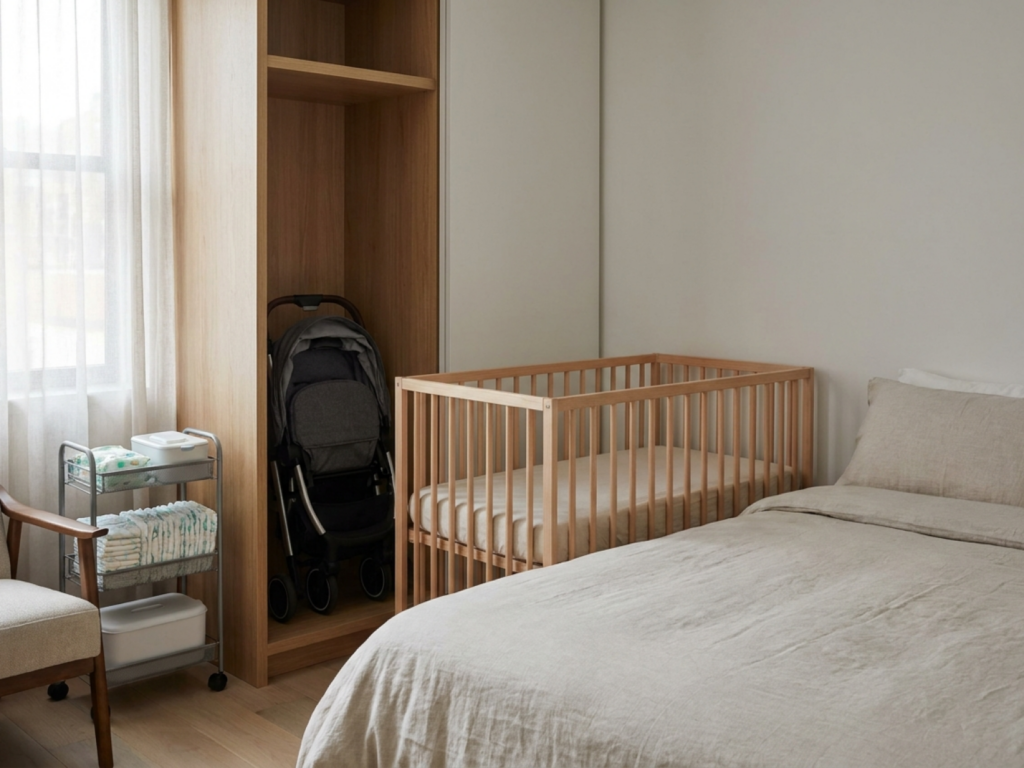
Infant sleep safety should lead the layout. Use a product specifically intended for infant sleep, such as an appropriately assembled bassinet, mini crib, crib, or play yard approved for sleep according to its instructions. The sleep surface should be firm, flat, and level, with a fitted sheet only. Avoid improvised sleep spaces, inclined products, couches, adult beds, pillows, loose blankets, positioners, and soft toys because they can increase the risk of airway obstruction or entrapment.
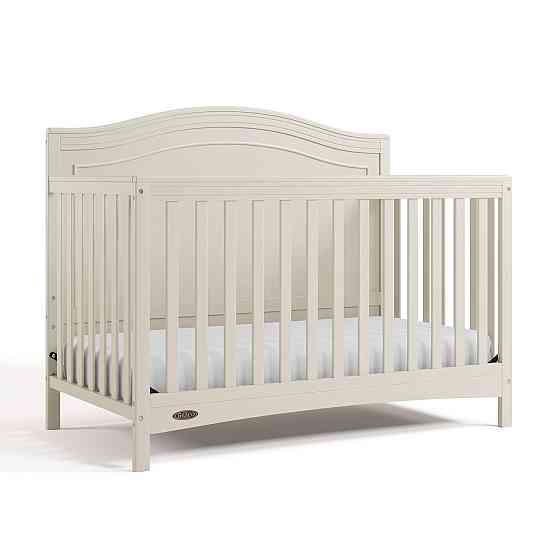
A bedside bassinet can be useful early on when it fits securely beside the adult bed and leaves room to walk. A mini crib may offer longer use while occupying less floor area than a standard crib. For either option, check dimensions carefully and use only the mattress and accessories specified by the manufacturer. Do not add an aftermarket mattress or padding to improve the fit.
Place the sleep zone away from windows, blinds, cords, heaters, lamps, shelves, and furniture that could tip. In apartments, it is also worth considering smoke and carbon monoxide alarm access, heating or cooling airflow, and noise management. A compact sleep space should remain easy to inspect from above, particularly during exhausted nighttime feeds.
When a baby starts rolling, sitting, pulling to stand, or exceeds the product’s developmental or weight limits, reassess the arrangement immediately. Product labels matter because a portable bassinet that is appropriate for a young infant may no longer be safe as motor skills progress. Discuss individualized sleep questions with your pediatric clinician, especially for a premature infant or a baby with respiratory, neurologic, or growth concerns.
Use Small, Mobile Stations for Diapering and Feeding
Rather than building a single large nursery station, use a rolling diaper caddy or a handled bin stocked with diapers, wipes, barrier cream, spare clothing, burp cloths, and a changing pad. This makes care supplies available where they are needed while allowing the living area to return to normal afterward. Refill the caddy at a predictable time so an overnight change does not become a search through cabinets.
Every changing surface needs active supervision. If using a portable pad on a bed, floor, or other surface, keep one hand on the baby and all supplies within reach. A floor-level changing setup can reduce fall risk once babies become unexpectedly mobile, although caregivers should also consider their own postpartum recovery, back pain, pelvic floor symptoms, or mobility limitations. A clinician or pelvic health professional can offer individualized ergonomic guidance when lifting or bending is painful.
For feeding, reserve a compact basket near the chair or couch for bottles, nipple shields, pumping supplies, water for the adult, cloths, and a phone charger. Formula preparation requires careful hygiene and safe water practices; follow local public health guidance and your infant formula instructions. Avoid storing prepared feeds at room temperature longer than recommended.
A wipe-clean, collapsible high chair can be sensible once the child is developmentally ready for solids and can sit with the support required by the seat. Look for a stable base, secure harness, clear age and weight limits, and a position that keeps the child upright. Never leave a baby unattended in a high chair, and do not use it as a substitute for a sleep space.
Choose Transport Gear for the Building You Actually Live In
Apartment life makes transport equipment a daily handling task rather than an occasional outing accessory. Before choosing a stroller, consider whether you must carry it down stairs, fit it in a narrow elevator, lift it into a car, navigate public transit, or store it inside your unit. A lightweight stroller with a one-hand fold can reduce repeated lifting demands, but lower weight should not come at the expense of reliable brakes, a secure harness, or stable steering.
Check the folded footprint, standing-fold design, locking mechanism, wheel condition, and basket access. Practice opening and closing a display model if possible. Your usable storage location should allow the stroller to dry after rain without blocking exits or creating a trip hazard. Building hallway storage may be restricted by lease terms or fire regulations, so confirm the rules instead of assuming a stroller can remain outside the apartment door.
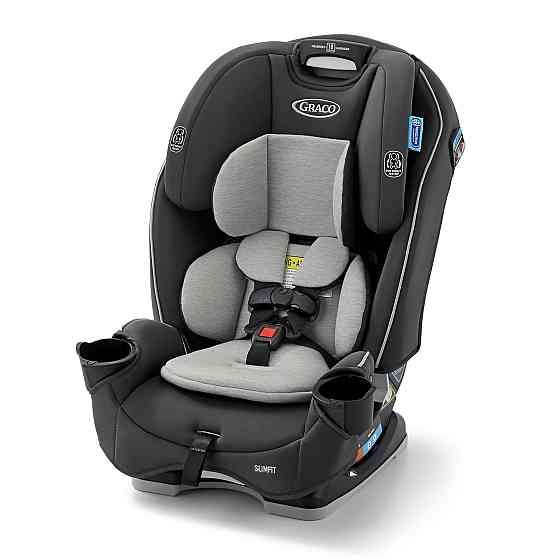
For newborns, follow the stroller manufacturer’s instructions for newborn positioning and any bassinet or car-seat compatibility. A young infant’s airway can be vulnerable when the head falls forward in a semireclined position. Car seats are designed for travel in vehicles, not routine unsupervised sleep after arriving home. Move a sleeping baby to an appropriate firm, flat sleep surface when practical.
A structured carrier may save space, but fit and use are safety-critical. Ensure the baby’s face remains visible, the airway stays clear, and the chin is not compressed toward the chest. Learn the specific carrier’s minimum size requirements and seek help from a qualified pediatric professional or trained educator if positioning is uncertain.
Make Multipurpose Gear Work Without Overloading It
Convertible and foldable products can be valuable in a small apartment, but each function must be used exactly as designed. A play yard may be a travel sleep option when its sleep components are installed correctly, while a compact dresser can serve as supply storage near a separate changing pad. A storage ottoman may hold blankets, but it should never be treated as a baby seat or changing surface unless the manufacturer explicitly approves that use.
Be cautious with products marketed as all-in-one solutions. A feature-rich item can have a larger folded size, more complex assembly, more parts to clean, and a shorter safe lifespan than expected. Assess whether it will be moved frequently, whether one caregiver can operate it safely, and whether it can be stored without creating an unstable stack.
Weight limits are particularly important for compact furniture and portable sleep products. A product can appear intact while no longer being appropriate for a heavier or more mobile child. Keep the instruction manual or digital manual readily available, register products for recall notices, and stop using anything with damaged straps, warped frames, torn mesh, missing hardware, or a malfunctioning lock.
Multiuse should mean fewer items, not more tasks forced onto an unsuitable product. A clear division between feeding, awake play, transport, diapering, and sleep supports safer routines. It also helps other caregivers follow the setup consistently when they are tired or unfamiliar with the apartment.
Protect Floor Space as Your Baby Becomes Mobile
Gear needs change quickly once rolling, crawling, and pulling up begin. The floor becomes a primary developmental environment, so preserving an open, supervised floor-level play area is often more useful than retaining bulky newborn equipment. A foldable foam mat or a simple washable rug can define the space without permanently occupying the room. Choose age-appropriate toys in small rotations rather than leaving many items out at once.
Perform a developmental home safety scan at each new mobility stage. Secure furniture against tip-over, cover or relocate exposed cords, lock medications and cleaning products, move hot drinks away from edges, and address window cord strangulation hazards. Apartment-specific risks can include balcony doors, shared laundry rooms, accessible stairwells, and narrow kitchens where a crawling child can reach lower cabinets quickly.
Vertical storage is helpful only when it is anchored and inaccessible to the child. Avoid balancing bins, heavy books, or diaper supplies on open shelves above a sleep or play area. Use closed storage for small objects that could become choking hazards, and inspect the floor regularly for dropped batteries, coins, medication, hardware, or pet items.
As the layout evolves, remove gear that no longer has a defined job. This is a safety intervention as much as an organizing habit: fewer unused frames and bins means clearer sightlines, fewer tripping points, and more room for responsive play. If your child has motor delays, medical equipment, oxygen tubing, feeding equipment, or other clinical needs, ask the care team about a home health assessment tailored to your space.
Set Up a Maintenance Routine for Compact Gear
Small-space gear works best when it is easy to clean, inspect, and put away. Select fabrics with removable washable covers when possible, and clean trays, handles, and high-touch surfaces according to product instructions. Moisture trapped in folded strollers, bath supports, or fabric bins can promote mildew, so allow items to dry fully before storage.
Create a short monthly safety check: inspect harnesses and buckles, test folding locks and brakes, verify hardware is tight, review weight limits, and look for recalls. Keep batteries, charger cords, and detachable accessories controlled. Do not use damaged secondhand gear until you have confirmed its history, current safety status, complete parts, and instructions.
Finally, design the apartment around caregiver recovery as well as infant needs. Put frequently used items between knee and shoulder height, avoid repeatedly lifting heavy gear from deep storage, and create a place to sit during feeds or soothing. Persistent musculoskeletal pain, dizziness, depressed mood, intrusive thoughts, or difficulty managing basic care deserves prompt discussion with a healthcare professional. Efficient gear can help, but it should never be expected to compensate for unmet medical or social support needs.
Compact Gear Safety Reminders
- Use only a manufacturer-approved, firm, flat sleep surface for infant sleep; portable does not automatically mean sleep-safe.
- Never leave a baby unattended on a changing surface, in a high chair, in a stroller, or in a carrier.
- Follow all age, weight, developmental, assembly, and harness limits, especially after rolling or sitting begins.
- Keep folded gear, storage bins, and strollers from blocking exits, stairways, or required building access routes.
- Stop using gear with damaged frames, straps, mesh, locks, or missing parts, and check for recalls.
Tools & Assistance
- Measure doorways, elevators, storage niches, and the route from apartment to street before purchasing gear
- Use a rolling diaper caddy to keep changing supplies available in more than one care area
- Register new baby products with manufacturers to receive recall notifications
- Ask a pediatric clinician or qualified infant safety professional about individualized sleep and positioning concerns
- Review building policies for hallway storage, elevators, balconies, and fire egress
FAQ
Is a mini crib safe for overnight infant sleep?
A mini crib can be appropriate when it is intended for sleep, fully assembled, used with its specified firm mattress and fitted sheet, and within all manufacturer limits. Keep the sleep space uncluttered.
Can a baby sleep in a stroller or car seat after an outing?
These products are useful for transport, but they are not replacements for a routine sleep surface. When practical, transfer the baby to an appropriate firm, flat sleep space after travel.
Which items can usually be skipped in a small apartment?
Many families can defer large swings, dedicated changing furniture, multiple bouncers, oversized activity centers, and duplicate storage systems. Your needs may differ based on caregiving, recovery, and infant health considerations.
How often should I reassess apartment baby-proofing?
Reassess whenever your child gains a new ability such as rolling, crawling, pulling to stand, climbing, or opening drawers. New access creates new hazards.
Sources
- Babylist — The Best Compact & Functional Baby Gear for Small Spaces
- The Madison at Marshfield — Preparing Your Apartment for a New Baby: What to Know
- Baby Gear Tested — Baby Gear For Small Spaces
Disclaimer
This article is for general educational purposes and does not provide medical diagnosis or individualized advice. Consult your pediatric clinician or another qualified healthcare professional about your baby's specific safety, sleep, positioning, or developmental needs.















Please log in to leave a comment.