
Intro
Choosing baby clothes is often presented as a shopping task, but it is really about supporting comfort, skin integrity, temperature regulation, feeding, diaper changes, and safe sleep. The best basics are not necessarily numerous or elaborate: they are well-fitting, breathable, easy to change, and appropriate for the environment.
Newborns and young infants have limited thermoregulatory capacity, so clothing choices deserve calm attention without becoming a source of constant worry. A small, flexible wardrobe lets you add or remove layers as conditions change and helps you notice when your baby seems comfortable.
Highlights
Prioritize soft, breathable layers that fit your baby's current size and allow unrestricted movement.
Choose clothing with simple, secure fasteners and inspect garments routinely for loose parts, broken zips, or trailing threads.
For sleep, use close-fitting sleepwear and an appropriately selected sleep sack rather than loose blankets.
Build a modest clothing rotation around frequent changes, because spit-up, diaper leaks, and laundry are part of normal infant care.
Start with a small, adaptable wardrobe
Baby clothing needs change quickly, especially in the first months. A useful starter wardrobe is built around items that wash well, layer easily, and can be changed without fully undressing a tired or unsettled infant. Rather than buying many outfits in one size, keep a small rotation in the current size and introduce the next size as your baby approaches the garment’s stated weight or height range.
For most families, the practical core includes short- and long-sleeved bodysuits, footed sleepers or rompers, pants, lightweight cardigans or overshirts, socks when needed, and weather-appropriate outer layers. Bodysuits help keep the abdomen and lower back covered during handling; sleepers reduce the need to coordinate separate pieces. Having several clean changes available matters more than having special-occasion clothing.
Choose garments that open widely at the neck or fasten down the front, especially for newborns. This reduces pulling fabric over the head and makes it easier to work around a healing umbilical cord stump. Double-ended or full-length zips may simplify overnight diaper changes, provided the zip is intact and its backing protects the skin.
- Keep several bodysuits and sleepers in the size your baby wears now.
- Have a few spare layers for leaks, milk dribbles, or increased laundry intervals.
- Use one or two simple outer layers rather than relying on bulky indoor outfits.
- Reserve highly structured, decorative, or difficult-to-fasten clothes for brief, supervised use if you choose them.
Choose fabrics and fit for infant comfort
Soft, breathable cotton is a dependable everyday choice. It is easy to wash and works well as a base layer in many indoor conditions. Fabric labels are useful, but comfort is determined by the whole garment: seams, tags, elastic, closures, thickness, and whether the item bunches when your baby is held, fed, or placed on a flat surface.
Fit is a safety and comfort issue. Clothing that is too tight can leave marks, restrict movement, or make diaper checks harder. Clothing that is excessively loose can ride up around the face, twist around the body, or create snagging risks. Check that neck openings lie flat, sleeves do not compress wrists, and waistbands do not press into the abdomen. A garment should permit normal flexion of the hips and knees; avoid forcing an infant’s legs into a straight, compressed position through tight pants or restrictive swaddling garments.
Watch for signs that a garment is irritating the skin, such as persistent redness at the neckline, under the arms, around the waist, or in the groin. Moisture and friction in skin folds can contribute to maceration, meaning softened skin that is more vulnerable to irritation. Changing damp clothing promptly and drying folds gently after bathing or diaper care can support skin comfort.
For infants with eczema, recurrent irritation, or a history of prematurity, clothing needs may be more individual. A pediatric clinician can help distinguish ordinary transient redness from dermatitis or another condition that needs assessment.
Make changing and diaper care easier
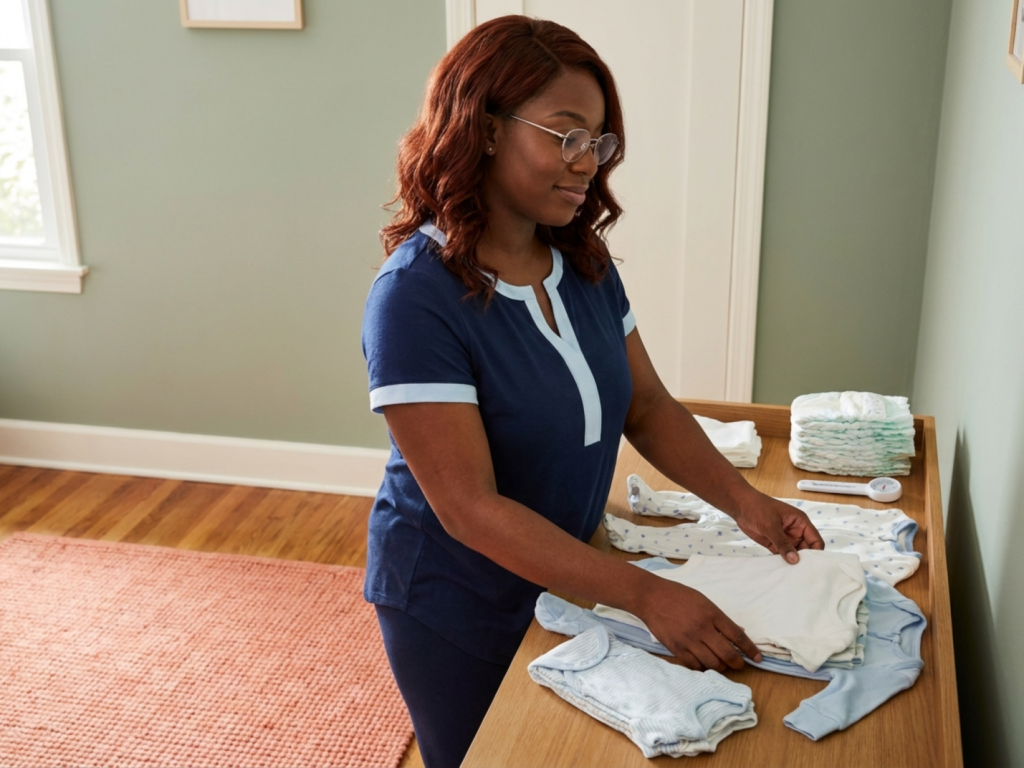
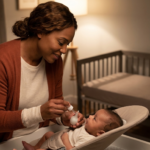
Clothes should support the repeated work of infant care, not complicate it. Envelope-style shoulders, front snaps, and zippered sleepers allow a soiled garment to be removed with less handling. During any clothing change, use a stable, flat surface and keep one hand on your baby. Gather the clean garment and diaper supplies first so you do not need to step away.
For diapered babies, crotch closures should be secure but not strained. Snaps that pull open, zips that distort, or leggings that become tight over a full diaper are practical signals to size up. After each change, make sure clothing is dry and not folded into the groin creases. Damp fabric against the diaper area can worsen friction and may aggravate diaper dermatitis, a common inflammatory rash caused by moisture, irritants, and friction.
Use clothing changes as a brief visual check. Notice whether a new garment leaves deep, persistent indentations, whether a tag is rubbing, or whether the skin is unusually hot, pale, swollen, broken, or weeping. Clothing adjustments can resolve mild pressure or moisture issues, but concerning skin changes deserve advice from your child’s healthcare professional.
A simple routine also reduces stress: open the clean garment fully, support the head and neck for young infants, guide limbs gently rather than pulling them, then confirm fingers and toes are free from twisted fabric. Avoid garments with many tiny decorative closures when quick changes are likely.
Use layers instead of heavy outfits
Layering is more flexible than choosing one heavy garment. Newborns can become uncomfortable when overheated or underdressed, and the room, weather, activity level, carrier use, and car travel can all change the effective temperature around them. A breathable base layer plus one removable layer is often easier to manage than a thick fleece or padded outfit indoors.
Check your baby’s chest, back, or the nape of the neck rather than relying on hands and feet, which may feel cool even when core temperature is comfortable. Sweaty hair, flushed skin, rapid breathing, or a hot trunk may suggest excessive warmth; remove a layer and reassess the environment. Persistent breathing difficulty, unusual lethargy, fever, or a baby who seems unwell requires prompt medical assessment rather than a clothing-only solution.
In warm conditions, a single light layer or diaper-only time indoors may be sufficient depending on the room. Protect young infants from direct sun using shade and appropriate clothing, but do not use heavy coverings that trap heat. In cooler weather, add layers that can be removed when entering heated spaces. Bulky coats should be taken off before a baby is secured in a car seat, because thick padding can interfere with harness fit.
Babywearing temperature checks are particularly useful because the caregiver’s body heat and the carrier itself add insulation. Dress the baby for the combined environment, and reassess after you have been walking or indoors for a while.
Keep sleep clothing simple and safety-focused
Sleep clothing should be close-fitting, comfortable, and free of avoidable hazards. Inspect pajamas and sleep sacks before use for loose buttons, snaps, threads, labels, damaged zippers, or detached zipper pulls. Items that could detach or become tangled should not be used for sleep. Avoid hats, hoods, scarves, strings, bibs, and decorative accessories in the sleep space.
For routine sleep, choose sleepwear appropriate to the room temperature and consider a well-fitting sleep sack or wearable blanket for newborn sleep when an extra layer is needed. The neck and arm openings should fit so the baby cannot slip down inside the product. Do not substitute loose blankets, quilts, comforters, or other loose items for a sleep layer. These may increase the risk of covering the face or causing entanglement.
Safe sleep clothing is only one part of safer sleep. Place infants on their backs for every sleep on a firm, flat sleep surface designed for infants, with the sleep area kept clear of loose objects. Follow local public-health guidance and any individualized advice from your baby’s clinical team, particularly for premature infants or babies with medical complexity.
It can be tempting to add layers when a baby wakes often, but waking has many possible causes and should not be interpreted as proof of being cold. Assess the room, feel the chest or back, and make gradual changes rather than adding multiple heavy layers at once.
Buy less, inspect often, and adjust as your baby grows
The best basics earn their place through repeated use. Before dressing your baby, look for wear at seams and fasteners, loose embroidery, fraying threads, peeling prints, and broken zips. Remove damaged items from use until repaired or discarded. Clothing with beads, sequins, ribbons, long ties, or other detachable decoration creates avoidable choking or entanglement concerns, particularly as babies begin grasping and mouthing objects.
Wash new garments before first use using a routine that suits your household and your baby’s skin. If fragrance or a particular detergent seems to correlate with skin irritation, discuss persistent symptoms with a healthcare professional rather than assuming the cause. Hypoallergenic claims are not a guarantee that an item will suit every infant.
Reassess sizing regularly. Growth spurts can make a previously comfortable sleeper tight within a short time. Signs to review fit include difficulty closing snaps, fabric pulling across the chest or hips, sleeves becoming short, repeated red pressure marks, or a diaper that no longer fits comfortably beneath the garment. Moving up a size is often more useful than trying to stretch clothing beyond its intended fit.
A calm, functional wardrobe gives caregivers room to focus on the baby rather than the outfit. Your observations of comfort, temperature, skin, and behavior are valuable. When something seems persistently wrong, or when you are unsure how clothing should be adapted for a medical condition, bring the question to your pediatric healthcare team.
Clothing safety checks
- Do not use hats, hoods, bibs, scarves, or clothing with loose strings during infant sleep.
- Remove damaged sleepwear and garments with loose buttons, snaps, threads, or zipper pulls.
- Take bulky outerwear off before fastening a baby into a car seat harness.
- Seek urgent medical care for breathing difficulty, marked lethargy, or a baby who appears seriously unwell; do not rely on changing layers alone.
- Ask a healthcare professional for individualized clothing guidance for premature infants or babies with complex medical needs.
Tools & Assistance
- Create a current-size drawer with clean bodysuits, sleepers, and one removable layer.
- Keep a small changing-station supply of spare clothing and a sleep sack in the appropriate size.
- Use a room thermometer as one environmental reference alongside direct checks of your baby's chest or back.
- Bring persistent skin irritation, unusual sweating, or fit concerns to a pediatric healthcare professional.
FAQ
How many layers should a newborn wear indoors?
It depends on room temperature and the garment's thickness. Start with breathable layers that can be removed easily, then check the baby's chest or back for warmth rather than judging by hands or feet alone.
Are footed sleepers suitable for everyday use?
Yes. Well-fitting footed sleepers are a practical everyday basic and can reduce the need for separate socks. Reassess fit as your baby grows and ensure the fabric is not tight across the hips or toes.
Should babies wear hats indoors?
Hats are generally unnecessary indoors for a healthy baby in a comfortable environment and should not be used during sleep. Ask the baby's clinical team about exceptions, such as specific medical circumstances.
What should my baby wear to sleep?
Use close-fitting sleepwear selected for the room and, when appropriate, a well-fitting sleep sack. Keep the sleep surface clear of loose bedding, hats, and accessories.
Sources
- Government of Canada, Public Health Agency of Canada — Dressing your baby for sleep
- NHS — How to dress a newborn baby
- HealthyChildren.org / American Academy of Pediatrics — Tips for Dressing Your Baby
Disclaimer
This article is for general information and does not replace medical advice. Consult a pediatric healthcare professional for individualized guidance or concerns about your baby's temperature, skin, breathing, or health.













Please log in to leave a comment.