
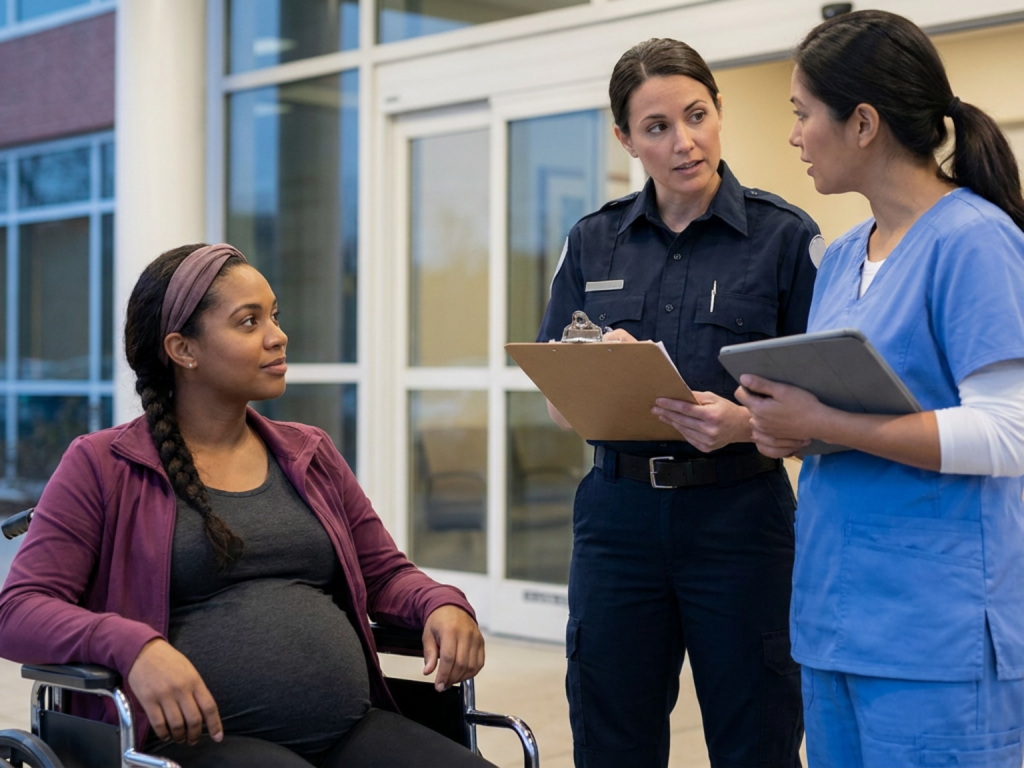
Intro
Birth can move from normal to urgent quickly, and it is not always easy to judge what is happening when pain, bleeding, contractions, fear, or exhaustion are present. If you are unsure whether a situation is dangerous, it is appropriate to seek emergency help rather than wait.
Highlights
Call 911 immediately for life-threatening symptoms such as severe breathing difficulty, chest pain, loss of consciousness, uncontrolled bleeding, choking, seizure, stroke signs, or a severe allergic reaction.
In labor and the postpartum period, heavy bleeding, severe headache with visual changes, reduced fetal movement, and signs of infection or shock warrant urgent assessment.
Ambulance transport can be safer than driving when the birthing person may deteriorate, birth may be imminent, or emergency treatment may be needed en route.
If symptoms are urgent but not immediately life-threatening, call your maternity triage unit or go directly to the hospital according to your care plan.
Trust the emergency threshold
Many people hesitate to call 911 because they worry about overreacting, causing inconvenience, or being told the problem was not serious. Around birth, that hesitation can be risky. Pregnancy, labor, delivery, and the first weeks after birth involve major cardiovascular, respiratory, neurologic, and bleeding-related changes. A symptom that might seem vague at first can represent hemorrhage, hypertensive disease, thromboembolism, sepsis, cardiac ischemia, stroke, anaphylaxis, or fetal compromise.
A useful rule is this: if there is an immediate threat to breathing, circulation, consciousness, neurologic function, or uncontrolled bleeding, call 911. If the situation is urgent but stable, such as painful contractions at term or rupture of membranes without danger signs, call your maternity triage number or go to the hospital as instructed by your clinician. When the line is blurry, choose the safer path and contact emergency services or your hospital labor unit.
Calling 911 is not just transportation. Emergency medical services can assess vital signs, give oxygen or other time-sensitive care according to local protocols, manage airway or bleeding emergencies, communicate with the receiving hospital, and choose the most appropriate facility. For heart attack or stroke symptoms, emergency activation can shorten time to treatment and reduce the danger of deterioration during travel. Do not drive yourself if you might faint, seize, become confused, have severe pain, or deliver imminently.
Call 911 for life-threatening signs in labor
Some symptoms should be treated as emergencies regardless of gestational age, contraction pattern, or whether you already have an appointment scheduled. Call 911 if the birthing person has severe difficulty breathing, gasping, blue or gray lips, chest pain lasting more than a couple of minutes, severe pressure in the chest, sudden weakness on one side, facial drooping, trouble speaking, sudden confusion, fainting, unresponsiveness, a seizure, choking, or a suspected overdose.
Call 911 for uncontrolled bleeding, including blood that soaks clothing, pools on the floor, or continues heavily despite lying down. Heavy vaginal bleeding after birth is especially concerning if accompanied by dizziness, faintness, rapid heartbeat, clammy skin, worsening abdominal pain, or confusion. These can be signs of shock and require immediate emergency care.
Other emergency symptoms include severe allergic reaction in labor or after birth, such as swelling of the tongue or throat, wheezing, widespread hives with breathing difficulty, collapse, or rapidly worsening symptoms after a medication, food, latex exposure, or insect sting. Major trauma, a car crash, a fall with abdominal impact, severe burns, or suspected poisoning also warrants emergency activation. If a baby has been born and is not breathing, is limp, has abnormal color, or cannot be awakened, call 911 immediately while beginning any emergency steps you have been trained to perform.
Go to the hospital immediately for urgent birth-related warning signs
Not every urgent situation requires an ambulance, but some symptoms still need immediate hospital assessment. If you have been told by your care team to come in for a specific symptom, follow that instruction. If you cannot reach them promptly, go to the hospital or call emergency services.
Urgent hospital assessment in pregnancy is needed for severe abdominal pain, persistent severe vomiting with dehydration, fever with feeling very unwell, suspected infection after membrane rupture, or regular painful contractions before 37 weeks. Preterm labor can be difficult to distinguish from cramps, pressure, or backache, so do not wait for symptoms to become dramatic. If your water breaks before term, if fluid is green or brown, or if you have bleeding with contractions, contact maternity triage and proceed as directed.
Hypertensive emergencies can occur before, during, or after birth. Seek immediate care for a severe headache with visual changes, new neurologic symptoms, severe right upper abdominal pain, chest pain, shortness of breath, sudden marked swelling with feeling unwell, or very high blood pressure if you have been instructed to monitor at home. Postpartum hypertensive disease can occur even after an uncomplicated delivery, including after discharge.
Reduced fetal movement also deserves prompt attention. If a baby who usually moves has clearly decreased movement, do not rely on reassurance from home devices, food, or waiting overnight. Contact your maternity unit immediately for guidance. They may recommend fetal monitoring or hospital evaluation.
Bleeding, fluid, pain, and postpartum emergencies
Bleeding deserves special caution because obstetric hemorrhage can progress rapidly. During pregnancy, any heavy bleeding, bleeding with pain, or bleeding after trauma needs urgent evaluation. After delivery, some bleeding is expected, but heavy vaginal bleeding after birth is not something to watch casually. Seek emergency help if you soak a pad in an hour or less, pass large clots, feel faint, have palpitations, develop increasing pelvic pain, or notice bleeding that suddenly becomes much heavier.
Amniotic fluid changes also matter. Clear fluid after term rupture of membranes can be managed according to your care plan, but green or brown fluid may indicate meconium and needs prompt maternity guidance. Foul-smelling fluid, fever, uterine tenderness, or chills raise concern for infection and should be assessed urgently.
Severe pain that feels different from contraction pain should not be dismissed. Examples include sudden tearing abdominal pain, severe constant pain between contractions, intense chest pain, severe headache, or one-sided leg swelling with pain and shortness of breath. Emergency symptoms after birth also include fever with confusion, worsening wound redness with systemic illness, inability to stay awake, thoughts of harming yourself or the baby, hallucinations, or extreme agitation. Postpartum mental health emergencies are real medical emergencies and deserve immediate help, not judgment.
When to call maternity triage, urgent care, or your clinician
Some concerns are important but not usually 911-level emergencies. Calling your maternity triage unit, obstetric clinician, midwife, pediatric clinician, or urgent care may be appropriate for mild cold symptoms, a small superficial cut, mild localized rash without breathing symptoms, routine medication questions, constipation, mild ankle swelling without other warning signs, or early labor contractions that are irregular and manageable.
For term labor, many people are advised to call when contractions follow a pattern such as the 5-1-1 rule for contractions: about every 5 minutes, lasting 1 minute, for 1 hour. Your personal plan may differ if you have a high-risk pregnancy, prior rapid labor, Group B strep considerations, planned cesarean birth, decreased fetal movement, bleeding, ruptured membranes, or a long distance to the hospital. The 5-1-1 rule is not a safety rule for emergencies; danger signs override contraction timing.
Urgent care may be suitable for non-obstetric problems that are uncomfortable but stable, such as minor sprains or mild infections, depending on local services and gestational age. However, many urgent care centers are not equipped for fetal monitoring, obstetric hemorrhage, or newborn emergencies. If a symptom could involve the pregnancy, placenta, fetus, postpartum recovery, or newborn stability, maternity triage or the emergency department is usually more appropriate.
Transport decisions: ambulance, private car, or direct hospital arrival
A hospital transport plan for labor should be made before the due period if possible. Include the maternity triage phone number, hospital entrance after hours, backup driver, childcare plan, route options, parking details, and what to do if birth feels imminent. Keep identification, insurance information if relevant, medication list, allergy list, prenatal records if separate, and emergency contacts easy to access.
Choose ambulance transport during labor or postpartum recovery if there is heavy bleeding, difficulty breathing in labor, chest pain, fainting, seizure, severe allergic reaction, altered mental status, major trauma, or a feeling that the baby is coming immediately and you cannot safely arrive in time. Also call 911 if the driver is panicked, impaired, unavailable, or if weather, distance, or traffic makes private transport unsafe.
If going by private car for a stable but urgent issue, do not have the symptomatic person drive. Call the hospital while en route if possible, use the designated maternity or emergency entrance, and bring only what is necessary. If symptoms worsen on the way, pull over safely and call 911. It is better for emergency responders to meet you than to continue driving through a deteriorating situation.
What to say when you call for help
In an emergency, clear information helps dispatchers and clinicians prioritize care. State that the person is pregnant, in labor, recently gave birth, or that a newborn is involved. Give the exact location, gestational age or days postpartum, main symptom, when it started, whether there is bleeding or fluid, fetal movement status if still pregnant, level of consciousness, breathing status, and any known high-risk conditions such as hypertension, diabetes, placenta previa, clotting disorder, prior hemorrhage, cardiac disease, or severe allergy.
If calling about possible stroke, mention facial droop, arm weakness, speech difficulty, sudden confusion, severe headache, vision loss, or time last known well. If calling about possible heart attack, mention chest pain or pressure, radiation to arm, jaw, back, shortness of breath, sweating, nausea, or collapse. If calling about bleeding, estimate pad counts, clots, pooling, dizziness, and whether the placenta has delivered if birth just occurred.
While waiting, follow dispatcher instructions. Unlock the door if safe, secure pets, gather medications, and avoid eating or drinking if surgery or anesthesia might be needed. If the baby is coming before help arrives, tell the dispatcher immediately. Stay on the line unless instructed otherwise.
Do not wait with these danger signs
- Call 911 for severe trouble breathing, chest pain, loss of consciousness, seizure, choking, or sudden confusion.
- Call 911 for uncontrolled bleeding, heavy vaginal bleeding after birth, or signs of shock.
- Seek immediate care for severe headache with visual changes, stroke-like symptoms, or severe right upper abdominal pain.
- Contact maternity triage urgently for reduced fetal movement, preterm labor symptoms, or green or brown amniotic fluid.
- Call 911 for severe allergic reaction in labor, major trauma, overdose, or a newborn who is not breathing normally.
Tools & Assistance
- Emergency services number: 911 in the United States
- Maternity triage or labor and delivery unit phone number
- Hospital transport plan for labor and postpartum emergencies
- Medication, allergy, and pregnancy risk-factor list
- Local emergency department or obstetric emergency unit
FAQ
Should I call 911 or drive to the hospital for chest pain in labor?
Call 911 for chest pain or pressure that is severe, persistent, associated with shortness of breath, sweating, faintness, or neurologic symptoms. Emergency responders can begin assessment and care during transport.
Is heavy bleeding after birth always an emergency?
Heavy bleeding, soaking pads rapidly, large clots, dizziness, fainting, or a racing heartbeat after birth should be treated as urgent and may require 911, especially if bleeding is uncontrolled or the person feels weak or confused.
What if I am not sure whether symptoms are serious?
If breathing, consciousness, neurologic function, or bleeding is involved, call 911. For urgent but stable birth-related concerns, call maternity triage. If you cannot get timely advice, go to the hospital.
Can I use urgent care during pregnancy?
Urgent care may be reasonable for minor stable problems, but it may not provide fetal monitoring or obstetric emergency care. Pregnancy-related warning signs are usually better assessed through maternity triage or the emergency department.
What should I do for reduced fetal movement?
Contact your maternity unit immediately for guidance. Do not wait overnight or rely on home reassurance if movement is clearly reduced from the baby’s usual pattern.
Sources
- Johns Hopkins Medicine — When to Call For Help
- American Heart Association — Call 911 for heart attack or stroke symptoms, or just drive to the ER
- Dutchess County Emergency Response — When to Call 911
Disclaimer
This article is for general medical information and does not replace individualized advice from a qualified healthcare professional. If you think there may be an emergency, call 911 or your local emergency number immediately.














Please log in to leave a comment.