
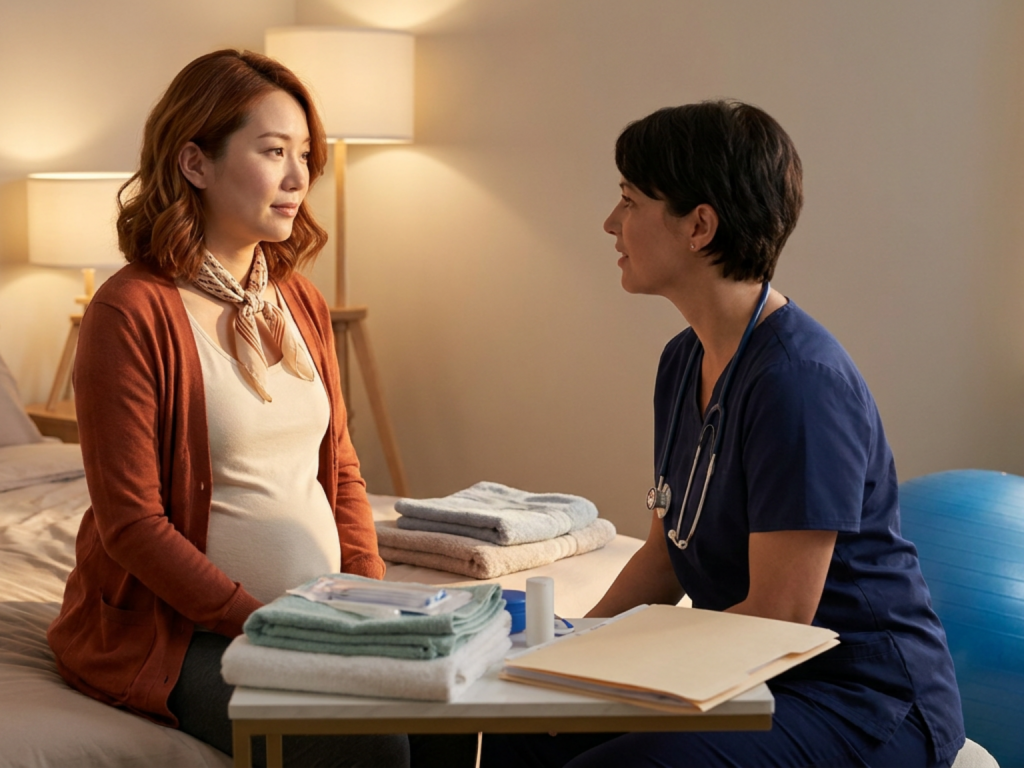
Intro
Choosing a birth setting is rarely a simple comparison of comfort versus safety. For many pregnant people and families, the decision touches deeply held values: autonomy, continuity of care, privacy, previous experiences with medical systems, cultural practices, and the desire for a physiologic labor with fewer routine interventions.
Home birth is not appropriate for every pregnancy, and it requires careful risk assessment, qualified professional attendance, emergency planning, and access to transfer when needed. Still, for selected low-risk pregnancies, some people view planned home birth as the setting most aligned with their clinical needs and personal priorities.
Highlights
Many people prefer home birth because it offers privacy, familiarity, and a greater sense of control during labor.
Planned home birth is associated in several studies with fewer obstetric interventions, including induction, regional analgesia, episiotomy, operative vaginal birth, and cesarean birth.
Safety depends heavily on appropriate candidate selection, skilled attendants, neonatal resuscitation readiness, and a clear emergency transfer plan.
Professional organizations emphasize that home birth may carry higher neonatal risks than hospital birth, so individualized counseling is essential.
Autonomy, privacy, and control over the birth environment
One of the strongest reasons some people prefer home birth over hospital birth is the ability to shape the environment. At home, the birthing person can usually decide who is present, how the room feels, whether lights are dimmed, what sounds are playing, and how freely they move. These details may seem nonmedical, but they can influence the neurohormonal physiology of labor. A setting perceived as safe may support endogenous oxytocin release, while fear, surveillance, or repeated disruption can increase catecholamines, which may inhibit contractions in some labors.
For people who feel anxious in clinical settings, the hospital atmosphere may be associated with loss of control, previous trauma, or a sense of being treated as a patient rather than an active participant. Home birth can feel less institutional and more relational. The person in labor may remain in familiar rooms, eat and drink according to an agreed plan, use their own shower or tub, and choose position changes in labor without waiting for permission unless clinical concerns arise.
This preference is not necessarily a rejection of medicine. Many families who choose home birth are medically literate and understand that obstetric care can be lifesaving. Their goal is often to reserve medical intervention for clear indications rather than to make intervention the default. In this sense, home birth is often chosen as a low-intervention birth plan, not as an anti-medical choice.
Desire to avoid unnecessary interventions
Another major reason is the wish to reduce exposure to interventions that may be routine in some hospitals. Depending on local practice patterns, hospital labor may involve admission protocols, intravenous access, continuous fetal heart rate monitoring, restrictions on oral intake, amniotomy, labor augmentation with oxytocin, regional analgesia, or a lower threshold for operative delivery. Each intervention can be appropriate in the right clinical context, but some people worry about a cascade in which one intervention increases the likelihood of another.
Evidence summarized by professional and scientific sources has found that planned home birth is associated with fewer maternal interventions. These include lower rates of induction of labor, epidural or regional analgesia, episiotomy, instrumental vaginal delivery, and cesarean delivery. Some studies also report fewer severe perineal lacerations, less maternal infectious morbidity, and lower rates of postpartum hemorrhage among selected people planning home birth.
These findings require careful interpretation. Lower intervention rates may reflect the lower-risk profile of people selected for home birth, midwifery practice style, and transfer thresholds, not simply the physical location. Also, fewer interventions are not always better if an intervention is clinically indicated. For example, oxytocin augmentation, operative birth, cesarean delivery, antibiotics, or continuous fetal surveillance can be important when maternal or fetal status changes. The meaningful question is not whether interventions are good or bad, but whether they are timely, proportionate, evidence-informed, and aligned with informed consent.
Continuity of care and trust in the birth team
Many people are drawn to home birth because care is often provided by a known midwife or small team who has spent substantial time with them during pregnancy. This continuity can build trust, improve communication, and make it easier to discuss nuanced preferences before labor begins. When the attendant knows the pregnant person’s history, values, baseline vital signs, and emotional triggers, care may feel more individualized.
Qualified professional attendance is central. A planned home birth should involve clinicians with appropriate training, licensure or certification according to local regulations, experience in risk screening, and competence in maternal and neonatal emergencies. Important capabilities include monitoring maternal vital signs, assessing labor progress, recognizing abnormal bleeding, evaluating fetal well-being through intermittent fetal heart rate monitoring when appropriate, managing shoulder dystocia maneuvers, initiating postpartum hemorrhage management, and providing immediate newborn assessment and resuscitation.
Trust also affects decision-making. In a well-functioning home birth model, the attendant is not simply present to support a desired outcome; they must also be prepared to recommend transfer when risk changes. Families often prefer home birth when they believe their clinician will neither overmedicalize normal labor nor delay escalation when warning signs appear. That balance is essential to ethical out-of-hospital care.
Comfort measures and physiologic labor support
Home can make nonpharmacologic comfort measures easier to use continuously. These may include movement, upright or lateral positions, massage, counterpressure, breathing techniques, heat, cold, a birth ball, showering, hydrotherapy during labor if appropriate, music, quiet, and uninterrupted support. Some people cope better when they can vocalize freely, lean over familiar furniture, or move between rooms without feeling observed.
In hospital, many of these same measures may also be available, especially in units that support physiologic birth. However, some families feel that home removes the need to negotiate for normal behaviors such as eating light foods, changing positions, laboring in water, or declining analgesia unless desired. A familiar environment may reduce the psychological burden of decision-making, allowing attention to remain on contractions, rest, hydration, and emotional support.
For those seeking pain coping without medication, home birth may feel coherent with their plan. Yet it is important to be realistic: home birth does not offer immediate epidural analgesia, operative delivery, blood transfusion, or emergency cesarean capability. If pain becomes intolerable, exhaustion develops, labor is prolonged, fetal status becomes concerning, or bleeding occurs, transfer may become the safest and most compassionate option. A good plan includes both the hope for physiologic birth and permission to use hospital resources if circumstances change.
Cultural, emotional, and previous birth experiences
Birth setting preferences are also shaped by culture, family history, religion, and prior encounters with healthcare. Some people come from traditions in which birth at home, attended by midwives or family-centered caregivers, is viewed as normal. Others choose home after a previous hospital birth that felt rushed, overly procedural, disrespectful, or traumatic. For them, home may represent dignity, bodily integrity, and a chance to experience labor without feeling separated from their own decision-making.
Respectful care matters clinically as well as emotionally. When people feel heard, they may be more likely to disclose symptoms, accept monitoring, and agree to transfer when needed. Conversely, fear of coercion or dismissal can make hospital care feel unsafe even when it is medically equipped. This does not mean the hospital is inherently impersonal; many hospital teams provide deeply respectful, individualized care. But the perception of safety is personal, and it can strongly influence choices.
Some families also value the postpartum transition at home. After birth, the parent and newborn remain in their own bed, with minimal separation and fewer environmental disruptions. Early skin-to-skin contact, feeding support, and bonding may feel more natural in a quiet space. However, the postpartum period still requires clinical vigilance, including assessment of uterine tone, bleeding, blood pressure when indicated, newborn temperature, feeding, respiratory status, and signs of infection or jaundice.
The safety conversation: benefits, risks, and candidate selection
A supportive discussion of home birth must include safety without using fear or judgment. Planned home birth among carefully selected low-risk pregnancies may be associated with lower maternal intervention rates and some lower maternal morbidity measures. At the same time, major medical organizations caution that planned home birth has been associated with higher risks of perinatal death and neonatal seizures compared with planned hospital birth in some datasets. These outcomes are uncommon, but they are serious.
Candidate selection is therefore crucial. Home birth is generally considered only for a low-risk pregnancy birth setting, and suitability should be reviewed with qualified maternity professionals. Factors that may make hospital birth safer include significant maternal medical disease, hypertensive disorders, insulin-requiring diabetes, placenta previa, fetal growth restriction, preterm labor, multiple gestation, breech presentation, prior classical cesarean incision or certain uterine surgeries, active infection concerns, or any condition requiring immediate obstetric, anesthetic, neonatal, or surgical backup.
Systems matter as much as individual preference. Safer planned home birth models include integrated collaboration with hospitals, clear consultation pathways, respectful transfer acceptance, reliable transportation, accurate documentation, and neonatal resuscitation equipment. Families should know the nearest hospital, estimated transfer time, reasons for nonurgent and urgent transfer, and who communicates with the receiving team. A home birth emergency transfer plan is not a sign of failure; it is part of responsible care.
Why some still choose hospital birth instead
Understanding why some prefer home birth also means acknowledging why others prefer hospital birth. Hospitals provide immediate access to operating rooms, anesthesia, blood products, advanced fetal assessment, neonatal intensive care, antibiotics, magnesium sulfate, antihypertensive therapy, and multidisciplinary teams. For many families, that proximity brings reassurance. For pregnancies with elevated risk, hospital birth may substantially improve the ability to respond quickly to hemorrhage, fetal distress, shoulder dystocia complications, uterine rupture, severe hypertension, sepsis, or neonatal respiratory compromise.
Some people choose a middle path: a hospital-based midwifery service, a birth center, or a natural birth in hospital with doctors who support mobility, intermittent monitoring when appropriate, doulas, water therapy, and shared decision-making. These options may provide a low-intervention atmosphere with faster access to emergency care. The best setting is not universal; it depends on medical risk, local resources, transfer distance, clinician qualifications, and the birthing person’s values.
The most constructive approach is individualized counseling. Families deserve clear data, respectful listening, and realistic planning rather than pressure in either direction. A person may prefer home because it supports privacy, autonomy, and physiologic labor, while another may prefer hospital because rapid escalation feels safer. Both preferences can be valid when informed by evidence, clinical context, and ongoing professional guidance.
When extra caution is needed
- Discuss home birth only after individualized risk assessment with qualified maternity professionals.
- Seek urgent care for heavy bleeding, severe headache, chest pain, seizures, fever, reduced fetal movement, or concerning fetal heart rate findings.
- Do not plan an unattended birth; skilled maternal and newborn assessment is essential.
- A transfer plan should be made before labor, including destination hospital and transportation.
- Home birth may not be appropriate for high-risk pregnancy, breech presentation, multiple gestation, or conditions needing immediate surgical or neonatal support.
Tools & Assistance
- Schedule a prenatal consultation with an obstetrician, certified nurse-midwife, or licensed midwife to review eligibility.
- Create a written birth plan that includes preferences, monitoring, medications, newborn care, and transfer criteria.
- Confirm that the birth attendant carries appropriate emergency supplies and neonatal resuscitation equipment.
- Tour the nearest hospital or discuss transfer procedures before labor begins.
- Consider a doula or childbirth educator experienced in physiologic labor support.
FAQ
Is planned home birth always safer because it has fewer interventions?
No. Fewer interventions can be beneficial when pregnancy is low risk and labor remains normal, but interventions can be lifesaving when complications arise. Safety depends on risk status, attendant qualifications, equipment, and transfer access.
Who is usually considered a better candidate for home birth?
Typically, someone with a singleton, head-down fetus at term, no major maternal or fetal complications, and access to qualified attendants and timely hospital transfer. Eligibility should be confirmed by healthcare professionals.
Can pain relief be used during home birth?
Home birth usually emphasizes nonpharmacologic methods such as movement, water, massage, breathing, and continuous support. Epidural analgesia and operative anesthesia require hospital care.
What happens if complications develop at home?
The birth attendant should assess the situation, begin appropriate initial measures within their scope, and arrange transfer if needed. A detailed emergency transfer plan should be prepared before labor.
Can a hospital still support a natural or low-intervention birth?
Yes. Many hospitals offer midwifery care, doulas, mobility, intermittent monitoring for appropriate candidates, hydrotherapy, and shared decision-making while maintaining access to emergency resources.
Sources
- National Institutes of Health (NIH) — Planned home birth: benefits, risks, and opportunities
- American College of Obstetricians and Gynecologists (ACOG) — Planned Home Birth
- Mayo Clinic — Home birth: Know the pros and cons
Disclaimer
This article is for informational purposes only and does not replace personalized medical advice. Discuss birth setting, risks, and emergency planning with qualified healthcare professionals.

















Please log in to leave a comment.