
Intro
Choosing between a birth center and a home birth is not simply a preference about atmosphere. It is a decision about clinical risk, emergency planning, available equipment, professional support, comfort, and how you want labor to unfold if everything remains low risk.
Both settings can support physiologic birth, freedom of movement, and family-centered care. The safest choice depends on your pregnancy, your local midwifery system, your distance from hospital services, and the training and integration of the professionals caring for you.
Highlights
Birth centers offer a home-like environment with more standardized protocols, equipment, and transfer pathways than most homes.
Home birth offers maximal familiarity, privacy, and control, but emergency response depends heavily on planning, provider skill, supplies, and distance to hospital care.
Both settings are generally considered only for carefully screened low-risk pregnancies with qualified professional attendance.
Transfer to hospital is not a failure; it is a safety tool used for pain relief, prolonged labor, fetal concerns, hemorrhage, or newborn transition problems.
The key comparison is not comfort versus safety, but which safety system best matches your medical profile and values.
What each setting means clinically
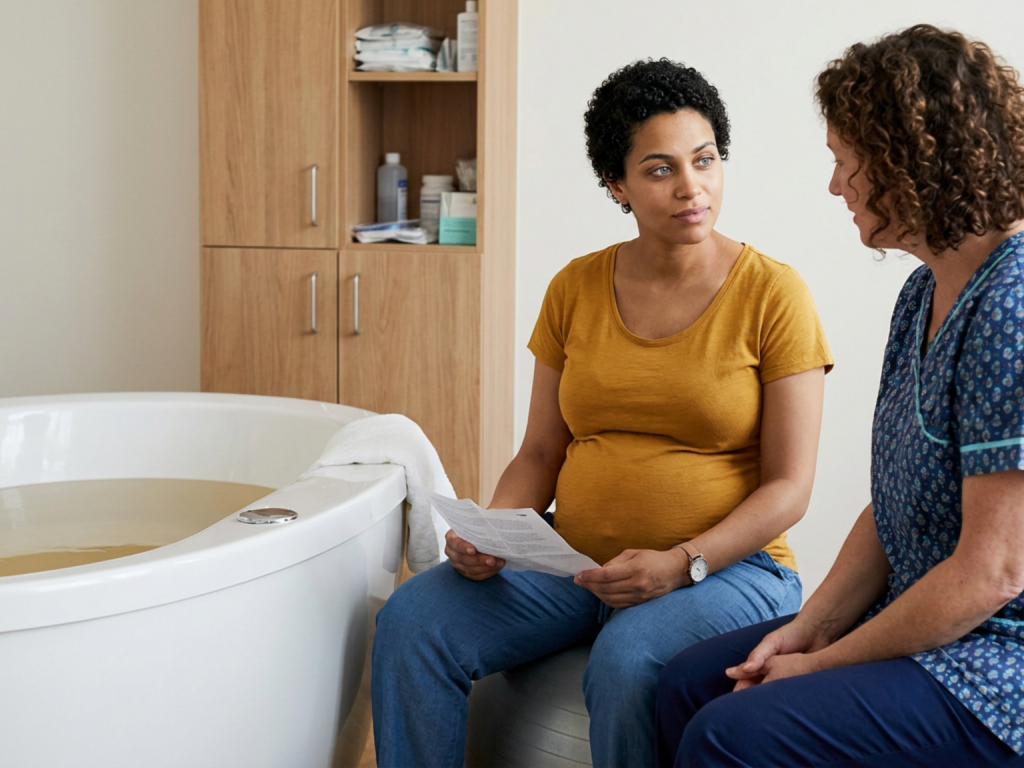
A birth center is a dedicated facility designed for low-intervention labor and birth, usually led by midwives and structured around physiologic birth. It may be freestanding or located near, or within, a hospital system. A freestanding birth center is not an operating room or labor ward, but it usually has standardized supplies, emergency medications, oxygen, neonatal resuscitation equipment, and written transfer agreements or procedures.
A planned home birth means labor and birth occur in your own residence with a qualified birth professional, commonly a registered or certified midwife depending on the country or state. The home is not converted into a hospital; rather, the midwife brings portable clinical equipment and follows a risk-screening and transfer plan.
The main distinction is infrastructure. A birth center is a prepared clinical site with predictable layout, stocked supplies, and staff routines. Home birth is highly individualized and familiar, but the clinical environment must be created for that specific birth. Both require careful prenatal screening, informed consent, and a clear understanding that transfer may become the safest option.
Eligibility and risk screening
Both options are usually intended for people with low-risk pregnancies. That generally means a singleton fetus in vertex presentation near term, no major placenta abnormalities, no severe hypertension, no uncontrolled diabetes, no significant fetal growth concerns, and no medical condition requiring continuous hospital-level monitoring. Prior cesarean birth, twin pregnancy, breech presentation, significant anemia, or a history of severe postpartum hemorrhage may change eligibility, depending on local standards and clinician judgment.
A birth center often has formal admission criteria and may be regulated by state, national, or accreditation bodies. Risk assessment continues throughout pregnancy and labor. If blood pressure rises, fetal presentation changes, membranes rupture for a prolonged period, or fetal heart rate concerns develop, care may be redirected to a hospital.
Home birth screening should be equally rigorous. The difference is that the home setting relies more visibly on the individual provider’s clinical judgment, backup relationships, and transport planning. A home birth emergency transfer plan should include the receiving hospital, estimated travel time, who calls ahead, who accompanies the laboring person, and what records travel with them.
Safety evidence and how to interpret it
Safety data on out-of-hospital birth can be difficult to compare because outcomes depend on provider training, emergency integration, selection of low-risk pregnancies, and whether the birth was planned or unplanned. A large study from British Columbia found that planned home births attended by registered midwives had very low perinatal death rates comparable to planned hospital births attended by midwives or physicians, with lower rates of interventions such as cesarean delivery, electronic fetal monitoring, and episiotomy. This type of evidence highlights the importance of integrated midwifery systems and careful risk selection.
At the same time, medical organizations and clinical resources caution that planned home birth may be associated with higher risks of infant death, neonatal seizures, and serious neurologic dysfunction compared with planned hospital birth in some datasets. These differences may reflect variations in training, transport delays, regulation, and emergency access. For families, the takeaway is not that one statistic applies everywhere, but that local system quality matters.
Birth centers occupy a middle ground. They do not offer emergency cesarean capability on site, but they usually provide more standardized protocols than an individual home environment. Their safety depends on strict eligibility criteria, skilled staff, rapid recognition of complications, and effective birth center transfer protocols.
Interventions, monitoring, and labor philosophy
Both birth centers and home births commonly emphasize unmedicated vaginal birth, upright positions, eating and drinking as appropriate, water immersion during labor when available, and intermittent fetal heart rate monitoring rather than continuous monitoring for low-risk labor. The style of care often includes patience with normal labor variation, hands-on comfort measures, and shared decision-making.
Differences can still arise. A birth center may have time-based protocols for labor progress, membrane rupture, or postpartum observation because it functions as a licensed clinical facility. Some families experience that structure as reassuring; others may feel it introduces pressure if labor is long but still clinically normal. At home, there may be more flexibility around pacing, rest, privacy, and environmental control, provided maternal and fetal assessments remain reassuring.
Neither setting is appropriate for every labor pattern. If fetal heart tones become nonreassuring, maternal blood pressure changes are concerning, meconium is significant, infection is suspected, or labor arrest develops, transfer or escalation of care may be recommended. A supportive provider should explain the clinical reasoning clearly and help preserve dignity during a change in plan.
Pain relief and comfort options
Pain relief differs substantially from hospital care. Neither a typical home birth nor most freestanding birth centers offer epidural analgesia or operative anesthesia on site. Pharmacological pain relief may be limited or unavailable, depending on regulations and provider scope. Some birth centers may offer nitrous oxide, sterile water injections, or selected medications; many home birth practices focus primarily on nonpharmacologic comfort measures.
Common comfort strategies in both settings include hydrotherapy, massage, counterpressure, position changes, breathing techniques, heat and cold, continuous labor support, and a calm sensory environment. Home birth may provide the greatest control over lighting, noise, movement, food, and who is present. Birth centers often provide tubs, birth stools, large beds, and space designed specifically for labor coping strategies.
If you strongly want access to an epidural, hospital birth may be a better match. If you hope to avoid epidural analgesia but want a clinical space outside your home, a birth center may feel like a balanced option. If familiarity and privacy are central to your coping, home may feel most supportive, as long as the safety plan is robust.
Emergency readiness and transfer logistics
The most important practical difference is how each setting responds when birth no longer remains low risk. Birth centers typically have emergency carts, oxygen, intravenous supplies, uterotonic medications for postpartum hemorrhage, and neonatal resuscitation equipment in fixed locations. Staff usually rehearse protocols and may have established pathways with nearby hospitals.
At home, the midwife brings portable versions of essential supplies. This may include Doppler equipment, blood pressure tools, oxygen, suction, neonatal ventilation equipment, medications to manage postpartum hemorrhage where permitted, suturing supplies, and IV materials. However, the physical environment, stairs, parking, weather, and distance from emergency services can affect response time.
Transfers happen for many reasons, and most are not dramatic emergencies. Common indications include request for epidural analgesia, prolonged labor, exhaustion, abnormal fetal heart rate patterns, heavy bleeding, retained placenta, elevated blood pressure, or newborn breathing difficulty. Before labor, ask how often the provider transfers clients, what proportion are urgent, which hospitals receive transfers, and whether the provider remains with you after arrival.
Newborn care and postpartum observation
In both settings, immediate newborn care usually prioritizes skin-to-skin contact, delayed cord clamping when clinically appropriate, breastfeeding or chestfeeding support, and assessment of breathing, tone, color, temperature, and feeding. The difference is how long and where observation occurs.
Birth centers often keep families for several hours after birth, then discharge if the birthing parent is stable, bleeding is normal, vital signs are reassuring, the newborn is transitioning well, and feeding has begun. They may perform newborn exams, administer vitamin K and eye prophylaxis where accepted and available, and arrange metabolic screening or hearing screening through follow-up systems.
Home birth postpartum care happens in the home, often with the midwife staying for several hours and returning for early postpartum visits. This can feel gentle and intimate, but it requires clear instructions about warning signs, newborn jaundice, poor feeding, hypothermia, respiratory distress, and maternal bleeding. Families should know exactly when to call the midwife, pediatric clinician, emergency services, or the hospital.
Emotional, practical, and financial considerations
Emotional safety matters. Some people feel more relaxed in their own bed, bathroom, and familiar rooms. Others feel safer knowing they are in a purpose-built clinical space without being in a hospital. Your nervous system, prior birth experiences, trauma history, cultural needs, and support network can all influence which setting feels right.
Practical issues also matter. Home birth requires space for supplies, clean linens, access to water, a safe route for emergency personnel, childcare planning, and willingness to manage cleanup or have support for it. A birth center requires travel during labor, packing supplies, and returning home shortly postpartum. Weather, traffic, rural distance, and ambulance availability should be part of decision-making.
Financial coverage varies widely. Some insurance plans cover birth centers more readily than home birth; others cover midwives differently depending on credentials. Ask for transparent estimates, including prenatal care, birth attendance, labs, newborn procedures, transfer costs, and hospital bills if transfer occurs. The most supportive plan is one that respects your values while remaining clinically realistic.
Seek urgent medical guidance
- Heavy vaginal bleeding, fainting, severe headache, chest pain, or seizures require urgent evaluation.
- Reduced fetal movement, persistent abnormal fetal heart rate concerns, or green/brown amniotic fluid should be discussed immediately with your clinician.
- Fever, severe abdominal pain, or signs of infection during labor or after birth need prompt medical attention.
- Newborn breathing difficulty, poor tone, bluish color, poor feeding, or abnormal sleepiness requires urgent pediatric assessment.
- Do not choose an out-of-hospital birth without a qualified attendant and a documented transfer plan.
Tools & Assistance
- Schedule a consultation with a licensed midwife or obstetric clinician to review eligibility.
- Tour a local birth center and ask about transfer rates, emergency drills, and hospital relationships.
- Create a written home birth emergency transfer plan if considering birth at home.
- Confirm insurance coverage for prenatal care, birth attendance, newborn care, and possible transfer.
- Discuss newborn medications, screening, feeding support, and postpartum follow-up before labor.
FAQ
Is a birth center safer than home birth?
Not automatically. Safety depends on pregnancy risk, provider training, equipment, transfer access, and local integration with hospitals. Birth centers usually offer more standardized infrastructure, while home birth depends more on portable equipment and logistics.
Can I have an epidural at a birth center or home birth?
Usually no. Epidural analgesia requires hospital-level anesthesia services. If you want epidural access, discuss hospital birth or a hospital-based birth center with your clinician.
What happens if complications occur at home or in a birth center?
The provider should stabilize the situation within their scope, call ahead, and transfer to a hospital when needed. Transfer may be nonurgent, urgent, or emergency depending on the clinical concern.
Who is a good candidate for out-of-hospital birth?
Typically, candidates have a low-risk, term, singleton, head-down pregnancy and no condition requiring hospital-level monitoring. Eligibility should be confirmed by qualified maternity professionals.
Is transfer considered a failed birth plan?
No. Transfer is a planned safety pathway. A respectful care team should treat it as appropriate escalation, not as failure.
Sources
- PubMed Central (National Institutes of Health) — Outcomes of planned home birth with registered midwife versus planned hospital birth with registered midwife or physician
- Mayo Clinic — Home birth: Know the pros and cons
- New Birth Experiences — Birth Center vs Home Birth
Disclaimer
This article is for general educational purposes and is not a substitute for individualized medical advice. Consult your obstetrician, midwife, pediatric clinician, or emergency services for personal care decisions.
















Please log in to leave a comment.