
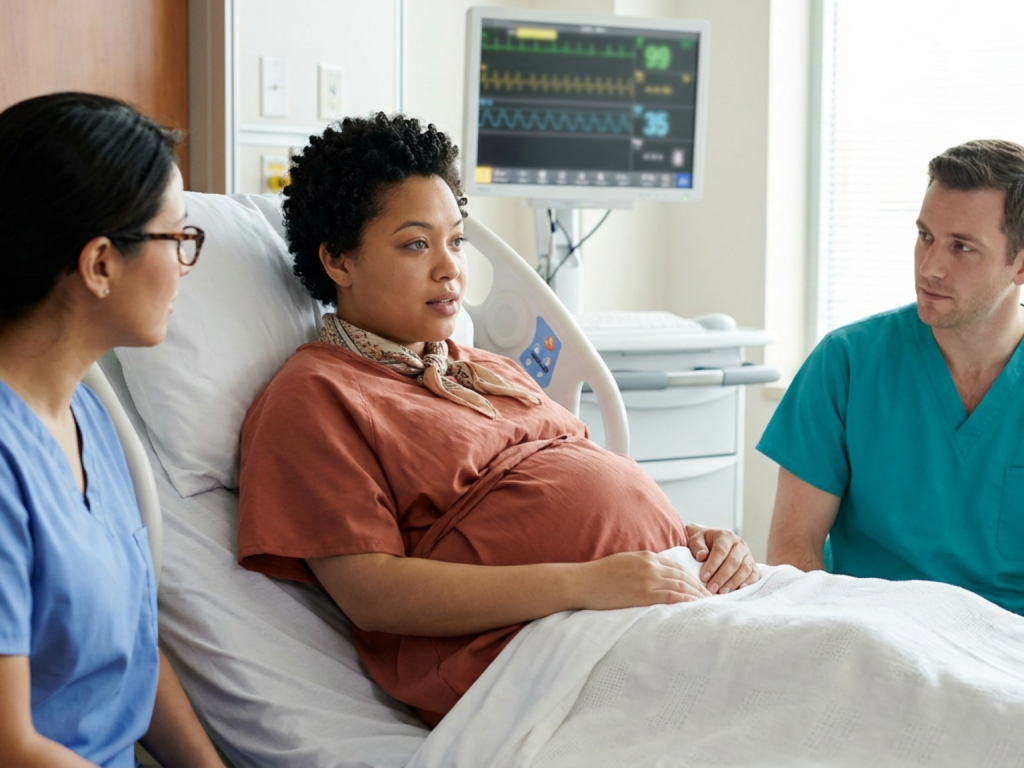
Intro
Assisted delivery is usually offered with the hope of completing a vaginal birth when labor is close to the finish line but needs help. For many families, vacuum or forceps assistance is successful. Sometimes, however, an attempted assisted vaginal birth does not achieve delivery or the clinical situation changes, and the safest next step becomes a cesarean section.
If this happened to you, it can feel sudden, frightening, or emotionally complicated. A move from assisted delivery to C-section is not a failure by the birthing person, the baby, or the care team; it is often a real-time response to anatomy, fetal tolerance of labor, and time-sensitive safety concerns.
Highlights
Assisted vaginal birth is generally intended to avoid cesarean birth when conditions are favorable and the baby is low enough in the pelvis.
A C-section may become necessary if vacuum or forceps assistance is unsuccessful, unsafe to continue, or if fetal or maternal concerns worsen.
The decision is influenced by station, fetal head position, cervical dilation, fetal heart rate, maternal condition, and how urgently birth needs to occur.
Debriefing after birth can help families understand why the plan changed and process the emotional impact.
Assisted delivery is usually an attempt to prevent C-section
Assisted vaginal delivery, also called operative vaginal birth, refers to using forceps or a vacuum device to help guide the baby through the birth canal during the second stage of labor. It is not usually a step toward surgery; in many situations it is offered specifically to complete a vaginal birth and avoid cesarean section. This may be considered when the cervix is fully dilated, the membranes have ruptured, the fetal head is low enough, and the clinician believes the position and pelvis make vaginal birth achievable.
Common indications include a prolonged second stage, maternal exhaustion, a need to shorten pushing because of certain medical conditions, or a concerning fetal heart rate pattern suggesting the baby may benefit from expedited birth. In these moments, the care team is balancing two clocks: the time needed to safely assist a vaginal birth and the time required to move to an operating room for a C-section if vaginal birth is unlikely or becomes unsafe.
Because assisted delivery occurs late in labor, the decision can feel abrupt. Families may hear terms such as station, rotation, descent, caput, molding, and fetal position. In plain language, the clinician is asking: Is the baby low enough? Is the head turned in a way that can be guided out? Is there enough space? Is the baby tolerating labor? Is the birthing person able to continue pushing effectively? The answers may change over minutes.
Why an assisted attempt may not work
An attempted forceps-assisted delivery or vacuum-assisted delivery may be stopped if progress is inadequate or if safety thresholds are reached. With vacuum, clinicians typically assess whether the cup can be placed correctly on the flexion point of the fetal scalp, whether traction results in descent, and whether the cup detaches repeatedly. With forceps, they assess whether the blades can be applied appropriately and whether gentle traction and maternal pushing produce movement. Lack of descent is a key warning sign because continued traction without progress can increase risk without benefit.
Several factors can make assisted delivery unsuccessful. The fetal head may be higher than initially appreciated, malpositioned, or extended rather than flexed. There may be cephalopelvic disproportion, meaning the baby’s head and maternal pelvis are not fitting well enough for vaginal birth. Significant swelling of the scalp or overlapping skull bones can make assessment more difficult. Epidural anesthesia, exhaustion, or infection may also affect pushing or urgency, although none of these automatically rules out assisted birth.
A C-section after attempted assisted vaginal birth is sometimes called a second-stage cesarean, and it can be technically more complex than a planned cesarean because the fetal head may be deeply engaged in the pelvis. This is one reason clinicians are careful about deciding when to try assisted delivery and when to proceed directly to surgery. The goal is not to avoid surgery at all costs; it is to choose the route most likely to achieve birth safely at that specific moment.
Clinical situations that can lead to C-section
Conversion to C-section may happen for fetal, maternal, or mechanical reasons. Fetal concerns include a persistent nonreassuring or concerning fetal heart rate pattern, especially if the baby does not descend quickly with an assisted attempt. Maternal concerns can include heavy bleeding, suspected uterine rupture in a person with a uterine scar, severe exhaustion, or a medical condition that makes prolonged pushing risky. Mechanical reasons include failure of the head to descend, inability to safely apply the instrument, or uncertainty about fetal position.
Typical reasons to abandon or avoid assisted delivery include:
- No meaningful descent with coordinated traction and pushing.
- Repeated vacuum cup detachments or inability to maintain correct placement.
- Forceps cannot be applied safely or the fetal head position is not suitable.
- The fetal heart rate becomes more concerning and vaginal birth is not imminent.
- New information suggests the baby is too high, malpositioned, or unlikely to pass through the pelvis.
In some cases, the care team may recommend an emergency C-section during labor without attempting instruments if conditions for assisted vaginal birth are not met. For example, if the cervix is not fully dilated, the head is not low, or the position is unknown, forceps or vacuum would generally not be appropriate. If the baby is already very low and delivery appears achievable in one or a few contractions, assisted birth may be faster than surgery. This is why two people with similar fetal heart rate concerns may receive different recommendations.
What the team considers before trying vacuum or forceps
Before assisted delivery, clinicians usually confirm full dilation, ruptured membranes, fetal head engagement, position, station, and adequacy of anesthesia. They also consider estimated fetal size, maternal pelvic anatomy, the presence of infection or bleeding, and whether immediate cesarean capability is available if the attempt fails. Consent should include the reason for the procedure, expected benefits, possible risks, and the possibility that cesarean section may still be needed.
The type of instrument matters. Vacuum uses suction applied to a cup on the fetal scalp and depends on correct placement and steady traction during contractions. Forceps are curved instruments placed around the fetal head to guide descent and sometimes rotation. Forceps may be preferred in some urgent situations because they do not detach like a vacuum, but they require specific expertise and may carry different maternal soft-tissue risks. Vacuum may be less likely to cause severe maternal perineal trauma in some contexts, but it can be associated with scalp bruising or, rarely, more serious neonatal bleeding complications.
Clinician training and local resources also affect decision-making. A well-timed operative vaginal birth performed by an experienced clinician can prevent a cesarean birth. Conversely, if the available clinician is not comfortable with a specific instrument or if the clinical picture is borderline, proceeding to C-section may be safer. Good care includes recognizing when not to persist.
When assistance happens during the C-section itself
The phrase assisted delivery can also appear in a different context: assistance during a cesarean. When a baby’s head is deeply engaged after prolonged pushing, extraction through the uterine incision can be difficult. In selected cases, a vacuum device may be used during cesarean birth to help elevate and guide the fetal head through the incision. This is different from an attempted vacuum vaginal birth, although both use suction technology.
Evidence on vacuum-assisted cesarean section suggests that, when the cup is properly placed and traction is controlled, it can be a safe and effective technique in difficult cases. Potential advantages include reducing the need for excessive fundal pressure, limiting extensions of the uterine incision, and decreasing blood loss. These benefits depend on appropriate case selection and skilled use. The goal is to deliver the baby through the abdominal and uterine incisions with less force and less trauma.
Other techniques may also be used for a deeply impacted fetal head, including vaginal disimpaction by another clinician, reverse breech extraction, or specialized devices depending on local practice. Families may not remember the details if the situation is urgent, but it is reasonable to ask afterward: Was the head impacted? Was a vacuum used during the cesarean? Were there uterine extensions or additional bleeding? Understanding the operative details can be useful for recovery and future pregnancy counseling.
What this can mean for recovery
Recovery after an attempted assisted delivery followed by C-section can involve overlapping experiences. The birthing person may have soreness from pushing, pelvic floor pressure, labial or perineal swelling, catheterization, and abdominal incisional pain. If forceps or vacuum were applied before surgery, there may also be soft-tissue tenderness even without a completed vaginal birth. Fatigue is often profound because labor may have been long before the operation occurred.
Postoperative care commonly focuses on pain control, mobility, bleeding, urination, bowel function, incision healing, and signs of infection or blood clots. The newborn may be observed for scalp marks, bruising, or other effects if vacuum or forceps were attempted, and for transition issues that can occur after cesarean birth. Most marks from attempted assistance are temporary, but any concerns about feeding, alertness, breathing, jaundice, swelling, or unusual crying should be discussed promptly with the baby’s clinician.
Emotionally, the combination of pushing, instruments, urgency, and surgery can be a lot to absorb. Some people feel relief; others feel grief, anger, confusion, or fear. These reactions can coexist with gratitude that everyone is safe. A postpartum debrief with the obstetric team can clarify the timeline: why assistance was recommended, what happened during the attempt, why the decision changed, and whether anything has implications for future births. If intrusive memories, panic, avoidance, or persistent distress develop, mental health support is appropriate and beneficial.
Questions to ask after birth and for future planning
After an unplanned change from assisted delivery to cesarean, many families benefit from a structured conversation once the immediate recovery period has passed. Helpful questions include: What was the baby’s station and position? Why was vacuum or forceps chosen? How many pulls or attempts were made? What indicated that the attempt should stop? Was the C-section urgent or emergent? Were there complications such as uterine incision extensions, hemorrhage, infection, or neonatal injury? These are not questions of blame; they are questions of understanding.
Future birth planning depends on the reason for the C-section, the type of uterine incision, operative findings, maternal recovery, and preferences. Some people may be candidates for vaginal birth after cesarean in a later pregnancy, while others may be advised to plan a repeat cesarean. A prior second-stage cesarean does not automatically determine the next birth, but it does deserve individualized counseling because factors such as fetal position, pelvic mechanics, and the prior surgical course matter.
If you are currently in labor and being offered assisted delivery, it is reasonable to ask concise questions even in a time-sensitive situation: What is the concern right now? How likely is this to work? What happens if it does not? How quickly can we move to C-section if needed? In urgent care, decisions may need to be made quickly, but respectful communication still matters. You deserve clear information, skilled care, and compassion regardless of how your baby is born.
Seek urgent medical help
- Heavy bleeding, fainting, chest pain, or shortness of breath after birth needs urgent assessment.
- Fever, worsening abdominal pain, foul-smelling discharge, or increasing incision redness may indicate infection.
- Severe headache, vision changes, right upper abdominal pain, or sudden swelling can be warning signs postpartum.
- A newborn with breathing difficulty, poor feeding, unusual sleepiness, seizures, or enlarging scalp swelling needs immediate care.
- Persistent traumatic memories, panic, or thoughts of self-harm require prompt professional support.
Tools & Assistance
- Request a postpartum birth debrief with the obstetric team
- Ask for a copy of the operative note and delivery summary
- Schedule early postpartum follow-up if recovery feels more painful or confusing than expected
- Consult a pelvic floor physical therapist when cleared by your clinician
- Seek perinatal mental health support after a frightening or traumatic birth
FAQ
Does an attempted assisted delivery mean the C-section was avoidable?
Not necessarily. Assisted delivery is often tried because vaginal birth seems possible, but new information or lack of descent may show that cesarean is the safer route.
Is it dangerous to try vacuum or forceps before C-section?
When eligibility criteria are met and the clinician stops appropriately if progress is poor, assisted delivery can be a reasonable option. Risks vary by situation and should be discussed with the care team.
Can vacuum be used during a C-section?
Yes, in selected difficult extractions a vacuum device may help deliver the fetal head through the uterine incision. This is different from vacuum-assisted vaginal birth.
Will this affect my next birth?
It might, depending on why the C-section occurred, the uterine incision, operative findings, and your preferences. Review the delivery records with an obstetric clinician before or early in a future pregnancy.
Sources
- NIH PubMed Central — Vacuum-assisted cesarean section
- Kaiser Permanente — Assisted Delivery: Medical Help During Labor
- Cleveland Clinic — Forceps Delivery: What To Expect, Risks & Recovery
Disclaimer
This article is for general medical information only and does not replace care from your obstetric, midwifery, pediatric, or emergency healthcare team. Always seek individualized advice for labor, birth, postpartum, or newborn concerns.
















Please log in to leave a comment.