
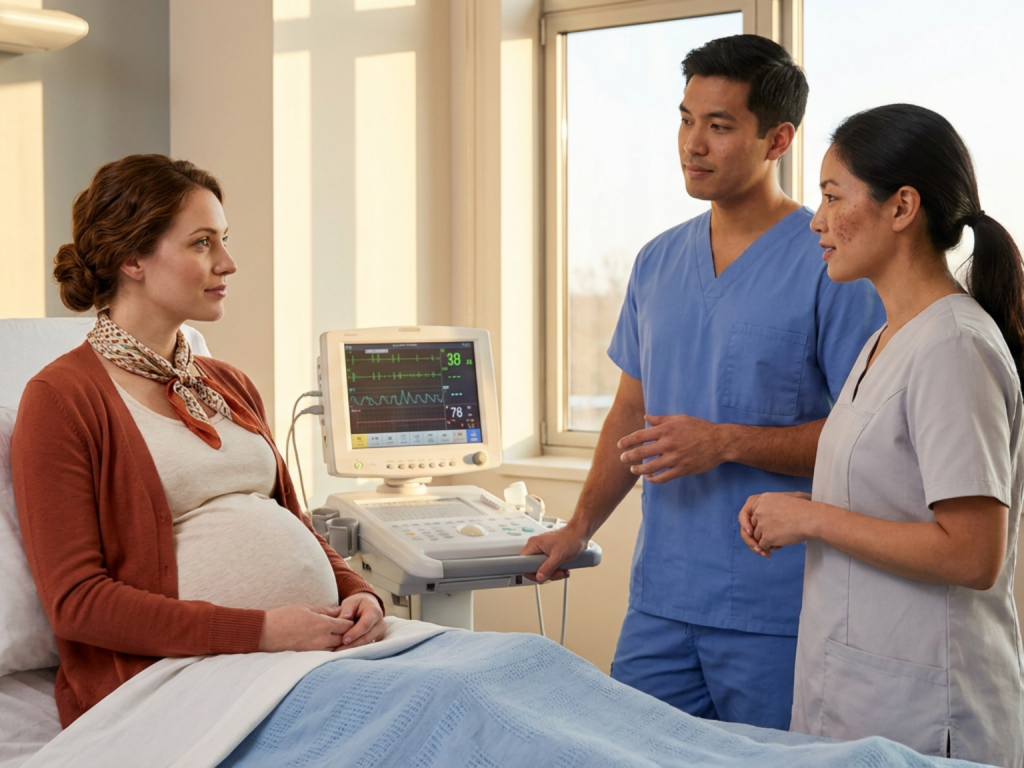
Intro
Wanting a natural birth in a high-risk pregnancy can bring up mixed emotions: hope, caution, grief about possible limits, and a strong wish to stay actively involved in decision-making. A high-risk label does not automatically mean that every aspect of physiologic labor is impossible, but it does mean the plan needs a more careful safety framework.
This article explains how clinicians think about natural birth when maternal, fetal, or obstetric risk factors are present. It is not a substitute for individualized care; the safest plan depends on your history, current pregnancy, hospital resources, and the judgment of your obstetric or midwifery team.
Highlights
High-risk pregnancy does not always rule out vaginal birth, but it changes the threshold for monitoring, intervention, and location of birth.
Some situations, such as certain prior uterine incisions, fetal malpresentation, multiple gestation, or lack of emergency cesarean access, may make a low-intervention plan unsafe.
A natural birth plan in a hospital can still include mobility, continuous support, nonpharmacologic coping, informed consent, and delayed or selective interventions when clinically appropriate.
For VBAC, success rates are often reported around 60% to 80%, but candidates need individualized assessment and immediate surgical capability because uterine rupture, while uncommon, can be life-threatening.
The goal is not to achieve birth without intervention at any cost; it is to protect the parent and baby while preserving autonomy, dignity, and physiologic support whenever possible.
What natural birth means when risk is higher
Natural birth usually means a vaginal birth that aims to minimize unnecessary intervention and, for many people, to avoid pharmacologic pain relief. In a high-risk pregnancy, that definition often needs refinement. The priority becomes physiologic support within a medically prepared environment, not an unmonitored or rigidly intervention-free birth.
A high-risk situation may involve maternal conditions such as chronic hypertension, preeclampsia, cardiac disease, diabetes requiring medication, prior uterine surgery, bleeding disorders, placenta-related concerns, or a history of severe postpartum hemorrhage. It may also involve fetal or pregnancy factors such as fetal growth restriction, malpresentation, multiple gestation, abnormal fetal testing, preterm labor, or suspected placental insufficiency.
For a medically literate reader, the central question is not simply, “Can I have a natural birth?” It is more precise: “Can I safely attempt vaginal birth, and which elements of low-intervention care are compatible with my risk profile?” Often, many supportive elements remain possible, including upright positioning, continuous labor support, breathing techniques, hydrotherapy before certain monitoring needs arise, freedom to decline nonessential interventions, and shared decision-making.
Why place of birth matters
In high-risk situations, the planned birth setting is a medical decision, not only a personal preference. ACOG notes that planned home birth is associated with a higher risk of perinatal death, neonatal seizures, and serious neurologic dysfunction when strict selection criteria and integrated systems are not in place. The same guidance identifies fetal malpresentation, multiple gestation, and prior cesarean delivery as contraindications to planned home birth.
This does not mean every person who wants low-intervention care must give up their preferences. It means the safest version of natural birth may be natural birth in hospital with doctors, midwives, anesthesiology, neonatal support, blood bank access, and operating room readiness nearby. For some families, a hospital-based plan can preserve the values of natural birth while reducing delays if fetal distress, hemorrhage, shoulder dystocia, hypertensive emergency, or uterine rupture occurs.
When evaluating a birth setting, ask whether continuous fetal heart rate monitoring is available, whether an emergency cesarean can be performed promptly, whether anesthesia and pediatric or neonatal teams are on site, and whether the team is comfortable supporting low-intervention birth preferences when the clinical picture is stable.
When vaginal birth may still be reasonable
Many high-risk pregnancies still end in vaginal birth. The decision depends on the specific condition, severity, gestational age, fetal status, cervical readiness, prior obstetric history, and how labor evolves. A person with well-controlled gestational diabetes, for example, may have a very different risk profile from someone with severe preeclampsia and abnormal fetal testing. Similarly, a stable singleton cephalic pregnancy after one low transverse cesarean is very different from a prior classical cesarean incision.
Clinicians often look for reassuring features: a single fetus in cephalic presentation, no placenta previa or vasa previa, no contraindication to labor, reassuring fetal surveillance, acceptable estimated fetal size for the clinical context, and maternal stability. Cervical status also matters if induction of labor is being considered, because an unfavorable cervix may increase the chance of prolonged labor, additional interventions, or cesarean birth.
A flexible low-intervention birth plan can include nonpharmacologic coping strategies, mobility-compatible monitoring when available, position changes in labor, a calm environment, doula support, and clear consent discussions before interventions. These preferences should be written as conditional rather than absolute: “If maternal and fetal status are reassuring, I would like…” This wording helps the care team protect both physiologic labor and safety.
Situations that often change or limit the plan
Some conditions make spontaneous or induced labor unsafe, while others do not prohibit labor but require a lower threshold for intervention. Placenta previa, certain invasive placental disorders, persistent transverse lie, some severe fetal anomalies requiring specialized delivery planning, or a prior classical cesarean incision are examples where planned vaginal birth may be contraindicated or strongly discouraged.
Other conditions may allow a trial of labor but require close surveillance. Hypertensive disorders can progress quickly and may require antihypertensive therapy, magnesium sulfate for seizure prophylaxis in selected cases, induction, or expedited delivery. Fetal growth restriction may require continuous monitoring because the fetus may have less reserve during contractions. Diabetes, especially when medication-treated or associated with suspected macrosomia, may raise concerns about shoulder dystocia or neonatal hypoglycemia. A history of postpartum hemorrhage may change plans for IV access, active management of the third stage, and blood product readiness.
This is where medically indicated early delivery and induction of labor may enter the discussion. Induction does not automatically erase the possibility of an unmedicated vaginal birth, but it may introduce cervical ripening, oxytocin, amniotomy, and continuous monitoring. The key is to understand which interventions are recommended because of evidence-based risk reduction and which are optional or preference-sensitive.
VBAC and TOLAC in high-risk decision-making
Vaginal birth after cesarean is one of the most common high-risk natural birth conversations. A trial of labor after cesarean, or TOLAC, can be a reasonable option for selected patients and is often reported to have a 60% to 80% success rate. The major risk is uterine rupture, which Mayo Clinic describes as occurring in less than 1% of cases but potentially life-threatening for both parent and baby.
Risk assessment includes the type of prior uterine incision, number of prior cesareans, prior vaginal birth, reason for the original cesarean, interpregnancy interval, need for induction, estimated fetal size, placental location, and facility capability. A prior low transverse uterine incision is generally more favorable than a prior classical incision. StatPearls emphasizes that prior classical cesarean sections or incisions into the contractile portion of the uterus carry higher rupture risk and are generally recommended for planned repeat cesarean rather than TOLAC.
Because uterine rupture can present with fetal heart rate abnormalities, pain, bleeding, loss of station, or maternal instability, continuous monitoring and rapid emergency cesarean capability are central to safe VBAC planning. A VBAC plan can still include unmedicated birth preferences, but it should be anchored in immediate access to surgical, anesthesia, and neonatal support.
Monitoring, autonomy, and low-intervention care
Many people fear that high-risk monitoring means losing control. In good care, monitoring should be explained, proportionate, and integrated with autonomy. Continuous electronic fetal monitoring may be recommended in VBAC, induction with oxytocin, fetal growth restriction, hypertensive disorders, or other scenarios where fetal reserve is a concern. The purpose is to detect patterns suggesting hypoxemia or uteroplacental stress early enough to act.
Even with continuous monitoring, some hospitals offer wireless or telemetry systems that allow standing, rocking, birth balls, or limited ambulation. IV access can be placed without continuous fluids unless needed. Cervical exams can often be limited to clinically useful moments. Pain coping without medication can include breathing, counterpressure, sterile water injections for back labor where available, heat, cold, massage, visualization, and one-to-one emotional support.
Informed consent remains essential. A high-risk label should not become a shortcut for coercion. Patients can ask: What is the indication? What are the benefits and risks? What happens if we wait? Are there alternatives? Is this urgent or can we discuss it? These questions help distinguish emergency care from routine practice patterns and support shared decision-making under pressure.
Building a realistic safety-centered birth plan
A useful plan for high-risk natural birth has three layers: preferences for stable labor, thresholds for changing course, and emergency priorities. In stable labor, you might request a quiet room, minimal staff changes, mobility as monitoring allows, nonpharmacologic coping first, vaginal exams only when clinically needed, and clear explanations before procedures.
The second layer names possible pivots. For example: if induction is recommended, ask which cervical ripening methods are appropriate for your history; if continuous monitoring is needed, ask about mobility-compatible monitoring; if cesarean becomes necessary, ask whether immediate skin-to-skin, a support person in the operating room, and breastfeeding support are feasible. These details can preserve dignity even when the route of birth changes.
The third layer addresses emergencies. Severe fetal heart rate abnormalities, hemorrhage, eclampsia, suspected uterine rupture, cord prolapse, or maternal instability may require rapid action. In those moments, the safest care may not feel natural, but it can still be respectful. Discuss in advance how your team communicates during urgent decisions, who speaks for you if you cannot, and what postpartum support you want if the birth differs from your hopes.
Seek urgent medical care
- Vaginal bleeding, severe abdominal pain, or suspected rupture of membranes before term needs prompt assessment.
- Severe headache, visual changes, chest pain, shortness of breath, or right upper abdominal pain can signal serious complications.
- Reduced fetal movement, especially after your usual pattern is established, should be evaluated quickly.
- Regular contractions, pelvic pressure, or fluid leakage before 37 weeks may indicate preterm labor.
- After a prior cesarean, sudden severe pain, abnormal fetal monitoring, bleeding, or maternal instability requires emergency evaluation.
Tools & Assistance
- Schedule a birth-planning visit with an obstetrician or maternal-fetal medicine specialist.
- Ask your hospital about emergency cesarean capability, anesthesia availability, and neonatal support.
- Prepare a flexible birth plan that separates preferences from medical contingencies.
- Consider a doula or trained labor support person familiar with high-risk hospital birth.
- Review warning signs and after-hours contact instructions before labor begins.
FAQ
Can I have a natural birth if my pregnancy is high risk?
Sometimes, yes. The safest answer depends on the specific risk factor, maternal stability, fetal status, prior uterine surgery, and the resources available where you plan to give birth.
Does continuous fetal monitoring mean I cannot move?
Not always. Some hospitals have telemetry or wireless monitoring, and even wired monitoring may allow position changes near the bed. Ask what is available before labor.
Is VBAC considered high risk?
VBAC involves specific risk assessment because uterine rupture is uncommon but potentially life-threatening. Many selected patients are candidates for TOLAC, but immediate emergency cesarean capability is important.
Can induction still be part of a natural birth plan?
It can be, depending on the indication and methods used. Induction may add interventions, but some people still labor without pharmacologic pain relief and have a vaginal birth.
When is a planned cesarean safer than trying labor?
Examples may include placenta previa, certain prior uterine incisions, some fetal malpresentations, and other individualized conditions. Your clinician should explain the reason and alternatives clearly.
Sources
- American College of Obstetricians and Gynecologists — Planned Home Birth
- Mayo Clinic — VBAC: Know the pros and cons
- StatPearls - NCBI Bookshelf — Vaginal Birth After Cesarean Delivery
Disclaimer
This article is for general medical education only and does not diagnose, prescribe, or replace care from your obstetric, midwifery, or emergency team. Always seek individualized advice from qualified healthcare professionals.


















Please log in to leave a comment.