
Intro
Planning a natural or low-intervention vaginal birth with twins can feel both hopeful and complicated, especially when one or both babies are estimated to be large. Many parents want to understand when vaginal birth may be reasonable, when the risks rise, and how clinicians make recommendations without reducing the decision to a single ultrasound number.
Twin birth is highly individualized. Presentation, gestational age, fetal growth, placental anatomy, maternal health, prior births, and the delivery team’s experience all matter. This article reviews the main medical considerations so you can have a more informed, calm conversation with your obstetrician, midwife, or maternal-fetal medicine specialist.
Highlights
Planned vaginal birth can be appropriate for some twin pregnancies when Twin A is head-down and other safety criteria are met.
Large fetal size may increase the chance of difficult labor, shoulder dystocia, birth trauma, operative delivery, or emergency cesarean birth.
Twin deliveries require extra preparation because risks such as postpartum hemorrhage, uterine atony, and difficult extraction are higher than in many singleton births.
A natural birth plan can still include medical safeguards, including fetal monitoring, IV access, anesthesia availability, and a clear cesarean contingency plan.
What does “large baby twins” mean clinically?
In everyday language, “large baby twins” may mean babies who feel bigger than expected, measure ahead on ultrasound, or are estimated to be near singleton birthweights despite being twins. Clinically, fetal macrosomia is commonly defined as an estimated fetal weight above 4,000 grams, or 8 pounds 13 ounces. Risks tend to rise further at higher weights, particularly above about 4,500 grams, or 9 pounds 15 ounces. Many twins are born smaller than singleton babies, so a twin approaching these thresholds deserves careful individualized review.
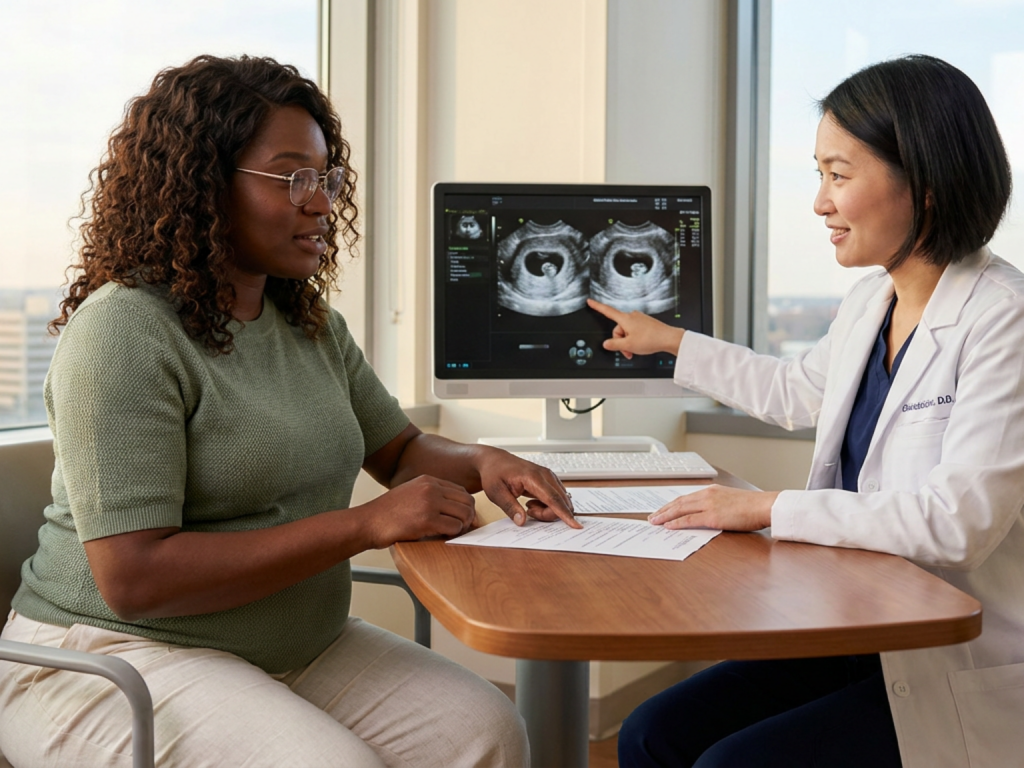
Estimated fetal weight is useful but imperfect. Ultrasound weight estimates can vary, particularly late in pregnancy and in twin gestations where fetal position, overlapping parts, and reduced space may make measurements harder. Because of this, clinicians usually do not make decisions based only on one number. They combine fetal weight estimates with maternal pelvis assessment, prior vaginal birth history, diabetes status, amniotic fluid, placental location, gestational age, fetal presentation, and signs of labor progress.
It is also important to distinguish between “both babies are large” and “Twin B is significantly larger than Twin A.” A larger second twin can raise concerns about delivery after Twin A is born, especially if Twin B is not head-down. Size discordance, presentation, and the clinician’s skill with twin maneuvers may influence whether a vaginal birth is considered reasonable.
When vaginal birth may be considered for twins
For many twin pregnancies, the key first question is the presentation of Twin A, the baby closest to the cervix. Evidence reviews and clinical guidance generally support planned vaginal birth in appropriately selected twin pregnancies when Twin A is vertex, meaning head-down, and when there are no other major contraindications. Some reviews also note better candidacy when Twin B is above a minimum estimated weight, often cited around 1,500 grams, because very small babies can be more vulnerable during delivery.
If Twin A is breech or transverse, many services recommend planned cesarean birth because the first baby’s delivery sets the mechanical and safety conditions for the rest of the birth. If twins share one placenta, particularly in monochorionic pregnancies, recommendations may be more cautious depending on chorionicity, amnionicity, fetal wellbeing, and local expertise. The NHS notes that cesarean birth is commonly used for twin births and may be recommended in situations such as a breech first twin or shared-placenta concerns.
A planned vaginal birth is not the same as an unmonitored or unsupported birth. In twin pregnancies, a low-intervention approach is usually adapted to the higher-risk context. This may include fetal heart rate monitoring, ready access to an operating room, experienced obstetric staff, neonatal support for both babies, and anesthesia availability even if the parent hopes to avoid an epidural. A flexible plan can preserve many values of natural birth while acknowledging that twin delivery can change quickly.
How large size changes the risk profile
Large fetal size can make vaginal birth more physically demanding and less predictable. In a singleton birth, macrosomia is associated with prolonged labor, operative vaginal delivery, shoulder dystocia, birth trauma, and neonatal complications such as hypoglycemia or breathing difficulties. In twin birth, these concerns may overlap with twin-specific challenges, including the need to safely deliver two babies, manage fetal position changes, and prevent maternal bleeding.
Shoulder dystocia is one of the most discussed risks with a large baby. It occurs when the baby’s head is born but the shoulders become impacted behind the maternal pelvis. It is an obstetric emergency that requires practiced maneuvers. Although the absolute risk depends on multiple factors, suspected large size, maternal diabetes, and prior shoulder dystocia can increase concern. With twins, clinicians also consider which baby is larger. If Twin B is larger than Twin A, the pelvis has not necessarily been “proven” for the larger baby, even after the first delivery.
Large twins can also increase the chance of labor abnormalities. The uterus is more distended in twin pregnancy, and with larger babies this distension may be greater. Overdistension is associated with less efficient contractions and uterine atony after birth, where the uterus does not contract firmly enough to control bleeding. This is why postpartum hemorrhage management is an essential part of any twin birth plan, including those intended to be unmedicated or low-intervention.
Maternal risks: bleeding, exhaustion, operative delivery, and emergency cesarean
The maternal risks of vaginal twin birth are not only about whether the babies fit through the pelvis. They also involve how the uterus, cervix, pelvic floor, and maternal cardiovascular system tolerate a longer or more complex delivery. Twin pregnancy carries a higher baseline risk of postpartum hemorrhage, especially because the uterus has been stretched more than in most singleton pregnancies. Large babies may intensify that risk through uterine overdistension and prolonged labor.
Other possible maternal risks include severe perineal tears, infection if labor is prolonged or membranes are ruptured for a long time, need for assisted vaginal delivery, and conversion to cesarean birth. One distinctive scenario is delivery of Twin A vaginally followed by cesarean delivery for Twin B. This combined mode of delivery is uncommon but emotionally and physically difficult when it occurs, and the possibility should be discussed in advance.
Maternal exhaustion also matters. Natural birth often emphasizes movement, breathing, water, position changes, and continuous support. These strategies can be valuable, but twin labor may require more continuous assessment and faster decision-making. If labor stalls, fetal heart tracing becomes concerning, or Twin B changes position after Twin A is born, the team may recommend interventions such as oxytocin augmentation, artificial rupture of membranes, internal maneuvers, operative vaginal birth, or cesarean delivery. These are not failures; they are tools used when the balance of risk changes.
Risks for the babies before, during, and after birth
For the babies, the major questions are oxygenation during labor, safe passage through the birth canal, trauma risk, and adaptation after birth. Continuous or frequent fetal assessment is often recommended in twin labor because each baby has a separate heart rate pattern and either baby may show signs of stress. Monitoring can be technically challenging, particularly when babies are large, close together, or moving, so teams may use ultrasound to confirm which heartbeat belongs to which twin.
Birth trauma risk may rise when a baby is large, especially with difficult extraction, shoulder dystocia, or operative vaginal delivery. Possible injuries include clavicle fracture, brachial plexus injury, bruising, scalp trauma, or, rarely, more serious complications. Most birth injuries are not inevitable and many resolve, but the goal is to reduce preventable risk through selection, preparation, and timely intervention.
After birth, larger babies may need monitoring for low blood sugar, especially if the birthing parent has diabetes or if the baby experienced a stressful delivery. Some newborns may also have breathing difficulties or require observation in a neonatal unit. Twins are more likely than singletons to be born early, and gestational age can matter as much as weight. A large early-term twin may still have transitional breathing or feeding issues, while a smaller but mature baby may adapt well. Neonatal planning should therefore include both estimated size and maturity.
Building a natural birth plan with medical safeguards
A natural birth plan for large twins is most useful when it is specific, flexible, and developed with the actual birth setting in mind. For many families, the goal is not “no medical care,” but rather respectful, physiologic support unless intervention becomes clinically important. This might include upright positions in early labor, breathing techniques, a doula or support person, minimal vaginal exams when safe, and delayed cord clamping if both babies are stable.
At the same time, twin birth usually benefits from practical safeguards. These may include an IV line, blood type and screen, uterotonic medications available for bleeding, two neonatal teams or adequate newborn support, ultrasound in the room, and immediate operating room access. Some clinicians recommend epidural placement for twin vaginal birth because it can facilitate urgent procedures or internal maneuvers if needed. Others may support an unmedicated plan if the clinical situation is favorable and emergency anesthesia remains available. This is a discussion to have before labor, not during a crisis.
Useful questions to ask include: Is Twin A head-down? How large is each baby estimated to be, and how reliable is that estimate? Is Twin B larger than Twin A? What is the plan if Twin B turns transverse after Twin A is born? Who will be present for the delivery? How quickly can an emergency C-section during labor be performed? What signs would prompt a recommendation to switch from the original plan? Clear answers can reduce fear and help everyone respond quickly if the birth changes direction.
Shared decision-making: balancing values and safety
Choosing between planned vaginal birth and planned cesarean for large twins can be emotionally charged. Some parents strongly value experiencing vaginal birth, avoiding abdominal surgery, or having a shorter recovery. Others feel safer with a planned cesarean because it feels more controlled. Both perspectives are valid. The best plan is one that reflects the medical facts, the local team’s experience, and the parent’s informed preferences.
Shared decision-making should include absolute and relative risks, not just labels like “high risk.” A pregnancy with vertex Twin A, reassuring growth, no major maternal disease, and an experienced twin-delivery team may be very different from one with breech Twin A, suspected macrosomia, diabetes, major size discordance, or limited emergency resources. Hospital capabilities matter: vaginal twin birth is safest where clinicians are comfortable with twin presentations and where cesarean delivery can happen quickly if needed.
It may help to create two birth plans: the preferred plan and the pivot plan. The preferred plan describes comfort measures, communication style, mobility, pain coping, and immediate newborn wishes. The pivot plan describes what should happen if induction is needed, labor becomes prolonged, fetal status changes, bleeding occurs, or cesarean birth becomes the safer option. This approach protects the emotional meaning of the birth while making room for clinical reality.
Seek urgent medical guidance if any of these occur
- Reduced or absent fetal movements in either twin.
- Heavy vaginal bleeding, severe abdominal pain, or symptoms of preeclampsia such as severe headache or visual changes.
- Regular contractions, ruptured membranes, or pelvic pressure before the recommended delivery window.
- Known Twin A breech or transverse presentation with signs of labor.
- Any concern about labor starting away from a facility prepared for twin delivery.
Tools & Assistance
- Schedule a birth-planning visit with an obstetrician or maternal-fetal medicine specialist.
- Ask whether your hospital has 24-hour anesthesia, operating room, blood bank, and neonatal support for twins.
- Request a clear written plan for monitoring, pain relief options, and emergency cesarean thresholds.
- Discuss fetal growth estimates, presentation, placental type, and delivery timing at each late-pregnancy visit.
- Prepare a flexible birth preferences document with both preferred and backup plans.
FAQ
Can twins be born naturally if they are large?
Sometimes, but it depends on presentation, estimated weights, maternal factors, gestational age, and the experience and resources of the birth team. Twin A being head-down is usually a key requirement.
Does a large estimated weight automatically mean cesarean birth?
Not automatically. Ultrasound estimates have a margin of error, and decisions usually consider the full clinical picture, including diabetes, prior births, size difference between twins, and fetal wellbeing.
Why is Twin A’s position so important?
Twin A is born first and determines the initial safety of vaginal delivery. If Twin A is breech or transverse, many clinicians recommend planned cesarean because vaginal delivery may carry higher risk.
What happens if Twin B changes position after Twin A is born?
The team may use ultrasound, external or internal maneuvers, assisted vaginal delivery, or cesarean birth depending on Twin B’s position, heart rate, size, and the clinician’s expertise.
Can I still have an unmedicated birth plan in a hospital?
You may be able to plan for minimal pain medication and physiologic support, but twin birth usually requires added safeguards such as monitoring, IV access, and immediate emergency readiness.
Sources
- Mount Sinai Fetal Medicine Center — Labor and Delivery of Twin Pregnancies
- Mayo Clinic — Fetal macrosomia - Symptoms & causes
- NHS — Giving birth to twins or more
Disclaimer
This article is for general medical education only and does not replace individualized care. Always discuss twin birth planning, suspected large fetal size, and delivery options with your qualified healthcare team.
















Please log in to leave a comment.