
Intro
Choosing a stroller can feel unexpectedly high-stakes. It is not just a purchase; it is a daily mobility tool that affects your baby’s positioning, your posture, your ability to travel, and how confidently you can leave the house during a demanding season of life.
The best stroller is not the most expensive one. It is the one that fits your baby’s developmental stage, your environment, your transport habits, and your caregiving routines while meeting basic safety expectations. If your baby was born premature, has low muscle tone, respiratory concerns, reflux, hip dysplasia, or any medical equipment needs, discuss stroller positioning with your pediatrician or relevant specialist.
Highlights
Start with your real daily life: stairs, sidewalks, car use, public transit, storage space, and whether you will walk mostly indoors, on pavement, or over uneven terrain.
Newborns need a stroller that supports a safe reclined position, such as a deep recline, bassinet, or compatible infant car seat used according to manufacturer instructions.
Safety features matter more than luxury details: look for reliable brakes, a stable frame, a secure harness, and a canopy that protects without blocking airflow.
A stroller should be easy enough to fold, lift, steer, and clean that you will actually use it safely when you are tired or managing a fussy baby.
Begin with your daily routes, not the showroom aisle
A stroller that looks perfect online can become frustrating if it does not match your actual routines. Before comparing brands, map a typical week. Do you drive most places and need a stroller that folds quickly into a trunk? Do you use buses, trains, or elevators where narrow width and one-hand folding matter? Do you live in a walk-up apartment where every kilogram becomes relevant? Consumer guidance often emphasizes that lifestyle factors such as car use, public transit, stairs, storage space, and multiple children should guide the decision.
Think about terrain as well. Smooth mall floors and paved neighborhood sidewalks place very different demands on wheels and suspension than gravel paths, cracked urban pavement, snow, or grassy parks. Small hard wheels can be light and compact, but they may rattle and stop abruptly on uneven ground. Larger wheels, air-filled tires, or better suspension may improve handling, but they often add size and weight.
Also consider who will use the stroller. A grandparent, postpartum parent recovering from cesarean birth, nanny, or caregiver with wrist, pelvic floor, or back pain may need different ergonomics. Adjustable handlebars, a lighter fold, and a frame that does not require awkward bending can reduce strain. If two caregivers have very different heights, test whether both can walk without kicking the rear axle and can operate the brake comfortably.
Understand the main stroller types
Most families choose from several broad categories. An all-purpose stroller is designed for everyday use and usually offers a balance of comfort, storage, recline options, and durability. It may work from infancy through toddlerhood if it has appropriate newborn support or accepts an infant car seat or bassinet.
A lightweight or umbrella-style stroller is easier to carry, store, and travel with. It can be excellent for older infants and toddlers, especially in cities or airports. However, some lightweight models do not recline enough for newborns and may have less suspension, smaller canopies, and limited storage. Always check age, weight, and developmental requirements rather than assuming a small stroller is suitable from birth.
A jogging stroller is built for running or rougher terrain, typically with three larger wheels and improved suspension. It is not automatically appropriate for a newborn. Many jogging strollers should be used for running only when a baby has sufficient head and trunk control, and manufacturer age guidance varies. Ask your pediatrician before running with a young infant, especially if there were prematurity, neurologic, airway, or musculoskeletal concerns.
Travel systems pair an infant car seat with a stroller frame or stroller seat. They can be convenient for moving a sleeping baby from car to stroller, but car seats are designed primarily for vehicle safety, not prolonged sleep outside the car. If you rely on a travel system, learn car seat safety and follow time, angle, and supervision recommendations from your clinician and the product manual.
Double strollers, tandem strollers, and stroller wagons may help with twins or siblings close in age. Look carefully at weight limits for each seat, recline differences, doorway width, turning radius, and whether the heavier child’s position affects tipping risk.
Prioritize newborn positioning and airway safety
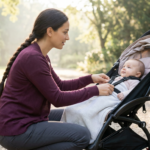
Newborns have relatively large heads, immature neck strength, and developing airway control. They need support that prevents slumping into a chin-to-chest posture, which can narrow the airway. For this reason, a newborn stroller option should provide an appropriate reclined position: a deep reclining seat approved for birth, a bassinet attachment with a firm flat surface, or a compatible infant car seat used exactly as instructed.
A full recline can be useful, but it is not the only detail. Check whether the harness fits a small infant without gaps, whether the seat keeps the pelvis from sliding forward, and whether the baby’s head remains midline rather than folding to the side. Do not add aftermarket head inserts, pillows, padding, or strap covers unless they are approved by the stroller or car seat manufacturer. Extra padding can change positioning and may interfere with restraint function.
If your baby was premature, had a neonatal intensive care unit stay, has hypotonia, laryngomalacia, bronchopulmonary dysplasia, congenital heart disease, reflux with choking episodes, or any condition affecting breathing or tone, get individualized advice before long stroller outings. Some infants need closer monitoring of positioning, feeding timing, oxygen equipment, or tolerance for semi-upright seats.
For sleep, remember that a stroller is a transport device. If your baby falls asleep during a walk, keep them supervised and move them to a recommended sleep surface when practical. If you want deeper guidance on newborn stroller use, look for age-appropriate stroller recline and airway positioning information from pediatric sources or your child’s healthcare team.
Inspect safety features before style features
A beautiful stroller still needs to stop, restrain, and remain stable. Test the brake repeatedly. It should engage and release easily, but not so easily that it can be triggered accidentally. Check whether it locks both rear wheels or uses a central system, and make sure open-toed shoes or winter boots do not make the mechanism difficult to operate.
The harness should be sturdy, adjustable, and appropriate for your child’s size. Many parents prefer a five-point harness because it secures the shoulders, hips, and between the legs, reducing the chance of sliding or climbing out. Buckles should be secure enough that a toddler cannot open them easily, while still being manageable for an adult under stress.
Stability matters. Push down lightly on the handlebar as you might when stepping off a curb, and observe whether the stroller feels tippy. Never plan to hang heavy bags from the handle unless the manufacturer specifically permits it; this increases stroller tip-over risk. A lower storage basket is safer for supplies, but it still has weight limits.
A canopy is more than a cosmetic feature. A roomy canopy can reduce sun exposure, wind, and overstimulation, but it should not trap heat or block airflow. Look for ventilation panels, peek windows, and fabric that can be positioned without fully enclosing the baby. In hot weather, avoid covering the stroller with blankets, which can increase temperature inside the stroller.
Before buying used, check for recalls, missing parts, frame cracks, worn wheels, compromised brakes, and whether the model still has manufacturer instructions available. Safety standards and product designs change, and an older stroller may not accept current accessories safely.
Test the fold, storage, and real-world usability
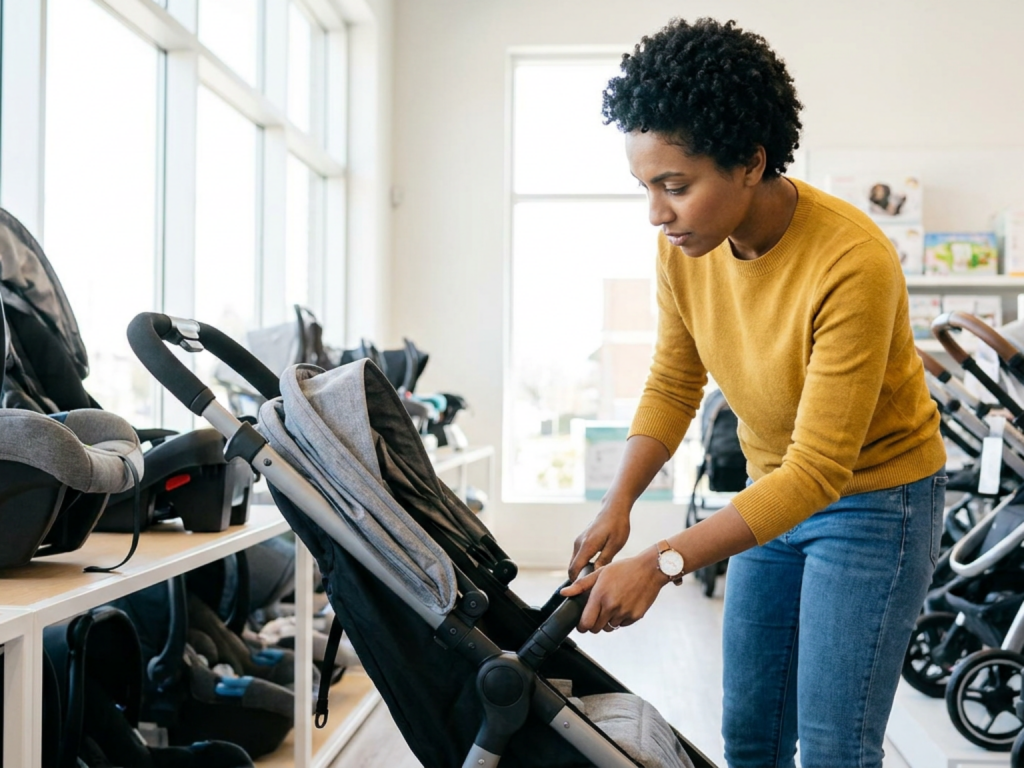
A stroller that is technically safe but exhausting to operate may still create problems. If possible, test-drive it before purchasing. Put weight in the seat or try it with your child if appropriate. Push it one-handed, turn in a tight aisle, lift the front wheels as if going over a curb, and fold it while holding a diaper bag. Notice whether the fold locks automatically and whether the folded stroller stands upright or falls open.
Storage needs are personal. A large basket can be helpful for diapers, feeding supplies, weather layers, and groceries. However, bigger storage should not tempt you to overload the stroller beyond its limit. Safe stroller storage basket use means keeping weight low and centered and avoiding heavy handlebar bags unless the manufacturer approves them.
Consider cleaning and maintenance. Babies spit up, leak diapers, drop snacks, and track in dirt. Removable washable fabrics, accessible crevices, and durable wheels can save frustration. If you live in a rainy or snowy climate, check whether replacement parts, rain covers, and wheel maintenance are realistic.
Measure instead of guessing. Compare stroller width with your doorway, elevator, car trunk, hallway, and storage closet. For air travel, confirm folded dimensions and airline policies. For public transit, ask yourself whether you can fold the stroller quickly while safely holding your baby, or whether you need a model that can remain open when permitted.
Balance budget, longevity, and accessories
Strollers range from inexpensive basics to premium modular systems. A higher price may buy better suspension, easier folding, longer lifespan, or compatibility with bassinets and second seats, but it does not automatically mean safer. Focus first on fit, function, and verified safety features.
Think through the first two years. Will you have another child soon and need a stroller that converts to a double? Will you mostly babywear early on and need only a compact stroller later? Do you need an infant car seat adapter now, or would a bassinet be more comfortable for long walks? Buying for your real future can prevent duplicate purchases, but overbuying features you will not use can add cost and storage burden.
Accessories should be chosen cautiously. Manufacturer-approved rain covers, mosquito nets, parent consoles, snack trays, and ride-along boards may be useful. Unapproved hooks, cup holders, fans, padding, and toys can affect balance, entanglement risk, or restraint fit. If you add accessories, re-check folding, braking, and tip stability.
Finally, allow room for emotion. New parents are often making this decision while tired, pregnant, postpartum, or worried about getting everything right. You do not need the perfect stroller for every possible scenario. You need a safe, practical stroller that supports your family’s mobility and your baby’s developmental needs. If you are unsure between two options, choose the one you can use consistently and safely on your most common days.
When to seek professional guidance
Most healthy term infants can use standard stroller options that match their age and the manufacturer’s instructions. Still, some situations deserve individualized guidance. Ask your pediatrician, physical therapist, occupational therapist, pulmonologist, cardiologist, or neonatal follow-up clinician if your baby has prematurity, low tone, delayed motor milestones, positional plagiocephaly, torticollis, airway abnormalities, oxygen needs, feeding tubes, seizures, casts, braces, or suspected hip dysplasia.
You should also seek advice if your baby consistently slumps, seems to work harder to breathe, turns blue or pale, vomits frequently in semi-upright positions, cannot maintain head alignment, or appears unusually sleepy or difficult to rouse during stroller use. These signs do not mean the stroller caused a medical condition, but they do mean positioning and overall health should be reviewed.
For families using both a car seat and stroller, a certified child passenger safety technician can help with installation and harness fit, while your pediatric clinician can advise on medical positioning concerns. If you want a broader safety review after purchasing, How to use stroller safely can be a helpful next topic to explore alongside the stroller manual.
Safety cautions
- Do not use a stroller seat for a newborn unless it is approved for birth or provides the required recline and support.
- Do not add unapproved pillows, inserts, strap covers, or padding around your baby’s head or body.
- Do not hang heavy bags from the handlebar, because this can increase tip-over risk.
- Do not jog with a young infant unless the stroller manufacturer and your pediatrician indicate it is appropriate.
- Seek medical advice if your baby slumps, has color changes, noisy breathing, or seems difficult to wake in the stroller.
Tools & Assistance
- Measure your car trunk, doorway, elevator, and storage space before shopping.
- Bring a weighted diaper bag to the store and practice folding, lifting, braking, and steering.
- Check manufacturer age, weight, recline, car seat compatibility, and accessory instructions.
- Search for recalls before buying a used stroller.
- Ask a pediatrician, therapist, or certified child passenger safety technician for individualized concerns.
FAQ
Can a newborn ride in any stroller?
No. A newborn needs a stroller configuration approved for birth, such as a deep recline, bassinet, or compatible infant car seat used according to instructions.
Is a travel system necessary?
Not always. It can be convenient for car-dependent families, but some families prefer a bassinet stroller, baby carrier, or compact stroller later.
When can I use a jogging stroller?
Follow the stroller manufacturer’s age guidance and ask your pediatrician before running, especially for infants with prematurity or medical concerns.
Is it safe to buy a used stroller?
It can be, but check for recalls, missing parts, brake function, frame damage, harness integrity, and access to the original manual.
Which stroller feature matters most?
There is no single feature for every family. Prioritize age-appropriate positioning, reliable brakes, a secure harness, stability, and ease of use in your daily environment.
Sources
- Consumer Reports — Choose the Right Stroller for Your Family
- Babylist — How to Choose a Stroller
- Babies in Bloom — Stroller 101 Guide: How to Choose the Best Baby Stroller
Disclaimer
This article is for informational purposes only and does not replace medical advice. Consult your pediatrician or another qualified healthcare professional for concerns about your baby’s positioning, breathing, development, or special medical needs.













Please log in to leave a comment.