
Intro
Diaper rash is common, but that does not make it any less stressful for families. The good news is that many cases can be prevented with consistent hygiene, gentle skin care, and a few practical diapering habits that reduce moisture, friction, and irritant exposure.
This article focuses on prevention rather than treatment. It is written for parents and caregivers who want a medically grounded, realistic routine for protecting an infant’s skin, while recognizing that persistent or severe rash should be reviewed by a healthcare professional.
Highlights
Frequent diaper changes matter because prolonged contact with urine and stool increases skin irritation. Prompt changes are one of the most effective prevention steps.
Gentle cleansing is usually better than scrubbing. Water, mild soap, and alcohol-free, fragrance-free wipes can clean the skin without adding extra irritants.
Dry skin is protected skin. Allowing the diaper area to air dry and keeping the diaper fit loose enough can reduce moisture and friction.
Barrier products such as zinc oxide or other ointments may help protect the skin surface, especially when a baby is prone to irritation.
If a rash looks infected, is worsening, or does not improve with routine care, a clinician should evaluate it rather than guessing at the cause.
Why diaper hygiene prevents rash
The diaper area is a warm, enclosed environment that can trap moisture and expose skin to irritants for long periods. Urine, stool, and friction from a wet or tightly fitted diaper can weaken the skin barrier, making the skin more vulnerable to inflammation.
Prevention works by lowering those triggers. The main goals are simple: remove stool and urine quickly, clean gently, reduce rubbing, and keep the area as dry as possible. Those measures do not require elaborate products; they rely mostly on consistency and technique.
Change diapers promptly and consistently
Frequent diaper changes are one of the most important hygiene habits. A wet or soiled diaper left on for too long increases the time skin is exposed to irritants, and prolonged moisture can soften the skin surface and make it more easily damaged.
In practice, this means changing diapers as soon as possible after stooling and checking wet diapers regularly, especially in newborns and infants who stool frequently. Overnight, some babies may still need a change if the diaper is heavily soiled or leaking.
Clean the skin gently
Cleaning should remove residue without causing extra abrasion. Many clinicians recommend using water, a soft cloth, or alcohol-free, fragrance-free wipes. If soap is used, it should be mild and rinsed well so residue does not linger on the skin.
Avoid scrubbing or repeated wiping over the same spot. Patting or blotting is usually gentler than rubbing. If stool is stuck to skin folds, moisten the area and wipe carefully rather than using force. The goal is clean skin, not a polished surface.
Let the area dry before re-diapering
After cleaning, allow the skin to dry completely when possible. Air drying can help reduce trapped moisture, and even a short pause before putting on a fresh diaper may be useful if the skin is already irritated.
Moisture can collect in skin folds, so those areas deserve special attention. A clean towel can be used to gently pat dry, but avoid vigorous rubbing. If a baby has sensitive skin, any drying step should be as gentle as the cleaning step.
Choose diapers and products that reduce irritation
Diapers that fit too tightly can increase friction and hold moisture against the skin. A looser, properly sized diaper can improve airflow and reduce rubbing at the waist and thighs. Clothing that is too snug can have a similar effect.
Product choice matters too. Fragranced wipes, scented detergents, and fabric softeners can irritate some babies’ skin. If a child seems particularly reactive, simplifying the routine often helps: unscented wipes, fragrance-free laundry products, and minimal topical products unless they are specifically needed.
Use barrier protection thoughtfully
Barrier creams or ointments can add a protective layer between the skin and moisture. Zinc oxide barrier cream is commonly used because it can help shield the skin surface from irritants. Some families also use petrolatum-based ointments, depending on their clinician’s advice and the baby’s skin sensitivity.
For prevention, barrier products are most useful when applied to clean, dry skin and used regularly in babies who are prone to irritation. They are not a substitute for changing diapers promptly, but they can support the skin barrier when exposure cannot be fully avoided.
Build a routine that is easy to sustain
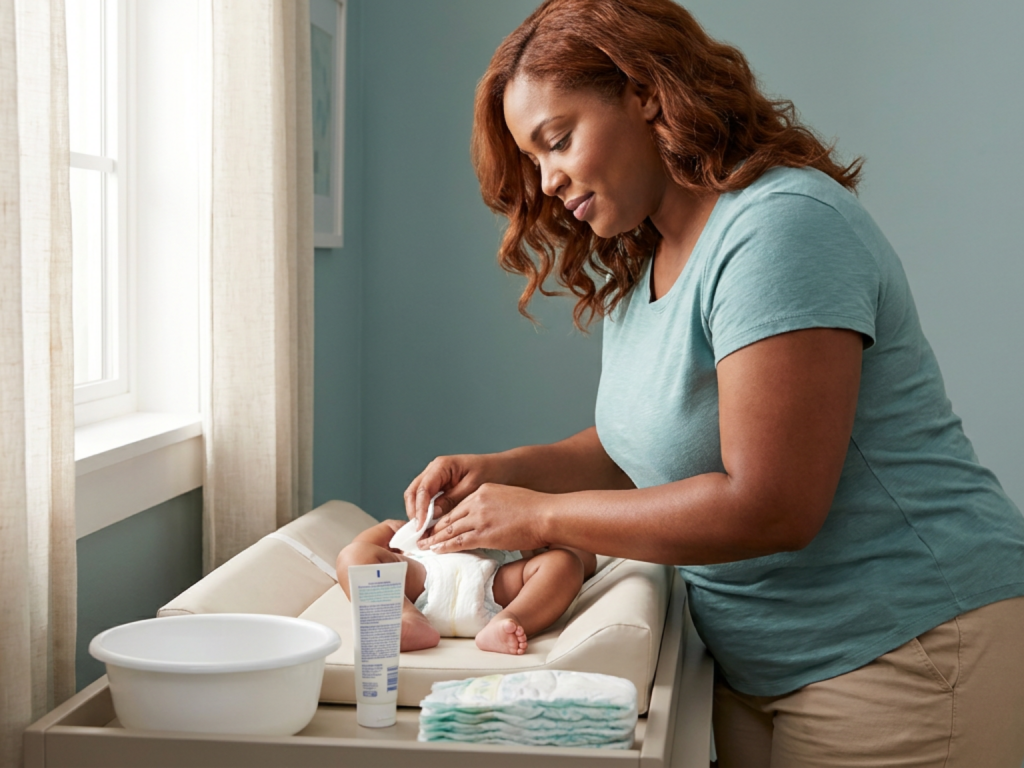
The best prevention plan is one that caregivers can repeat many times a day without strain. Setting up wipes, clean diapers, and barrier products within arm’s reach helps make diaper changes thorough and calm rather than rushed.
It also helps to think of diapering as skin care, not just cleanup. A consistent routine lowers the chance that small irritations will turn into a more significant rash. For babies with repeated episodes, it may be worth reviewing the whole routine with a pediatrician or dermatologist to identify hidden triggers.
When to seek medical care
- The rash is spreading, blistering, or looks infected.
- There is pus, crusting, fever, or significant pain.
- The skin is not improving despite careful hygiene.
- You see bright red folds, satellite bumps, or recurrent rash that keeps returning.
- Your baby seems unwell, feeds poorly, or has fewer wet diapers than expected.
Tools & Assistance
- Pediatrician or family doctor for persistent rash or unclear symptoms
- Dermatologist if the skin problem is severe, recurrent, or hard to control
- Alcohol-free, fragrance-free baby wipes
- Mild soap and water for gentle cleansing when appropriate
- Zinc oxide barrier cream or a clinician-recommended ointment
FAQ
How often should I change diapers to help prevent rash?
Change promptly after stooling and check wet diapers regularly. The main goal is to keep urine and stool from staying on the skin for long periods.
Are wipes bad for diaper-area skin?
Not necessarily. Alcohol-free, fragrance-free wipes are commonly recommended. If a baby seems sensitive, water and a soft cloth may be gentler.
Should I use powder to keep the skin dry?
Powders are not routinely needed for prevention, and many families do well without them. Ask a healthcare professional before using any drying product on an infant’s skin.
Can barrier cream prevent diaper rash?
It can help protect the skin from moisture and irritants, especially when applied to clean, dry skin. It works best along with frequent diaper changes and gentle cleansing.
When should I call a doctor?
Call if the rash is severe, worsening, looks infected, or does not improve with good hygiene. Medical evaluation is also important if your baby seems unwell.
Sources
- American Academy of Dermatology — How to treat diaper rash
- Nemours KidsHealth — Diaper Rash Causes & Prevention
- Boston Children's Hospital — Diaper Rash
Disclaimer
This article is for general education only and is not a substitute for medical advice, diagnosis, or treatment. If you are concerned about a rash or your baby’s condition, contact a qualified healthcare professional.














Please log in to leave a comment.