
Intro
Dry skin is common in babies, especially in the first months of life when the skin barrier is still maturing. That can make the skin lose water more easily, become rough or flaky, and feel uncomfortable even when the baby otherwise seems well. A thoughtful routine is less about doing a lot and more about using a few gentle, consistent steps that protect the skin barrier.
This article explains how to build a practical baby dry skin care routine using evidence-based, baby-safe habits: brief lukewarm baths, careful cleansing, early attention to moisture, and cloth-and-diaper choices that reduce irritation. Because every infant is different, especially newborns and premature babies, use this as general guidance and check with a healthcare professional if the dryness is persistent, severe, or associated with rash or discomfort.
Highlights
Baby skin is thinner and more permeable than adult skin, so dryness can worsen quickly if the barrier is irritated by hot water, frequent soap use, or fragranced products.
Gentle bathing can help when done briefly with lukewarm water and mild cleanser used only where needed.
Moisturizers and emollients support the skin barrier by reducing transepidermal water loss and improving softness and comfort.
Newborns, and especially premature infants, often need the simplest routine first: plain water cleansing early on and cautious product introduction later.
Persistent or severe dryness may reflect eczema, infection, or another condition that needs clinical assessment rather than more home care.
Why baby skin becomes dry so easily
Infant skin is still developing its barrier function. Compared with older children and adults, it loses water more readily and is more vulnerable to friction, over-cleansing, heat, and fragrance exposure. That is why a baby can look fine one day and then develop flaking, patchiness, or redness after a few days of overly frequent washing or a new product.
For many babies, dryness is not a disease on its own but a sign that the skin barrier needs support. In practical terms, that means reducing unnecessary cleansing, avoiding harsh surfactants, and restoring lipids and hydration with a suitable moisturizer or emollient. In the earliest newborn period, the routine is often intentionally minimal because the skin barrier is still adapting to life outside the womb.
Start with a gentle bathing routine
A baby dry skin care routine usually begins with bathing habits. Dermatology guidance emphasizes short baths, lukewarm water, and soap only on visibly dirty areas. Long, hot baths can strip away surface lipids and make dryness worse, so it is better to keep bathing brief and calm.
For newborns, some guidance recommends plain water cleansing at first and avoiding soaps and wipes during the earliest weeks, particularly while the skin barrier is immature. For older infants, a mild liquid baby cleanser may be reasonable. In one randomized pilot study of infants with dry skin, bathing with a mild liquid baby cleanser followed by a baby lotion was gentler than water alone or water plus lotion, and it improved skin moisture, barrier function, pH, and clinical skin features. That does not mean every baby needs the same regimen, but it supports the idea that very mild cleansing plus moisturization can be a sensible approach.
- Use lukewarm, not hot, water.
- Keep bath time short.
- Clean only the parts that need it unless your clinician advises otherwise.
- Pat skin dry gently rather than rubbing.
Choose moisturizers and emollients that support the barrier
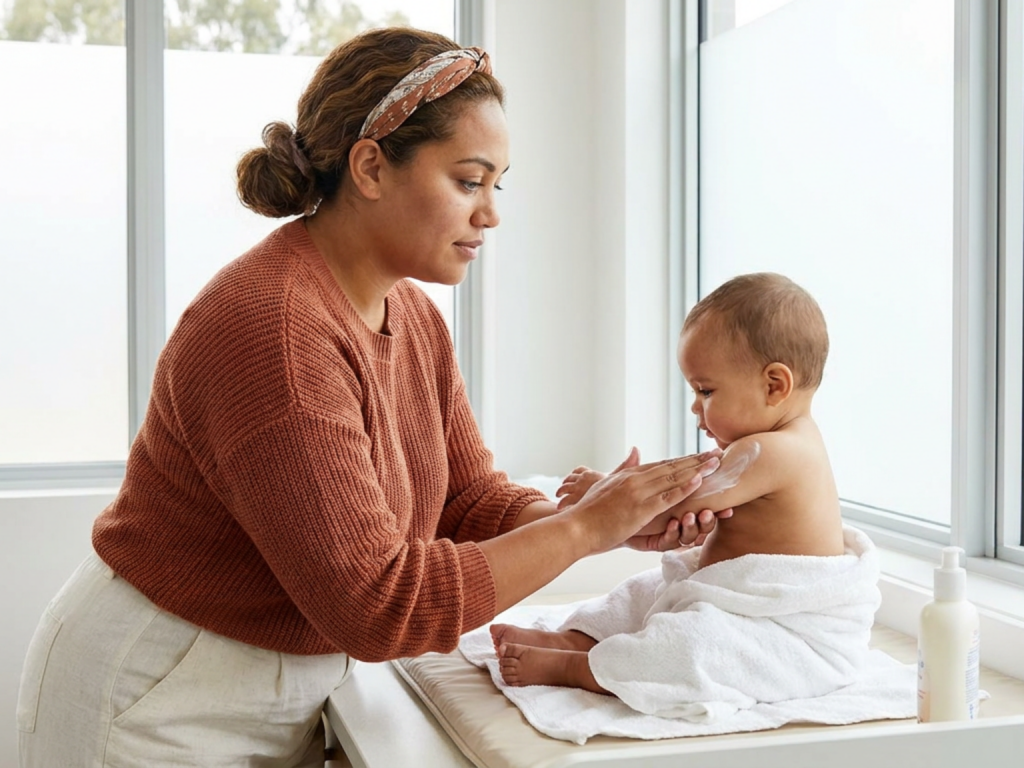
Moisturizing is the central step for many babies with dry skin. A moisturizer creates an occlusive or semi-occlusive layer that helps reduce transepidermal water loss, which is the passive evaporation of water through the skin. Emollients can also smooth rough surface scales and make the skin feel less tight or itchy.
For older infants, applying a fragrance-free moisturizer soon after bathing is often helpful because damp skin is more receptive to hydration. The AAD recommends moisturizing dry skin, and the infant study above supports a routine in which cleanser and lotion are used together rather than leaving the skin unprotected after bathing. Newborn guidance is slightly more conservative: emollient-based creams are usually introduced after the barrier has matured, and premature babies may need especially cautious product selection because their skin is even more fragile.
When choosing a product, simplicity matters. Fragrance-free formulas are preferable, and many families do best with a plain, bland emollient rather than a product marketed with multiple active ingredients. If you are unsure which texture or base is right for your baby, a pediatrician or dermatologist can help match the product to the skin pattern and age.
Protect the diaper area and the rest of the skin
Dry skin care is not only about the bath. The diaper area, clothing, and laundry products can all influence how comfortable the skin feels. Frequent diaper changes reduce prolonged exposure to moisture and irritants, which is important because irritated skin can become dry, inflamed, or both. In the diaper region, barrier products such as petroleum-based or zinc-based preparations are commonly used to protect the skin from urine and stool exposure.
Outside the diaper area, clothing and bedding should be washed with fragrance-free detergent when possible. This reduces exposure to perfumes and other additives that may irritate sensitive skin. Soft, breathable fabrics can also help by limiting friction and heat buildup. If a baby has dry patches in skin folds, the neck, or behind the knees, think about both cleansing habits and clothing friction rather than assuming the problem is only the moisturizer choice.
- Change diapers promptly.
- Use fragrance-free laundry products for baby clothing and bedding.
- Choose gentle fabrics that do not rub or trap too much heat.
- Consider barrier ointments for the diaper area if recommended by a clinician.
Build a simple routine that is easy to repeat
The most effective skincare routine is usually the one caregivers can do consistently. A simple pattern works well: brief bath when needed, gentle pat-dry, apply moisturizer or emollient to dry areas, and then dress the baby in soft, clean clothing. If the baby is very young, your routine may be even simpler, with plain water cleansing and minimal product use until the skin barrier matures.
Consistency matters because barrier repair is cumulative. It is often better to do a few safe, repeated steps than to rotate through many products in search of a quick fix. Families sometimes worry that they must bathe daily to keep the skin clean, but for many babies, especially those without heavy soiling, frequent long baths are unnecessary. What matters more is avoiding triggers and keeping the skin comfortable.
If you are caring for a baby with recurrent dryness, it can help to keep a small log of bathing frequency, products used, and when flare-ups happen. That record can be useful if you later speak with a pediatrician or dermatologist.
Know when dryness needs medical attention
Dry skin is common, but not every dry patch should be managed the same way at home. A clinician should assess a baby if the skin is very inflamed, painful, cracked, oozing, crusted, or associated with a widespread rash. Persistent itching, sleep disruption, fever, poor feeding, or signs of infection also deserve prompt medical review.
It is especially important to seek advice if the baby is a newborn or premature infant, because their skin barrier is less mature and they can be more easily irritated by products that are harmless for older infants. Healthcare professionals can help distinguish simple xerosis, which means dry skin, from eczema, contact irritation, seborrheic dermatitis, or infection. They can also advise whether a particular cleanser, ointment, or emollient is appropriate for your baby’s age and skin pattern.
If you have been trying several products without improvement, that is another good reason to ask for help rather than adding more ingredients. Sometimes the safest next step is simply a more targeted plan.
When to get medical advice
- The skin is cracking, bleeding, oozing, or forming crusts.
- Dryness is severe, widespread, or not improving with gentle care.
- The baby seems itchy, uncomfortable, or sleeps poorly because of the skin.
- There is fever, poor feeding, or concern for infection.
- The baby is premature or very young and the skin reaction is worsening.
Tools & Assistance
- Pediatrician or family doctor for age-appropriate skincare guidance
- Pediatric dermatologist for persistent dryness, eczema, or diagnostic uncertainty
- Fragrance-free baby cleanser and moisturizer with simple ingredients
- Fragrance-free laundry detergent for baby clothes and bedding
- Plain water, lukewarm bath setup, and soft towels for gentle daily care
FAQ
How often should I bathe a baby with dry skin?
Often less is more. Short, lukewarm baths are usually gentler than long or frequent hot baths, and some newborns only need plain water cleansing at first.
Should I use soap on my baby every day?
Usually not on every body area. Dermatology guidance recommends fragrance-free soap only on dirty areas, because frequent full-body soap use can worsen dryness.
Is lotion safe for a newborn?
It depends on the baby’s age and skin maturity. Newborn guidance is cautious about introducing products too early, so it is best to ask your clinician before starting emollients in the first weeks.
What kind of moisturizer is best?
A fragrance-free, bland moisturizer or emollient is often preferred. A pediatrician or dermatologist can help you choose a product that fits your baby’s age and skin needs.
When should I worry that it is more than simple dryness?
If the skin is very red, itchy, cracked, oozing, crusted, or the baby seems unwell, seek medical advice because eczema or infection may need evaluation.
Sources
- PubMed Central — A Randomized Pilot Clinical Assessment Of Three Skincare Regimens For The Treatment Of Infants With Dry Skin
- American Academy of Dermatology — How to care for your baby's skin, hair, and nails
- NHS North Lincolnshire — Skincare for newborn babies
Disclaimer
This article is for general information only and does not diagnose or replace medical care. For a newborn, premature baby, severe dryness, or any rash that worries you, consult a pediatrician or dermatologist.














Please log in to leave a comment.