
Intro
Bringing a newborn home is joyful, tender, and often a little nerve-racking. It is completely understandable to want a clean bubble around your baby, especially in the first weeks when feeding, recovery, sleep deprivation, and family expectations are all happening at once.
Newborn infection prevention is not about sterilizing every part of life or keeping loving relatives away forever. It is about reducing avoidable exposure while your baby’s immune system is still immature, using practical habits such as hand hygiene, visitor screening, vaccination of close contacts, careful cleaning, and prompt medical advice when warning signs appear.
Highlights
Newborns have developing immune defenses, so early exposure to sick visitors, crowded indoor spaces, and respiratory droplets deserves extra caution.
Handwashing, avoiding kisses on the baby’s face or hands, and keeping ill people away are simple measures with meaningful protective value.
Vaccination of parents, siblings, and close caregivers helps create a protective circle around a baby who is too young for many vaccines.
A clean home does not need to be sterile; focus on high-touch surfaces, feeding equipment, diapering areas, and good ventilation.
Any fever or concerning change in a newborn should be discussed urgently with a pediatric clinician, because young infants can become ill quickly.
Why newborn germ protection matters
A newborn’s immune system is functional but still developing. Compared with older infants and adults, newborns have less immunologic memory, a smaller reserve when fighting illness, and limited ability to localize infection. They are also too young for many routine immunizations, which means some protection must come from the environment around them.
Common respiratory viruses, gastrointestinal viruses, and bacterial exposures that cause mild symptoms in adults can be more serious for a newborn. Fever in the first weeks of life is treated cautiously because clinicians must consider infections such as urinary tract infection, bacteremia, meningitis, pneumonia, or viral illness. This does not mean parents should live in fear; it means prevention and early communication with your baby’s healthcare team are especially valuable.
Protection is most important in the early newborn period, during respiratory virus season, after a premature birth, and when a baby has medical complexity such as chronic lung disease, congenital heart disease, or immune concerns. In those situations, your pediatrician may recommend stricter precautions or a tailored plan.
Set visitor boundaries before anyone arrives
Visitors can bring love, meals, and emotional support, but they can also bring pathogens before they realize they are contagious. A clear visitor plan is one of the most effective ways to protect a newborn without improvising during an awkward doorstep moment.
- Ask anyone with fever, cough, sore throat, vomiting, diarrhea, rash, cold symptoms, or recent infectious exposure to postpone the visit.
- Keep early visits short, calm, and limited to a small number of healthy adults.
- Avoid crowded indoor gatherings during the first weeks, especially in peak respiratory virus seasons.
- Require handwashing before touching the baby, feeding supplies, pacifiers, or the baby’s sleep space.
- Ask visitors not to kiss the baby’s face, mouth, hands, or feet, because newborns often bring their hands and feet near the mouth.
You can be warm and firm at the same time. A simple message such as, “We are keeping visits small and illness-free while the baby is brand new,” is not rude; it is medically reasonable. If someone feels disappointed, that feeling does not outweigh your baby’s safety.
Make hand hygiene the household default
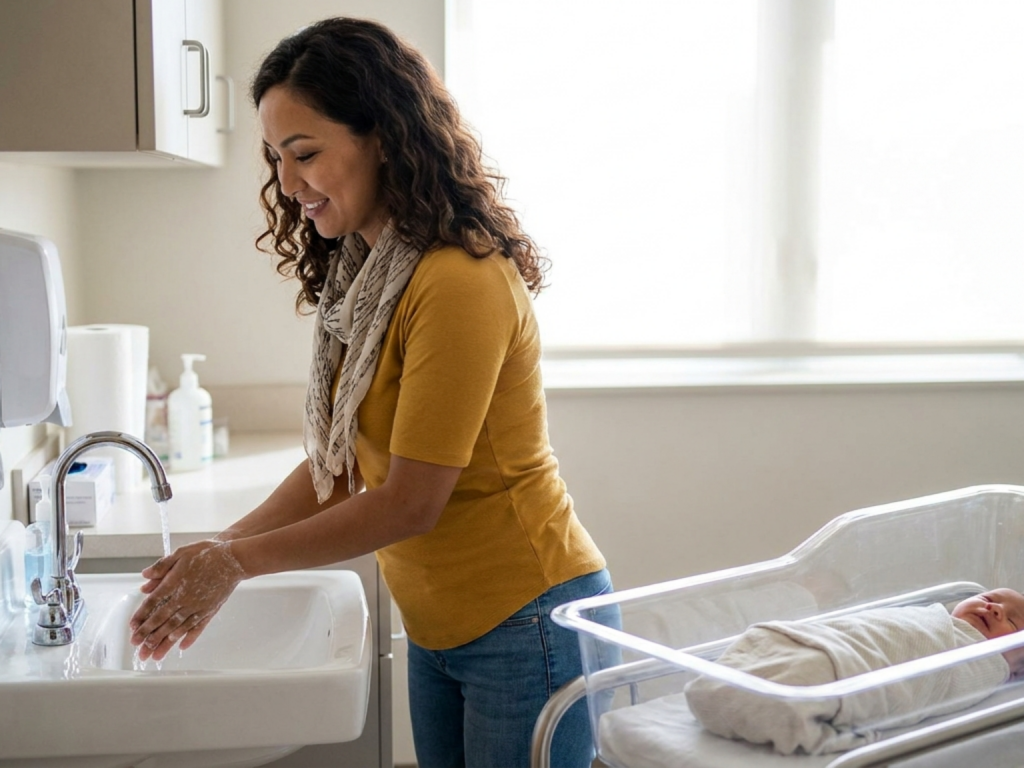
Hand hygiene is basic, but it remains one of the strongest everyday defenses against infection. Germs move easily from phones, door handles, kitchen surfaces, diapering areas, tissues, pets, and older siblings to a newborn’s mouth, eyes, and nose.
Wash hands with soap and running water for at least 20 seconds, especially before feeding, after diaper changes, after bathroom use, after coughing or sneezing, after handling raw food, after coming home from public places, and before preparing bottles or pumping equipment. Alcohol-based hand sanitizer can be useful when soap and water are not available, but visibly dirty hands should be washed.
Place sanitizer near the entrance, feeding chair, and diapering area, but keep it out of children’s reach. For older siblings, make handwashing part of the greeting ritual: shoes off, hands washed, then baby time. This protects the newborn while giving the sibling a predictable role.
Use smart cleaning, not constant sterilizing
A newborn does not need to live in a sterile environment. In fact, trying to disinfect every object all day can become exhausting and may increase stress without adding meaningful protection. A better approach is targeted hygiene.
- Clean high-touch surfaces such as counters, faucet handles, remote controls, phones, doorknobs, and changing tables regularly.
- Keep diapering supplies separate from feeding supplies, and clean the changing area after soiling.
- Wash burp cloths, bibs, towels, and baby clothes when wet or soiled.
- Follow manufacturer and pediatric guidance for cleaning bottles, nipples, pacifiers, breast pump parts, and formula preparation equipment.
- Do not share utensils, cups, toothbrushes, or pacifiers between adults, siblings, and the newborn.
Ventilation also matters. When practical and safe, fresh air or improved indoor airflow can reduce concentration of respiratory particles. Avoid cigarette smoke, vaping aerosols, and strong fumes around the baby; a smoke-free newborn sleep environment supports respiratory health and is also part of safer infant care.
Reduce respiratory droplet exposure
Many newborn infections spread through droplets and aerosols from talking, coughing, sneezing, kissing, and close face-to-face contact. Because adults can be contagious before symptoms are obvious, prevention should not depend only on whether someone “looks sick.”
Ask visitors to avoid putting their face close to the baby’s face. Kissing the top of the head may seem harmless, but avoiding kisses entirely is often simpler and safer during the early weeks, particularly if cold sores, respiratory symptoms, or recent illness are possible. Herpes simplex virus, influenza, RSV, COVID-19, and other infections can be dangerous for young infants.
If a parent or primary caregiver becomes ill, contact your pediatrician for individualized advice. Depending on the illness, recommendations may include masking while close to the baby, meticulous hand hygiene, avoiding kissing, continuing feeding with precautions, or arranging help from a healthy caregiver. Do not stop breastfeeding or change feeding plans solely because of mild illness without discussing your situation with a healthcare professional.
Build a protective vaccine circle
Newborns cannot immediately receive all the vaccines that will later protect them. This makes “cocooning” important: reducing risk by ensuring close contacts are up to date on recommended immunizations. Parents, siblings, grandparents, babysitters, and frequent visitors should speak with their own clinicians about vaccines such as Tdap, seasonal influenza vaccine, and COVID-19 vaccination, as appropriate for their age, health status, and local guidance.
Tdap helps protect against pertussis, also called whooping cough, which can be severe in infants. Flu and COVID-19 vaccines reduce the chance that caregivers bring serious respiratory infections into the home. Maternal vaccination during pregnancy may also provide passive antibody protection for the newborn, depending on the vaccine and timing, but postpartum caregiver vaccination still matters.
Your baby’s own immunization schedule is another layer of protection. The hepatitis B vaccine at birth is an early example of newborn preventive care, and later routine vaccines help protect against multiple serious infections. If your baby was premature or has medical concerns, ask the pediatrician whether the schedule or additional preventive measures need special planning.
Feeding, sleep, and daily care considerations
Feeding routines can either reduce or spread germs, depending on how they are handled. Before breastfeeding, bottle-feeding, pumping, or preparing formula, clean hands are essential. If using bottles or pumping equipment, follow safe cleaning and storage recommendations. Prepared formula and expressed milk should be handled according to pediatric guidance, because bacteria can grow when milk is stored or warmed improperly.
Breast milk contains antibodies and other immune-active components that can support infant defenses, although it does not make a baby infection-proof. Families who formula-feed can also protect their baby very effectively through safe preparation, clean equipment, and consistent hygiene.
Sleep routines also intersect with infection prevention because congestion, overheating, smoke exposure, and unsafe sleep products can increase risk. Safe sleep basics for newborn care include placing the baby on the back for sleep, using a firm, flat infant sleep surface, and keeping the sleep space free of loose bedding and soft objects. These practices do not replace germ prevention, but together they support overall newborn safety.
When other caregivers help, show them exactly How to hold a newborn safely, where clean supplies are stored, and what rules your family follows about handwashing, kissing, masks, and illness. Clear routines prevent confusion when everyone is tired.
When to seek medical advice
Even careful families cannot prevent every infection. The goal is to reduce risk and respond early if something seems wrong. Newborns may show illness subtly, and a clinician would rather hear from you early than have you wait through concerning symptoms at home.
Contact your baby’s healthcare professional urgently if your newborn has a fever, unusually low temperature, poor feeding, repeated vomiting, fewer wet diapers, increasing sleepiness, limpness, breathing difficulty, bluish color around the lips, persistent irritability, a new rash with illness, or any behavior that feels significantly different from normal. Follow the temperature method and fever threshold provided by your pediatrician, because recommendations can vary by age and clinical context.
Trust your observations. Parents and close caregivers often notice meaningful changes before they can describe them perfectly. If your baby is premature, under one month old, medically fragile, or has known immune or cardiac conditions, ask in advance what symptoms should trigger immediate care.
Call promptly for red flags
- Fever or abnormal temperature in a young newborn needs urgent professional guidance.
- Trouble breathing, blue lips, pauses in breathing, or grunting require immediate medical attention.
- Poor feeding, marked sleepiness, limpness, or fewer wet diapers can signal significant illness.
- Keep anyone with cold sores, fever, vomiting, diarrhea, cough, or rash away from the newborn.
- Do not give over-the-counter medicines, herbal remedies, or leftover prescriptions without pediatric advice.
Tools & Assistance
- A visitor screening message prepared before delivery or discharge
- Soap, hand sanitizer, and disposable tissues placed near care areas
- A vaccine checklist for parents, siblings, and frequent caregivers
- A thermometer and written pediatrician instructions for newborn temperature concerns
- A cleaning routine for feeding equipment, diapering surfaces, and high-touch household items
FAQ
Should newborns have visitors in the first weeks?
Visitors are not automatically unsafe, but they should be limited, healthy, vaccinated when appropriate, and willing to wash hands and avoid kissing the baby. Families may choose stricter rules during respiratory virus season or if the baby is premature.
Is it okay for grandparents to kiss the newborn?
It is safest to ask all visitors, including grandparents, not to kiss a newborn’s face, mouth, hands, or feet. This reduces exposure to respiratory viruses and infections such as herpes simplex.
Do I need to disinfect the whole house every day?
No. Targeted cleaning is usually more practical: focus on hands, feeding supplies, diapering areas, high-touch surfaces, and keeping sick people away. A clean home does not need to be sterile.
Can breastfeeding protect my baby from germs?
Breast milk provides antibodies and immune-supportive factors, but it does not prevent every infection. Hand hygiene, safe feeding practices, vaccination of close contacts, and avoiding sick visitors remain important.
What if an older sibling brings home a cold?
Encourage handwashing, avoid face-to-face contact while symptomatic, do not share cups or utensils, and ask your pediatrician what precautions are appropriate for your newborn’s age and health.
Sources
- Johns Hopkins Medicine — New Parents and Newborns: Are Visitors OK?
- American Academy of Pediatrics — How to Protect a Baby from Germs
- The Lullaby Trust — Preventing infection
Disclaimer
This article is for general educational purposes and is not a substitute for medical advice, diagnosis, or treatment. Always consult your pediatrician or another qualified healthcare professional about newborn symptoms, fever, vaccination, or infection concerns.












Please log in to leave a comment.