
Intro
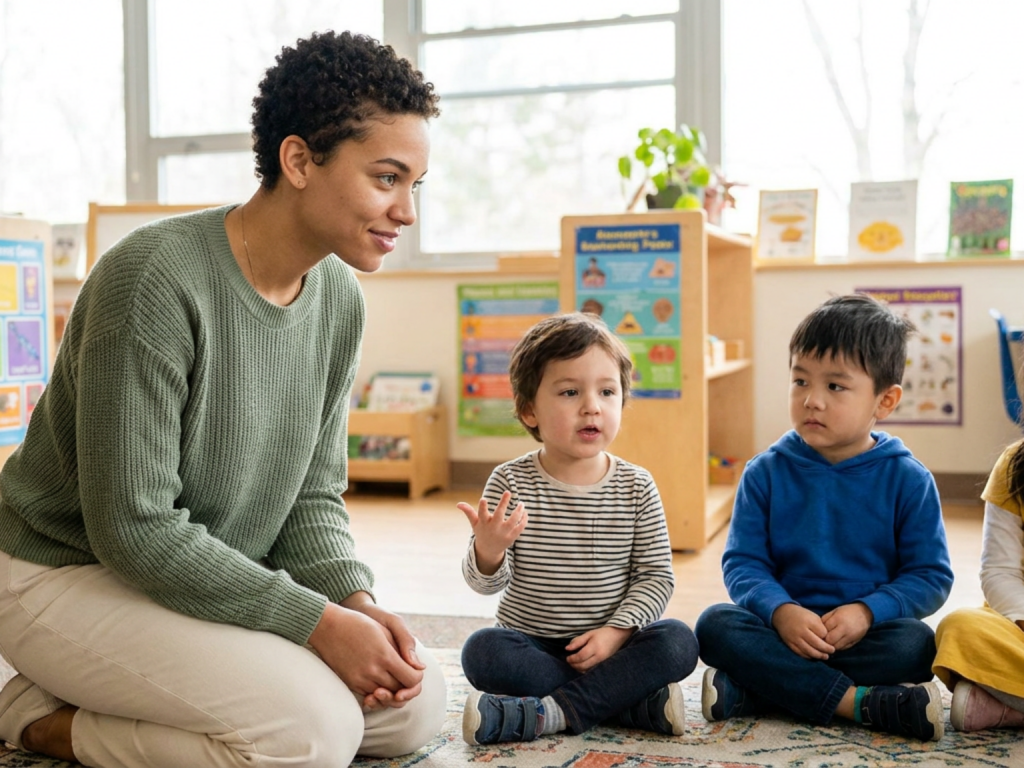
Children learn how to communicate long before they can explain what respect means. They absorb tone, pacing, facial expression, turn-taking, repair after conflict, and the way adults respond when emotions are high. For parents, respectful communication is not about creating a perfectly calm household; it is about building repeated, trustworthy experiences in which children feel heard while also learning boundaries, empathy, and accountability.
Highlights
Respectful communication is a teachable set of behaviors: listening fully, taking turns, using clear words, and repairing harm after conflict.
Children are more likely to listen respectfully when they have repeatedly experienced being listened to by calm, responsive adults.
Listening is both a skill and a value; it communicates safety, dignity, and curiosity about another person’s perspective.
Development matters: a toddler, a school-age child, and a teenager will show respect differently, especially under stress.
Persistent communication struggles, extreme withdrawal, aggression, or sudden changes in behavior may warrant guidance from a pediatrician, child psychologist, or other qualified professional.
Respectful communication begins with the nervous system
Respectful communication is often described as good manners, but it is also closely related to self-regulation. A child who is tired, hungry, overstimulated, anxious, or developmentally overwhelmed may have limited capacity for polite language or careful listening. The prefrontal cortex, which supports impulse control, perspective-taking, planning, and inhibition, matures gradually across childhood and adolescence. This does not excuse hurtful behavior, but it helps parents respond with realistic expectations.
When adults speak respectfully during stress, they act as an external regulatory system. A steady voice, simple language, and predictable limits can reduce escalation. This process is sometimes called co-regulation: the adult’s regulated presence helps the child’s nervous system return toward stability. Over time, children internalize these patterns and become better able to pause, listen, and respond rather than react.
Respectful communication with children does not mean permissiveness. It means holding dignity and limits at the same time. A parent can say, "I will not let you hit your brother," while also saying, "I can see you are furious that he touched your toy." The first sentence protects safety; the second models emotional recognition.
Listening as a value, not just a technique
Listening becomes a value when children see that understanding another person matters even when we disagree. It is more than being quiet while someone else talks. Effective listening includes attention, body orientation, appropriate eye contact when culturally comfortable, curiosity, and checking whether we understood correctly. Communication guidance from HelpGuide, Harvard Division of Continuing Education, and Monash University all emphasizes giving full attention, avoiding interruptions, and paraphrasing what was heard as core respectful communication habits.
Parents can make listening visible by narrating it: "I want to make sure I understand. You felt left out when your friends started the game without you." This is reflective listening during conflict, and it helps a child feel recognized before problem-solving begins. Feeling heard often reduces defensiveness, making it easier for children to consider another viewpoint.
Listening also teaches social reciprocity. When a child experiences an adult saying, "Tell me more," they are more likely to learn that other people’s inner experiences deserve attention. This is a foundation for empathy, collaborative problem-solving, and moral development.
Everyday habits that teach children to speak respectfully
Respectful communication is built through small, repeated behaviors rather than occasional lectures. Children benefit from concrete scripts and consistent modeling.
- Use names and gentle attention first: Instead of shouting from another room, move closer when possible and say the child’s name calmly.
- State the expectation clearly: "Use a quieter voice at the table" is easier to follow than "Be respectful."
- Model turn-taking: "You speak first for one minute, then your sister gets a turn."
- Teach repair language: "I interrupted you. I’m sorry. Please finish what you were saying."
- Separate feelings from behavior: "It is okay to be angry. It is not okay to call people names."
These habits make respect observable. A child cannot always act on abstract values, but they can practice waiting, using a calmer tone, asking before taking, and trying again after a mistake. Modeling respectful behavior is especially powerful because children copy not only words but also timing, facial expression, and how adults handle frustration.
Teaching listening during conflict
Conflict is one of the most important classrooms for communication. When a child is upset, the adult’s first goal is usually not persuasion; it is de-escalation and understanding. Listening before problem-solving can prevent a conversation from becoming a contest of power.
A useful sequence is: pause, regulate, reflect, set limits, then problem-solve. For example: "You wanted more screen time and I said no. You’re disappointed and angry. The limit is still no more screen time tonight. We can talk about what helps you switch activities." This approach validates the emotional state without removing the boundary.
Parents can also teach children to paraphrase: "Before you answer, tell me what you heard your brother say." This skill slows impulsive responses and strengthens perspective-taking. It can feel awkward at first, especially for children who are used to defending themselves quickly, but it becomes easier with practice.
Repair matters after adults make mistakes too. If a parent yells, interrupts, or dismisses a child, a repair conversation after not listening can be profoundly educational: "I was frustrated and I spoke sharply. That was not the respectful tone I want in our family. I’m going to try again." This models accountability without collapse or shame.
Respect is not the same as obedience
Many families struggle because respect is confused with immediate compliance. Children do need limits, safety rules, and guidance, but respectful communication allows room for questions, feelings, and age-appropriate disagreement. A child can be required to stop unsafe behavior while still being allowed to say, "I’m mad" or "I don’t like that rule."
When respect is defined only as obedience, children may learn to suppress feelings rather than communicate them safely. Conversely, when expression is allowed without boundaries, children may not learn the impact of their words and actions. The healthier middle ground is mutual respect and boundaries: adults remain in charge of safety and structure while also treating the child as a person with thoughts and emotions worth hearing.
For example, a parent might say, "You may disagree with me. You may not insult me." This sentence teaches both voice and responsibility. It also prepares children for school, friendships, healthcare encounters, and future workplaces, where respectful disagreement is a crucial social skill.
Developmentally realistic expectations
A preschooler may interrupt because working memory and impulse control are still immature. A school-age child may understand turn-taking but struggle when embarrassed or overstimulated. A teenager may be capable of sophisticated reasoning but still react intensely when autonomy, identity, or peer belonging feels threatened. Developmentally realistic expectations help parents teach without mislabeling normal immaturity as intentional disrespect.
For younger children, use short phrases, visual cues, and immediate practice: "Hand on my arm means you want a turn to talk." For school-age children, teach conversation rules explicitly: listening face, waiting turn, asking a question, and summarizing what was heard. For adolescents, collaborative discussion often works better than lectures: "What would respectful disagreement look like between us when we both feel strongly?"
Children with neurodevelopmental differences, language disorders, hearing impairment, anxiety, trauma histories, or sensory processing challenges may need tailored support. If a child consistently cannot follow conversational expectations despite patient teaching, consider consulting a pediatrician, speech-language pathologist, occupational therapist, child psychologist, or school support team. The goal is not to diagnose at home, but to understand what support may help.
Creating a family culture of listening
A family culture is formed by what happens repeatedly. If adults routinely interrupt one another, mock emotions, or use sarcasm during conflict, children learn those habits. If adults pause, clarify, apologize, and listen across disagreement, children learn that respect is part of belonging.
Simple rituals can strengthen this culture. At dinner or bedtime, each person can share one good moment and one hard moment while others listen without fixing. During family decisions, parents can invite input while keeping final responsibility: "I want everyone’s ideas about the weekend schedule. I will make the final decision after hearing you."
Positive reinforcement helps. Notice the behavior you want to grow: "You waited until I finished speaking. That helped me listen to you better." Specific feedback is more useful than general praise because it tells the child exactly what to repeat. Over time, active listening with children becomes less of a special strategy and more of the emotional climate of the home.
When communication problems need extra help
All children are rude, impulsive, or inattentive sometimes. Concern rises when difficulties are persistent, impairing, or associated with distress. Sudden withdrawal, loss of previously acquired language or social skills, intense aggression, frequent explosive episodes, school refusal, bullying involvement, self-harm statements, or major changes in sleep, appetite, or mood should be discussed with a qualified healthcare professional.
Parents should also seek support if communication patterns at home feel unsafe or chronically hostile. Family therapy, parent coaching, speech-language evaluation, or mental health support may help identify barriers and teach practical strategies. Asking for help is not a failure of parenting; it is a protective step when a child or family system needs more support than everyday advice can provide.
Use caution when communication concerns are intense or persistent
- Seek urgent help if a child talks about self-harm, harming others, or feeling unsafe.
- Consult a pediatrician or mental health professional for sudden behavioral, mood, sleep, appetite, or social changes.
- Do not assume persistent "disrespect" is willful; hearing, language, neurodevelopmental, anxiety, trauma, or learning factors may contribute.
- Avoid using humiliation, threats, or fear-based discipline; these can worsen emotional dysregulation and reduce trust.
- If family conflict feels unsafe, contact local emergency services, crisis resources, or a qualified professional.
Tools & Assistance
- Use a daily five-minute listening ritual with no correcting, teaching, or multitasking.
- Practice paraphrasing: "What I heard you say is... Did I get that right?"
- Create family conversation rules for turn-taking, tone, name-calling limits, and repair.
- Ask your child’s teacher or school counselor whether communication struggles appear in other settings.
- Consult a pediatrician, child psychologist, speech-language pathologist, or family therapist when concerns are persistent or impairing.
FAQ
How can I teach my child not to interrupt?
Teach a concrete replacement behavior, such as placing a hand on your arm or writing a thought down. Praise brief waiting, and remember that younger children need repeated practice because impulse control is still developing.
Does listening to my child mean I have to agree with them?
No. Listening means trying to understand their perspective. You can validate feelings while maintaining boundaries, such as saying, "I understand you are angry, and the answer is still no."
What should I do if I lose my temper?
Repair promptly and specifically. You might say, "I yelled, and that was not okay. I’m sorry. I will try again in a calmer voice." This models accountability and respectful communication.
Why does my child listen at school but not at home?
Home is often where children release fatigue and emotional load. Differences can also reflect structure, transitions, sleep, sensory demands, or relationship dynamics. If the pattern is severe or worsening, seek professional guidance.
When should I get professional help?
Consider help when communication problems are persistent, cause impairment at home or school, involve aggression or withdrawal, or occur with mood, sleep, appetite, language, or social changes.
Sources
- HelpGuide.org — Effective Communication: Improving Your Interpersonal Skills
- Harvard Division of Continuing Education — 8 Ways You Can Improve Your Communication Skills
- Monash University — Respectful and effective communication
Disclaimer
This article is for general educational purposes and is not a diagnosis or treatment plan. Consult a qualified healthcare professional for concerns about a child’s behavior, development, mental health, hearing, speech, or safety.


















Please log in to leave a comment.