
Intro
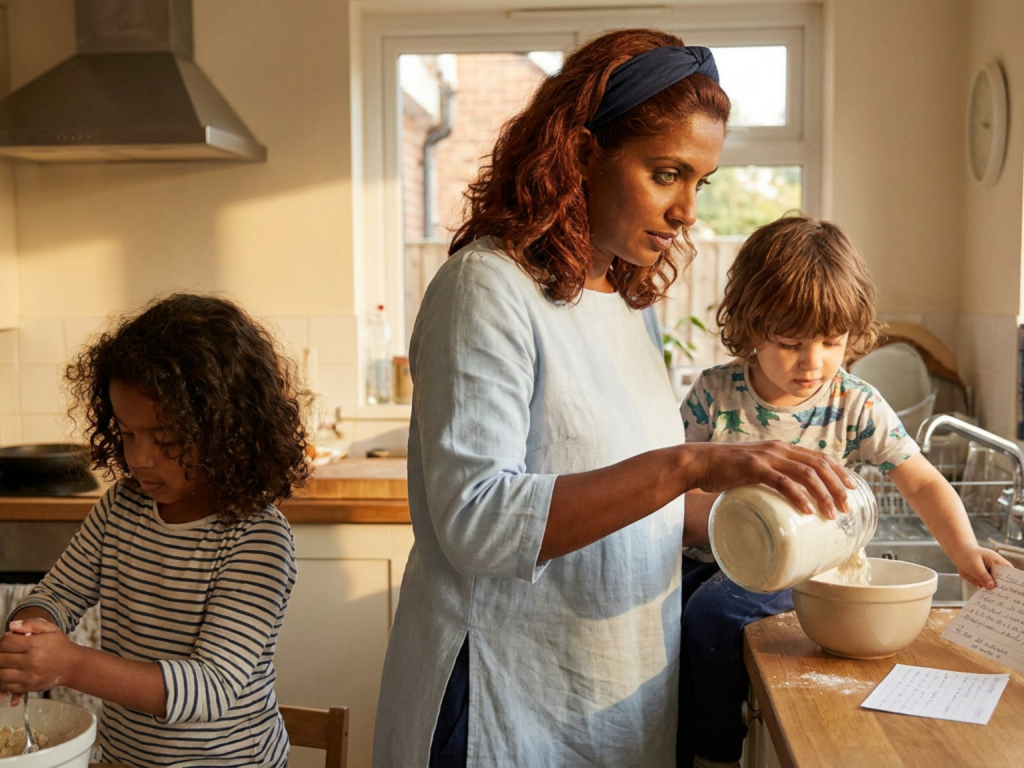
Family traditions and rituals are the repeated practices that help a household feel like itself. They may be as simple as pancakes on Saturday, a bedtime phrase, a birthday walk, a weekly call with grandparents, or a holiday meal prepared in a familiar way. For children, these patterns can become emotional landmarks: cues that say, “I belong here,” “I know what happens next,” and “my family has a story.”
Highlights
Traditions do not need to be elaborate to be meaningful. Small, predictable rituals often have the greatest developmental value because they fit real family life.
Family rituals can support identity, belonging, emotional regulation, and intergenerational connection. Their benefits are strongest when they feel warm rather than compulsory.
Healthy traditions can change over time. Adapting rituals after separation, illness, bereavement, migration, or adolescence is a sign of resilience, not failure.
Rituals should never override safety, medical needs, or a child’s psychological well-being. Families can preserve meaning while modifying practices that cause distress.
What family traditions and rituals really are
A family tradition is a repeated practice that carries meaning. A ritual is often a tradition with a more symbolic or emotionally significant structure: a special greeting, a prayer, lighting candles, telling the same story each year, or preparing a meal associated with family history. The distinction is less important than the function. Both traditions and rituals help organize time, express values, and communicate belonging.
Some rituals are daily, such as a morning hug, a song during bath time, or predictable family routines around dinner and sleep. Others are weekly, seasonal, religious, cultural, or tied to milestones such as birthdays, graduations, first days of school, or memorial days. Families also create “micro-rituals” that outsiders may barely notice: a secret handshake, a phrase said before leaving the house, or a way of checking in after a difficult day.
Importantly, family customs are not static. The Library of Congress emphasizes that family customs are shaped by culture, history, migration, work patterns, religion, and social change. A ritual that began with one generation may be simplified, blended with another culture, or reinterpreted by the next. This flexibility allows families to maintain continuity without being trapped by rigid expectations.
Why rituals matter for children and parents
Children develop within relationships. Repeated family rituals provide external structure that can support internal regulation. In developmental terms, predictable patterns reduce uncertainty and help children anticipate transitions, which may lower stress reactivity in everyday situations. A child who knows that bedtime includes washing, reading, a brief cuddle, and the same goodnight phrase may find separation at night less abrupt.
Rituals also contribute to identity formation. When children hear family stories, participate in cultural customs, or help prepare a traditional food, they learn where they come from and what their family values. WebMD notes that family traditions can strengthen identity, transmit values across generations, and create shared memories.
For parents and caregivers, rituals can reduce decision fatigue. Not every evening needs to be reinvented. A familiar sequence can help the whole household move through predictable pressure points, especially when caregivers are tired. This does not mean the home must be perfectly consistent. Rather, “good enough” repetition often gives children the emotional scaffolding they need.
Rituals can also function as relational repair. A family that has had a tense afternoon may still come back together for a simple evening check-in. Over time, these repeated moments can communicate that conflict does not erase connection.
Everyday rituals: small practices with large emotional weight
Everyday rituals are often more sustainable than elaborate annual events. They work because they are brief, repeated, and tied to natural transitions in the day. They can be especially helpful for young children, neurodivergent children, anxious children, and children coping with change, although individual needs vary and professional guidance may be appropriate when distress is significant.
Examples of everyday rituals include:
- A morning phrase such as “I’m glad to see you today.”
- A shared breakfast song or a calm goodbye routine at the door.
- An after-school transition routine with snack, decompression time, and a short conversation.
- A “rose and thorn” dinner check-in where each person shares one good thing and one hard thing.
- A bedtime sequence that is soothing and developmentally appropriate.
- A weekly reset, such as choosing clothes for Monday, reviewing the calendar, or preparing lunches together.
The most effective rituals are not necessarily the most beautiful. A five-minute ritual that happens with warmth is usually more protective than a complex plan that repeatedly collapses and creates guilt. Families under financial pressure, shift-work schedules, single parenting demands, or caregiving responsibilities may need “minimum version” rituals: one song, one candle, one repeated sentence, one walk around the block.
Cultural, spiritual, and intergenerational meaning
Many families use traditions to carry cultural or spiritual meaning. This might include religious observances, language practices, recipes, music, naming customs, service activities, storytelling, or honoring ancestors. These rituals can be especially important for children growing up between cultures or in communities where their heritage is underrepresented.
Intergenerational rituals help children see themselves as part of a longer narrative. A grandparent teaching a recipe, a caregiver explaining why a holiday is celebrated, or a family looking at old photographs can strengthen continuity. These practices do not have to romanticize the past. Families can tell honest stories that include resilience, migration, hardship, humor, and change.
Blended, adoptive, foster, and chosen families may need particular care around tradition-making. Some children arrive with previous rituals, losses, or loyalties. For them, the goal is not to erase what came before but to create safety and inclusion. A supportive approach might be: “Are there any traditions from before that you would like us to remember?” This respects the child’s attachment history and reduces pressure to assimilate emotionally before they are ready.
Creating traditions without adding pressure
Modern parenting can turn rituals into another performance standard. Social media may amplify the idea that traditions need matching clothing, perfect meals, handmade decorations, or expensive travel. In reality, rituals are most meaningful when they are emotionally safe, accessible, and repeatable.
To create or refresh a tradition, consider these questions:
- What value do we want this ritual to express: connection, gratitude, faith, humor, service, rest, courage, or remembrance?
- Can this ritual survive a busy week, a tight budget, or a tired caregiver?
- Does every child have a role that fits their age, temperament, sensory needs, and abilities?
- Is the ritual flexible enough to change as children become teenagers?
- Does the tradition bring warmth, or has it become a source of shame, conflict, or exhaustion?
Children can help design rituals. Preschoolers may choose a song or color of napkin. School-age children may help cook or plan a game. Teenagers may prefer autonomy, humor, or service-oriented traditions. Inviting their input increases ownership and decreases resistance.
It is also acceptable to retire a ritual. If a tradition no longer fits because of divorce, relocation, disability, food allergy, trauma history, religious change, or family conflict, the family can preserve the underlying value in a new form. For example, a large holiday gathering may become a quiet meal and video call; a food-based ritual may become a storytelling or music ritual if dietary restrictions change.
Rituals during stress, illness, grief, and transition
During stressful periods, rituals can provide orientation. After a move, a new school, a medical diagnosis in the family, parental separation, or bereavement, familiar practices may help children feel that some parts of life remain stable. However, children’s reactions vary. Some may cling to old rituals; others may avoid them because they trigger sadness.
In grief, rituals can support mourning without forcing emotional expression. Lighting a candle, cooking a loved one’s favorite meal, visiting a meaningful place, or sharing one memory can give children a concrete way to participate. Caregivers should avoid insisting that a child “feel” a certain way. Children often grieve intermittently, moving between sadness and play.
When illness affects family life, rituals may need practical modification. A child with asthma may need holiday practices that avoid smoke exposure. A child with food allergy, diabetes, celiac disease, feeding disorder, or gastrointestinal condition may need medically appropriate adaptations to food rituals. A child with sensory processing differences may need quieter gatherings, predictable exits, or reduced tactile demands. Families should consult pediatricians, allergists, dietitians, psychologists, occupational therapists, or other qualified clinicians when health conditions affect participation.
Rituals should support care plans, not compete with them. For example, a family can honor a cultural meal while adjusting ingredients for safety, or preserve a spiritual observance while following medical guidance for medication timing, sleep needs, or infection prevention.
When traditions become harmful or need boundaries
Most traditions are benign or beneficial, but some require rethinking. A ritual may be harmful if it humiliates a child, ignores consent, reinforces exclusion, pressures a child to eat beyond comfort, exposes someone to allergens or unsafe substances, disrupts essential sleep, or forces contact with a person who has been abusive. “We have always done it this way” is not a sufficient reason to continue a practice that compromises safety or dignity.
Caregivers can set boundaries while acknowledging emotional complexity. For example: “I know this tradition matters to our family. We are changing it because our child’s safety comes first.” This type of statement protects the child from being framed as the problem.
If a family ritual is connected with intense conflict, coercive control, substance misuse, traumatic memories, self-harm concerns, or severe anxiety, professional support can be valuable. A pediatrician, family therapist, child psychologist, social worker, faith leader trained in safeguarding, or culturally informed counselor may help the family distinguish meaningful continuity from harmful repetition.
Practical ways to begin this week
Families do not need to overhaul their lives. Start with one small ritual attached to something that already happens. Repetition, warmth, and shared meaning matter more than novelty.
Simple starting points include:
- Choose one predictable mealtime question for the week.
- Create a two-minute goodbye ritual for school or childcare mornings.
- Ask each child to name one family practice they hope never disappears.
- Record a grandparent or older relative telling a short story.
- Make one low-cost seasonal ritual, such as a neighborhood walk to notice changes in weather.
- Set a monthly family service ritual, such as donating food, writing cards, or helping a neighbor.
After trying a ritual, observe the effect. Does the child seem calmer, more connected, or proud to participate? Does the caregiver feel supported rather than burdened? If the answer is no, adjust. A healthy family tradition is allowed to evolve.
When to be cautious
- Do not continue a tradition that exposes a child to known allergens, unsafe foods, smoke, alcohol, drugs, or other medical risks.
- Avoid rituals that shame, frighten, isolate, or coerce a child, even if they are longstanding family customs.
- Seek professional support if family rituals trigger severe anxiety, trauma responses, self-harm concerns, or persistent conflict.
- Modify traditions when a child’s disability, neurodevelopmental profile, sensory needs, or chronic illness makes participation unsafe or overwhelming.
- Consult qualified healthcare professionals before changing diet, medication routines, sleep plans, or therapeutic recommendations for the sake of a tradition.
Tools & Assistance
- A family meeting to choose one small ritual everyone can tolerate and repeat
- A shared calendar for birthdays, cultural observances, medical needs, and school events
- A memory box or digital folder for recipes, photos, voice recordings, and family stories
- Professional support from a pediatrician, family therapist, dietitian, allergist, or child psychologist when health or distress affects rituals
- A simple review after major life changes to decide which traditions to keep, adapt, or retire
FAQ
Do family traditions have to be old to matter?
No. A tradition can begin this week. What makes it meaningful is repetition, emotional safety, and shared significance, not age.
What if my child refuses to participate?
Try to understand the reason. The ritual may be too long, too sensory, too public, developmentally mismatched, or emotionally loaded. Offer choices and adapt rather than forcing participation.
Can divorced or separated parents maintain traditions?
Yes, but flexibility helps. Some rituals can continue in both homes, while others may become new traditions. Children benefit when adults avoid using rituals to compete for loyalty.
Are food traditions safe for children with medical dietary needs?
They can be, but adaptations may be necessary. For allergies, celiac disease, diabetes, feeding disorders, or other conditions, consult the child’s healthcare team for individualized guidance.
How many rituals should a family have?
There is no required number. A few consistent, warm rituals are usually more helpful than many complicated ones that create pressure or conflict.
Sources
- Library of Congress — Family Customs Past and Present: Exploring Cultural Rituals
- Raising Children Network — Why are family traditions & rituals important?
- WebMD — Why Family Traditions Matter
Disclaimer
This article is for general educational purposes only and is not a substitute for medical, psychological, or therapeutic advice. Consult qualified healthcare professionals for concerns about a child’s health, development, behavior, trauma, allergies, diet, sleep, or safety.















Please log in to leave a comment.