
Intro
Advanced maternal age is a clinical term usually used when a pregnant person is expected to be 35 years or older at the time of delivery. Many people in this age group have healthy pregnancies and healthy babies, and the term should not be understood as a judgment about readiness, parenting ability, or inevitable complications. It is simply a marker that helps clinicians tailor counseling, screening, and monitoring.
Pregnancy after 35 is increasingly common. Career timing, partnership, fertility treatment, education, financial planning, and personal preference all play a role. The most helpful approach is not alarm, but individualized risk assessment: age matters, but so do baseline health, obstetric history, genetics, body mass index, blood pressure, diabetes status, medications, lifestyle factors, and whether the pregnancy is singleton or multiple.
Highlights
Advanced maternal age generally means pregnancy at age 35 or older at delivery, but risk rises gradually rather than suddenly on a birthday.
Many pregnancies after 35 are uncomplicated; the goal of extra screening and monitoring is early recognition and prevention where possible.
Fertility decline, miscarriage, chromosomal conditions, gestational diabetes, hypertensive disorders, cesarean birth, preterm birth, and stillbirth are among the concerns discussed in counseling.
For people age 40 or older, some professional guidance supports more intensive fetal surveillance and consideration of delivery timing based on individual circumstances.
Personalized care with an obstetrician, midwife, maternal-fetal medicine specialist, genetic counselor, or fertility specialist can help align medical evidence with personal values.
What does advanced maternal age mean?
Advanced maternal age, often abbreviated AMA, usually refers to pregnancy in a person who will be 35 years or older at delivery. The threshold is widely used in obstetrics because several pregnancy risks become more common with increasing age, particularly after 35 and more noticeably after 40. However, the biology is continuous: risk does not abruptly appear at 35, and a healthy 36-year-old may have a lower overall risk profile than a younger person with significant medical conditions.
The American College of Obstetricians and Gynecologists describes age 35 years or older at delivery as a risk factor for adverse maternal, fetal, and neonatal outcomes. This does not mean a complication is expected. It means clinicians may recommend more deliberate counseling, evidence-based screening, and sometimes additional surveillance.
Some clinicians now prefer terms such as pregnancy at age 35 years or older because advanced maternal age can sound impersonal or stigmatizing. Whatever wording is used, the practical aim is the same: to understand the risk landscape and create a plan that supports both parent and baby.
Fertility and conception after 35
Fertility gradually declines with age, with a more noticeable decline beginning around 35 and often accelerating around 37. This is mainly related to decreasing ovarian reserve and egg quality. Ovulation may still occur regularly, but the probability of conception in each cycle tends to be lower, and the likelihood of chromosomal errors in eggs rises with age.
If pregnancy has not occurred after a period of trying, many clinicians use age to guide when to seek fertility evaluation. People 35 or older are often advised to consult a reproductive specialist sooner than younger patients, especially if cycles are irregular, there is known endometriosis, prior pelvic infection, recurrent pregnancy loss, male-factor concerns, or a history of chemotherapy or ovarian surgery.
For those using assisted reproductive technologies, age remains important, but the specific prognosis depends on whether the eggs used are the patient’s own or donor eggs, embryo testing decisions, uterine health, sperm factors, and prior treatment response. A fertility specialist can explain realistic success rates and risks without reducing the person to age alone.
Miscarriage and chromosomal conditions
Miscarriage risk increases with maternal age, largely because the proportion of embryos with chromosomal abnormalities increases. Chromosomal aneuploidy means that an embryo or fetus has an extra or missing chromosome. Some aneuploidies result in early pregnancy loss; others can result in an ongoing pregnancy, such as trisomy 21, also called Down syndrome.
Prenatal screening and diagnostic testing are therefore central parts of counseling in advanced maternal age pregnancy. Screening estimates risk; diagnostic testing can confirm or exclude certain chromosomal conditions.
- Cell-free DNA screening: A blood test that analyzes placental DNA fragments in maternal blood to screen for common chromosomal conditions. It is highly sensitive for some conditions but is not diagnostic.
- First-trimester ultrasound: May include dating, assessment of pregnancy location and number of fetuses, and sometimes nuchal translucency measurement depending on local practice.
- Chorionic villus sampling and amniocentesis: Diagnostic procedures that sample placental tissue or amniotic fluid. They provide more definitive genetic information but carry procedure-related considerations that should be discussed with a specialist.
- Genetic counseling: A structured conversation about screening options, family history, test limitations, possible results, and personal values.
No screening choice is universally right. Some people want as much information as possible early in pregnancy; others prefer limited testing. A clinician or genetic counselor can help match testing decisions to medical context and personal preferences.
Maternal health risks that may be monitored more closely
Pregnancy places significant physiologic demands on the cardiovascular, metabolic, renal, and hematologic systems. With increasing age, chronic conditions may be more common before pregnancy, and some pregnancy-specific complications also occur more often. The most discussed include gestational diabetes, hypertensive disorders of pregnancy, preeclampsia, placental complications, and cesarean delivery.
Gestational diabetes is diabetes first recognized during pregnancy. It can increase the risk of fetal overgrowth, birth complications, neonatal hypoglycemia, and future type 2 diabetes for the parent. Screening is usually part of routine prenatal care, but clinicians may screen earlier if risk factors are present.
Hypertensive disorders include gestational hypertension and preeclampsia. Preeclampsia is a pregnancy-specific condition involving high blood pressure and signs of organ involvement, such as kidney, liver, neurologic, hematologic, or placental effects. It can become serious quickly, which is why blood pressure checks, symptom review, and urine or blood testing may be important.
Cesarean birth is more common with increasing maternal age. This may reflect medical indications, prior uterine surgery, induction of labor patterns, fetal positioning, multiple gestation, patient preference, or clinician recommendation. Importantly, age alone does not automatically require a cesarean. Mode of birth should be individualized.
Fetal and newborn considerations
Advanced maternal age is associated with higher rates of some fetal and neonatal outcomes, including preterm birth, fetal growth restriction, low birth weight, neonatal intensive care admission, and stillbirth. The absolute risk for an individual may still be low, especially in an otherwise healthy singleton pregnancy, but the association is meaningful enough to shape prenatal care.
Stillbirth risk increases with age, particularly after 40, and also with other factors such as hypertension, diabetes, fetal growth restriction, smoking, obesity, and certain placental conditions. For this reason, clinicians may discuss third-trimester fetal surveillance for some patients. Surveillance may include nonstress testing, biophysical profile, ultrasound assessment of growth, or amniotic fluid evaluation.
For pregnant people age 40 or older, professional recommendations may include offering antenatal fetal surveillance and discussing delivery timing, often around the late term or early term boundary depending on the full clinical picture. These decisions should be made with an obstetric clinician because early delivery can reduce some risks but may introduce others if the baby is delivered before optimal maturity.
Prenatal care and monitoring: what to expect
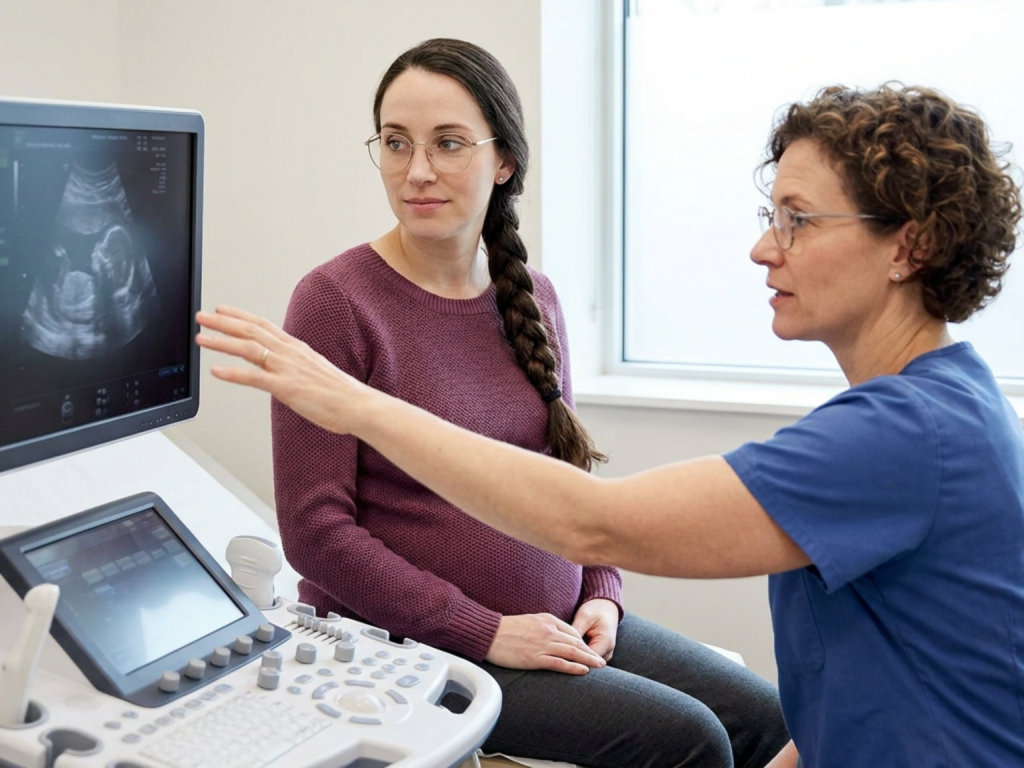
Prenatal care for advanced maternal age is often similar to standard prenatal care, with additional attention to risk assessment. Early confirmation of gestational age is especially useful because accurate dating affects screening windows, fetal growth interpretation, and delivery planning. A first-trimester ultrasound may be recommended if dates are uncertain or if there are risk factors such as fertility treatment or prior loss.
Common components of care may include:
- Review of medical history, medications, prior pregnancies, surgeries, genetic history, and family history.
- Baseline evaluation for chronic hypertension, diabetes, thyroid disease, kidney disease, autoimmune disease, or other conditions when relevant.
- Discussion of aspirin prophylaxis for preeclampsia risk if indicated; this is a clinician-guided decision and not something to start without medical advice.
- Screening for chromosomal conditions and structural ultrasound evaluation, often including a detailed anatomy scan in the second trimester.
- Gestational diabetes screening and blood pressure monitoring.
- Third-trimester growth assessment or fetal surveillance when clinically indicated.
The care plan may be led by an obstetrician or midwife, and some patients benefit from consultation with a maternal-fetal medicine specialist. Referral does not mean something is wrong; it often means the pregnancy deserves a more specialized risk review.
Planning for birth
Birth planning in advanced maternal age pregnancy should balance safety, preferences, and evolving clinical information. Some people will go into spontaneous labor and have an uncomplicated vaginal birth. Others may be offered induction of labor because of age, diabetes, hypertension, fetal growth concerns, reduced fetal movement evaluation, or reaching a gestational age where continuing pregnancy may carry increasing risk.
Age 35 to 39 alone does not necessarily require early delivery if the pregnancy is otherwise uncomplicated. For people age 40 and older, clinicians may more actively discuss delivery timing because stillbirth risk rises with advancing gestational age. The exact recommendation depends on cervical status, prior birth history, fetal testing, growth, placental function, blood pressure, glucose control, and patient preferences.
A thoughtful birth plan can include preferences for labor support, pain relief, mobility, monitoring, induction methods if needed, cesarean contingencies, newborn care, feeding plans, and postpartum support. Flexibility is valuable because obstetric decisions sometimes need to change quickly for safety.
What you can do before and during pregnancy
Although age itself cannot be modified, many pregnancy risks can be reduced or better managed with preparation. Preconception care is particularly helpful for people 35 or older, especially if there are chronic conditions or prior pregnancy complications.
- Schedule a preconception visit: Review medications, vaccines, chronic conditions, prior pregnancy history, and whether any specialist input is needed.
- Optimize chronic disease management: Blood pressure, glucose, thyroid disease, autoimmune conditions, kidney disease, and mental health conditions are safer when well managed before conception.
- Take folic acid or a prenatal vitamin as advised: Folate supports neural tube development, but the right dose may vary for certain medical histories or medications.
- Review medications and supplements: Some are safe, some require dose changes, and some should be avoided in pregnancy. Always ask before stopping or starting treatment.
- Prioritize sleep, nutrition, movement, and substance avoidance: Sustainable habits support metabolic and cardiovascular health.
- Know your warning signs: Prompt reporting of severe headache, visual symptoms, chest pain, shortness of breath, heavy bleeding, severe abdominal pain, fever, or reduced fetal movement can be critical.
Emotional support also matters. People pregnant after 35 may receive unhelpful comments, feel pressure about fertility timelines, or carry grief from prior losses or fertility treatment. Compassionate care should include mental health, not only lab values and ultrasound findings.
Seek urgent medical advice for warning signs
- Heavy vaginal bleeding, severe abdominal pain, or shoulder pain in early pregnancy.
- Severe headache, vision changes, chest pain, shortness of breath, or sudden swelling.
- Persistent high blood pressure readings if you have been instructed to monitor at home.
- Fever, severe vomiting, dehydration, or symptoms that feel rapidly worsening.
- Reduced or absent fetal movement later in pregnancy, according to your clinician’s guidance.
- Any concern after a fall, abdominal trauma, or significant accident.
Tools & Assistance
- Preconception appointment with an obstetrician, midwife, or primary care clinician
- Genetic counseling to review screening and diagnostic testing options
- Maternal-fetal medicine consultation for complex medical history or age 40 and older
- Home blood pressure monitoring if recommended by a clinician
- Fertility specialist consultation if conception is taking longer than expected
FAQ
Is pregnancy after 35 automatically high risk?
Not automatically. Age 35 or older is a risk factor, but the overall risk depends on health history, pregnancy type, prior obstetric history, and current findings.
Do I need special genetic testing because I am over 35?
You should be offered counseling about screening and diagnostic options. Whether you choose cell-free DNA screening, ultrasound-based screening, diagnostic testing, or no testing is a personal decision made with clinical guidance.
Can I have a vaginal birth if I am advanced maternal age?
Yes, many people 35 or older have vaginal births. Age alone does not require cesarean delivery, although cesarean rates are higher in this group for multiple reasons.
Why is age 40 often discussed separately?
Several risks, including stillbirth and medical complications, rise more noticeably after 40. Clinicians may recommend additional fetal surveillance or discuss delivery timing more actively.
What is the best first step if I am planning pregnancy after 35?
A preconception visit is a strong first step. It can address medications, chronic conditions, fertility timing, vaccinations, prenatal vitamins, and individualized risk reduction.
Sources
- American College of Obstetricians and Gynecologists — Pregnancy at Age 35 Years or Older
- PubMed Central — Management of Pregnancy in Women of Advanced Maternal Age
- Johns Hopkins Medicine — Advanced Maternal Age
Disclaimer
This article is for informational purposes only and does not replace medical advice, diagnosis, or treatment. Always consult a qualified healthcare professional about pregnancy care and urgent symptoms.

















Please log in to leave a comment.