
Intro
Pregnancy changes how the body responds to everyday movement, heat, balance, hydration, fatigue, and physical strain. For many people with uncomplicated pregnancies, staying active is not only safe but beneficial: regular physical activity is associated with improved cardiometabolic health, lower risk of gestational diabetes and hypertensive disorders, and better functional strength for birth and recovery. Still, the safest plan is individualized, especially when pregnancy is complicated by bleeding, cervical or placental concerns, significant cardiopulmonary disease, or fetal growth issues.
This article focuses on practical safety for daily activities: walking, commuting, household tasks, work, exercise, lifting, posture, heat exposure, and when to pause and seek medical advice. It is written for readers who are comfortable with medical terminology, while recognizing that pregnancy can make even familiar routines feel uncertain. If you are unsure whether an activity is appropriate for your situation, your obstetrician, midwife, physiotherapist, or other qualified clinician can help adapt guidance to your pregnancy and baseline fitness.
Highlights
For most uncomplicated pregnancies, regular moderate-intensity activity is safe and clinically beneficial when performed with appropriate precautions.
Daily movement should be adjusted for changing balance, joint laxity, thermoregulation, fatigue, and pelvic floor load.
Warning symptoms such as vaginal bleeding, chest pain, dizziness, painful contractions, or fluid leakage mean activity should stop and medical advice should be sought.
High-impact, contact, fall-risk, overheating, and supine prolonged activities may need modification or avoidance depending on gestational age and individual risk.
Why daily activity matters in pregnancy
Physical activity in pregnancy is not limited to formal exercise. It includes walking to work, climbing stairs, shopping, caring for children, household chores, stretching, gardening, and occupational movement. In an uncomplicated pregnancy, these activities usually help preserve cardiovascular fitness, glucose regulation, musculoskeletal strength, mood, sleep quality, and functional independence.
Evidence reviews and professional guidance consistently support regular moderate-intensity activity for most pregnant people. Research summarized in expert reviews has found associations between prenatal physical activity and lower risks of preterm birth, preeclampsia, and gestational diabetes, without evidence that appropriate activity is harmful in uncomplicated pregnancies. This does not mean more is always better; rather, the goal is consistent, well-tolerated movement that respects symptoms, fitness level, and obstetric risk.
A common practical benchmark is moderate intensity: you are breathing faster but can still speak in full sentences. If you were active before pregnancy, you may often continue many activities with modifications. If you were inactive, gradual progression is typically safer than sudden strenuous exertion. Clinical clearance is especially important if there are medical or obstetric complications.
How pregnancy changes activity safety
Several physiologic changes affect daily safety. Blood volume and cardiac output rise, resting heart rate often increases, and oxygen consumption changes. Because heart rate varies substantially in pregnancy, perceived exertion and the talk test can be more useful than rigid pulse targets for many people.
Hormonal effects on connective tissue, including increased ligamentous laxity, can affect joint stability. The growing uterus shifts the center of gravity, increasing fall risk and changing gait mechanics. Abdominal wall stretching and pelvic floor loading can contribute to back pain, pelvic girdle pain, urinary leakage, or a feeling of pelvic heaviness. These symptoms are common but should not be ignored if they worsen with activity.
Thermoregulation also matters. Pregnant people may be more vulnerable to overheating, particularly during strenuous exercise, hot weather, humid environments, poorly ventilated rooms, saunas, or hot yoga. Hydration, breathable clothing, rest breaks, and avoiding peak heat are simple but important safety measures.
After the first trimester, prolonged flat-on-back positioning can cause some people to feel lightheaded or nauseated because the uterus may compress major blood vessels. If supine activity causes symptoms, change position promptly. Many floor exercises can be modified using side-lying, seated, standing, or inclined positions.
Safer everyday activities and exercise options
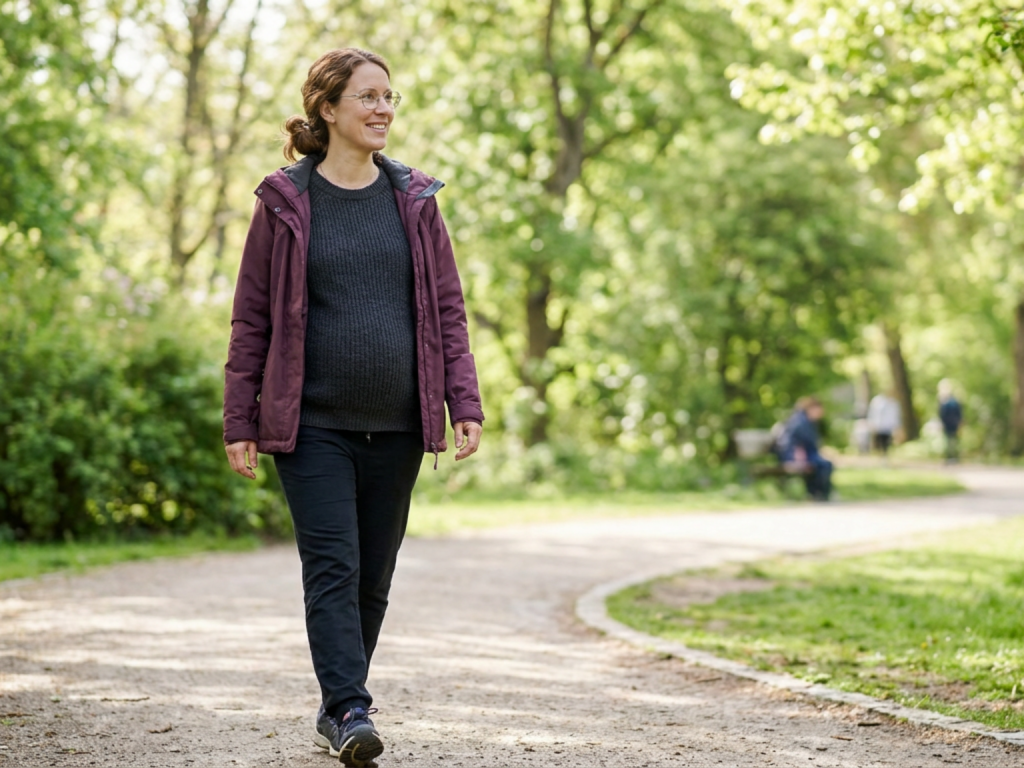
Low-impact, rhythmic activities are often well tolerated during pregnancy. Options commonly recommended by obstetric organizations include walking, swimming, water aerobics, stationary cycling, low-impact aerobics, and modified yoga or Pilates. These activities can support aerobic conditioning while limiting collision and fall risk.
- Walking: accessible, adjustable, and useful for daily circulation and endurance. Choose even surfaces and supportive footwear.
- Swimming and water exercise: buoyancy can reduce joint loading and may be comfortable for back or pelvic discomfort.
- Stationary cycling: avoids traffic and reduces fall risk compared with outdoor cycling, especially as balance changes.
- Modified yoga or Pilates: can support mobility, breathing, and core awareness, provided positions are adapted to avoid overheating, prolonged supine posture, excessive twisting, or extreme stretching.
- Strength training: light-to-moderate resistance can be helpful when technique is controlled, breathing is steady, and heavy straining or Valsalva maneuvers are avoided.
A warm-up and cool-down reduce abrupt cardiovascular shifts. Begin with gentle movement, then gradually increase intensity. End with slower movement and comfortable stretching. Avoid bouncing stretches or forcing range of motion, as joint laxity can make overstretching easier.
Household tasks, lifting, and posture
Most routine household tasks can continue if they feel comfortable, but pregnancy often requires pacing and ergonomic adjustments. Fatigue, nausea, reflux, pelvic pressure, and back discomfort can make ordinary tasks more demanding than expected.
For lifting, use a conservative approach. Keep the object close to the body, bend through hips and knees rather than rounding the back, exhale with effort, and avoid twisting while carrying. If a load causes breath-holding, pain, pelvic heaviness, urinary leakage, or abdominal coning, it is a signal to reduce load, change technique, or ask for help. Repeated heavy lifting at work or home should be discussed with a clinician, particularly if there are obstetric risk factors.
For cleaning and chores, consider dividing tasks into shorter sessions. Use long-handled tools to reduce prolonged bending. When standing for long periods, shift weight, use a footrest, or take seated breaks. When sitting, support the lower back and change position frequently. Prolonged immobility may worsen swelling or discomfort, so brief movement breaks are useful.
Pelvic floor awareness is part of activity safety. Gentle pelvic floor exercises may help support continence and pelvic organ support, but they should be performed correctly. If there is pelvic pain, a sensation of dragging, significant urinary leakage, or pain with exercise, referral to a pelvic health physiotherapist can be valuable.
Work, commuting, and travel considerations
Workplace safety depends on the type of work, gestational age, symptoms, and pregnancy risk. Desk-based work may require posture changes, breaks for circulation, hydration, and bathroom access. Physically demanding work may involve lifting limits, shift modifications, protection from heat, reduced prolonged standing, or avoidance of hazardous exposures. Occupational concerns should be reviewed with an obstetric clinician and, when available, occupational health services.
Commuting and travel add practical risks: crowding, long periods of sitting, fall hazards, and limited access to fluids or restrooms. On public transport, holding a rail, avoiding rushing, and allowing extra time can reduce fall risk. When driving, wear the seat belt with the lap belt under the abdomen across the hips and the shoulder belt between the breasts; adjust the seat to maintain safe distance from the steering wheel while preserving control.
For longer journeys, periodic walking and calf movement can help reduce stiffness and support venous return. People with elevated thromboembolic risk, prior venous thromboembolism, thrombophilia, significant immobility, or other risk factors should ask their healthcare professional for individualized travel advice.
Activities that usually need avoidance or modification
Some activities carry higher risk because of trauma, falls, oxygen changes, heat stress, or excessive intra-abdominal pressure. General guidance commonly recommends avoiding contact sports, activities with a high risk of falling, scuba diving, hot yoga, hot Pilates, and exercise in extreme heat or humidity. Examples may include skiing, horseback riding, gymnastics, outdoor cycling on difficult terrain, basketball, soccer, and martial arts, depending on skill level and pregnancy stage.
Activities at high altitude may require special caution, particularly if you are not acclimatized or have cardiopulmonary or obstetric complications. Scuba diving is generally avoided because of fetal decompression risk. Any activity involving abdominal impact or collision should be treated cautiously.
Intensity also matters. Vigorous activity may be appropriate for some well-conditioned individuals with uncomplicated pregnancies, but it should be discussed with a clinician if there is uncertainty. Warning signs, unusual fatigue, poor recovery, reduced fetal movement after viability, or new pain should prompt reassessment.
Hydration, nutrition, clothing, and environmental safety
Hydration supports thermoregulation and circulation. Thirst, dark urine, headache, dizziness, and excessive fatigue may suggest inadequate fluid intake, although these symptoms can have many causes. Drink before, during, and after activity, especially in warm conditions.
Nutrition also influences safety. Pregnancy increases energy and micronutrient demands, and exercising while under-fueled can contribute to lightheadedness or poor tolerance. Some people do better with a small snack before activity, especially if nausea or long gaps between meals are present. Those with gestational diabetes or other metabolic conditions should follow the monitoring and nutrition plan provided by their care team.
Wear supportive footwear and clothing that allows heat dissipation. Consider compression garments only if recommended or comfortable, and ensure they do not restrict breathing or circulation. In winter, choose surfaces carefully to reduce slipping; in summer, avoid the hottest part of the day and choose shaded or indoor options.
When to stop activity and seek advice
Stopping activity is not a failure; it is an important safety response. If symptoms occur, pause, move to a safe position, hydrate if appropriate, and contact a healthcare professional when warning signs are present. Some symptoms require urgent evaluation.
Concerning symptoms include vaginal bleeding, regular painful contractions, amniotic fluid leakage, chest pain, shortness of breath before exertion, dizziness or fainting, calf pain or swelling, severe headache, muscle weakness affecting balance, or reduced fetal movement after the stage when movement monitoring is recommended by your clinician.
People with placenta previa after midpregnancy, ruptured membranes, preterm labor risk, significant cervical insufficiency, severe anemia, uncontrolled hypertension, significant heart or lung disease, fetal growth restriction, or multiple gestation with complications may need activity restrictions or tailored plans. These decisions should be made with the obstetric care team rather than self-prescribed.
Stop and seek medical advice if these occur
- Vaginal bleeding, fluid leakage, or regular painful contractions
- Chest pain, fainting, severe dizziness, or shortness of breath before exertion
- Calf pain or swelling, sudden severe headache, or new neurologic symptoms
- Reduced fetal movement after your clinician has advised monitoring movements
- New severe abdominal, pelvic, or back pain during activity
Tools & Assistance
- Ask your obstetrician or midwife for an individualized activity plan at a routine prenatal visit
- Use the talk test to keep most daily activity at a moderate, sustainable intensity
- Schedule brief movement breaks during prolonged sitting or standing
- Consult a pelvic health physiotherapist for pelvic pain, leakage, heaviness, or exercise-related discomfort
- Choose indoor, shaded, or water-based activity during hot or humid weather
FAQ
Is it safe to exercise every day while pregnant?
For many uncomplicated pregnancies, regular daily movement is safe and beneficial if intensity is moderate and symptoms are respected. Individual medical or obstetric risks should be reviewed with a healthcare professional.
Can I start exercising if I was inactive before pregnancy?
Often yes, but start gradually with low-impact options such as walking or swimming. Avoid sudden strenuous routines and ask your clinician for guidance if you have complications or significant symptoms.
Should I avoid lying on my back?
After the first trimester, prolonged flat-on-back exercise may cause dizziness or nausea in some people due to blood vessel compression. If symptoms occur, change to a side-lying, seated, standing, or inclined position.
Are household chores safe during pregnancy?
Most routine chores are safe if they do not cause pain, breath-holding, overheating, dizziness, or pelvic pressure. Heavy or repetitive lifting may need modification, especially in higher-risk pregnancies.
What is the safest type of activity during pregnancy?
Walking, swimming, stationary cycling, low-impact aerobics, and modified yoga or Pilates are commonly recommended for uncomplicated pregnancies. The best choice is one that is comfortable, sustainable, and approved for your situation.
Sources
- PubMed Central — Physical activity and pregnancy outcomes: An expert review
- American College of Obstetricians and Gynecologists — Exercise During Pregnancy
- NHS — Exercise in pregnancy
Disclaimer
This article is for informational purposes only and does not replace personalized medical advice. Always consult your obstetrician, midwife, or qualified healthcare professional about activity safety in your pregnancy.

















Please log in to leave a comment.