
Intro
Preeclampsia is a pregnancy-related hypertensive disorder that can affect the pregnant person, the placenta, and the baby. It most often develops after 20 weeks of gestation, but it can also appear during labor or in the postpartum period. Many people with preeclampsia feel well at first, which is why routine prenatal blood pressure checks and urine testing remain so important.
Hearing the word “preeclampsia” can be frightening, especially because it is associated with serious complications if not recognized and managed promptly. At the same time, close monitoring, timely evaluation, and individualized obstetric care can greatly improve safety. This article explains what is known about causes, how clinicians diagnose preeclampsia, and how monitoring is typically approached.
Highlights
Preeclampsia is defined by new-onset hypertension after 20 weeks of pregnancy, often with proteinuria or signs of maternal organ dysfunction.
The placenta is central to current theories of preeclampsia; abnormal placental development can trigger systemic endothelial inflammation and vascular dysfunction.
Diagnosis is not based on a single symptom. It requires blood pressure confirmation and assessment for proteinuria, platelet changes, kidney or liver involvement, neurological features, pulmonary edema, and fetal wellbeing.
Monitoring usually combines maternal assessment, laboratory tests, fetal growth evaluation, and individualized decisions about timing of birth.
Severe headache, visual disturbance, right upper abdominal pain, breathlessness, sudden swelling, or reduced fetal movements should prompt urgent medical contact.
What preeclampsia means
Preeclampsia is a multisystem hypertensive disorder of pregnancy. In clinical terms, it is usually suspected when a pregnant person develops new high blood pressure after 20 weeks of gestation. It may be accompanied by proteinuria, meaning excess protein in the urine, or by evidence that organs such as the kidneys, liver, brain, lungs, blood vessels, or placenta are under stress.
Although high blood pressure is the most visible feature, preeclampsia is not simply “pregnancy hypertension.” It reflects a broader vascular and inflammatory process. The disorder can reduce blood flow to the placenta, contribute to fetal growth restriction, and increase the risk of preterm birth. For the pregnant person, severe disease can progress to complications such as eclampsia, HELLP syndrome, stroke, pulmonary edema, kidney injury, or placental abruption.
Preeclampsia can be mild in presentation or rapidly progressive. Some people have no noticeable symptoms, while others develop headache, visual changes, pain below the ribs on the right side, nausea or vomiting, swelling, shortness of breath, or sudden weight gain. Because symptoms can overlap with common pregnancy discomforts, it is safest to discuss concerning changes with a maternity professional rather than trying to interpret them alone.
Likely causes and the role of the placenta
The exact cause of preeclampsia is not fully understood, but the placenta is considered central. In early pregnancy, the placenta must establish an adequate blood supply by remodeling maternal spiral arteries. In preeclampsia, this remodeling may be incomplete or abnormal, leaving the placenta relatively underperfused. A stressed placenta can release inflammatory and antiangiogenic factors into the maternal circulation, contributing to endothelial dysfunction, vasoconstriction, high blood pressure, and leakage of protein into the urine.
This placental model helps explain why delivery of the placenta is the definitive endpoint of the disease process, although symptoms and blood pressure abnormalities may persist or worsen for a time after birth. It also explains why fetal growth may be affected: the placenta may not deliver oxygen and nutrients as efficiently as expected.
Researchers also describe immune, genetic, metabolic, and cardiovascular contributors. Preeclampsia is more likely when the pregnant person already has vascular, renal, metabolic, or autoimmune vulnerability. However, it can also occur in someone with no obvious risk factors. This unpredictability is one reason prenatal care focuses on repeated screening rather than relying only on risk history.
Who is at higher risk
Risk factors do not mean that preeclampsia will definitely occur, and absence of risk factors does not guarantee protection. They help clinicians decide how closely to monitor a pregnancy and whether preventive strategies may be appropriate.
- Previous preeclampsia: A history of preeclampsia, especially if early or severe, increases recurrence risk.
- Chronic hypertension: Pre-existing high blood pressure can make diagnosis more complex and increases baseline risk.
- Kidney disease: Chronic kidney disease and pre-existing proteinuria can overlap with and predispose to preeclampsia.
- Diabetes and metabolic disorders: Type 1 diabetes, type 2 diabetes, and insulin resistance-related conditions may increase vascular risk.
- Autoimmune conditions: Conditions such as systemic lupus erythematosus and antiphospholipid syndrome are associated with higher risk.
- Multiple gestation: Twin or higher-order pregnancies place greater demand on the placenta.
- First pregnancy or new partner pregnancy: Immunologic adaptation to placental tissue may be relevant.
- Higher maternal age or body mass index: These factors may increase cardiovascular and metabolic strain.
- Family history: A family history of preeclampsia may suggest inherited susceptibility.
People with chronic medical conditions often benefit from planning before pregnancy when possible. A preconception or early pregnancy consultation can review baseline blood pressure, kidney function, medications, and risk-reduction options with an obstetric clinician.
How preeclampsia is diagnosed
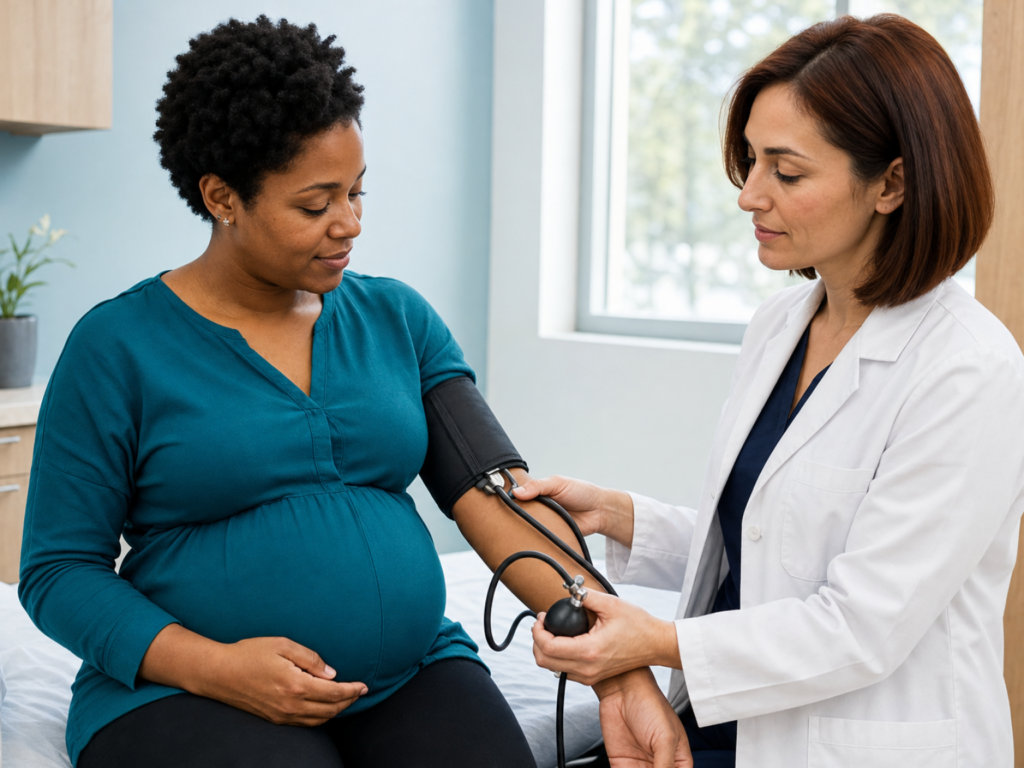
Diagnosis is made by healthcare professionals using clinical criteria, not by symptoms alone. The classic starting point is new-onset hypertension after 20 weeks of pregnancy. Blood pressure is usually confirmed with repeated measurements, because anxiety, pain, activity, cuff size, and measurement technique can affect readings.
Proteinuria is commonly assessed with a urine dipstick as an initial screen, followed when needed by more quantitative testing such as a urine protein-to-creatinine ratio or a 24-hour urine collection. However, proteinuria is not required for diagnosis if other signs of maternal organ dysfunction are present.
Laboratory evaluation may include platelet count, serum creatinine, liver enzymes, and sometimes additional markers depending on local protocols and clinical severity. Low platelets can suggest platelet consumption, elevated liver enzymes may indicate hepatic involvement, and rising creatinine may reflect impaired kidney function. Clinicians also assess symptoms such as severe headache, visual disturbance, upper abdominal pain, shortness of breath, and neurological features.
Some settings use angiogenic biomarkers, such as placental growth factor or soluble fms-like tyrosine kinase-1 to placental growth factor ratios, to help evaluate suspected disease, particularly when the diagnosis is uncertain. Availability and interpretation vary by country, institution, gestational age, and clinical context. Biomarkers support assessment; they do not replace professional evaluation.
Monitoring the pregnant person
Once preeclampsia is suspected or confirmed, monitoring aims to detect progression early and determine the safest timing and setting for care. The plan depends on gestational age, blood pressure level, symptoms, laboratory findings, fetal wellbeing, and whether severe features are present.
Maternal monitoring may include:
- Regular blood pressure measurement in clinic, hospital, or selected home-monitoring programs
- Repeat urine protein assessment when clinically useful
- Blood tests to monitor platelets, kidney function, and liver enzymes
- Symptom review, including headache, visual symptoms, chest pain, breathlessness, abdominal pain, nausea, vomiting, and swelling
- Assessment for complications such as pulmonary edema, neurological symptoms, or worsening hypertension
Some people require hospital admission, especially if blood pressure is severely elevated, symptoms are concerning, laboratory results are abnormal, or the pregnancy is preterm and close observation is needed. Others may be monitored as outpatients with clear thresholds for urgent reassessment. Decisions should always be individualized by an obstetric team.
Home blood pressure monitoring can be useful when recommended, but it should be done with a validated cuff, proper technique, and explicit instructions about when to call. Home readings should not be used to dismiss symptoms or delay urgent care.
Monitoring the baby and placenta
Preeclampsia can affect placental blood flow, so fetal monitoring is an important part of care. The goal is to look for evidence that the baby is growing appropriately and tolerating the intrauterine environment.
Depending on gestational age and severity, fetal assessment may include ultrasound measurement of fetal growth, amniotic fluid assessment, umbilical artery Doppler studies, and cardiotocography or non-stress testing. Doppler assessment can provide information about blood flow resistance in placental circulation, which is especially relevant if fetal growth restriction is suspected.
Fetal movements also matter. A noticeable reduction in fetal movements should be reported promptly according to local maternity guidance. While movement patterns vary, a clear decrease can be a sign that the baby needs assessment.
Monitoring does not “cure” preeclampsia, but it helps clinicians balance two competing priorities: allowing the pregnancy to continue when safe, and recommending birth when the risks of continuing become greater than the risks of prematurity.
Treatment decisions and timing of birth
This article cannot recommend treatment for an individual pregnancy, but it is helpful to understand the principles clinicians use. Management may involve closer observation, blood pressure control, seizure prevention in severe disease, corticosteroids to support fetal lung maturation if early birth is likely, and planning the timing and mode of delivery.
The only definitive resolution of the placental driver of preeclampsia is delivery of the baby and placenta. However, the safest timing varies. At later gestations, delivery may be recommended once diagnosis is established or if severe features develop. At earlier gestations, clinicians may try to prolong pregnancy under close monitoring if maternal and fetal conditions are stable, because each additional day or week can matter for fetal maturity.
Postpartum monitoring is also essential. Preeclampsia can first appear after birth, and blood pressure can worsen in the days following delivery. Persistent headache, visual changes, chest pain, shortness of breath, severe abdominal pain, or very high blood pressure after birth should be treated as urgent. Follow-up after a preeclampsia pregnancy should also include discussion of future cardiovascular risk, because preeclampsia is associated with higher long-term risk of hypertension and cardiovascular disease.
Emotional impact and practical coping
Preeclampsia can make pregnancy feel medically intense and emotionally uncertain. Frequent appointments, lab results, blood pressure numbers, and discussions about early delivery can be overwhelming. Feeling anxious, disappointed, or frightened does not mean you are coping poorly; it means you are navigating a high-stakes situation.
Practical steps can help you feel more oriented. Keep a written list of blood pressure readings if your clinician has asked you to monitor at home. Bring questions to appointments. Ask what specific symptoms should trigger a same-day call, urgent triage visit, or emergency care. If you are admitted to hospital, ask your team to explain what they are watching for and what would change the plan.
Support also matters. A partner, family member, friend, doula, or patient advocate can help listen during appointments and remember instructions. If fear is affecting sleep, eating, or daily functioning, tell your maternity team; mental health support is part of safe pregnancy care.
Seek urgent medical advice for warning signs
- Severe or persistent headache, especially if different from usual headaches
- Blurred vision, flashing lights, loss of vision, or new neurological symptoms
- Severe pain in the upper abdomen or right side below the ribs
- Shortness of breath, chest pain, fainting, or sudden severe swelling
- Reduced fetal movements or concern that the baby is moving less than usual
- Very high blood pressure readings if you have been instructed to monitor at home
Tools & Assistance
- Prenatal blood pressure checks with an obstetric clinician or midwife
- Urine protein testing and blood tests for kidney, liver, and platelet assessment
- Validated home blood pressure monitor if recommended by your care team
- Fetal ultrasound, growth assessment, and Doppler monitoring when indicated
- Urgent maternity triage or emergency services for severe symptoms
FAQ
Can preeclampsia happen without protein in the urine?
Yes. Proteinuria is common, but preeclampsia can also be diagnosed when new hypertension is accompanied by organ dysfunction, such as low platelets, kidney impairment, liver involvement, pulmonary edema, or neurological symptoms.
Does swelling always mean preeclampsia?
No. Some swelling is common in pregnancy. Sudden swelling of the face, hands, or whole body, especially with headache, visual symptoms, pain, or high blood pressure, should be assessed promptly.
Can preeclampsia develop after delivery?
Yes. Postpartum preeclampsia can occur, and blood pressure may worsen in the days after birth. Severe headache, visual changes, chest pain, breathlessness, or severe abdominal pain after delivery warrants urgent medical attention.
Will I need to deliver early if I have preeclampsia?
Sometimes, but not always immediately. Timing depends on gestational age, severity, blood pressure, laboratory results, symptoms, and fetal wellbeing. Your obstetric team will balance maternal safety with the risks of prematurity.
Can preeclampsia be prevented?
Not all cases can be prevented. People at higher risk may be offered specific preventive strategies by their clinician, but this should be individualized and discussed before or early in pregnancy.
Sources
- PubMed Central (PMC) — Preeclampsia: Risk Factors, Diagnosis, Management, and the Use of Biomarkers in the Disease Process
- Mayo Clinic — Preeclampsia - Symptoms & causes
- NHS — Pre-eclampsia
Disclaimer
This article is for informational purposes only and does not replace medical diagnosis or care. If you are pregnant or postpartum and have concerning symptoms or high blood pressure, contact your healthcare professional or urgent maternity service promptly.

















Please log in to leave a comment.