
Intro
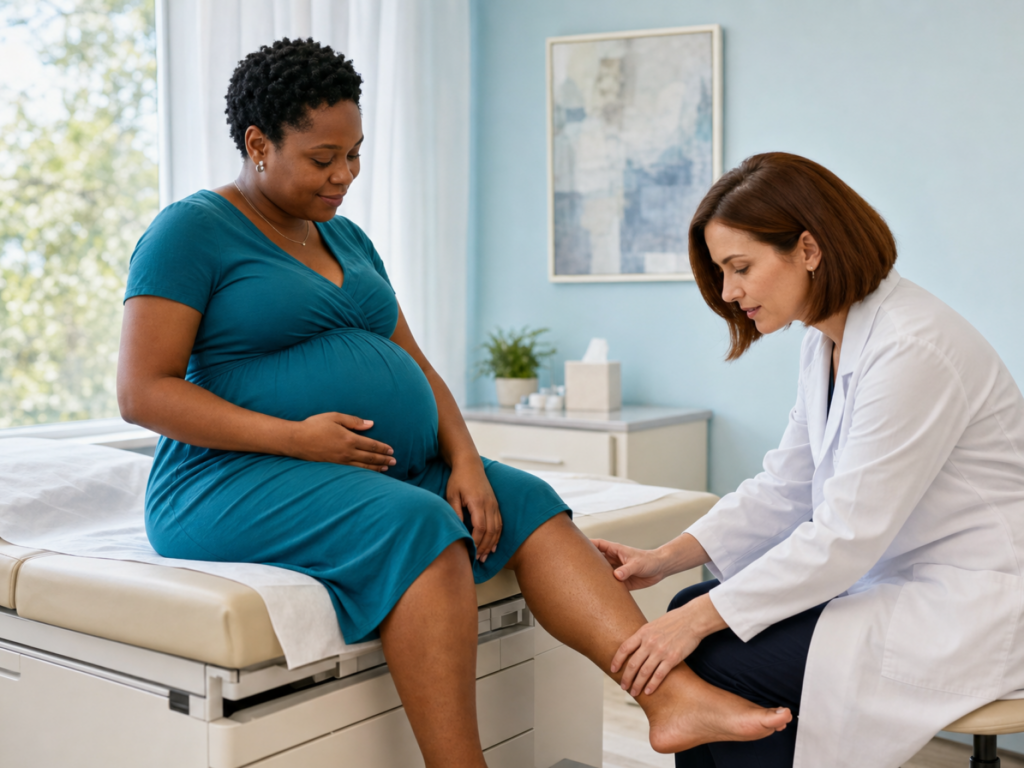
Swelling in pregnancy can be uncomfortable, surprising, and sometimes worrying. Many pregnant people notice puffiness in the feet, ankles, lower legs, fingers, or hands, especially toward the end of the day or in the third trimester. In many cases this is physiologic edema: fluid shifts and venous pressure related to pregnancy rather than a disease process.
At the same time, swelling deserves thoughtful attention because it can occasionally be a sign of a more serious condition, such as preeclampsia or deep vein thrombosis. The goal is not to alarm you, but to help you distinguish common patterns from warning signs and to know when to contact your maternity care team promptly.
Highlights
Mild, gradual swelling of the feet and ankles is common in late pregnancy and often worsens with heat, prolonged standing, or the end of the day.
Sudden swelling, especially involving the face or hands, should be taken seriously because it can be associated with preeclampsia.
One-sided calf or leg swelling, pain, redness, or warmth may suggest a blood clot and needs urgent medical assessment.
Practical measures such as leg elevation, left-side lying, gentle walking, foot exercises, comfortable footwear, and compression stockings may reduce discomfort.
Do not assume all swelling is normal; your clinician can assess blood pressure, urine protein, symptoms, and other risk factors.
What pregnancy edema means
Edema means swelling caused by fluid accumulation in body tissues. During pregnancy, the body naturally expands its blood volume and extracellular fluid volume to support the placenta and the growing fetus. Hormonal effects also influence the tone and permeability of blood vessels, making it easier for fluid to move from the circulation into surrounding tissues.
As the uterus enlarges, it can compress pelvic veins and the inferior vena cava, especially when lying flat on the back. This can slow venous return from the legs, increasing hydrostatic pressure in the lower limbs. The result is often swelling in the feet, ankles, and lower legs. This pattern is particularly common in the third trimester, when uterine size and fluid volume are greatest.
Physiologic edema is usually bilateral, meaning it affects both sides, though one ankle may look slightly puffier than the other after certain positions or activity. It tends to build gradually, may leave a temporary indentation when pressed, and often improves with rest, elevation, or overnight sleep.
Common patterns of normal swelling
Many pregnant people first notice that rings feel tighter, socks leave deeper marks, or shoes feel smaller by late afternoon. Warm weather, sitting for long periods, standing at work, air travel, and reduced mobility can all make dependent edema more noticeable.
Common features of typical pregnancy-related edema include:
- Gradual onset over days or weeks rather than sudden overnight swelling.
- Swelling mainly in both feet, ankles, and lower legs.
- Worsening after prolonged standing or at the end of the day.
- Improvement after lying on the left side, elevating the legs, or resting.
- Mild hand or finger puffiness without severe headache, visual symptoms, or high blood pressure concerns.
Even when swelling is common, it can still be physically limiting. Tight skin, aching feet, difficulty wearing shoes, and numb or stiff fingers can affect sleep, work, and daily movement. Mention these symptoms during prenatal appointments, especially if swelling is new, increasing, or interfering with normal activities.
When swelling is not routine
Some swelling patterns require prompt medical attention because they can point to hypertensive disorders of pregnancy or venous thromboembolism. Preeclampsia is a pregnancy-related condition involving high blood pressure and signs of organ involvement, often including protein in the urine or symptoms such as headache or visual disturbance. Swelling alone does not diagnose preeclampsia, but sudden swelling of the face, around the eyes, or hands can be a warning sign, particularly when accompanied by other symptoms.
Deep vein thrombosis, or DVT, is a blood clot in a deep vein, usually in the leg. Pregnancy increases clotting tendency as a normal protective adaptation against bleeding, but it also raises the risk of pathologic clot formation. A DVT may cause one-sided leg swelling, calf pain, tenderness, redness, warmth, or a feeling of tightness. A clot can become dangerous if part of it travels to the lungs, causing pulmonary embolism.
Because these conditions require clinical evaluation, it is important not to self-diagnose or wait for severe symptoms. Contact your healthcare professional, maternity assessment unit, or emergency service according to local guidance if swelling is sudden, asymmetric, painful, or associated with systemic symptoms.
Preeclampsia warning signs to know
Preeclampsia can develop after 20 weeks of pregnancy, during labor, or in the postpartum period. It is not always obvious at first, and some people feel generally unwell rather than dramatically ill. Swelling may be part of the picture, but blood pressure measurement and urine or blood tests are often needed to assess risk.
Seek urgent medical advice if swelling is accompanied by any of the following:
- Severe or persistent headache.
- Visual symptoms, such as flashing lights, blurred vision, or spots.
- Sudden swelling of the face, hands, or around the eyes.
- Pain in the upper abdomen, especially under the ribs on the right side.
- Nausea, vomiting, shortness of breath, or feeling acutely unwell.
- A sudden increase in swelling or rapid weight gain related to fluid retention.
These symptoms do not prove that preeclampsia is present, but they are important enough to be checked. If you have been given a home blood pressure monitor or urine testing instructions, follow your clinician’s plan, but do not let home monitoring replace urgent assessment when red flags appear.
Practical ways to reduce everyday swelling
For typical pregnancy edema, small adjustments can make a meaningful difference. The aim is to improve venous return, reduce pressure in the lower limbs, and avoid mechanical restriction around the legs and waist.
- Rest with your feet raised when possible, ideally above hip level for short periods.
- Lie on your left side, which may reduce pressure from the uterus on major blood vessels and support circulation.
- Avoid standing still for long periods; if you must stand, shift weight, walk briefly, or do calf raises.
- Take regular gentle walks if your clinician has not advised activity restriction.
- Do ankle circles, foot flexes, and toe stretches during sitting or travel.
- Wear comfortable, supportive shoes and avoid tight socks or clothing that marks the skin.
- Ask your clinician whether compression stockings are appropriate for you and what strength or fit is recommended.
Hydration and balanced nutrition still matter. It is generally not advisable to severely restrict fluids to treat edema, because dehydration can create other problems. Likewise, do not use diuretics, herbal water pills, or high-dose supplements unless specifically recommended by your healthcare professional.
Swelling in the hands, fingers, and wrists
Fluid retention can affect the hands as well as the legs. Rings may become tight, and some people develop tingling, numbness, or pain in the thumb, index, and middle fingers. This may occur when edema contributes to compression of the median nerve at the wrist, a pattern similar to carpal tunnel syndrome.
If rings are becoming snug, consider removing them early before swelling makes removal difficult. Hand elevation, gentle finger movements, and avoiding prolonged wrist flexion may help some people. If numbness, weakness, or pain persists, ask your clinician or a physiotherapist for individualized advice.
Hand swelling becomes more concerning when it appears suddenly or occurs with headache, visual disturbance, upper abdominal pain, or high blood pressure. In that context, it should not be dismissed as ordinary pregnancy puffiness.
What your healthcare team may check
When you report swelling, your clinician may ask about timing, location, severity, associated symptoms, fetal movement, medical history, medications, and risk factors such as previous preeclampsia, thrombophilia, hypertension, kidney disease, or multiple pregnancy. The assessment may include blood pressure measurement, urine testing for protein, blood tests, and examination of the legs.
If a blood clot is suspected, further testing such as ultrasound imaging of the leg may be arranged. If preeclampsia is a concern, your team may recommend monitoring, laboratory evaluation, fetal assessment, or hospital review depending on gestational age and severity. The appropriate plan varies widely, so it is safest to follow individualized medical advice rather than comparing your swelling with someone else’s pregnancy.
It is also worth mentioning other common pregnancy experiences that can overlap with swelling. For example, breathlessness, dizziness, urinary frequency, back pain, and digestive discomfort can each be common but can also sometimes change the urgency of an assessment when they occur together with edema.
Emotional impact and body comfort
Swelling can affect how you feel in your body. Shoes may stop fitting, your hands may feel unfamiliar, and the heaviness in your legs can make ordinary tasks feel harder. It is understandable to feel frustrated, self-conscious, or anxious, especially if swelling appears quickly or people around you minimize it.
You deserve to have symptoms taken seriously. Keeping a simple note of when swelling occurs, what improves it, and whether any warning signs are present can help you communicate clearly with your care team. If you are unsure whether a pattern is normal, asking is not overreacting; it is appropriate prenatal care.
Seek medical advice urgently if
- Swelling appears suddenly or rapidly worsens, especially in the face, hands, or around the eyes.
- Swelling occurs with severe headache, visual changes, upper abdominal pain, nausea, vomiting, or feeling very unwell.
- One leg is much more swollen than the other, particularly with calf pain, redness, warmth, or tenderness.
- You have chest pain, sudden shortness of breath, coughing blood, fainting, or a racing heartbeat.
- You have reduced fetal movements or any symptom your maternity team has told you to report immediately.
Tools & Assistance
- Keep your maternity unit or obstetric triage contact number accessible.
- Use a daily symptom note to track swelling pattern, triggers, and associated warning signs.
- Ask a clinician or pharmacist about properly fitted pregnancy-safe compression stockings.
- Choose supportive shoes and loose socks that do not constrict the ankles or calves.
- Use scheduled movement breaks, ankle circles, and short walks during long sitting or travel.
FAQ
Is ankle swelling normal in pregnancy?
Mild, gradual swelling of both ankles and feet is common, especially in late pregnancy and after standing. It should still be discussed with your clinician if it is new, worsening, painful, or associated with other symptoms.
Does drinking less water reduce edema?
Usually no. Restricting fluids is not a safe general strategy for pregnancy swelling and may lead to dehydration. Ask your healthcare professional for individualized guidance if you have kidney, heart, or blood pressure concerns.
Are compression stockings safe during pregnancy?
Compression stockings can help some people with leg swelling, but fit and compression level matter. Ask your clinician which type is appropriate, especially if you have pain, one-sided swelling, vascular disease, or suspected clot symptoms.
Why is swelling often worse at night?
Fluid tends to pool in the lower limbs during the day because of gravity, standing, sitting, heat, and venous pressure from the enlarged uterus. Resting with legs elevated or lying on the left side may help it improve.
Can swelling continue after birth?
Yes, fluid shifts can continue for a period postpartum, and swelling may temporarily persist. However, sudden or severe swelling, headache, visual symptoms, chest pain, shortness of breath, or one-sided leg symptoms after birth require prompt medical attention.
Sources
- Merck Manuals Consumer Version — Swelling During Late Pregnancy
- NHS — Swollen ankles, feet and fingers in pregnancy
- Mayo Clinic — Ankle swelling during pregnancy: What helps?
Disclaimer
This article is for general information only and does not replace medical evaluation, diagnosis, or treatment. Contact your healthcare professional or emergency services for concerning or sudden symptoms.











Please log in to leave a comment.