
Intro
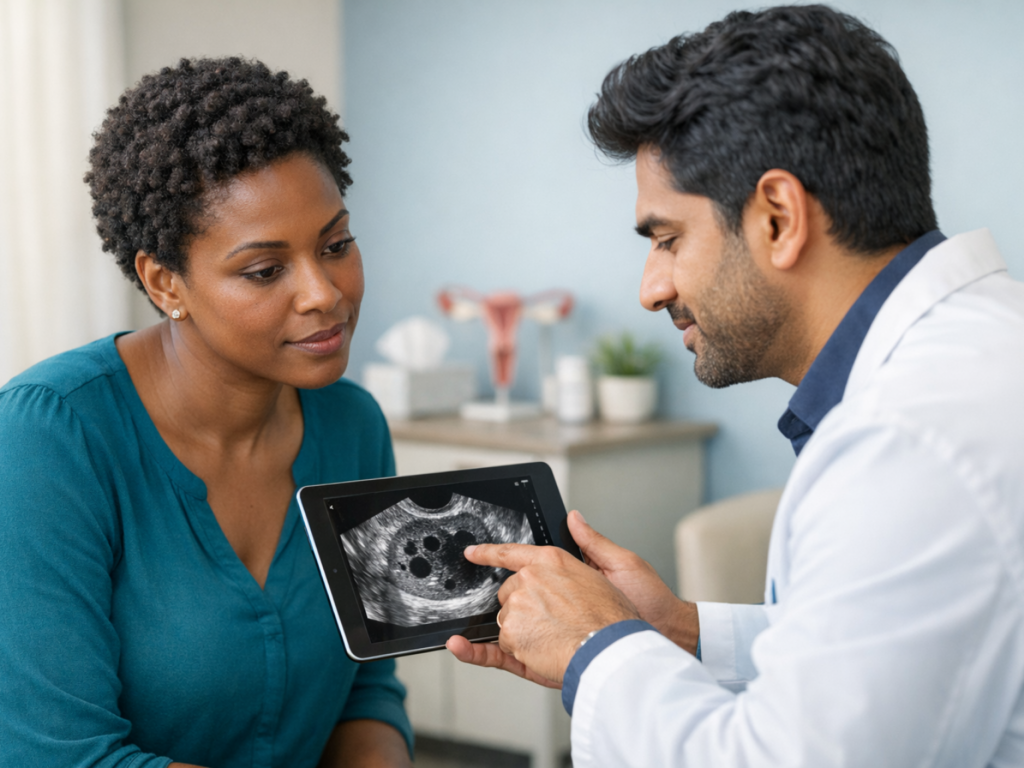
Ovarian reserve is one of the most discussed concepts in fertility care, and it can also be one of the most emotionally loaded. A blood result such as anti-Müllerian hormone (AMH), a day-3 follicle-stimulating hormone (FSH), or an ultrasound count of small ovarian follicles can seem to reduce a deeply personal hope into a number. In reality, ovarian reserve testing provides useful information, but it is not the same as a complete fertility forecast.
In medical terms, ovarian reserve refers mainly to the quantity of remaining eggs and the ovaries’ expected response to stimulation. Fertility, however, depends on many factors: age-related egg quality, ovulation, tubal and uterine health, sperm parameters, timing of intercourse or insemination, underlying endocrine conditions, and chance. Understanding what ovarian reserve can and cannot tell you may help you use test results constructively, ask better questions, and avoid unnecessary panic.
Highlights
Ovarian reserve tests estimate remaining follicle activity and likely response to ovarian stimulation; they do not directly measure whether a specific egg can make a healthy embryo.
Age remains one of the strongest predictors of fertility because egg quality, especially chromosomal competence, declines over time even when cycles remain regular.
AMH, FSH with estradiol, and antral follicle count are commonly used together, but results must be interpreted in context rather than in isolation.
A low ovarian reserve result does not mean pregnancy is impossible, and a normal result does not guarantee quick conception.
If results are unexpected or conception is taking longer than expected, a reproductive endocrinologist can help interpret the numbers and discuss individualized options.
What ovarian reserve means
Ovarian reserve describes the remaining pool of eggs in the ovaries and the functional activity of the follicles that contain them. A person is born with all the oocytes they will ever have. The number declines steadily from fetal life onward through a natural process called atresia. By reproductive age, only a small fraction of the original pool remains, and in each menstrual cycle a group of small follicles begins to grow, although usually only one becomes dominant and ovulates.
In clinical practice, ovarian reserve is not measured by counting every egg. Instead, clinicians use indirect markers. These markers reflect the activity of small growing follicles and the hormonal feedback between the ovary, pituitary gland, and brain. They are helpful, but they are estimates rather than exact inventories.
It is also important to separate egg quantity from egg quality. Quantity refers to the number of remaining follicles; quality refers largely to an egg’s ability to mature normally, be fertilized, form a chromosomally competent embryo, and support a pregnancy. Egg quality is strongly age-related and cannot be fully assessed by AMH or FSH alone. This distinction is central: someone may have a lower-than-expected reserve for their age and still conceive, while someone with reassuring ovarian reserve markers may still face other fertility barriers.
The main ovarian reserve tests
The most commonly used ovarian reserve tests include AMH, basal FSH with estradiol, and antral follicle count. Each captures a different aspect of ovarian physiology, and none should be interpreted without the person’s age, cycle history, ultrasound findings, medical background, and reproductive goals.
- Anti-Müllerian hormone (AMH): AMH is produced by granulosa cells in small growing follicles. In general, higher AMH suggests a larger pool of recruitable follicles, and lower AMH suggests fewer recruitable follicles. AMH is often convenient because it can usually be measured on many days of the cycle, though values may vary between laboratories and can be influenced by assay differences, hormonal contraceptive use, ovarian surgery, and conditions such as polycystic ovary syndrome.
- Follicle-stimulating hormone (FSH): FSH is typically measured early in the menstrual cycle, often around cycle day 2 to 4. As the follicle pool declines, the ovary produces less inhibin B and estradiol feedback, and the pituitary may increase FSH output to stimulate follicle growth. Elevated early-cycle FSH can suggest reduced ovarian reserve, but FSH fluctuates between cycles.
- Estradiol: Estradiol is often checked alongside FSH. A high early-cycle estradiol may suppress FSH and make the FSH appear deceptively normal. This is why clinicians commonly interpret the two together.
- Antral follicle count (AFC): AFC is measured by transvaginal ultrasound, usually early in the cycle. It counts the small visible follicles, commonly about 2 to 10 mm, in both ovaries. AFC can help predict the number of eggs that may be retrieved in an IVF cycle, but it depends on ultrasound quality, timing, and the observer’s technique.
Other tests have been used historically, such as clomiphene challenge testing, but modern practice often relies most on AMH, AFC, and early-cycle FSH/estradiol. The best test panel varies by clinical setting.
What ovarian reserve tests can and cannot predict
One of the most important messages from reproductive medicine guidelines is that ovarian reserve tests are better at predicting ovarian response to stimulation than predicting natural fertility in people without known infertility. For example, AMH and AFC can help estimate whether someone may produce a low, expected, or high number of eggs during an IVF cycle. This can guide medication dosing, counseling, and risk reduction, such as avoiding excessive stimulation in people at risk for ovarian hyperstimulation syndrome.
However, these tests do not reliably answer the question many people most want answered: “Can I get pregnant naturally this month or this year?” Natural conception depends on ovulation, egg and sperm meeting in a patent fallopian tube, fertilization, embryo development, uterine receptivity, and implantation. Ovarian reserve is only one part of that system.
A low AMH may suggest fewer eggs are available for recruitment, and it may mean time is more clinically relevant, particularly if pregnancy is desired soon. But low AMH alone does not diagnose infertility. Similarly, a reassuring AMH does not guarantee fertility or delay the age-related decline in egg quality. This is why fertility specialists often combine ovarian reserve testing with a broader assessment, including menstrual history, ovulation evaluation, semen analysis, uterine and tubal assessment when indicated, and review of medical conditions.
Age, egg quality, and ovarian reserve
Age is deeply intertwined with ovarian reserve but is not identical to it. As age increases, the number of remaining follicles declines, and the proportion of eggs with chromosomal abnormalities tends to rise. This age-related change in chromosomal competence is a major reason miscarriage risk increases and pregnancy rates decline with time, especially in the late 30s and 40s.
Two people of the same age can have different ovarian reserve markers, and two people with similar AMH levels can have different chances of pregnancy depending on age. A 32-year-old and a 42-year-old with the same AMH value may have different embryo quality expectations because egg quality is strongly age-dependent. This is why clinicians usually interpret ovarian reserve tests alongside chronological age rather than replacing age with a lab result.
Regular periods can be reassuring that ovulation is occurring, but they do not guarantee a high ovarian reserve. Conversely, irregular cycles can occur for reasons unrelated to diminished reserve, including polycystic ovary syndrome, thyroid disease, hyperprolactinemia, hypothalamic dysfunction, and other hormonal conditions. A careful evaluation helps distinguish among these possibilities.
Factors that may lower ovarian reserve
Ovarian reserve naturally declines with age, but some people experience diminished ovarian reserve earlier than expected. Sometimes no clear cause is found. In other cases, medical history provides clues.
- Ovarian surgery: Surgery involving the ovary, such as removal of ovarian cysts or endometriomas, can reduce functional ovarian tissue, depending on the condition, technique, and extent of surgery.
- Chemotherapy or pelvic radiation: Some cancer treatments can damage ovarian follicles. Fertility preservation counseling before treatment is important when time and clinical circumstances allow.
- Endometriosis: Endometriosis, especially ovarian endometriomas, may be associated with reduced ovarian reserve and can also affect fertility through inflammation, anatomy, and pelvic factors.
- Genetic or chromosomal factors: Fragile X premutation and Turner mosaicism are examples of conditions that can be associated with earlier ovarian insufficiency in some individuals.
- Autoimmune and metabolic conditions: Some autoimmune disorders and medical conditions may affect ovarian function, though the relationship varies.
- Smoking and environmental exposures: Cigarette smoking is associated with earlier menopause and reduced reproductive potential. The effect of other exposures is more complex and often harder to quantify.
If a result suggests low reserve, it is reasonable to feel worried. It is also reasonable to ask for confirmation, context, and a plan. A single unexpected value may need repeat testing or correlation with ultrasound and clinical history before major decisions are made.
Ovarian reserve in infertility evaluation and IVF planning
In an infertility evaluation, ovarian reserve testing helps clinicians estimate prognosis and design treatment. In IVF, AMH and AFC are particularly useful for anticipating how many follicles may respond to injectable gonadotropins. Someone with low reserve may produce fewer eggs despite appropriate stimulation; someone with high reserve, such as many patients with PCOS, may be at higher risk of an excessive response.
For people considering egg freezing, ovarian reserve markers help estimate how many eggs might be retrieved per cycle and whether more than one cycle may be needed to reach a target number. The decision to freeze eggs also depends heavily on age, because the probability that a frozen egg may later result in a live birth is linked to the age at which the egg was frozen.
Ovarian reserve testing may also help with timing. For example, if someone in their mid-30s has low AMH and wants more than one child, a clinician may discuss shorter timelines, embryo banking, egg freezing, or earlier referral to reproductive endocrinology. These are not one-size-fits-all recommendations; they are conversations that incorporate values, finances, medical risks, relationship status, and emotional readiness.
How to interpret results without losing hope
Fertility testing can feel vulnerable because the results seem to speak about the future. Yet ovarian reserve markers are probabilities and planning tools, not moral judgments or absolute predictions. Many people with diminished ovarian reserve conceive, and many people with normal markers still need help for other reasons.
Helpful questions to ask a healthcare professional include:
- How does this result compare with expected values for my age and lab assay?
- Should the test be repeated, or interpreted with an antral follicle count?
- Does this result change my timeline for trying to conceive?
- Are there other factors we should evaluate, such as ovulation, semen parameters, fallopian tubes, thyroid function, prolactin, or uterine anatomy?
- If I pursue IVF or egg freezing, what response would you expect, and what are the realistic success ranges?
It is also worth protecting your emotional wellbeing. Online AMH charts and fertility forums can be useful for community, but they can also amplify fear. Your numbers need interpretation by someone who understands your whole clinical picture.
When to seek fertility advice
General guidance often suggests seeking evaluation after 12 months of regular, unprotected intercourse if under 35, after 6 months if 35 or older, and sooner if 40 or older or if there are known risk factors. Earlier consultation is also appropriate with irregular or absent periods, known endometriosis, prior ovarian surgery, chemotherapy or pelvic radiation, recurrent pregnancy loss, suspected premature ovarian insufficiency, or a known sperm factor.
Seeking advice does not commit you to treatment. A consultation can simply clarify where you stand, what testing is appropriate, and which options fit your goals. For some, that means continuing to try naturally with better timing. For others, it may mean ovulation induction, intrauterine insemination, IVF, fertility preservation, donor eggs, or choosing not to pursue medical treatment. Supportive care should respect both medical realities and personal values.
When results deserve prompt medical discussion
- Periods stop before age 40, become very infrequent, or are accompanied by hot flashes or night sweats.
- AMH, FSH, or antral follicle count results are unexpectedly low for your age.
- You have a history of chemotherapy, pelvic radiation, ovarian surgery, or significant endometriosis.
- You are 35 or older and have been trying to conceive for 6 months without success.
- You have recurrent pregnancy loss, severe pelvic pain, or a known sperm-factor concern.
Tools & Assistance
- Schedule a preconception or fertility consultation with an obstetrician-gynecologist or reproductive endocrinologist.
- Bring prior cycle dates, medications, surgeries, lab results, ultrasound reports, and family reproductive history.
- Ask whether AMH, early-cycle FSH and estradiol, antral follicle count, and semen analysis are appropriate for your situation.
- Consider genetic counseling or fertility preservation counseling if there is a family history of early menopause or upcoming gonadotoxic treatment.
- Use reliable medical sources rather than interpreting a single lab value from online charts alone.
FAQ
Does low AMH mean I cannot get pregnant naturally?
No. Low AMH may suggest fewer recruitable follicles and may predict a lower response to ovarian stimulation, but it does not by itself prove that natural pregnancy is impossible. Age, ovulation, sperm, tubal health, and other factors matter.
Can I improve my ovarian reserve?
There is no proven way to restore the original egg supply. Some health measures, such as stopping smoking and managing medical conditions, may support overall fertility, but supplements or medications should be discussed with a clinician before use.
Is AMH the same as egg quality?
No. AMH mainly reflects the activity of small growing follicles and helps estimate egg quantity or ovarian response. Egg quality is more closely related to age and chromosomal competence.
Why are FSH and estradiol measured together?
Early-cycle estradiol can suppress FSH. If estradiol is high, FSH may look normal even when ovarian reserve is reduced, so clinicians interpret them together.
Should everyone test ovarian reserve before trying to conceive?
Not necessarily. Testing may be useful for people with infertility, risk factors, or fertility preservation questions, but routine testing in people with unproven fertility may not accurately predict natural conception.
Sources
- American Society for Reproductive Medicine — Testing and interpreting measures of ovarian reserve: a committee opinion (2020)
- ReproductiveFacts.org / American Society for Reproductive Medicine — Ovarian reserve patient education fact sheet
- PubMed Central — Ovarian reserve testing: a review of the options, their applications, and the limitations of these tests
Disclaimer
This article is for informational purposes only and does not replace medical advice, diagnosis, or treatment. Discuss fertility concerns and test results with a qualified healthcare professional.

















Please log in to leave a comment.