
Intro
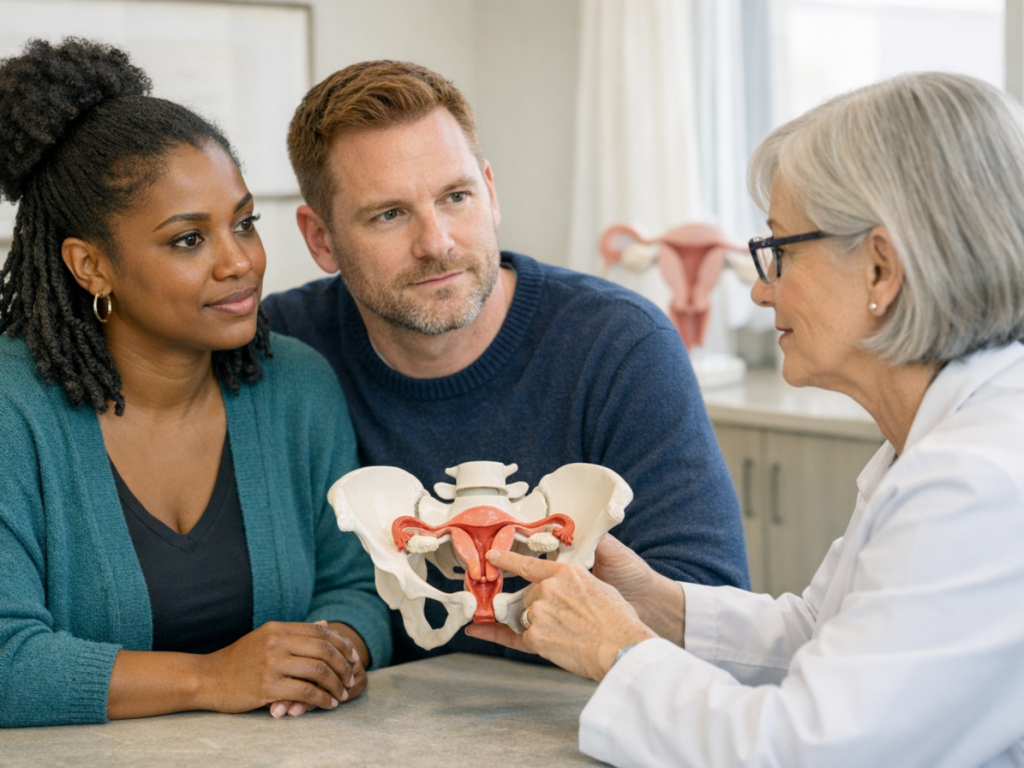
Endometriosis can make the road to pregnancy feel uncertain, painful, and emotionally demanding. It is a chronic inflammatory condition in which tissue resembling the endometrium, the lining of the uterus, grows outside the uterine cavity, most often on the ovaries, fallopian tubes, pelvic peritoneum, bowel, bladder, or ligaments supporting the uterus. For some people, symptoms are severe; for others, infertility may be the first major clue.
Endometriosis does not mean pregnancy is impossible. Many people with endometriosis conceive naturally, while others benefit from medical evaluation, surgery, ovulation induction, intrauterine insemination, or in vitro fertilization. The best approach depends on age, ovarian reserve, pain symptoms, disease severity, fallopian tube status, sperm parameters, prior treatment, and personal goals.
Highlights
Endometriosis may affect fertility through inflammation, adhesions, altered pelvic anatomy, ovarian endometriomas, and possible effects on egg, sperm, embryo, and endometrial function.
The severity of pelvic pain does not always match the severity of disease or the degree of fertility impact; mild endometriosis can still be associated with infertility.
Treatment planning is individualized. Surgery may help in selected cases, while assisted reproductive technologies such as IVF may be more appropriate when age, tubal disease, male factor, or low ovarian reserve are present.
Early specialist input can be valuable, especially for people over 35, those with known endometriomas, severe pain, prior pelvic surgery, or more than 6–12 months of unsuccessful attempts to conceive.
Understanding endometriosis in the context of fertility
Endometriosis is estrogen-responsive and inflammatory. The ectopic endometrial-like lesions can bleed, scar, and trigger immune activity, leading to pelvic adhesions and distorted anatomy. When adhesions tether the ovaries, fallopian tubes, uterus, or bowel, the egg and sperm may have more difficulty meeting. If a fallopian tube is blocked or pulled away from the ovary, natural conception may become less likely.
Endometriosis is commonly staged surgically as minimal, mild, moderate, or severe based on lesion location, depth, adhesions, and ovarian involvement. However, staging is not a perfect predictor of fertility. A person with stage I disease may have biochemical inflammatory changes affecting fertility, while someone with more advanced disease may still conceive. This mismatch can be frustrating, but it also means that decisions should not be based on stage alone.
How endometriosis may contribute to infertility
Fertility depends on coordinated ovulation, egg quality, sperm function, tubal pickup, fertilization, embryo development, implantation, and early pregnancy support. Endometriosis can interfere at several points.
- Inflammation: Endometriotic lesions produce cytokines, prostaglandins, and oxidative stress that may affect sperm motility, egg quality, fertilization, and embryo development.
- Adhesions and pelvic distortion: Scar tissue may impair the normal relationship between the ovary and fallopian tube, reducing the chance that an ovulated egg is captured.
- Ovarian endometriomas: These cysts, sometimes called chocolate cysts, can be associated with reduced ovarian reserve and may complicate egg retrieval or surgery.
- Altered follicular environment: Inflammation around the ovary may influence follicle development and oocyte competence.
- Possible implantation effects: Some studies suggest changes in endometrial receptivity or immune signaling, although this remains complex and not fully explained.
It is also important not to assume endometriosis is the only factor. Age-related egg quality, irregular ovulation, thyroid disease, male factor infertility, tubal disease, and other medical issues may coexist. A broad fertility assessment helps avoid missed contributors.
Symptoms can be obvious, subtle, or absent
Classic symptoms include painful periods, deep pain with sex, chronic pelvic pain, painful bowel movements during menstruation, bladder pain, heavy bleeding, fatigue, and sometimes gastrointestinal symptoms that flare cyclically. Yet some people with endometriosis have little pain and present mainly with difficulty conceiving.
Pain severity does not reliably indicate fertility impact. Deep infiltrating endometriosis may cause severe pain, while minimal or mild disease may still be linked with infertility through inflammatory mechanisms. Conversely, visible lesions found during surgery do not always explain all fertility challenges. If periods are severely painful, if pain limits daily activities, or if conception is taking longer than expected, it is reasonable to discuss endometriosis with a gynecologist or fertility specialist.
Evaluation when endometriosis and infertility are suspected
A careful evaluation usually starts with a medical history, menstrual and pain pattern review, prior surgery or infection history, medication review, and a partner or donor sperm assessment when relevant. Clinicians may also assess ovulation, ovarian reserve, uterine anatomy, and tubal patency.
- Transvaginal ultrasound: Useful for identifying ovarian endometriomas and some structural abnormalities, though superficial peritoneal endometriosis may not be visible.
- MRI: Sometimes used when deep infiltrating endometriosis is suspected, especially involving the bowel, bladder, or uterosacral ligaments.
- Ovarian reserve testing: Anti-Müllerian hormone, antral follicle count, and follicle-stimulating hormone may help estimate likely response to fertility treatment, though they do not directly measure egg quality.
- Tubal assessment: Hysterosalpingography, hysterosalpingo-contrast sonography, or laparoscopy may be used to evaluate whether the fallopian tubes are open.
- Semen analysis: Male factor infertility is common and should be assessed early rather than after prolonged delays.
Laparoscopy with histologic confirmation has historically been considered the definitive diagnostic method, but not everyone needs immediate surgery simply to establish a diagnosis. Many decisions now balance symptom severity, imaging findings, fertility timeline, and whether surgical results would change management.
Treatment options before pregnancy: balancing pain relief and fertility goals
Endometriosis treatment can aim to reduce pain, suppress disease activity, improve fertility, or support assisted reproduction. These goals sometimes overlap, but not always. Hormonal suppression with combined contraceptives, progestins, GnRH agonists, or GnRH antagonists may improve pain by reducing ovarian estrogen stimulation. However, these medications usually prevent ovulation while being used, so they are not fertility treatments during active attempts to conceive.
For someone actively trying to become pregnant, options may include a time-limited period of expectant management, ovulation induction in selected cases, intrauterine insemination, surgery, or IVF. The choice depends heavily on age, duration of infertility, ovarian reserve, tubal status, sperm results, severity of endometriosis, and whether pain is also a major concern.
Because fertility declines with age, prolonged treatment that delays conception attempts may not be appropriate for everyone. This is especially relevant for people over 35, those with low ovarian reserve, or those who have already been trying for many months.
Surgery: when it may help and when caution is needed
Laparoscopic excision or ablation of endometriotic lesions and adhesiolysis may improve pain and may increase natural pregnancy rates in selected people with minimal to mild endometriosis. Surgery can also restore anatomy when adhesions distort the pelvis. For moderate to severe disease, surgery may be useful for pain, large endometriomas, suspected malignancy, or anatomy that interferes with fertility procedures.
However, surgery is not automatically the best fertility strategy. Operations on ovarian endometriomas can reduce ovarian reserve if healthy ovarian tissue is inadvertently removed or damaged. Repeat ovarian surgery may carry particular risk. For some patients, proceeding directly to IVF or retrieving and freezing eggs or embryos before surgery may be discussed.
A thoughtful surgical plan should include the surgeon’s endometriosis expertise, the likelihood of symptom relief, potential fertility benefit, ovarian reserve considerations, and whether bowel, bladder, or ureter involvement requires a multidisciplinary team.
IUI, IVF, and fertility preservation
Intrauterine insemination may be considered in selected cases of minimal or mild endometriosis, especially when tubes are open, sperm parameters are adequate, and age is favorable. It is sometimes combined with ovulation induction to increase the number of available eggs in a cycle. Success rates vary and should be discussed with a fertility clinician.
In vitro fertilization can bypass some endometriosis-related barriers, particularly tubal dysfunction, pelvic adhesions, and impaired egg-sperm interaction in the pelvis. IVF may be recommended sooner when endometriosis is moderate or severe, when fallopian tubes are damaged, when there is male factor infertility, when ovarian reserve is reduced, or when time is a major concern.
Fertility preservation may be relevant for people with bilateral endometriomas, anticipated ovarian surgery, recurrent disease, or a desire to delay pregnancy. Egg or embryo freezing does not guarantee a future pregnancy, but it can provide additional reproductive options.
Emotional health and decision-making
Endometriosis-related infertility can be uniquely exhausting because it may combine chronic pain, uncertainty, invasive testing, repeated treatment decisions, and the grief of delayed pregnancy. Many people also feel dismissed if symptoms were normalized for years as ordinary period pain. Emotional distress is not a minor side issue; it can affect relationships, work, sexuality, and the ability to continue treatment.
Support may include counseling, pelvic pain psychology, fertility counseling, support groups, physiotherapy for pelvic floor dysfunction, and clear communication with clinicians. It is reasonable to ask for explanations in plain language, to seek a second opinion, and to request that both pain control and fertility goals be considered together.
When to seek prompt medical advice
- Severe pelvic pain that is sudden, worsening, or associated with fever, vomiting, fainting, or shoulder-tip pain needs urgent assessment.
- Heavy bleeding causing dizziness, shortness of breath, chest pain, or soaking pads rapidly should be evaluated promptly.
- Known endometriosis with more than 6–12 months of unsuccessful attempts to conceive warrants fertility review; consider earlier review after age 35.
- Large or growing ovarian cysts, especially with acute one-sided pain, require medical assessment to exclude torsion, rupture, or other causes.
- Do not start, stop, or combine hormonal or fertility medications without guidance from a qualified clinician.
Tools & Assistance
- Schedule a consultation with a gynecologist experienced in endometriosis or a reproductive endocrinologist.
- Track cycle dates, pain timing, bleeding pattern, bowel or bladder symptoms, and intercourse timing before appointments.
- Ask about ovarian reserve testing, tubal evaluation, and semen analysis as part of a complete infertility workup.
- Bring prior ultrasound, MRI, operative, and pathology reports to fertility or surgical consultations.
- Consider mental health or fertility counseling if treatment decisions feel overwhelming.
FAQ
Can I get pregnant naturally with endometriosis?
Yes, many people with endometriosis conceive naturally. The likelihood depends on age, ovarian reserve, tubal function, sperm parameters, disease severity, and duration of trying.
Does removing endometriosis always improve fertility?
Not always. Surgery may help selected patients, especially when adhesions or minimal to mild disease are present, but ovarian surgery can also reduce ovarian reserve. Decisions should be individualized.
Should endometriomas be removed before IVF?
Sometimes, but not routinely for everyone. Factors include cyst size, pain, suspicion on imaging, access to follicles during egg retrieval, prior surgery, and ovarian reserve.
Do hormonal treatments improve fertility in endometriosis?
Hormonal suppression can reduce pain and disease activity, but it prevents or suppresses ovulation while used. It is not a way to conceive during treatment, though it may be used strategically before or between fertility treatments.
When should I see a fertility specialist?
Consider evaluation after 12 months of trying if under 35, after 6 months if 35 or older, or sooner with known endometriosis, severe pain, endometriomas, irregular cycles, tubal disease, or prior pelvic surgery.
Sources
- World Health Organization — Endometriosis
- American College of Obstetricians and Gynecologists — Endometriosis
- American Society for Reproductive Medicine — Endometriosis: Does It Cause Infertility?
Disclaimer
This article is for general educational purposes only and does not replace personalized medical advice, diagnosis, or treatment. Please consult a qualified healthcare professional about symptoms, infertility evaluation, or treatment choices.















Please log in to leave a comment.