
Intro
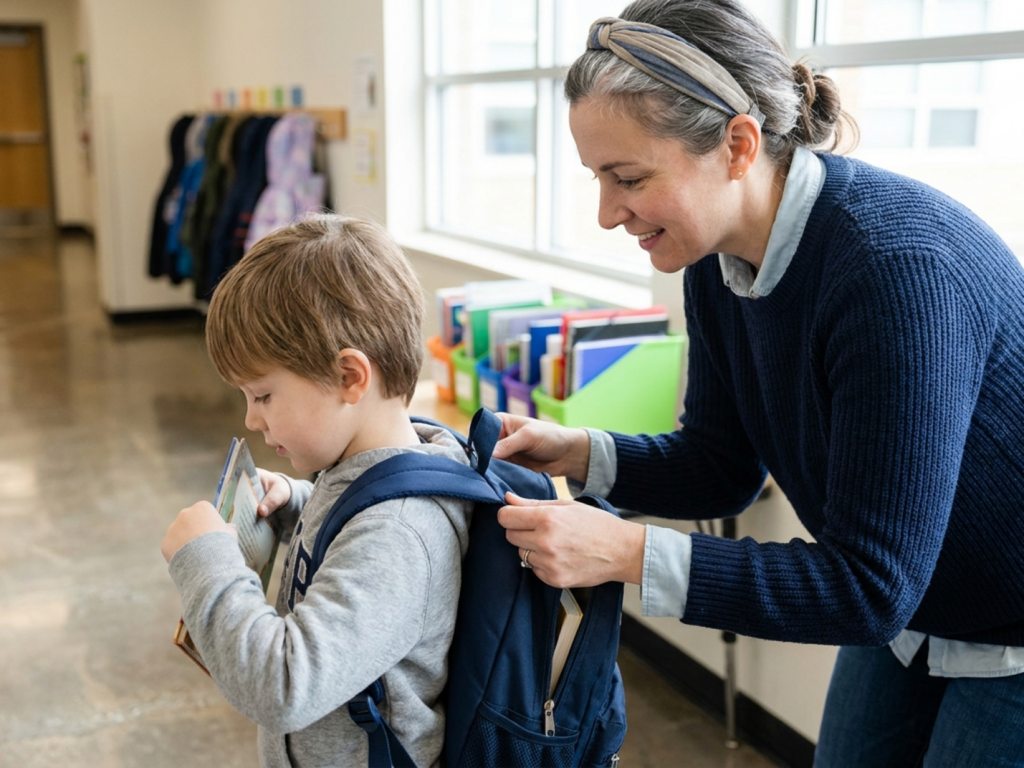
School supplies can make daily learning smoother, but they can also become a source of strain, frustration, or avoidable risk when they are poorly chosen, overpacked, or not matched to a child’s developmental needs. Many families are trying to follow long supply lists while balancing cost, classroom rules, sensory preferences, and a child’s wish to feel included.
This article looks at common school supply mistakes with a practical child-health lens. It is not meant to make parents feel judged. Small adjustments, such as changing how a backpack is packed or simplifying an organization system, can reduce musculoskeletal stress, improve independence, and make the school day feel more manageable.
Highlights
The most common supply mistake is not buying the “wrong” item, but carrying too much of everything every day.
Backpack fit, strap use, load placement, and total weight can affect posture, fatigue, and musculoskeletal comfort.
Supplies should match the child’s age, hand skills, sensory needs, health plan, and actual classroom routine.
Overly complicated organization systems can increase stress for children with attention, executive function, or learning challenges.
When pain, numbness, weakness, persistent fatigue, or school avoidance appears, families should involve a healthcare professional and the school team.
Overpacking the backpack
The most familiar school supply mistake is also one of the most preventable: sending a child to school with a backpack that is too heavy. Children may carry textbooks, notebooks, technology, lunch, water, sports gear, art projects, and “just in case” extras long after those items stop being necessary. The result can be excessive axial load, meaning increased downward force through the spine, shoulders, hips, and lower limbs.
Pediatric guidance commonly recommends keeping backpack weight to a modest fraction of the child’s body weight, and both HealthyChildren.org and Nemours KidsHealth emphasize checking the loaded bag rather than guessing. The concern is not that a heavy backpack automatically causes permanent injury in every child. The concern is that excessive load, especially when carried daily and for prolonged periods, can contribute to discomfort, muscle fatigue, altered gait, forward trunk lean, and compensatory posture.
Common overpacking patterns include carrying every textbook home “just in case,” storing loose papers instead of filing them, keeping old water bottles or lunch containers in the bag, and using the backpack as a mobile locker. A weekly clean-out helps, but a daily two-minute check is even better: what must travel today, what can stay at school, and what can be accessed digitally or shared in class?
Children who already have back pain, joint hypermobility, neuromuscular conditions, scoliosis monitoring, recent injury, or chronic fatigue may need more individualized guidance. In those situations, families should discuss backpack load and school logistics with the child’s clinician, physical therapist, occupational therapist, or school nurse rather than relying on a generic rule.
Choosing a backpack that fits poorly
A backpack can be the right size on the shelf and still be the wrong size on the child. One common mistake is buying a large backpack so it will “last for years.” Oversized bags invite overpacking and often hang too low, shifting weight away from the body’s center of mass. A safer fit usually keeps the bag close to the back, with the bottom near the lower back rather than sagging toward the buttocks.
Another mistake is ignoring strap design. Wide, padded shoulder straps distribute pressure better than narrow straps that dig into the soft tissues around the shoulders. A padded back can improve comfort and reduce pressure from hard objects inside the bag. Chest or waist straps, when present and used correctly, may help stabilize the load during walking, especially for children who travel longer distances.
Using only one shoulder strap is a frequent habit, often because it feels faster or looks more casual. However, asymmetrical carrying can increase uneven loading across the shoulders and trunk. Backpack ergonomics for children is not about making a child stand rigidly; it is about reducing avoidable strain by keeping the load balanced and close to the body.
Parents can check fit with the backpack fully loaded, not empty. Ask the child to walk, climb stairs if relevant, and put the bag on and off independently. Watch for shoulder elevation, forward head posture, excessive trunk lean, red marks, tingling, or complaints that the straps hurt. If these occur repeatedly, adjust the straps, reduce the contents, or consider a better-fitting design. If symptoms persist, seek medical advice.
Packing weight in the wrong place
Even when total backpack weight is reasonable, poor weight distribution can make the bag feel heavier and less stable. A common mistake is placing the heaviest items in the outer pockets, where they pull the backpack away from the spine. Heavy books, tablets, and binders are usually better placed closest to the child’s back, with lighter items farther away.
This matters because load position affects biomechanics. When weight sits far from the body, the child may compensate by leaning forward, rounding the shoulders, or changing stride. Over time, prolonged carrying with poor distribution may contribute to muscle fatigue and discomfort, particularly in the neck, upper back, and lower back. Research reviews on backpack ergonomics describe how excessive load, distribution, and duration interact rather than acting as isolated factors.
Good packing is also about containment. Loose items create shifting weight, make supplies harder to find, and increase the chance that the child carries duplicates. A simple system may work better than many small pouches. For example, one pencil pouch, one folder for papers going home, one folder for papers returning to school, and a clearly assigned spot for technology may be enough for many children.
Water bottles deserve special mention. Hydration is important, but a large full bottle adds substantial weight. If the school has safe refill options, a smaller bottle refilled during the day may be more practical. For younger children, bottles should be leak-resistant and easy to open without requiring excessive grip strength.
Buying supplies that do not match the child’s development
School supplies for children should support the child’s actual motor skills, attention span, and classroom expectations. A supply that works beautifully for an older student may frustrate a younger child. Fine motor demands matter: very small erasers, stiff scissors, slippery pencils, tight caps, and complicated pencil sharpeners can become daily obstacles for children who are still developing hand strength and coordination.
Handwriting tools are a common source of mismatch. Some children benefit from thicker pencils, triangular pencils, pencil grips, or mechanical pencils with a comfortable barrel, but others find grips distracting or uncomfortable. Adaptive tools for handwriting should be selected based on function, not appearance. If a child has persistent pain, avoids writing, presses extremely hard, tires quickly, or has illegible work despite effort, an occupational therapy evaluation or school-based support may be appropriate.
Age appropriateness also includes safety. Younger children may mouth objects, disassemble supplies, or trade small novelty items. Tiny magnets, button batteries in novelty devices, sharp tools, or strong-scented products can create risks depending on the child’s age and behavior. Families should follow school policies and product age guidance, especially for preschool and early elementary students.
Developmental fit includes independence. A lunch container that an adult can open easily may still be too hard for a six-year-old in a noisy cafeteria with limited time. Shoes, jackets, pencil cases, folders, and art supplies should be tested under realistic conditions. If a child cannot use the item independently, it may increase stress and reduce participation.
Prioritizing appearance over comfort and function
Children often care deeply about colors, characters, trends, and what peers are using. That is understandable, and allowing some choice can support autonomy. Problems arise when appearance becomes more important than comfort, usability, or school policy. A sequined backpack that scratches the arms, a lunchbox that does not fit in the backpack, or a pencil case that spills constantly may look appealing but create daily friction.
Sensory comfort is especially important for children with autism, attention-deficit/hyperactivity traits, anxiety, migraine vulnerability, or sensory processing differences, though any child can be sensitive to texture, sound, smell, or visual clutter. Sensory-friendly school supplies may include low-odor markers, quiet fidget tools approved by the teacher, smooth-seamed straps, matte folders instead of shiny reflective ones, or clothing-compatible backpack materials.
The goal is not to remove all preferences or make supplies purely clinical. A better approach is to offer limited choices within functional boundaries: “These three backpacks fit your body and the school rules; which one do you like?” This protects the child’s voice while avoiding items likely to cause discomfort or distraction.
Appearance-based mistakes can also affect equity and social pressure. Expensive branded supplies may be lost, damaged, or stolen, and some children feel anxious about using them. Simple, replaceable supplies often reduce stress. When school supply lists are financially burdensome, families can ask the school about community classroom supplies, donation closets, fee waivers, or local resource programs.
Creating organization systems that are too complicated
Many adults respond to school disorganization by buying more organizers: color-coded binders, multiple folders, planners, labels, dividers, pouches, and digital reminders. These tools can help, but too many systems can overwhelm a child’s executive functions. Executive functions include planning, working memory, inhibition, flexible thinking, and task initiation. When the system has too many steps, the child may abandon it entirely.
A common mistake is designing an adult-friendly system for a child who needs a school-day system. The best organization method is the one the child can use quickly while standing at a desk, listening to a teacher, and preparing for the next activity. For many children, fewer categories are better: “home,” “school,” “finished,” and “unfinished” may work better than ten subject tabs.
Children with attention difficulties in the classroom may need visual cues, routines, and teacher-supported checkpoints rather than more supplies. A planner is useful only if someone teaches the child when to write in it, where to store it, when to check it, and how to act on what is written. Likewise, a binder helps only if there is time and practice for hole-punching, filing, and cleaning it out.
Families can reduce clutter by buying modest quantities and replenishing later. Sending a child with a full year’s worth of pencils, glue sticks, markers, and notebooks can create weight and distraction. If classroom storage is available, bulk supplies can stay there. If not, keep extras at home and restock monthly.
Ignoring health plans, allergies, and individual accommodations
Some school supply mistakes are not ergonomic but medical or accessibility-related. A child with asthma, diabetes, severe allergies, migraine, seizure history, eczema, visual impairment, hearing needs, or mobility limitations may require supplies that align with a health plan or individualized school plan. Families should not rely on ordinary supply lists alone when a child has medical needs.
For example, scented markers, fragranced hand sanitizers, latex-containing items, or certain cleaning wipes may bother children with sensitivities or specific allergies. A child with eczema may need gentler hand hygiene options discussed with a clinician and approved by the school. A child with migraine may be affected by strong odors, bright flashing novelty items, or heavy bags that worsen neck discomfort. These issues should be handled collaboratively with healthcare professionals and school staff.
Technology supplies also need thought. Tablets and laptops add weight, require chargers, and may need protective cases. However, overly bulky cases can make the device difficult to carry. Children with vision, motor, or learning needs may require assistive technology, styluses, keyboards, audio supports, or digital organization tools. These choices should be guided by the school team and relevant clinicians when accommodations are involved.
Medication storage, emergency action plans, and self-carry permissions are school-health issues, not ordinary supply decisions. Parents should speak with the school nurse or administration about policies and required forms. Do not place medication, sharps, glucose supplies, or emergency devices in a backpack without confirming the child’s plan, maturity, and school rules.
Missing the child’s feedback
One of the easiest mistakes to make is assuming that silence means everything is working. Children may not report discomfort because they think it is normal, they do not want to seem different, or they cannot describe the problem clearly. Brief, specific questions can reveal more than a general “How was school?” Try asking whether the backpack hurts anywhere, whether the lunchbox opens in time, whether papers are getting lost, or whether any supply feels embarrassing or distracting.
Watch behavior as well as words. A child who avoids carrying the backpack, asks to be driven a very short distance, frequently loses papers, refuses writing tasks, or melts down during homework may be struggling with the supply system. These behaviors are not proof of a medical condition, but they are useful clues.
A supportive school supply routine can be built into the day without blame. In the evening, remove unnecessary items, repack only what is needed, refill or wash containers, and place the backpack in a predictable location. In the morning, avoid last-minute searches by keeping shoes, outerwear, lunch, and the backpack together. Predictability reduces stress for both children and caregivers.
If a child reports persistent pain, numbness, weakness, headaches, severe fatigue, skin irritation, or escalating school avoidance, it is time to involve a pediatrician or another qualified healthcare professional. The solution may be as simple as changing the bag or reducing load, but persistent symptoms deserve careful evaluation.
When to seek help promptly
- Persistent back, neck, shoulder, or limb pain related to carrying school supplies should be discussed with a healthcare professional.
- Numbness, tingling, weakness, gait changes, or pain that wakes a child from sleep needs medical advice.
- Do not send medications, sharps, or emergency devices in a backpack without a school-approved health plan.
- Strong odors, latex, small parts, magnets, or batteries may be unsafe for some children depending on age and medical history.
- Sudden school refusal, repeated meltdowns, or major task avoidance may need input from the school team and, when appropriate, a clinician.
Tools & Assistance
- Weigh the fully packed backpack on a home scale once a week.
- Ask the teacher which books and supplies truly need to travel daily.
- Schedule a backpack clean-out at the same time each evening.
- Consult the school nurse about health plans, allergies, medications, and safe storage.
- Request occupational therapy or school support if handwriting tools, scissors, or organization demands remain difficult.
FAQ
How heavy is too heavy for a child’s backpack?
Guidance often suggests keeping the loaded backpack to a modest percentage of body weight, but the child’s symptoms, walking distance, and health history also matter. If pain or fatigue occurs, reduce the load and consult a clinician if symptoms persist.
Is a rolling backpack better?
A rolling backpack may help some children, but it can be difficult on stairs, buses, snow, crowded hallways, or uneven sidewalks. Check school rules and consider the child’s route before choosing one.
Should I buy all supplies in bulk at the start of the year?
Bulk buying can save money, but sending everything at once can add weight and clutter. Keep extras at home or in approved classroom storage and restock gradually.
What if my child wants trendy supplies that are not practical?
Offer choices within safe, functional limits. For example, choose three backpacks that fit well and let the child pick the preferred design.
When are supply problems a sign of a bigger issue?
If a child consistently avoids writing, loses materials despite support, has pain, or becomes very distressed about school routines, discuss concerns with the teacher and consider professional evaluation.
Sources
- HealthyChildren.org, American Academy of Pediatrics — School Backpack Safety: Proper Fit, Smart Packing & Preventing Injury
- Nemours KidsHealth — Backpack Safety
- International Journal of Environmental Research and Public Health, MDPI — Impact of Backpacks on Ergonomics: Biomechanical and Physiological Effects: A Narrative Review
Disclaimer
This article is for general educational purposes and does not replace medical evaluation, diagnosis, or treatment. Consult a qualified healthcare professional for persistent pain, neurologic symptoms, allergies, or school health-plan decisions.














Please log in to leave a comment.