
Intro
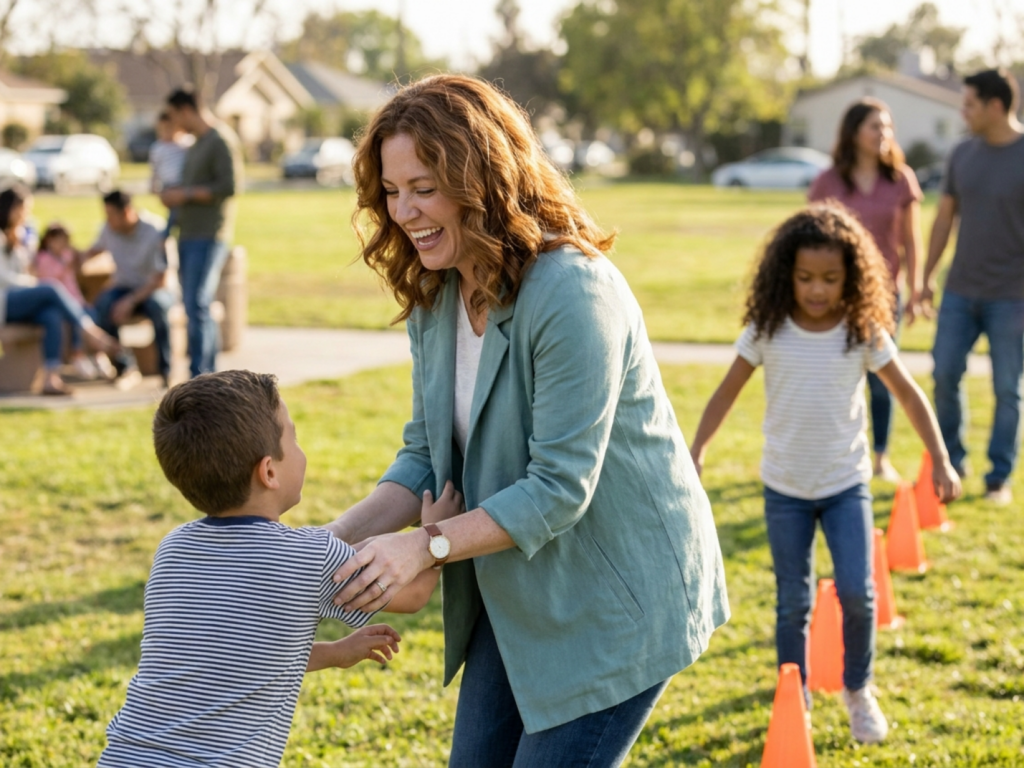
Outdoor play gives children room to move, test their balance, negotiate space, and recover from the demands of school or childcare routines. Research reviews suggest that children aged 3 to 12 who spend more time outside are generally more active and less sedentary, and that outdoor and risky play are linked with better well-being and lower perceived stress.
That does not mean every game has to be intense or adventurous. A good outdoor game can be simple, short, and playful. What matters is that it invites movement, curiosity, and enough challenge to feel engaging without becoming overwhelming.
Highlights
Outdoor games can support physical activity, reduce sedentary time, and give children a healthy outlet for energy.
A mix of running, balancing, throwing, climbing, and imaginative play helps build motor variety without needing expensive equipment.
Children often benefit from managed risk, which means age-appropriate challenge with attentive supervision rather than danger.
Outdoor play can also strengthen confidence, cooperation, and stress regulation when adults keep the atmosphere calm and flexible.
Why outdoor games matter
Outdoor games are more than a way to pass the time. They help children accumulate physical activity in a form that usually feels enjoyable rather than imposed. In the research literature, more outdoor time is associated with greater activity and less sedentary behaviour, and that pattern is especially relevant in childhood, when habits around movement are still forming.
Outdoor play also gives children something indoor spaces often cannot: room to accelerate, change direction, judge distance, and respond to uneven terrain. Those experiences support gross motor development, including balance, coordination, and cardiorespiratory fitness, which is the efficiency of the heart and lungs during movement. Just as importantly, the outdoor setting can feel emotionally regulating. Children often seem more able to release tension when they are moving in open air, especially if the game is playful rather than overly structured.
What kinds of outdoor games work well
The best outdoor games are usually the ones children can understand quickly and return to often. Simple rules make play more inclusive, while repetition helps children practise skills without feeling pressured. Games that involve running, chasing, jumping, skipping, aiming, hiding, or balancing are useful because they blend effort with fun. Many children also enjoy games that combine imagination and movement, such as pretending to be animals, explorers, or athletes.
- Tag and chase games build speed, reaction time, and social awareness.
- Ball games support hand-eye coordination, timing, and shared attention.
- Obstacle courses encourage climbing, crawling, stepping, and problem-solving.
- Scavenger hunts turn walking or running into a task with a purpose.
- Chalk games, hopscotch, and step patterns add rhythm, balance, and turn-taking.
Simple equipment is often enough. A soft ball, a jump rope, cones, chalk, or even a few household objects can create a rich play environment. The goal is not perfection; it is repeated opportunities to move in different ways.
Choosing age-appropriate activities for children
Age-appropriate activities for children are not about moving a child through a fixed menu of skills. They are about matching complexity, endurance, and risk to the child in front of you. A younger child may thrive with short games, very clear rules, and lots of repetition. A school-aged child may enjoy longer play periods, team formats, or games that require planning and strategy. Older children often like more autonomy, more speed, and more room to negotiate the rules themselves.
Temperament matters too. Some children are immediately drawn to fast, noisy games. Others prefer predictability, smaller groups, or quieter movement such as walking, collecting, digging, or balancing. Children who become overwhelmed easily may do better with one change at a time: first the location, then the rule, then the equipment. That kind of gradual adjustment can make outdoor play feel safe enough to enjoy.
If a child has pain, frequent falls, fatigue, or a known medical condition that affects movement, it is sensible to ask a pediatric clinician, physiotherapist, or other qualified professional for individualized guidance. The aim is not to avoid play, but to choose the right level of challenge.
How outdoor games support social and emotional skills
Outdoor play is also social practice. In social play for children, the game itself becomes a setting for communication: children ask to join, negotiate rules, wait for a turn, recover after losing, and decide what to do when someone changes the plan. Those interactions are not small. They are rehearsals for cooperation, self-control, and flexible thinking.
Cooperative games for children can be especially helpful when adults want less competition and more shared success. A relay where everyone completes part of the task, a scavenger hunt in pairs, or a group obstacle course can reduce pressure while still requiring coordination. These formats are often kinder to children who feel anxious about winning or who need more time to process social cues.
There is also value in managed risk. When a child climbs a little higher, runs a little faster, or tries a new physical challenge within a safe environment, they learn something about their own ability. That can support confidence and may lower perceived stress over time. The key is to allow challenge without forcing it, and to stay nearby enough that the child feels supported rather than abandoned.
Outdoor safety for children without making play too strict
Good outdoor play needs outdoor safety for children, but safety should be practical rather than overly restrictive. Children do not learn much from being wrapped in caution. They learn more when adults create a safe frame: a clear space, a watchful adult, age-appropriate equipment, and rules that fit the setting. That balance helps reduce avoidable injuries while preserving the enjoyment that makes children want to keep playing.
Use a quick safety check before play starts. Look for traffic, sharp objects, broken surfaces, open water, unstable climbing structures, extreme heat, ice, and poor visibility. Make sure shoes fit, helmets are used for cycling or wheeled sports, and equipment is suited to the child’s size and skill. Playground injury prevention is not about removing every risk; it is about reducing obvious hazards and supervising in a way that matches the child’s age and the environment.
Hydration, shade, and weather awareness matter too. In hot conditions, encourage rest breaks and avoid forcing children to continue if they look overheated or unusually tired. In cold, wet, or stormy weather, shorten the session or move play indoors. If a child has asthma, a chronic condition, or a recent injury, ask a healthcare professional what modifications are sensible before returning to vigorous play.
Making outdoor play a realistic routine
Families and educators often know outdoor play is valuable, but daily life can make it feel hard to fit in. The most sustainable approach is usually simple and repetitive. Keep a few items ready, choose locations that are easy to access, and let the child help decide the game. When children have some control, they are more likely to participate willingly and less likely to experience play as another adult demand.
It can help to build outdoor time into existing transitions: after school, before dinner, during a weekend walk, or after a childcare drop-off. Not every session needs to be long. Short, active bursts done consistently are often more realistic than rare, elaborate outings. You can also rotate the type of movement so the child gets varied physical activity daily, such as one day for chasing games, one day for ball skills, and another for balance or nature exploration.
If a child regularly avoids outdoor play because of pain, breathlessness, dizziness, fear of falling, or repeated conflicts with peers, take that seriously and speak with a qualified professional. Outdoor games should stretch a child in healthy ways, not leave them distressed. When play feels safe, predictable enough, and fun, it is much easier for children to keep coming back to it.
When to pause and get help
- Seek urgent medical care for head injury, trouble breathing, fainting, severe bleeding, or collapse during play.
- Do not ignore limping, persistent pain, repeated falls, or a child who stops using a limb normally.
- Keep children away from unsupervised water, moving traffic, unstable climbing areas, and dangerous heights.
- Use extra caution in extreme heat, lightning, icy conditions, or poor air quality.
- Ask a healthcare professional before returning to vigorous play after injury or when a chronic condition affects exercise tolerance.
Tools & Assistance
- A soft ball, chalk, jump rope, cones, or simple household objects for obstacle games
- A shaded outdoor space with drinking water and age-appropriate supervision
- A quick pre-play safety check for surfaces, weather, and nearby hazards
- Pediatric clinician, physiotherapist, or school health professional for individualized advice
FAQ
How much outdoor play should children get?
There is no single perfect number for every child, but regular daily outdoor time is a good goal. The best amount depends on age, weather, energy level, and family routine.
Are risky outdoor games bad for children?
Not necessarily. Managed risk, meaning age-appropriate challenge with supervision and sensible boundaries, can support confidence and engagement.
What if my child prefers quiet or predictable play?
That is okay. Start with simple, repeatable games and let the child help shape the activity. Many children do better when changes are gradual.
When should I ask a professional about play concerns?
If pain, shortness of breath, frequent injuries, dizziness, or developmental concerns interfere with play, speak with a pediatric clinician or other qualified professional.
Sources
- PubMed Central — Healthy childhood development through outdoor risky play
- PubMed Central — What Is the Relationship between Outdoor Time and Physical Activity, Sedentary Behaviour, and Physical Fitness in Children?
- Outside Play — Resources
Disclaimer
This article is for general educational purposes and does not replace individualized medical advice. If a child has pain, repeated injuries, breathing problems, or other health concerns, consult a pediatric clinician or other qualified health professional.














Please log in to leave a comment.